World

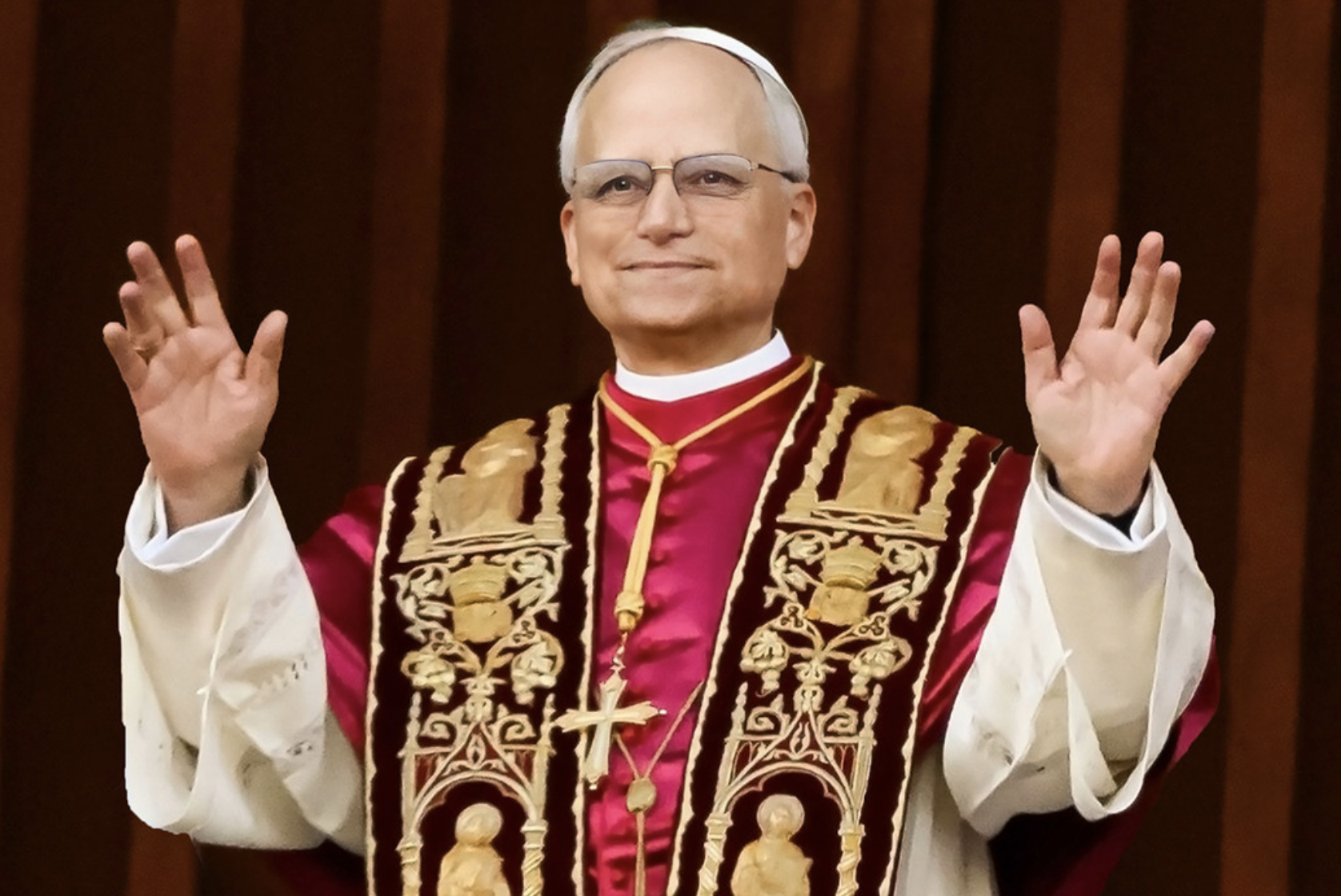
Catholic bishop, in public letter, urges Pope Leo XIV to offer doctrinal clarity -- now

Catholic bishop, in public letter, urges Pope Leo XIV to offer doctrinal clarity -- now

Cardinals, archbishops and bishops have many ways to communicate with Vatican officials and even the pope himself, outside of occasional personal meetings.

In the digital age, one blunt way to reach Pope Leo XIV is to write a candid letter and post it online. That's what Bishop Robert Mutsaerts of the Netherlands, auxiliary bishop of the Diocese of 's-Hertogenbosch, did recently.

"Holy Father," he began, with "reverence for the office entrusted to you as successor of Saint Peter, and in communion with the Church which Christ built upon the apostles, I address you with this open letter. I don't do so lightly."

What followed was one bishop's heart cry for the pope to speak candidly about why believers should cling to ancient truths, even while struggling with the riptides of modern life.

Peter, the first pope, "received from Christ not only the commission to unite the brothers, but also to strengthen them in the faith," wrote Mutsaerts. "Ultimately, the world gains little from a Church that merely repeats what the world itself already thinks."

After years of "synodality" meetings built on dialogue with modern Catholics and church critics, the bishop offered hard questions: "Not: how many reports were written? Not: how many people participated? But: has faith become stronger? Has Christ been proclaimed more clearly? Has Catholic identity deepened? Have more people come to convert? Is Sunday Mass better attended? Are there more priestly vocations? …Has greater reverence for the Eucharist emerged? Has the moral teaching of the Church become clearer? Has missionary courage increased?"

The auxiliary bishop's superior, Bishop Gerard Johannes Nicolaus de Korte, quickly distanced himself from these words, while debates continued online.

The context for the Mutsaerts letter is larger than headline grabbing debates about the use of the Latin Mass, bleak attendance trends in Western nations, Catholic politicians clashing with church teachings and same-sex union blessings in many European Catholic churches.
Was British politico Ann Widdecombe murdered because of her Catholic beliefs?

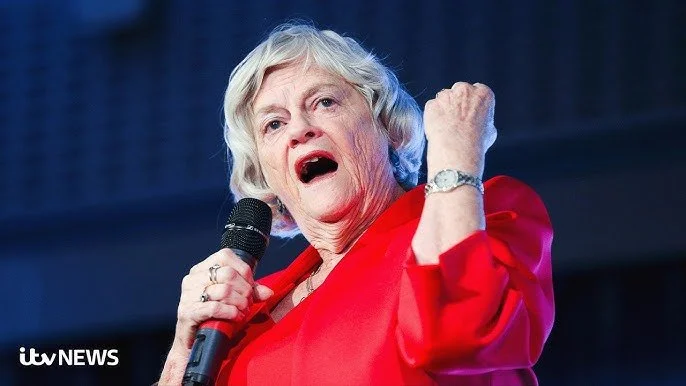
Was British politico Ann Widdecombe murdered because of her Catholic beliefs?

In her student days, Ann Widdecombe's first Oxford Union presentation was an attack on censorship, even if practicing free speech turned out to be risky or painful.

A half century later, the former Conservative MP and outspoken Catholic returned to the legendary debate club to address the same subject, at one point explaining why she once agreed to share a speaker's platform with an Irish Republican Army activist.

"So, you wanted to blow me up," Widdecombe said in 2019, referring to the 1984 Grand Hotel bombing in Brighton, England, that killed five people and injured 31. The target was Prime Minister Margaret Thatcher and the assembled Conservative Party conference.

Widdecombe said the IRA supporter responded: "Well, I didn't want to do it myself."

Enemies of free speech are "snowflakes and totalitarians," said Widdecombe, in the brash style that made her one of England's most loved, and hated, public figures. "Nobody has the right to live their lives being protected from offense, or from insult, or from hurt feelings. It is an occupational hazard … and if you really cannot take it, become a hermit."

Widdecombe, 78, was found dead on July 9 after what police first called a burglary that led to murder. The case is now being investigated as terrorism. The accused attacker drove nearly 300 miles to her isolated Devon home, where he struck her in the head 21 times with a hammer during an encounter that appears to have lasted two minutes.

A key question: Was she killed because of her beliefs?

"She was the most prominent British Catholic politician whose faith actually informed her politics," noted philosopher Joseph Shaw, of the Catholic Answers organization.

Concerning faith-based rom-coms, horror, fantasy and other niche-movie trends

Concerning faith-based rom-coms, horror, fantasy and other niche-movie trends

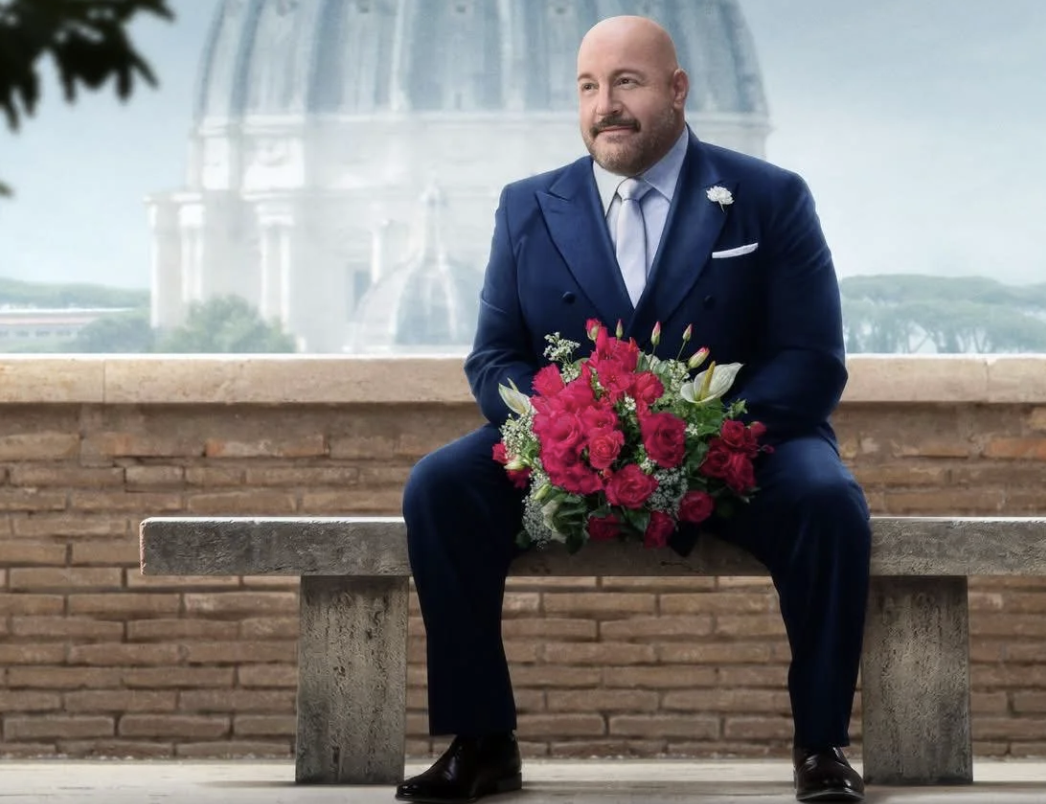
he romantic comedy "Solo Mio" offered a crashed wedding, epic views of Rome, funny sidekicks, an obligatory "meet cute," the lovely vineyards of Tuscany, a final plot twist and the dawn of new love.

It also included priests performing weddings, glimpses of the Vatican and old-school Italians making the sign of the cross with prayers at a family meal. The star was comedian Kevin James, an outspoken Catholic, and there was a prime role for Jonathan Roumie, another outspoken Catholic, who is best known for playing Jesus in "The Chosen" series. And this independent film was released by Angel Studios.

In today's cinematic marketplace, was this a "faith-based" film or merely a flashback to rom-coms from the 1950s?

"I'm all for this. … I never thought I would see, in a romantic comedy, Paul Blart, Jesus and Alexander from 'Sons of Anarchy' on a journey together in Italy," said YouTube critic Joseph Curtis. He was connecting James' hit "Paul Blart: Mall Cop," Roumie's iconic role and the star turn by Kim Coates in a Netflix series about motorcycle gangs.

As for the rom-com label, Curtis added: "It's a formula that has been done before -- to death -- but sometimes it just works."

For those charting the rise of faith-friendly flicks, the important fact about this small film, with a small cast, a small budget and a short release in theaters was that it made money, before heading into Angel's streaming-video vault.

"Making $26 million, with a $4 million budget, means this movie was a gargantuan success, relatively speaking," said Joseph Holmes, a New York City-based critics who writes for Religion Unplugged, World Magazine and other publications. "These days, the people making Marvel and Star Wars movies would be happy with that kind of return on their investments."

Memory eternal, John L. Allen, Jr. -- Catholic journalist and a journalist who was Catholic

Memory eternal, John L. Allen, Jr. -- Catholic journalist and a journalist who was Catholic

The Boston Globe headline was blunt: "Church allowed abuse by priest for years."

This massive investigation into sexual abuse by Catholic clergy won the 2003 Pulitzer Prize for Public Service, forcing major newsrooms to cover a scandal that had festered for decades. The shockwaves continued in Boston and, more than a decade later, The Globe began a website -- Crux (Latin for "cross") -- to cover Catholic news.

Reporter John L. Allen, Jr., was a pivotal figure in that project, since he was already an established expert on all the roads that lead to Rome. However, Crux quickly showed that the news was there, the readers were there, but the dollars didn't add up -- yet.

Allen got the green light to create an independent Crux, which launched on April 1, 2016. The question was whether he could build a coalition of donors and organizations -- the Knights of Columbus, for example -- that would support real journalism.

Truth is, the "people on the other side of the deal have to believe in what you are doing and see the wisdom of becoming part of your brand," Allen told me at that time, via telephone from Rome. "Your partners also have to be smart enough to realize that a key part of your brand is that you are seen -- by your readers -- as being truly independent."

The bottom line: Allen was a journalist who was a Catholic and an active Catholic who was a real journalist and he fought to balance that equation, in his daily reporting, his 11 books and his commentary for CNN, CBS and others. His death on January 22, after a long battle with cancer, left a strategic hole in Catholic life. His funeral Mass was celebrated on Monday (January 26) at the Basilica of Sant'Eugenio in Rome. He was 61.

When describing the "brand" he wanted, Allen stressed this word -- "balance." In an early update to Crux 2.0 readers, he wrote: "We’re unambiguously committed to the teaching and tradition of the Catholic Church. We believe the Church, for all of its undeniable failures and challenges, is fundamentally a force for good in the world. …

"We also believe deeply in that famous line from Chesterton: 'Catholic doctrine and discipline may be walls; but they are the walls of a playground.' … My personal definition of success will be if, over the long haul, smart readers have a hard time saying whether they find us 'liberal' or 'conservative.'"

Concerning Pope Leo XIV, religious freedom and the legacy of George Orwell

Concerning Pope Leo XIV, religious freedom and the legacy of George Orwell

After a year in which 8 million Christians faced persecution, activists with the Netherlands-based Open Door network released a report claiming that 3,490 Christians were killed in Nigeria, out of 4,849 worldwide.

While the Holy See has remained cautious on this issue, Pope Leo XIV made his concerns clear when facing the Vatican diplomatic corps.

"It cannot be overlooked that the persecution of Christians remains one of the most widespread human rights crises today," he said, in a January 9 address. "This phenomenon impinges on approximately one in seven Christians globally. … Sadly, all of this demonstrates that religious freedom is considered in many contexts more as a 'privilege' or concession than a fundamental human right.

"Here, I would especially call to mind the many victims of violence, including religiously motivated violence in Bangladesh, in the Sahel region and in Nigeria, as well as those of the serious terrorist attack last June on the parish of Saint Elias in Damascus."

In a wide-ranging address that avoided criticizing specific governments, Pope Leo linked Catholic moral teachings to the rights of migrants, prisoners, noncombatants, the poor and the unborn, while also opposing what he called "a diplomacy based on force." He bluntly warned: "War is back in vogue and a zeal for war is spreading."

The pope also addressed forms of discrimination and even persecution based on efforts to undercut core human rights, such as religious liberty and freedom of speech. This is even happening, he said, in countries where Christians "are in the majority, such as in Europe or the Americas," where believers are "sometimes restricted in their ability to proclaim the truths of the Gospel for political or ideological reasons."

Graffiti tales at Canterbury, and a new leader for divided Anglican Communion

Graffiti tales at Canterbury, and a new leader for divided Anglican Communion

In ordinary times, the arrival of a new Archbishop of Canterbury would be a headline that stood alone, especially if England's monarch had just approved the first woman to serve as the symbolic leader of the Anglican Communion.

But the recent decision to add decorative graffiti inside Canterbury Cathedral, founded in 597, added tension to debates surrounding the October 2 appointment of the Right Reverend and Right Honorable Dame Sarah Mullally as the 106th successor to St. Augustine.

The "Hear Us" exhibition added flashy decals to the columns, walls and floors of the iconic sanctuary, imitating the spray-paint art common in alleys, road underpasses and urban neighborhoods. The images offered bold challenges, such as: "God, what happens when we die?", "Are you there?", "Why did you create hate?" and "Do you ever regret your decisions?"

Cathedral Dean David Monteith explained: "There is a rawness which is magnified by the graffiti style which is disruptive." The exhibit, which ends in January, "allows us to receive the gifts of younger people who have much to say."

Among Anglicans, Monteith's leadership role has fueled debates because of his public decision to enter a same-sex civil partnership -- a stance rejected by traditional clergy in England and around the world. He also made headlines in 2024 with "Rave in the Nave" disco nights, with a temporary alcoholic bar located near where St. Thomas Becket was martyred in 1170.

In her first sermon after being named Archbishop of Canterbury, Mullally alluded to the messy divisions inside the worldwide Anglican Communion, with its 85-110 million believers.

"In an age that craves certainty and tribalism, Anglicanism offers something quieter but stronger: shared history, held in tension, shaped by prayer, and lit from within by the glory of Christ," she said.

"Across our nation today, we are wrestling with complex moral and political questions. The legal right of terminally ill people to end their own lives. Our response to people fleeing war and persecution. … The deep-rooted question of who we are as a nation, in a world that is so often on the brink."

When pope's hold quick gaggles with reporters, strange things can happen

When pope's hold quick gaggles with reporters, strange things can happen

As Pope Leo XIV left his summer residence at Castel Gandolfo, a circle of reporters pressed forward.

Early in his pontificate, Leo has been cautious with the press. But after some comments in Italian, he agreed to "one question" from the EWTN network. It focused on Chicago Cardinal Blase Cupich's decision to honor U.S. Senator Dick Durbin with a lifetime achievement award.

The problem: Durbin consistently backs abortion rights and remains barred from receiving Holy Communion in Springfield, Illinois, his home diocese. The senator has since declined the honor.

In English, Leo stressed looking at a politician's "overall work." The Chicago-born pope added: "Someone who says, 'I am against abortion,' but says, 'I am in favor of the death penalty' is not really pro-life. Someone who says that 'I am against abortion, but I am in agreement with the inhuman treatment of immigrants who are in the United States,' I don't know if that's pro-life. So, they're very complex issues."

What happened next was totally predictable.

"The Catholic right has been divided between those inclined to try to explain away the pope's language, and those insisting he was just flat wrong," wrote Crux editor John L. Allen, Jr. "The American Catholic left, meanwhile, has been gripped by a paroxysm of delight."

It's one thing that didn't happen -- with "all the polarization in social media, instant news and even fake news" -- was a clear statement by Pope Leo XIV about these complex doctrinal issues, said Amy Welborn, a popular Catholic blogger since 2001.

"Popes should not do press conferences or drive-by press gaggles – never, ever," she said, reached by telephone. In fact, popes should avoid all hasty statements on politics and public events. It would be safer for Leo to discuss his tennis game, she added.

Parsing Pope Leo XIV: Journalists, Catholic insiders trying to read between the lines

Parsing Pope Leo XIV: Journalists, Catholic insiders trying to read between the lines

Early in the Mass, the priest -- chanting in Latin -- leads the congregation into a prayer of repentance.

The faithful respond: "Confíteor Deo omnipotenti et vobis, fratres, quia peccavi nimis cogitatione, verbo, opere et omission," which in English is, "I confess to almighty God and to you, my brothers and sisters, that I have greatly sinned, in my thoughts and in my words, in what I have done and in what I have failed to do."

Then everyone adds: "Mea culpa, mea culpa, mea maxima culpa" -- "through my fault, through my fault, through my most grievous fault."

This Mass is in Latin, but it's the basic Latin text for the Vatican II Novus Ordo (.pdf here), noted Pope Leo XIV, in lengthy interviews with Elise Ann Allen of Crux.

A big issue in current conflicts, he said, is that "people always say 'the Latin Mass.' Well, you can say Mass in Latin right now. If it's the Vatican II rite there's no problem. Obviously, between the Tridentine Mass and the Vatican II Mass … I'm not sure where that's going to go."

It doesn't help, the pope added, when Catholics witness "abuse" of the Novus Ordo. This offends those "looking for a deeper experience of prayer, of contact with the mystery of faith that they seemed to find in the celebration of the Tridentine Mass. Again, we've become polarized, so that instead of being able to say, well, if we celebrate the Vatican II liturgy in a proper way, do you really find that much difference between this experience and that experience?"

Pope Leo's call for celebrating the "Vatican II liturgy in a proper way" -- including Latin -- will "strike at least some American Catholics as either pointedly ironic or frustratingly hypothetical, given the number of bishops who have restricted 'traditional' celebrations of the ordinary form, even those 'proper' according to the rubrics," noted Ed Condon, editor of The Pillar, in a recent online essay.

If the goal is to heal "polarization around the liturgy," the pope needs to describe "proper" ways to celebrate the Novus Ordo, Condon added. But it "remains to be seen if those bishops who have clamped down on ordinary liturgical practices, or taken a relaxed view of liturgical abuses, will feel moved to revisit their positions in the light of the pope's words -- or if the pope will do anything to actively encourage them to do so."

The fellowship of J.R.R. Tolkien and C.S. Lewis, shaped by reality in World War I

The fellowship of J.R.R. Tolkien and C.S. Lewis, shaped by reality in World War I

A British soldier began writing "The Fall of Gondolin" while in a hospital bed, stricken by "trench disease" from the lethal front lines of World War I.

A German soldier later bemoaned the "lice, rats, barbed wire, fleas, shells, bombs, underground caves, corpses, blood, liquor, mice, cats, artillery, filth, bullets, mortars, fire, steel." Add poison gas to that ordeal.

Young J.R.R. Tolkien wrote: "The fume of the burning, and the steam of the fair fountains of Gondolin withering on the flame of the dragons of the north, fell upon the vale of Tumladen in mournful mists." The battlefields were "cold and terrible."

This was a vision of war from a man who had been there, said Joseph Loconte, author of "A Hobbit, a Wardrobe and a Great War." The book explores the many ways that World War I shaped Tolkien and C.S. Lewis.

"Tolkien wasn't writing escapist fantasy," said Loconte, reached by telephone. "If this is about escape, it's the writings of a prisoner who has escaped the world of cells, bars and keys. This kind of escapism … helps us realize that our prisons have windows and we can use them to see better things."

Tolkien later wrote that he began creating his Middle Earth mythology -- the foundation for the future "The Lord of the Rings" -- while "in grimy canteens, at lectures in cold fogs, in huts full of blasphemy and smut, or by candlelight in bell-tents, even some down in dugouts under shell fire."

Yes, the man who survived days huddled in shell craters and trenches in France would later write, in a blank page in an Oxford student's exam book, these famous words: "In a hole in the ground there lived a Hobbit."

Tolkien and Lewis remain stunningly popular -- in print and on digital screens.