terrorism

On death penalty, Catholics have evolved by Protestants clash on doctrinal details

On death penalty, Catholics have evolved by Protestants clash on doctrinal details

After the Second Vatican Council, the 1566 Catechism continued to teach that civil authorities could use the death penalty to "punish the guilty and protect the innocent. Far from involving the crime of murder, the just exercise of this power is an act of paramount obedience to this divine law, which prohibits murder."

On November 5, 2009 -- when Major Nidal Hasan killed 13 at Fort Hood, Texas -- an updated Catechism said if guilt was "fully determined" church teachings do "not exclude recourse to the death penalty, if this is the only possible way of effectively defending human lives against the unjust aggressor." Civil authorities were urged to seek "non-lethal means … more in conformity to the dignity of the human person."

Quoting a 2017 Pope Francis address, the Catechism now says, "the death penalty is inadmissible because it is an attack on the inviolability and dignity of the person." Thus, the church "works with determination for its abolition worldwide."

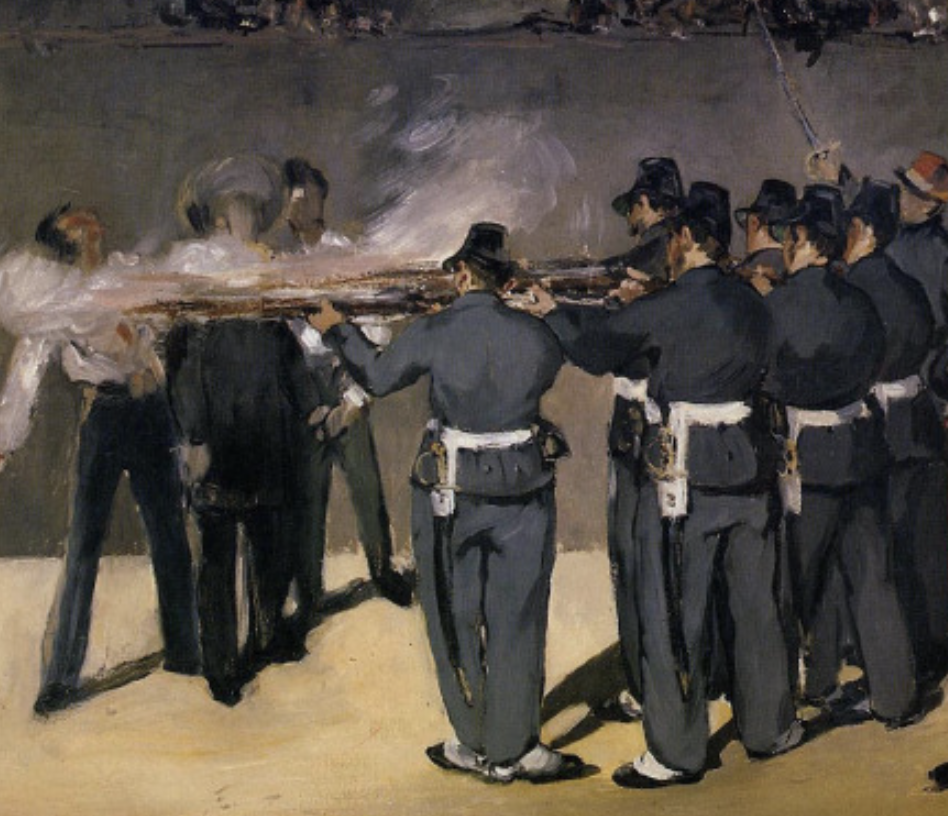
Catholic leaders spoke quickly when the Department of Defense said President Donald Trump backed Hasan's death by firing squad on December 3 at Fort Hood, the first military execution of this kind since World War II. After initially approving a public livestream, Trump cancelled that order but said victims' families could attend.

A televised firing squad would have been a "strong deterrent for the World to witness how America deals with terrorists and SCUM," the president posted. However, "many very good … people would rather not watch him die."

During the days when the livestream was in play, the Hasan drama offered a case study of modern Christian debates about capital punishment. Catholics cited the evolving Catechism. Protestants debated Old Testament passages supporting public executions.

Was British politico Ann Widdecombe murdered because of her Catholic beliefs?

Was British politico Ann Widdecombe murdered because of her Catholic beliefs?

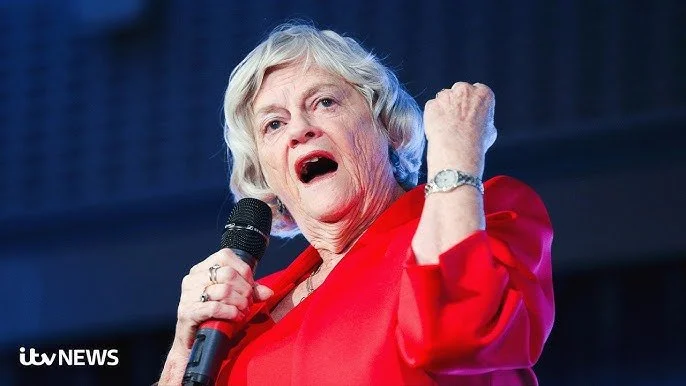
In her student days, Ann Widdecombe's first Oxford Union presentation was an attack on censorship, even if practicing free speech turned out to be risky or painful.

A half century later, the former Conservative MP and outspoken Catholic returned to the legendary debate club to address the same subject, at one point explaining why she once agreed to share a speaker's platform with an Irish Republican Army activist.

"So, you wanted to blow me up," Widdecombe said in 2019, referring to the 1984 Grand Hotel bombing in Brighton, England, that killed five people and injured 31. The target was Prime Minister Margaret Thatcher and the assembled Conservative Party conference.

Widdecombe said the IRA supporter responded: "Well, I didn't want to do it myself."

Enemies of free speech are "snowflakes and totalitarians," said Widdecombe, in the brash style that made her one of England's most loved, and hated, public figures. "Nobody has the right to live their lives being protected from offense, or from insult, or from hurt feelings. It is an occupational hazard … and if you really cannot take it, become a hermit."

Widdecombe, 78, was found dead on July 9 after what police first called a burglary that led to murder. The case is now being investigated as terrorism. The accused attacker drove nearly 300 miles to her isolated Devon home, where he struck her in the head 21 times with a hammer during an encounter that appears to have lasted two minutes.

A key question: Was she killed because of her beliefs?

"She was the most prominent British Catholic politician whose faith actually informed her politics," noted philosopher Joseph Shaw, of the Catholic Answers organization.

The church bombing in ancient Damascus: This was more than a political drama

The church bombing in ancient Damascus: This was more than a political drama

The faithful gathered for a more than symbolic rite at St. Elias Orthodox Church in Damascus -- the Feast of all Antiochian Saints.

During this June 22 service, a jihadist -- Syria blamed the Islamic State -- entered with a rifle and began firing. As worshippers tackled him, he detonated an explosive vest. In seconds the Orthodox Patriarchate of Antioch had more names to add to its two millennia of saints and martyrs.

"Among the spirits of the righteous perfected in faith, give rest, O Savior, to the souls of Your servants, keeping them in the blessed life which is from You, O loving One," Orthodox believers prayed this past Sunday, in global memorial prayers for the new martyrs of Syria.

"In Your place of rest, O Lord, where all Your Saints repose, give rest also to the souls of Your servants, for You alone are immortal." Bishops circulated names to be read aloud: "Nabil, Emile, Souliman, Simon, Abdullah, Amal, Milad, Razzouk, Farid, Peter, Georgios, Mariam, Susan, Julia, Metanios, Maen, Laurance, Anjie. …"

In a funeral for many of the martyrs, Antiochian Patriarch John X preached about the past, the present and the life to come.

"You, beloved martyrs, have left us and were translated to heaven, to eternal life, in the presence of the Lord Who rose from the dead," he said, in an online translation from Arabic. "You were martyred and entered into eternal life … joining the company of all righteous and holy Antiochian Saints, and all the saints. Today, we turn to you. We ask you to pray for us, now that you rest in the Lord's embrace."

It's hard to shock believers in sanctuaries surrounded by centuries of war, conquest and terror. Young people saw three of the faithful attempt to push the attacker away from the flock inside St. Elias.

"Grace, Peter and Milad. I know them personally," said Patriarch John. "These are our people and our heroes. … They would have done the same and protected the people around them even if they were in the mosque."

The political context was significant and, thus, dominated mainstream news reports. BBC noted: "It was the first such attack in Damascus since Islamist-led rebel forces overthrew Bashar al-Assad in December, ending 13 years of devastating civil war."

But, for Christians around the world, this attack also took place in an ancient, truly biblical context.

Entering year 35 with 'On Religion' -- Demons, martyrs, violence, miracles in Colombia

Entering year 35 with 'On Religion' -- Demons, martyrs, violence, miracles in Colombia

In one of her first encounters with violence linked to the Revolutionary Armed Forces of Colombia (FARC), Deann Alford heard, or felt, a bullet pass and slam into a door frame, with shrapnel striking a nearby woman and child.

The future journalist was both shocked and inspired by her contacts with Christians caught in that land's toxic climate of paramilitary warfare, narcotrafficking and kidnappings. She struggled to grasp how someone like pilot Russell Martin Stendal, after years held for ransom, could forgive his kidnappers and then start a missionary effort to convert them.

"Without his months as their hostage, I'm convinced he never could have reached the FARC," wrote Alford, in "Victorious: The Impossible Path to Peace," her blunt memoir about religious freedom in Colombia.

Stendal, she added, "has forgiven all. But I have not. ... In my quarter-century as a journalist, I've written dozens of articles about Colombian guerrilla groups' crimes against Christians, ranging from extortion to murder. Many of these stories regard crimes of the FARC, typically threatening and abducting church workers, missionaries and pastors, extorting them with offers they could not refuse."

Eventually, Alford realized that it wasn't enough to cover Colombia with telephone calls, faxes and Internet connections. She would have to put "boots on the ground" and return. "But I didn't. I was afraid. No, that word is too mild. I was terrified. I let the risk of being killed and kidnapped keep me away."

Alford's bottom line: "I told the Lord I would go anywhere for him but Colombia."

But she returned and, over years of contacts, her fears mixed with frustration. After working in secular newsrooms, as well as Christian publications and wire services, she couldn't understand why more people -- journalists and religious leaders -- could not see the importance of the faith stories unfolding, decade after decade, in Colombia.

This is another example of an important theme woven into my work with this "On Religion" column, with this week marking the start of my 35th year. Simply stated, many journalists do not "get" religion, in terms of grasping the role faith plays in many important events and trends stories.

Modern-day Coptic martyrs: The truly ancient faith of 'The 21' beheaded in Libya by ISIS

Modern-day Coptic martyrs: The truly ancient faith of 'The 21' beheaded in Libya by ISIS

After one trip into Libya as a migrant worker, Tawadros Youssef Tawadros reported that he had been warned that his Christian name -- "Theodore," in English -- might anger Muslim radicals.

His widow, Maleka Ayad, recalled him saying: "Anyone who starts changing his name will end up changing his faith."

Malak Ibrahim Seniut was more blunt, in a final talk with his priest. Told that Christians could be witnesses by living a long, faithful life, the young man replied: "That's not enough for me. I want to do it through death."

On Feb. 15, 2015, both were among the men beheaded by Islamic State soldiers on a beach in Libya. All 21 -- 20 Egyptian Copts and a Ghanan who professed his Christian faith -- were soon declared martyrs by the Coptic Orthodox Church. This is the latest chapter in a long drama, detailed by writer Martin Mosebach, of the German Academy of Arts.

"The Coptic Church, founded by St. Mark the Evangelist, is among the earliest manifestations of Christianity. In 1,400 years of suppression after the Islamic conquest, it has still preserved its original form and it has proven to have the most amazing vitality," he said, at an event this week in New York City, marking the release of the English edition of his book, "The 21: A Journey into the Land of Coptic Martyrs."

"The faith found in this church was and is stronger than all of the economic and social disadvantages Christians have to suffer. The Coptic Church has never been broken by political oppression. The Christianity of the first millennium is still to be found there and is … a living reality."

After immersing himself in the village culture surrounding these new saints, the Catholic author reached this conclusion: For these men, liturgy and martyrdom were "two sides of one and the same coin."

There was something truly iconic about those 21 men in orange jumpsuits kneeling on that beach, said Coptic Archbishop Angaelos of London.

Holy Week parable: Yes, faith played role in life, sacrifice of Lt. Col. Arnaud Beltrame

Holy Week parable: Yes, faith played role in life, sacrifice of Lt. Col. Arnaud Beltrame

Three years ago, a French police officer traveled to the Basilica of Sainte-Anne d'Auray near the Brittany coast, seeking yet another change in his already eventful life.

Arnaud Beltrame made his pilgrimage to offer prayers that he would meet "the woman of his life." Soon afterwards he met Marielle Vandenbunder and they celebrated their engagement in 2016 -- at Easter. They were married a few months later.

That was a secular union. Arnaud and Marielle wanted more time to prepare for a truly Catholic marriage, according to Father Jean-Baptiste of the Abbey of St. Mary of Lagrasse in South France. The wedding was set for June 9, 2018.

Father Jean-Baptiste was at their side all through that process. He was also at their side performing last rites -- hours before Palm Sunday and the start of Holy Week -- when Lt. Col. Beltrame died hours after a sacrificial act that caused mourning across France.

French President Emmanuel Macron was blunt, stating that by "giving his life to end the murderous escapade of a jihadist terrorist, he died a hero."

Pope Francis sent his condolences to the families of those killed and injured when a self-proclaimed ISIS supporter attacked a supermarket in Trebes. The pope singled out the "generous and heroic" act by Beltrame, who offered himself as a substitute for a female hostage the gunman was using as a human shield.

The 45-year-old officer entered the standoff alone and placed his cellphone -- the line open -- on a table, allowing police to listen in. After two hours officers heard gunfire and rushed inside, killing the gunman. The fatal blow to Beltrame was a knife stab to the neck.

In a lengthy interview with Famille Chretienne (Christian Family), Father Jean-Baptiste went much further than the pope, when linking Beltrame's heroism with his pilgrimage to faith.

The officer "knew the incredible risk he was taking. He also knew the promise of a religious marriage he had made to Marielle, who is already his wife and loves him tenderly, of which I am a witness," said the monk, in a transcript, translated online from French.

Islamic State leaders attempt to read Pope Francis a theological riot act

Islamic State leaders attempt to read Pope Francis a theological riot act

Moments before the beheading of 21 Egyptian Christians, an Islamic State leader warned "Crusaders" that this rite was being held on a North African beach for a reason.

Previous videos of ISIS fighters "chopping off the heads that have been carrying the cross for a long time" were filmed in Iraq and Syria, he noted, in fluent English. "Today, we are … south of Rome, on the land of Islam, Libya, sending another message."

When the slaughter was over, the lead executioner stressed again: "We will conquer Rome, by Allah's permission."

Time after time, Pope Francis has refused to take this bait -- consistently stating his conviction that true Islam promotes peace, not violence. He said this again when a reporter asked about the murder of the elderly Father Jacques Hamel in France.

"I don't like to speak of Islamic violence," said Francis, flying home from World Youth Day in Poland. "When I browse the newspapers, I see violence, here in Italy -- this one who has murdered his girlfriend, another who has murdered the mother-in-law -- and these are baptized Catholics! …

"If I speak of Islamic violence, I must speak of Catholic violence. … Not all Muslims are violent, not all Catholics are violent. It is like a fruit salad -- there's everything."

The terrorists who slaughtered the Egyptian Christians, he added, were quick to "show us their identity cards" as part of the Islamic State. "But this is a fundamentalist group which is called 'ISIS.' But you cannot say -- I do not believe -- that it is true or right that Islam is terrorist."

The pope's stand has caused debate among Catholics and other Christians, as well as quiet tensions with Christians in the ancient Middle Eastern churches. However, he has drawn praise from mainstream Islamic leaders, who stress the fact that ISIS has massacred countless Muslims who have rejected its radical vision of the faith.

Now, in a new issue of its magazine Dabiq -- entitled "Break the Cross" -- ISIS has responded directly to the pope of Rome, arguing that Francis has been misled by Muslims who are themselves heretics.

Did the terrorists who murdered Father Jacques Hamel know what they were doing?

One after another, news reports about violence at Catholic churches in France kept stacking up.

There was a mysterious fire on a church altar in Provence. Elsewhere, someone attacked the tabernacle containing the unleavened bread used in the Mass, scattering hosts on the floor. Attackers destroyed crosses and crucifixes in graveyards.

None of this surprised the Pro Europa Christiana Federation, which collects French media reports on anti-Christian acts of this kind. In 2015 they found 810 similar attacks in France.

But the murder of Father Jacques Hamel was different. The attackers interrupted a Mass, shouting "Allahu Akbar" and references to the Islamic State. The duo forced the elderly priest to kneel at the altar, where they slit his throat in what may have been an attempted beheading.

A nun who escaped -- Sister Danielle -- told reporters: "They told me, 'you Christians, you kill us.' They forced him to his knees. … That's when the tragedy happened. They recorded themselves. They did a sort of sermon around the altar, in Arabic. It's a horror."

This drama unfolded in the church of Saint-Etienne-du-Rouvray, named for St. Stephen, the first Christian martyr, noted Archbishop Anthony Fisher of Australia, during a "Mass In Time Of Persecution" in Sydney.

"Though we welcome the solidarity of those of other faiths, and while we recognize that this was very much an attack on France, on civilization, on all religions more generally, we cannot ignore the fact that this was also a targeted attack on our Christian faith," he said.

Fundamental Breivik truths

As journalists began digging into the who, what, when, where, why and how of Anders Behring Breivik, the deputy police chief of Oslo faced a media scrum and served up the day's hottest sound bite. "What we know is that he is right wing and he is a Christian fundamentalist," he said, the morning after the hellish attack on Norway's Labor Party and on the children that were its future.

That was the English version of the quote that jumped into American news reports and wire service stories around the globe.

Breivik was officially a "Christian fundamentalist." He was also a "Christian extremist" in a New York Times headline, a "religious conservative" on an ABC newscast and a "Christian terrorist" in an Associated Press report.

However, the pivotal "fundamentalist" phrase sounded a bit different in the context of the televised Norwegian press conference that ignited this media storm, said the Rev. Arne H. Fjeldstad, a minister in the Church of Norway and a former senior editor at the major Norwegian newspaper Aftenposten. He is also one of my colleagues in the GetReligion.org project to study the mainstream media's coverage of religion news.

Translating from the Norwegian, Fjeldstad said the police claimed that Breivik was part of a "Christian, fundamentalist, extreme-right environment in Norway." The key was his violent opposition to the political policies known as "multiculturalism."

"I am not sure this police official knew what he was saying when he used the word 'fundamentalist,' " said Fjeldstad. "I think he was trying to say that this was a crazy, lunatic, radical guy on the political fringe and he is calling himself a Christian."

It's crucial to know, he added, that "fundamentalist" has literally been pulled into the Norwegian language from English -- even if there is very little history of Protestant fundamentalism in Norway.

During debates inside the Church of Norway, said Fjeldstad, the term is primarily used by liberals to describe conservatives who stress the Bible's authority as the "inspired word of God" and who defend traditional Christian doctrines on moral issues. While there are Christian groups in America who identify themselves as "fundamentalists," this is not the case in Norway.

As media around the world quickly reported, Breivik did identify himself as a Christian -- period -- on his Facebook page. He also added other details about his religious and cultural beliefs in his 1,500-page online manifesto, "2083 -- A European Declaration of Independence."

At the age of 15, Breivik apparently chose to be baptized and confirmed into the state church. However, the writings left behind by the 32-year-old radical also stress that he does not hold traditional Christian beliefs or practice the faith. Instead, he carefully identifies himself as a "Christian agnostic" or a "Christian atheist (cultural Christian)." In his manifesto, Breivik emphasizes his identity as a Free Mason, his interest in Odinist Norse traditions and his role as a "Justiciar Knight" in a new crusade against Islam.

"If you have a personal relationship with Jesus Christ and God then you are a religious Christian," he wrote, in a passage that found its way into a few media reports. "Myself and many more like me do not necessarily have a personal relationship with Jesus Christ and God. We do however believe in Christianity as a cultural, social, identity and moral platform. This makes us Christian."

Breivik explicitly separates himself from conservative forms of Christianity, at one point noting: "It is therefore essential to understand the difference between a 'Christian fundamentalist theocracy' (everything we do not want) and a secular European society based on our Christian cultural heritage (what we do want).

"So, no, you don't need to have a personal relationship with God or Jesus to fight for our Christian cultural heritage. It is enough that you are a Christian-agnostic or a Christian-atheist."

In other words, noted Fjeldstad, for Breivik the "Christian" label is cultural or political -- but not a statement of personal faith in his case.

"If you are going to use the word 'fundamentalist' it must be used to describe someone who is a very conservative Christian when he is talking about the Bible and the practice of the faith," he said. Thus, a fundamentalist Christian "would always place a heavy emphasis on having a personal faith in Jesus Christ. ...

"So whatever Anders Breivik is, the last thing you can call him is a 'fundamentalist' Christian."