First Things

Talkin' faith, football and what ESPN's Paul Finebaum understands about the South

Talkin' faith, football and what ESPN's Paul Finebaum understands about the South

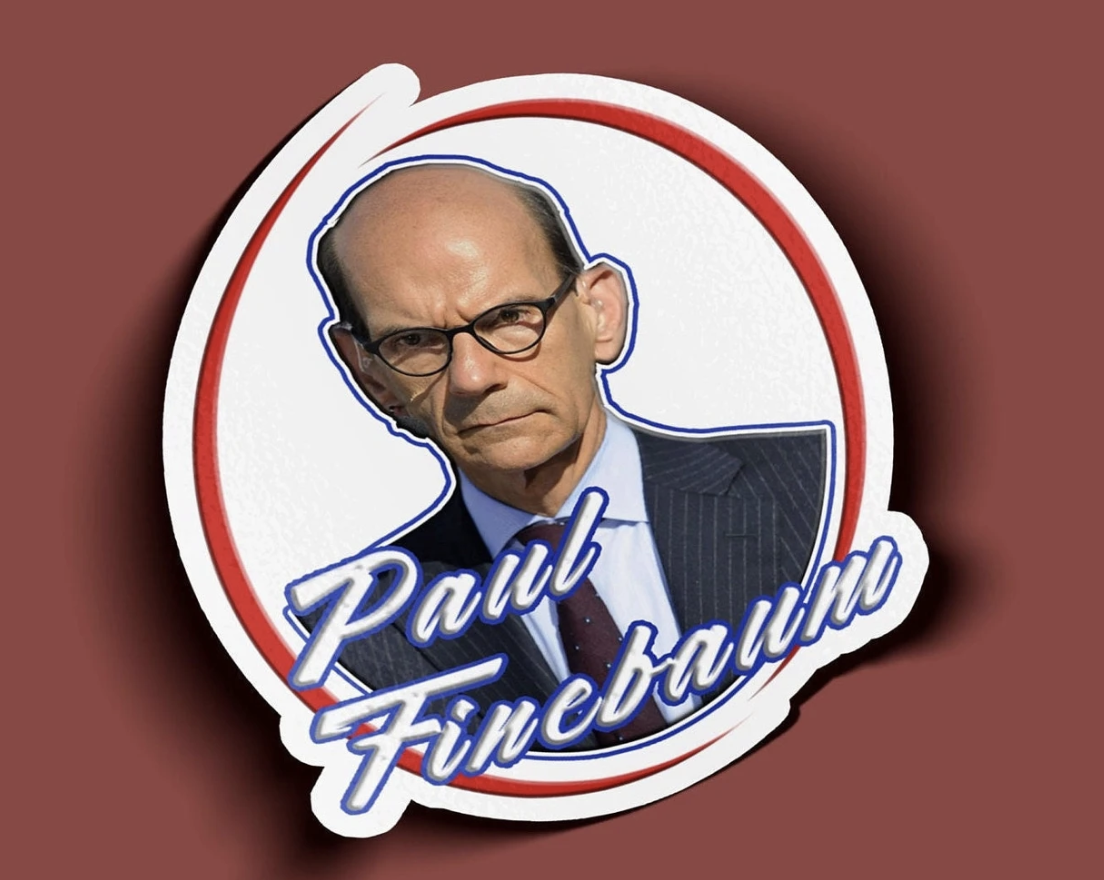
Sports analyst Paul Finebaum is often called the voice of Bible Belt football, but he has never had the luxury of preaching to one choir.

The war between Auburn University and the University of Alabama has, for example, verged on a crusade with fans so devoted some seem possessed. In the most infamous moment on "The Paul Finebaum Show, "Al from Dadeville (Harvey Updyke)" offered this explanation for his poisonous attack that killed Auburn's hallowed Toomer's Corner oak trees: "I just had too much 'Bama in me."

But there's more to Finebaum's ESPN flock than Southeastern Conference shouting matches. He often allows regular callers -- "Squirrel," "I-Man," "Jim from Tuscaloosa," the late, beloved Tammy "War Damn Eagle" Bullard -- to veer into commentary about grief, health issues, personal tragedies and answered prayers.

"Paul Finebaum truly listens to what Americans have to say, and as a result he hears a lot of God talk," noted Michael Schmitz, editor of Compact, an online magazine that blends progressive economics with cultural conservatism.

Writing for First Things, he added: "On a recent show, Legend -- known for his bravura calls and the fifteen years he spent in prison for murdering his cousin -- reassured listeners that he was fine after being unceremoniously ejected from the SEC's media days. 'I've actually really been being blessed by the Lord.' … He also admitted that he may have been at fault for the recent dustup. 'Pride and ego, those are horrible things. I asked God to deal with me.'"

Yes, some of this may be a sign that talk-radio listeners are often old, retired or in jobs -- truckers, for example -- with time to ponder the puzzles of daily life. When Southerners testify about suffering and their own mortality, these are rarely secular subjects.
Among Southern Baptists, as well: More adults are converting, and getting baptized

Among Southern Baptists, as well: More adults are converting, and getting baptized

Back in the Southern Baptist Convention's boom years, from the 1960s to 2010, the experts charting baptism statistics divided "children" into three groups -- starting with those under age 6.

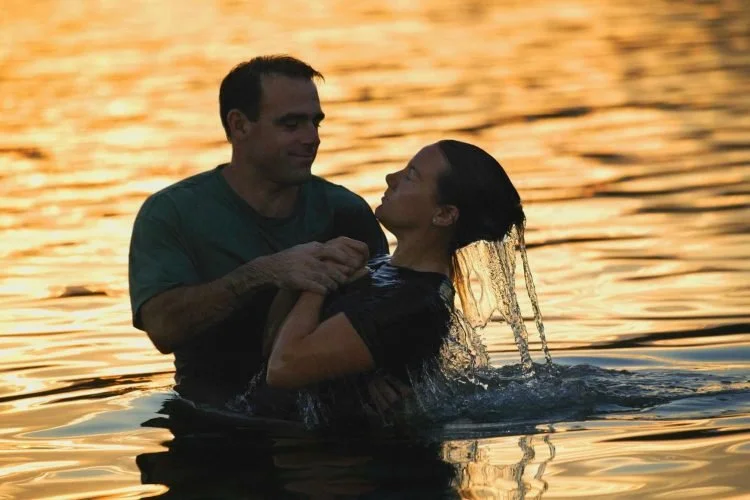
Behind the scenes, there were discussions about when children reached the "age of accountability" and could make mature professions of faith in Jesus Christ, leading to "believer's baptism" by full immersion in water. As with many other doctrinal issues, this was settled by local-church leaders. The same was true when adults asked to be rebaptized, for various reasons.

"At the end of the day, when someone says they've decided to give their life to Christ, the local church is going to let them symbolize that by being baptized," noted Scott McConnell, executive director of Lifeway Research. "That's what Baptists do. That's who we are."

Obviously, Baptists pay close attention to baptism statistics, along with trends with church attendance and membership. In a new report, Lifeway dug into Southern Baptist Convention Annual Church Profile numbers for 2025 and reported that baptisms rose for the fifth consecutive year.

Baptist leaders quickly noted another current trend -- adults 30 and older represented 33% of all baptisms. That was higher than the baptism of those 12-17 (25%), children before age 12 (22%) and young adults between 18-29 (20%). In the past, it was common for the baptism of minors to be two-thirds of the total, noted McConnell, reached by telephone.

The "seismic development" in these numbers is the consistently rising number of conversions among Americans over age 18, noted the Rev. R. Albert Mohler, Jr., president of Southern Baptist Theological Seminary in Louisville, Kentucky.

Was British politico Ann Widdecombe murdered because of her Catholic beliefs?

Was British politico Ann Widdecombe murdered because of her Catholic beliefs?

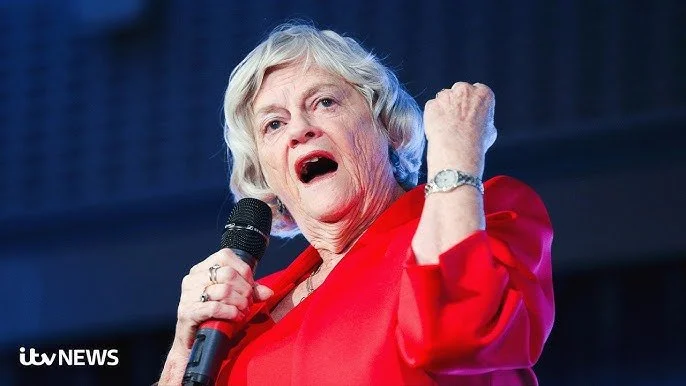
In her student days, Ann Widdecombe's first Oxford Union presentation was an attack on censorship, even if practicing free speech turned out to be risky or painful.

A half century later, the former Conservative MP and outspoken Catholic returned to the legendary debate club to address the same subject, at one point explaining why she once agreed to share a speaker's platform with an Irish Republican Army activist.

"So, you wanted to blow me up," Widdecombe said in 2019, referring to the 1984 Grand Hotel bombing in Brighton, England, that killed five people and injured 31. The target was Prime Minister Margaret Thatcher and the assembled Conservative Party conference.

Widdecombe said the IRA supporter responded: "Well, I didn't want to do it myself."

Enemies of free speech are "snowflakes and totalitarians," said Widdecombe, in the brash style that made her one of England's most loved, and hated, public figures. "Nobody has the right to live their lives being protected from offense, or from insult, or from hurt feelings. It is an occupational hazard … and if you really cannot take it, become a hermit."

Widdecombe, 78, was found dead on July 9 after what police first called a burglary that led to murder. The case is now being investigated as terrorism. The accused attacker drove nearly 300 miles to her isolated Devon home, where he struck her in the head 21 times with a hammer during an encounter that appears to have lasted two minutes.

A key question: Was she killed because of her beliefs?

"She was the most prominent British Catholic politician whose faith actually informed her politics," noted philosopher Joseph Shaw, of the Catholic Answers organization.

Can Christian colleges 'keep the faith' or is avoiding compromise impossible?

Can Christian colleges 'keep the faith' or is avoiding compromise impossible?

As America's second-oldest Lutheran college, Roanoke College in Virginia's Shenandoah Valley proclaims that it is "never sectarian" in outlook, while maintaining that "critical thinking and spiritual growth" are essential.

The online spiritual-life page also offers this advice: "We encourage you to follow your own personal spiritual path while here at Roanoke." The collage "honors its Christian heritage" and its affiliation with the progressive Evangelical Lutheran Church in America by stressing "dialogue between faith and reason," according to its "Mission & Vision" statement. "Diversity, inclusion and belonging" are strategic goals.

These commitments are "so informal that it's hard to call them doctrinal commitments at all," said Robert Benne, a retired Roanoke College professor who founded its Benne Center for Church and Society. "This is what you see in many Christian colleges. … These vague commitments go along with efforts to embrace whatever is happening in modern culture."

This isn't unusual, he stressed, after studying trends in Christian higher education for decades. In the post-pandemic marketplace, an increasing number of small private schools -- religious and secular -- face economic and enrollment challenges that threaten their futures.

Leaders of many Christian colleges and universities face a painful question as they try to stay alive: When seeking students and donors, should administrators strengthen ties to denominations or movements that built their schools or weaken the ties that bind in order to reach outsiders and even secular students?

The Rev. Pat Robertson: The prophet of the post-denominational age in America

The Rev. Pat Robertson: The prophet of the post-denominational age in America

The Pat Robertson for President advance team made it clear that journalists were barred from its campaign rally in a church near Denver.

The candidate wanted friendly faces. As one volunteer said: "What Pat might have to say to a group of pastors … might not be the kinds of things he'd want mainstream Republicans to read in the press."

The faithful inside that 1988 event raised their hands in praise to God and sang familiar choruses with a true believer that they knew shared their embrace of miracles, prophecy and "speaking in tongues." That kind of trust fueled Robertson's media-driven career, which ended on June 8 with his death at age 93.

Yes, I was on the outside of that door, researching my very first syndicated "On Religion" column. Before Robertson arrived, supporters prayed for a "special anointing" of God's power on their candidate. There is the kingdom of heaven, and there is the kingdom of the earth, one man prayed. "We thank you for men of courage, like Pat Robertson, who are working to bring these two kingdoms closer together," he added.

Robertson avoided blunt faith language when facing the press during that high-wire political campaign. However, he kept blending subtle biblical references into remarks about economics, foreign policy and hot cultural issues. He knew fans of his daily 700 Club broadcasts could break the code.

"Robertson had his own program. He knew he could say whatever he wanted to say there," said Kenneth Woodward, known for decades of work at Newsweek and books such as "Getting Religion: Faith, Culture and Politics from the Age of Eisenhower to the Era of Obama."

On one level, "he didn't need to talk to the press because he could talk straight to his own people. But that doesn't always work in politics, when you need to reach other people in order to succeed," said Woodward, reached by telephone.

Once Robertson veered into politics, his critics paid closer attention to what he said, about almost anything. In an online First Things essay, Woodward noted that this included 700 Club prayers in which Robertson -- "his eyes squeezed tight for inward gazing" -- said he could sense that viewers were being healed.

Flashback to 'catacomb' Masses after Pope Francis crackdown on the Latin Mass?

Flashback to 'catacomb' Masses after Pope Francis crackdown on the Latin Mass?

It's easy for religious leaders to create new laws, but it's harder to convince believers to follow them.

At least, that's what the Benediction monk Gratian -- a canon law pioneer -- argued in the 12th century: "Laws are established when they are promulgated. … They are confirmed when they have been approved by the long term and reasoned acceptance of those who observe them."

Anyone doubting this wisdom should study Catholic social media, noted Cardinal Walter Brandmuller, the 92-year-old former leader of the Pontifical Committee for Historical Sciences. There has been a "hurricane" in the "blogger scene and other media" in response to Traditionis Custodes ("Guardians of the tradition"), the effort by Pope Francis to bind those who celebrate the traditional Latin Mass.

When confusion surrounds a new "ecclesiastical law" -- as opposed to scripture and "natural law" doctrines -- it's important to remember that its "validity … ultimately depends on the consent of those affected by it," wrote Brandmuller, at Kath.net in Germany.

"The law must serve the good of the community, and not vice versa. … If a law is not observed, or is no longer observed, whether from the beginning or after a time, it loses its binding force and becomes obsolete."

The pope's declaration has unleased waves of grief among supporters of the now retired Pope Benedict XVI and his apostolic letter Summorum Pontificum ("Of the Supreme Pontiffs"), which claimed the post-Vatican II Novus Ordo was the "ordinary form" for the modern Mass, but that the older Tridentine rite was an "extraordinary form" that could be encouraged.

This fight is "not really about rites at all, wrote Father Raymond J. de Souza, at First Things. It's about Catholic life in the age of the Internet. The Mass is the message."

The question is how Pope Francis will apply his ruling that the modern Mass is now the "unique expression" of the Catholic "lex orandi" (the law of what is prayed). Will this affect Byzantine liturgies used by Eastern Rite Catholics or rites approved for former Anglicans?

Memory eternal: Farewell to the sharp pen of Father Paul 'Diogenes' Mankowski

Memory eternal: Farewell to the sharp pen of Father Paul 'Diogenes' Mankowski

For millions of Americans, "The Battle Hymn of the Republic" is as familiar as the national anthem and much easier to sing.

Few would need help with: "Mine eyes have seen the glory of the coming of the Lord. He is trampling out the vintage where the grapes of wrath are stored. He has loosed the fateful lightning of His terrible swift sword. His truth is marching on! Glory, glory, Hallelujah! … His truth is marching on!"

During 1990s fights over updated Catholic liturgies, a Semitic languages professor at Rome's Pontifical Biblical Institute wrote a Battle Hymn for modernists.

This "sanitized" text -- "chanted to no tune in particular" -- declared: "I see God's approach; it is good. God makes wine with God's feet. … Brightness flashes from the decision-making apparatus. God's worldview is currently earning widespread respect. Give honor repeatedly to the god of our tradition. We have owned our values."

Father Paul V. Mankowski put his own name on that First Things piece, since it didn't lance specific institutions or leaders. For decades, Catholics seeking his satirical work learned to look for "Diogenes" at CatholicCulture.org or "Father X" elsewhere.

Mankowski died on September 3 at age 66, felled by a ruptured brain aneurysm. Raised in a middle-class Rust Belt family, he worked in steel mills to pay tuition at the University of Chicago. His advanced degrees included a master's from Oxford and a Harvard University doctorate.

Many researchers, politicos and journalists (like me) knew him through telephone calls and emails, usually seeking documents and statements from nearby Catholic leaders. He was a rarity in the modern age -- a Jesuit conservative -- and his superiors eventually ordered him not to address church controversies. Much of his work was published anonymously or using pen names.

Princeton University's Robert P. George blitzed through years of emails, after hearing about Mankowski's sudden death.

"There are some doozies -- especially the spoofs, send ups and parodies," said George, on Facebook. "His wit was a massive quiver full of poison-dipped arrows, and he was a master archer. … He would not give a pass to fools, frauds, charlatans, hypocrites, rent seekers, time servers, racketeers, manipulators, corrupt scholars, false teachers or weak or craven leaders, especially in the Church."

Conspiring to keep some Advent spirit alive, while waiting for the real Christmas

Conspiring to keep some Advent spirit alive, while waiting for the real Christmas

The children kept asking a logical question in Sunday school, one linked to those "Whose birthday is it?" appeals voiced by "Put Christ back in Christmas" activists.

Leaders of Ecclesia Church in Houston were trying to find ways to encourage members to observe the four solemn weeks of Advent (Latin for "toward the coming"), which precede the Christmas season, which begins on Dec. 25 and then lasts for 12 days.

"The children pushed this thing to another level," said the Rev. Chris Seay, pastor of this nondenominational flock in the trendy Montrose neighborhood near downtown. The church, which draws around 3,000 each weekend, was created by a coalition of Baptists, Presbyterians and others.

The question the children asked, he said, was this: " 'If Christmas is Jesus' birthday, then he should get the best gifts. Right?' … Once you ask that, it has to affect what we do as a church and what we do as families. If you start thinking that way, it changes just about everything we do at Christmas."

That shift led to efforts -- part of a national "Advent Conspiracy" campaign -- to raise money to provide safe water for suffering people around the world. The basic equation: If Americans spent $450 billion a year on Christmas, then why can't believers funnel some of this gift-giving into efforts to save others?

Ecclesia, an urban flock that includes poor and rich, is trying to raise about $1 million. That would be 30 percent of its annual budget, noted Seay, a total that will require major changes for many church members. The bottom line: "Advent Conspiracy" pastors are asking people to find ways to use the four weeks of Advent to prepare for Christmas as a holy day, rather than queuing up for America's blitz of holiday shopping, partying and decorating -- starting around Halloween.

This also means paying attention to ancient traditions that have shaped the church calendar, if not the shopping mall calendar.

Seeking Christian solidarity in, for starters, a few American voting booths

Seeking Christian solidarity in, for starters, a few American voting booths

Michael Maturen is a Catholic writer, a businessman, a grassroots political activist, a former evangelical Anglican priest and a professional magician.

Seeking the presidency of the United States may not have been the next logical move for this self-proclaimed "nobody" from the tiny town of Harrisville, on Lake Huron in Northeast Michigan.

"I'm a magician, I sell cars and I'm running for president," said Maturen, laughing. "I am not delusional. People in the American Solidarity Party don't think we can win the presidency. Our goal is to promote the ideas behind our party and the idea that it's time to change our political system. … Two parties are not enough when you look at the reality of modern America."

This would have been more obvious if the party's founders had kept its original name, as in the Christian Democracy Party-USA. That would have linked it to major political parties -- primarily in Europe and Latin America -- with the "Christian Democrat" label.

Maturen said the name was changed because, while the party is built on Catholic social teachings, America has become such a diverse culture. The new name does offer a nod to Saint Pope John Paul II and Poland's Solidarity movement.

"Lot's of people are pretty disgusted with where we are in America," said Maturen. "What changed my own thinking was the ugliness of this election cycle. As a simple matter of ethics, I knew that I couldn't support Donald Trump and, since I am pro-life, I knew I couldn't vote for Hillary Clinton."