Politics

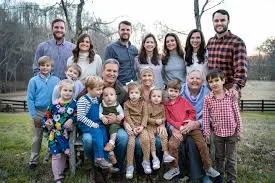
Chris Pratt and Ben Sasse discuss family life, faith and Hollywood's idols

Chris Pratt and Ben Sasse discuss family life, faith and Hollywood's idols

Superstar Chris Pratt was enduring a messy, painful time in his life when he was selected to receive the MTV Network's 2018 Generation Award, saluting his impact on popular culture.

Pratt decided to take a leap of faith, during his on-camera remarks.

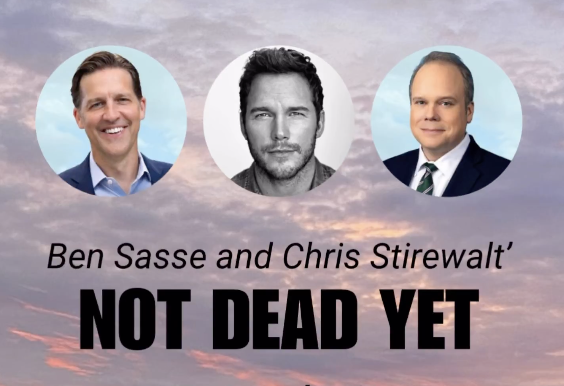
"I'm going to say to this young generation the things that I want to say," he said, in a recent appearance on the "Not Dead Yet" podcast cohosted by former U.S. Sen. Ben Sasse and political analyst Chris Stirewalt. "God has saved me multiple times. I'm gonna put my money where my mouth is and stand on this stage and say this to these folks. And so, I did it."

The star of Guardians of the Galaxy, the Jurassic Park reboots and myriad blockbusters -- grossing more than $14 billion globally -- outed himself as a Christian. His advice included, for example, "Learn to pray. It's easy, and it's so good for your soul" and "God is real. God loves you. God wants the best for you. Believe that. I do."

This immediately fueled speculation about how his faith would affect his cultural clout. Then, in 2020, Pratt started Indivisible Productions, with a nod to the phrase "one nation under God, indivisible" in the Pledge of Allegiance. The company's mission is to "create entertaining content, focusing on themes which will help to bridge the growing divide in our country and world."

Pratt said it's hard to look at American life right now without feeling worried and grateful, at the same time.

"I've got to be careful about this because I love America," he said. "I believe in God's providence that, you know, we have something really extraordinary here. And I love Hollywood as well. I love movies." However, he added: "As human beings, our hearts are designed in such a way that we have a spot reserved in them to be in awe of God."

Truth is, he added: "I work in a business where we create idols. And we worship them. And no one is worthy of worship. And so not only do we create idols to worship, we create idols to burn. … It's not an indictment on the system that they would look at me and say, 'You know what, he said this, so let's burn him.'"

Another year on the religion beat: The great Russell Shaw on secrecy in Catholic life

Another year on the religion beat: The great Russell Shaw on secrecy in Catholic life

In the spring of 1972, Catholic bishops gathered in Atlanta for an historic event -- their first gathering under a policy that would allow journalists inside the doors of their meetings.

Cardinal John Krol of Philadelphia, the conference president, promised to honor the policy approved by the bishops, which did allow many sensitive topics to be discussed during closed executive sessions.

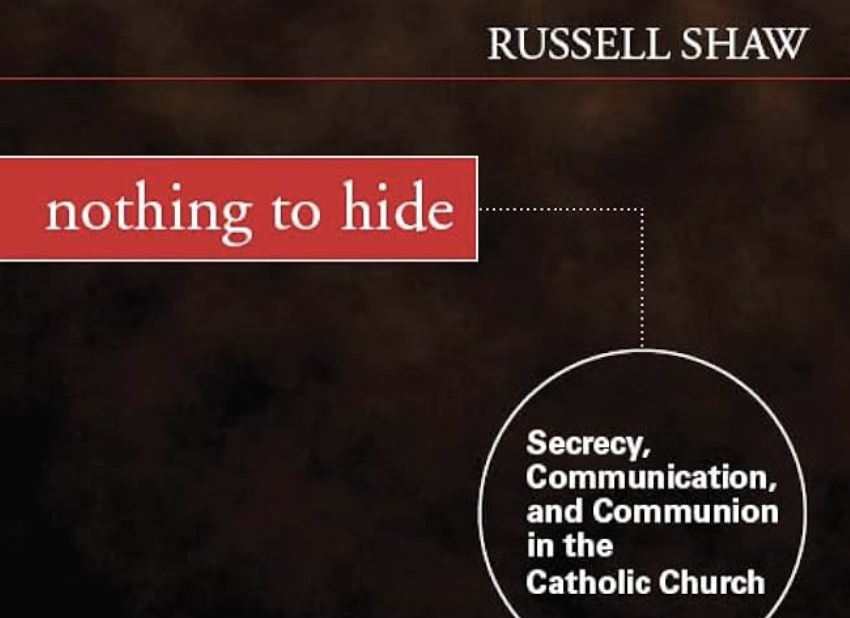
"Cardinal Krol managed to get his own back, after his own fashion," wrote journalist Russell Shaw, in his book "Nothing to Hide: Secrecy, Communication and Communion in the Catholic Church." He served, with different titles, as press aide for the bishops from 1969-1987 and wrote more than 20 books and thousands of articles for Catholic and mainstream publications.

"At the start of the meeting, after the bishops had prayed and taken care of preliminaries, the cardinal rose to speak. He spoke rapidly and at length -- in Latin! Nervous coughing and shuffling of papers could be heard from the press section."

Eventually the cardinal faced the journalists, with what Shaw called a "wicked grin." Krol quipped: "We told you we'd let you in. We didn't tell you what language we'd speak."

Krol was a conservative, but progressives have used similar tactics. I once asked Cardinal Joseph Bernardin of Chicago, after tense debates about the morality of nuclear weapons, if several bishops -- by switching to Latin at key moments -- had "launched a preemptive strike" on newspaper headline writers. He smiled and said, "Yes."

This past week marked the start of my 38th year writing this "On Religion" column, and I spent 20 years leading GetReligion.org, a website that critiqued mainstream coverage of religion news. Over the decades, I had many encounters with Shaw and his January death, at age 90, reminded me that choices made by powerful clergy, as well as newsroom managers, often determine what news makes it into print.

One story loomed over Shaw's career more than any other -- decades of hidden and then public scandals about the sexual abuse of children, teens and adults by Catholic clergy.

King Charles III and the dangers of talking about Easter

King Charles III and the dangers of talking about Easter

In western Christian churches, the highest holy day on the liturgical calendar is Easter -- the Solemnity of the Resurrection of the Lord.

A year ago, King Charles III, in an Easter message that made little news, proclaimed that the love Jesus showed "when he walked the Earth reflected the Jewish ethic of caring for the stranger and those in need, a deep human instinct echoed in Islam and other religious traditions. …

"The abiding message of Easter is that God so loved the world -- the whole world -- that He sent His son to live among us to show us how to love one another, and to lay down His own life for others in a love that proved stronger than death."

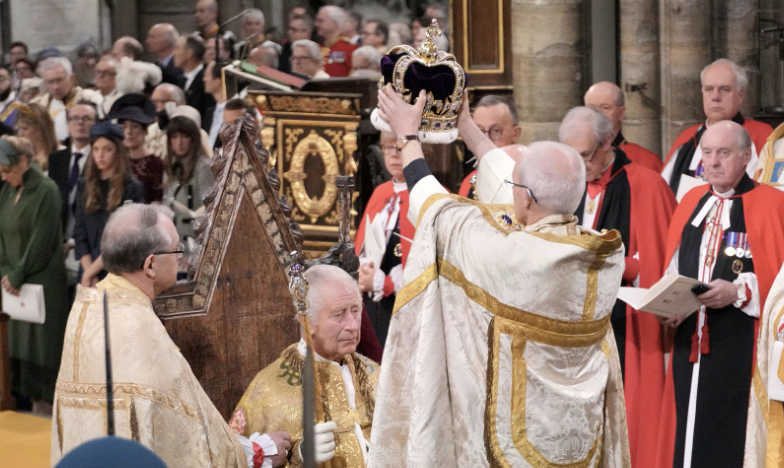
This year, Buckingham Palace made headlines when it confirmed that Charles III, the Supreme Governor of the Church of England, would not release a statement for Holy Week or Easter. While the monarch traditionally addresses the public at Christmas, Easter messages have not been the norm.

This news shocked many Christian leaders, since the king had just offered statements marking the beginning and end of Ramadan, the month of fasting and prayer for Muslims.

Adding fuel to the fire, a protester sprayed "Not our King" in red paint on a wall of the ancient Cathedral of Saints Asaph and Cyndeyrn in Wales before the arrival of King Charles and Queen Camilla for a Maundy Thursday rite during Holy Week.

The Royal Family did release a short Easter message on social media, showing a cross, the message, "Happy Easter. He is risen!" and a caption wishing "a joyous Easter Sunday to Christians celebrating in the UK, the Commonwealth and around the world today."

It's fair to ask how the king expected the public to interpret both his actions and what could be seen as strategic silence, said Gavin Ashenden, a convert to Catholicism who, as a priest in the Church of England, served as chaplain for Queen Elizabeth II from 2008-2017.

It would have been consistent for Charles to issue remarks about Great Lent, as well as Ramadan, since the fasting and prayer themes in these seasons are similar, wrote Ashenden, on his "New English Catholic" website.

Concerning that Ash Wednesday exit interview by former Sen. Ben Sasse

Concerning that Ash Wednesday exit interview by former Sen. Ben Sasse

On his 54th birthday, former U.S. Senator Ben Sasse of Nebraska was given a cake that proclaimed, "Happy last Birthday Ben!"

"I have the best friends," the senator wrote on February 22, his smiling face weary from chemotherapy as he held the cake in a social media post.

Two days before Christmas, Sasse released a letter stating, "Last week I was diagnosed with metastasized, stage-four pancreatic cancer, and am gonna die." He recently offered an update in a Hoover Institution interview timed for Ash Wednesday, when millions of Christians are marked with an ash cross on their foreheads, while hearing: "Remember that you are dust and to dust you shall return."

In December, doctors said he may have 90 days to live, which means he may not make it through Lent to Easter, which falls on April 5 this year, in Western churches.

Peter Robinson, host of the "Uncommon Knowledge" interview series, asked: "Instead of withdrawing from the world, you are throwing all that you have left into it. How come?"

"I'm with Paul when he says, 'To live is Christ, to die is gain,' " said Sasse, quoting the Epistle to the Philippians. "Obviously, death is a wicked thief. I don't want it to happen, but we're mortals. …

"We don't build any storehouses that last. The things that matter and endure are human souls. … We should be neither triumphalists nor despairing. Nothing we build is going to last, but that doesn't mean nothing matters. The chance to love your neighbor and serve is a blessing."

Gov. Bill Lee of Tennessee offers a testimony on grief and renewal (with no politics)

Gov. Bill Lee of Tennessee offers a testimony on grief and renewal (with no politics)

There was nothing unusual about Tennessee Gov. Bill Lee meeting with Jelly Roll before pardoning him for the felony robbery and drug-related crimes in his past.

What the governor didn't realize was that they had met years earlier, when Lee offered a prison testimony about the impact of grief on his family. That audience included the future country-music superstar.

At the recent National Prayer Breakfast, Lee said the man previously known as Jason DeFord told him: "You don't remember me, but we met in 2008. …You were not the governor, and I was not Jelly Roll. And here we are, 17 years later."

Lee said his Jelly Roll reunion reminded him of truths he learned after his wife's fatal horse-riding accident in 2000.

"There are very few things in life that matter and we should be about them," he said. "I have a belief that within every human being, there's this innate sense that we all need a pardon. And there is only one who can grant that pardon, and He has to be asked. … His name is Jesus."

The governor was asked to be the keynoter on one day's notice. His testimony contrasted sharply with the politically charged atmosphere in recent prayer breakfasts. In fact, there are now two competing events, with many lawmakers attending a smaller U.S. Capitol event.

News after the larger Washington Hilton rite focused on President Donald Trump's claim that, "I've done more for religion than any other president," referring to his actions on religious-freedom issues at home and abroad.

"Why, oh God, why?" The question former Sen. Ben Sasse could have asked

"Why, oh God, why?" The question former Sen. Ben Sasse could have asked

It's the question believers have asked for centuries when wars threaten nations, storms ravage cities and diseases strike loved ones: "Why, oh God, why?"

Former U.S. Senator Ben Sasse of Nebraska, 53, elected not to ask that question in an X post just before Christmas that said: "I'll cut to the chase: Last week I was diagnosed with metastasized, stage-four pancreatic cancer, and am gonna die.

"Advanced pancreatic is nasty stuff; it's a death sentence. But I already had a death sentence before last week too -- we all do. I'm blessed with amazing siblings and half-a-dozen buddies that are genuinely brothers. As one of them put it, 'Sure, you're on the clock, but we're all on the clock.' Death is a wicked thief, and the bastard pursues us all."

Sasse served as a Republican senator from 2015 until his resignation in 2023, when he became president of the University of Florida. He left that job in July 2024, after his wife, Melissa, was diagnosed with epilepsy, while also wrestling with memory issues.

Before reaching the Senate, Sasse taught at the University of Texas, served in the Department of Health and Human Services for President George W. Bush and was president of Midland University in Fremont, Nebraska. Sasse has a Yale University doctorate in history and has written bestsellers such as "The Vanishing American Adult."

The timing of the Sasse announcement was more than symbolic, said Daniel Darling, director of the Land Center for Cultural Engagement at Southwestern Baptist Theological Seminary. Sasse noted that he was writing at the end of the Advent season, with its message of Christmas hope for this life and the next.

"To many, this may come across as pie-in-the-sky, a comforting myth that helps you get away from the cold, hard reality of death," wrote Darling, in The Dispatch. "But Christians really believe there is another world coming, that this broken reality will give way to a world made right by the one who made it."

Thus, Sasse's letter is important in an age in which "tech entrepreneurs publicly muse about transhumanist utopias" and some politicos embrace "the advancing Orwellian horror of 'death with dignity.'"

2025 headlines: The year of Pope Leo XIV and immigration fights with Donald Trump

2025 headlines: The year of Pope Leo XIV and immigration fights with Donald Trump

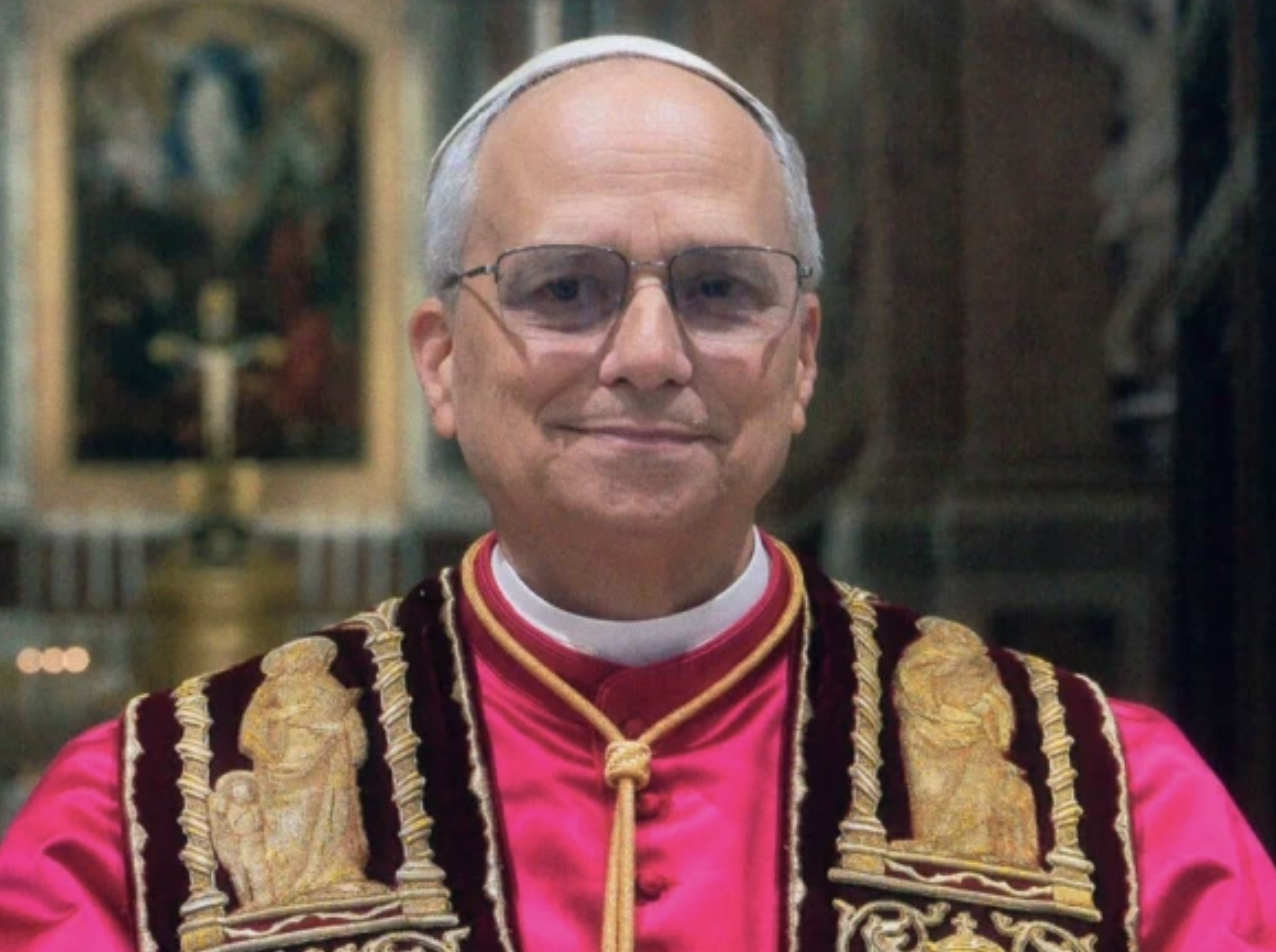
On Pentecost Sunday, Pope Leo XIV left few doubts about the issue he wanted listeners to ponder during this symbolic event early in his papacy.

"The Spirit opens borders, first of all, in our hearts," he said, in the June 8 sermon. He later added, "The Spirit also opens borders in our relationship with others," thus "opening our hearts to our brothers and sisters, overcoming our rigidity, moving beyond our fear of those who are different."

Finally, he stressed: "The Spirit also opens borders between peoples. …Where there is love, there is no room for prejudice, for 'security' zones separating us from our neighbors, for the exclusionary mindset that, tragically, we now see emerging also in political nationalisms."

For members of the Religion News Association, this was the kind of dramatic appeal that made the Chicago native the top Religion Newsmaker of 2025. The runner-up was Democratic Socialist Zohran Mamdani, who was elected as New York City's first Muslim mayor. The assassinated evangelical activist Charlie Kirk placed third.

The top U.S. religion news story was a tie between the papal election and ongoing debates about President Donald Trump and immigration. The poll stressed the White House call for "sweeping deportations of immigrants lacking legal status. … Catholic bishops and other faith-based groups protest and report parishioners avoiding worship for fear of arrest."

The rise of Pope Leo XIV was the top 2025 international religion story, with the death of Pope Francis finishing second.

In November, the U.S. Conference of Catholic Bishops overwhelming approved a statement rejecting "a climate of fear and anxiety around questions of profiling and immigration enforcement. We are saddened by the state of contemporary debate and the vilification of immigrants." They condemned the "indiscriminate mass deportation of people."

While backing the U.S. bishops, Pope Leo told journalists outside Castel Gandolfo: "No one has said that the United States should have open borders. I think every country has a right to determine who and how and when people enter." Still, he criticized what he called "extremely disrespectful" or "inhuman" treatment of long-term immigrants who are living productive lives.

Are the massacres in Nigeria "old news"? Not to the pastors who bury the dead

Are the massacres in Nigeria "old news"? Not to the pastors who bury the dead

The Rev. Ezekiel Dachomo had every reason to be emotional as he stood in a shallow grave containing the corpses of 11 members of his Church of Christ in Nations congregation in Rachas village, located in central Nigeria.

"I am tired of mass burials! … Nigerian government came out and openly denied -- there is no massacre. There is no genocide of Christians in Nigeria and look at it today," he shouted, gesturing toward to machete-slashed bodies around him. "United Nations, I know you are watching me! American Senate, you are watching what I am doing! Special advisor to Trump, now, please, tell Trump to save our lives in Nigeria!"

The pastor's mid-October Facebook video went viral, joining years of social-media messages from Catholic, Protestant and secular human-rights activists responding to raids by armed Boko Haram and Fulani insurgents. Many of the attacks occur at Easter, Christmas and other holy days.

Responding to pleas from Republicans in Congress and religious conservatives, President Donald Trump sent this warning, via his Truth Social platform.

"If the Nigerian Government continues to allow the killing of Christians, the U.S.A. will immediately stop all aid and assistance to Nigeria and may very well go into that now disgraced country, 'guns-a-blazing,' to completely wipe out the Islamic Terrorists who are committing these horrible atrocities," warned Trump. "If we attack, it will be fast, vicious, and sweet, just like the terrorist thugs attack our CHERISHED Christians!"

During his first White House administration, Trump designated Nigeria as a Country of Particular Concern for tolerating religious freedom violations against Christians -- a stance dropped by President Joe Biden in 2021. Now, Trump has restored that designation, in part responding to appeals by the U.S. Commission on International Religious Freedom.

"Nigeria is the most dangerous nation on Earth to follow Christ," said a statement from House Appropriations Committee Chairman Tom Cole, Vice Chair Mario Díaz-Balart and Legislative Branch Subcommittee Vice Chair Riley Moore.

Concerning heaven, hell and the eternal prospects of President Donald Trump

Concerning heaven, hell and the eternal prospects of President Donald Trump

The U.S. Secret Service spotted the hunter's stand high in a tree near Palm Beach International Airport.

It's possible that it could be used to shoot invasive wildlife. Then again, this potential sniper's nest had a clear sightline to the departure stairs for Air Force One, when parked in its usual slot when President Donald Trump returns to Mar-a-Lago.

Obviously, Trump knows he has enemies who want to help him spend eternity in real estate infinitely hotter than South Florida.

"I'm not supposed to be here tonight," he told the Republican National Convention, days after an assassin just missed his head. When the crowd shouted, "Yes you are!", Trump responded, "I thank you, but I'm not, and I'll tell you, I stand before you in this arena only by the grace of Almighty God."

The president believes God saved his life for a purpose. That's interesting, considering his history of remarks doubting whether he is worthy of heaven.

During Trump's recent journey to Israel, a Fox News reporter asked if the Gaza ceasefire effort might open heaven's gates.

"I'm being a little cute. I don't think there's anything going to get me in heaven," said Trump. "I think I'm not maybe heaven bound. ... I'm not sure I'm going to be able to make heaven, but I've made life a lot better for a lot of people."

That question was linked to his August remarks about ending the bloodshed in Ukraine.

"If I can save seven thousand people a week from getting killed, that's pretty good," Trump said. "I want to get to heaven if possible. I'm hearing I'm not doing well. I hear I'm at the bottom of the totem pole. If I can get to heaven, this will be one of the reasons."