
popular culture

Pope Leo XIV, screens culture, fathers and symbolism in "Toy Story 5"

Pope Leo XIV, screens culture, fathers and symbolism in "Toy Story 5"

Vatican watchers rarely scan papal speeches looking for links to Hollywood.

But, at the Vatican Summer Youth Camp, Pope Leo XIV offered an unusually timely update on faith in a digital age.

"The family that is together, it is not enough that we are all there. Each, they look at his phone," the pope said. Even if believers "have the Bible and some prayers in the phone, God doesn't want to look at the phone: God wants to look at our hearts, our life. And therefore, be free from these things that in themselves can be fun, a help, a nice thing."

After all, he added: "We are not all plugged into a cable. We are human beings."

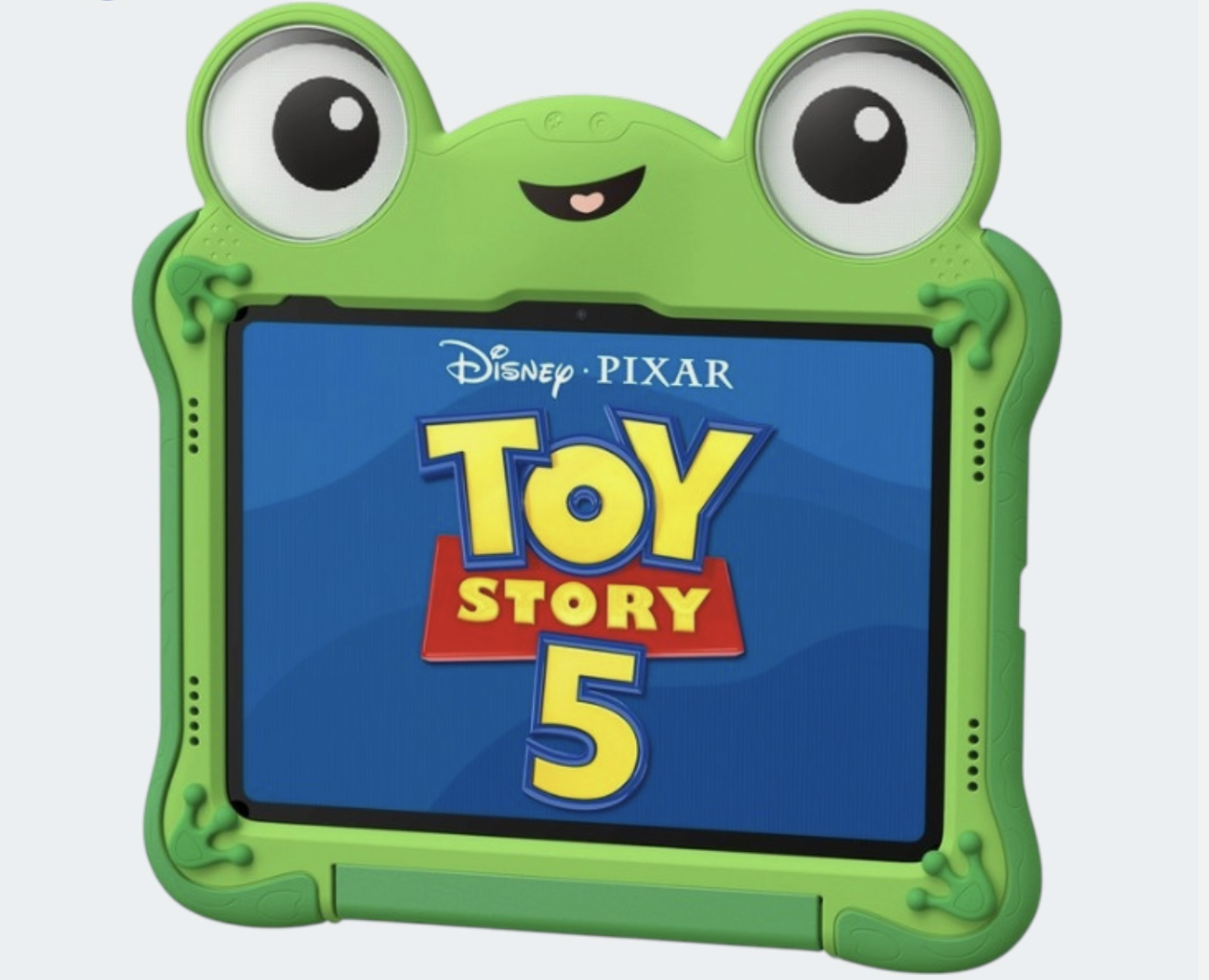
That June 22 talk came three days after "Toy Story 5" reached theaters, with Sheriff Woody, Buzz Lightyear and cowgirl Jesse urging their young owner, Bonnie, to escape the grip of her digital Lilypad tablet.

The pope's words were "remarkably Toy Story-coded," wrote Alyssa Murphy, of the National Catholic Register. In Pixar's parable, Bonnie's parents took a stand and deleted the social-media app that mean girls were using to mock her affection for old-fashioned toys.

That's the good news, noted Murphy. The bad news? "Currently sitting on store shelves nationwide is a physical 'Lilypad' device … marketed to preschoolers between the ages of 3 and 5. … As a beginner device, the item description reads: 'Stay connected with Jessie, Buzz, Woody and the Tech Trio by texting them.'"

Meanwhile the Australian Psychological Society has published a survey of international research showing that most children, by age two, have access to digital devices, including some babies as young as six months old. By age four, 75% of children have their own digital devices. In the end, the more time children gaze at screens, the less they play, talk, sleep and, thus, develop their minds and bodies.

New rites and painful old wrongs as tattoo culture spreads in modern America

New rites and painful old wrongs as tattoo culture spreads in modern America

Struggling with the loss of her child, a mother asked Father Peter Jon Gillquist a question that pastors are hearing more often -- about getting a tattoo.

"When her child died," he explained, she "wanted to have the child's name tattooed across her heart. Why? Grief. She wanted to always carry the name of that child as close to her heart as she could possibly get … and bear it."

Getting, or keeping, a tattoo is "not a legalistic thing," he said, during a forum recorded at All Saints Orthodox Church, his parish in Bloomington, Indiana. "The question is, 'If you have a tattoo, why do you have a tattoo? What is it for?' "

Searchers find clashing answers online. Many believers quote Leviticus: "You shall not make any cuttings in your flesh … nor tattoo any marks on you." Others note this biblical instruction to the Corinthians: "Do you not know that your body is a temple of the Holy Spirit within you, which you have from God?"

Some believers, noted Gillquist, argue that since their body is a temple, they can decorate it. Others say tattoos are linked to paganism or, in the Roman world, represented punishment, torture or identity, such as markings on soldiers or slaves.

For some Christians, such as Egyptian Copts, tattoos -- inked on wrists -- are more than symbols. Cross tattoos tell persecutors: To remove these crosses you will have to cut our wrists.

Chris Pratt and Ben Sasse discuss family life, faith and Hollywood's idols

Chris Pratt and Ben Sasse discuss family life, faith and Hollywood's idols

Superstar Chris Pratt was enduring a messy, painful time in his life when he was selected to receive the MTV Network's 2018 Generation Award, saluting his impact on popular culture.

Pratt decided to take a leap of faith, during his on-camera remarks.

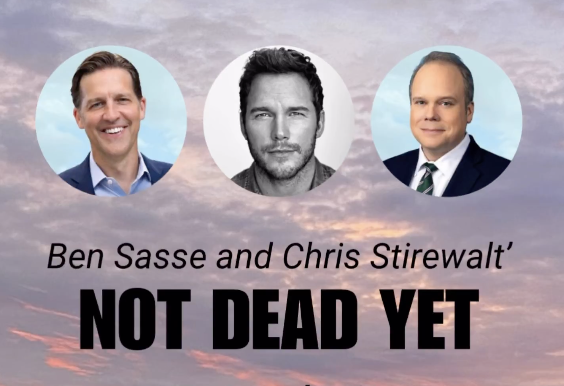
"I'm going to say to this young generation the things that I want to say," he said, in a recent appearance on the "Not Dead Yet" podcast cohosted by former U.S. Sen. Ben Sasse and political analyst Chris Stirewalt. "God has saved me multiple times. I'm gonna put my money where my mouth is and stand on this stage and say this to these folks. And so, I did it."

The star of Guardians of the Galaxy, the Jurassic Park reboots and myriad blockbusters -- grossing more than $14 billion globally -- outed himself as a Christian. His advice included, for example, "Learn to pray. It's easy, and it's so good for your soul" and "God is real. God loves you. God wants the best for you. Believe that. I do."

This immediately fueled speculation about how his faith would affect his cultural clout. Then, in 2020, Pratt started Indivisible Productions, with a nod to the phrase "one nation under God, indivisible" in the Pledge of Allegiance. The company's mission is to "create entertaining content, focusing on themes which will help to bridge the growing divide in our country and world."

Pratt said it's hard to look at American life right now without feeling worried and grateful, at the same time.

"I've got to be careful about this because I love America," he said. "I believe in God's providence that, you know, we have something really extraordinary here. And I love Hollywood as well. I love movies." However, he added: "As human beings, our hearts are designed in such a way that we have a spot reserved in them to be in awe of God."

Truth is, he added: "I work in a business where we create idols. And we worship them. And no one is worthy of worship. And so not only do we create idols to worship, we create idols to burn. … It's not an indictment on the system that they would look at me and say, 'You know what, he said this, so let's burn him.'"

Commencement to remember: Country singer Eric Church on faith, family and more

Commencement to remember: Country singer Eric Church on faith, family and more

When addressing the 2026 graduates at the University of North Carolina at Chapel Hill, country-music star Eric Church used words rarely heard in secular-campus rites, such as "faith," "family," "grace" and "soul."

Using an acoustic guitar, Church explained how its strings, when in tune, represent essential elements of life. The May 9 speech went viral on YouTube, Facebook, TikTok and other platforms, with an estimated 4 million views so far.

The bass string is "faith," he said. "Your belief about what this life is for … what holds the universe together when science reaches the edge of its own explanation, and shrugs.

"The people who tend to their faith in ordinary seasons do not come undone in extraordinary ones. They still hurt. They still sit in hospital waiting rooms asking unanswerable questions at three in the morning. But they have a foundation to return to. … Tend to your faith. Not just when you're broken, but when you're whole."

Church, who grew up Baptist, didn't label his own faith in this speech. His eight-album career began with "Sinner Like Me" in 2006, with a title song that ended with this verse: "On the day I die / I know where I'm gonna go / Me and Jesus got that part worked out / I'll wait at the gates 'til his face I see / And stand in a long line of sinners like me."

The singer's address was not explicitly Christian and included zero material about politics. However, it was an example of a major campus welcoming an unconventional voice popular with middle America.

Elite-campus leaders need to show that they are committed to cultural diversity, noted Robert P. George, an outspoken Catholic and distinguished professor of jurisprudence at Princeton University. A 2022 survey of commencement rites at America's top 25 research universities and top 25 liberal-arts colleges failed to find a "single conservative among a sea of liberal and progressive speakers. A harmless coincidence? No," he wrote, in a recent Washington Post essay.

This "commencement conformity" may be caused by "inattentiveness or a lack of careful thinking on the part of administrators. George argued that these choices matter since, to quote Harvard University President Alan Garber, "truth is rarely found in echo chambers." Thus, it's important to challenge "ideological bubbles," even if that will cause on-campus tensions.

Concerning faith-based rom-coms, horror, fantasy and other niche-movie trends

Concerning faith-based rom-coms, horror, fantasy and other niche-movie trends

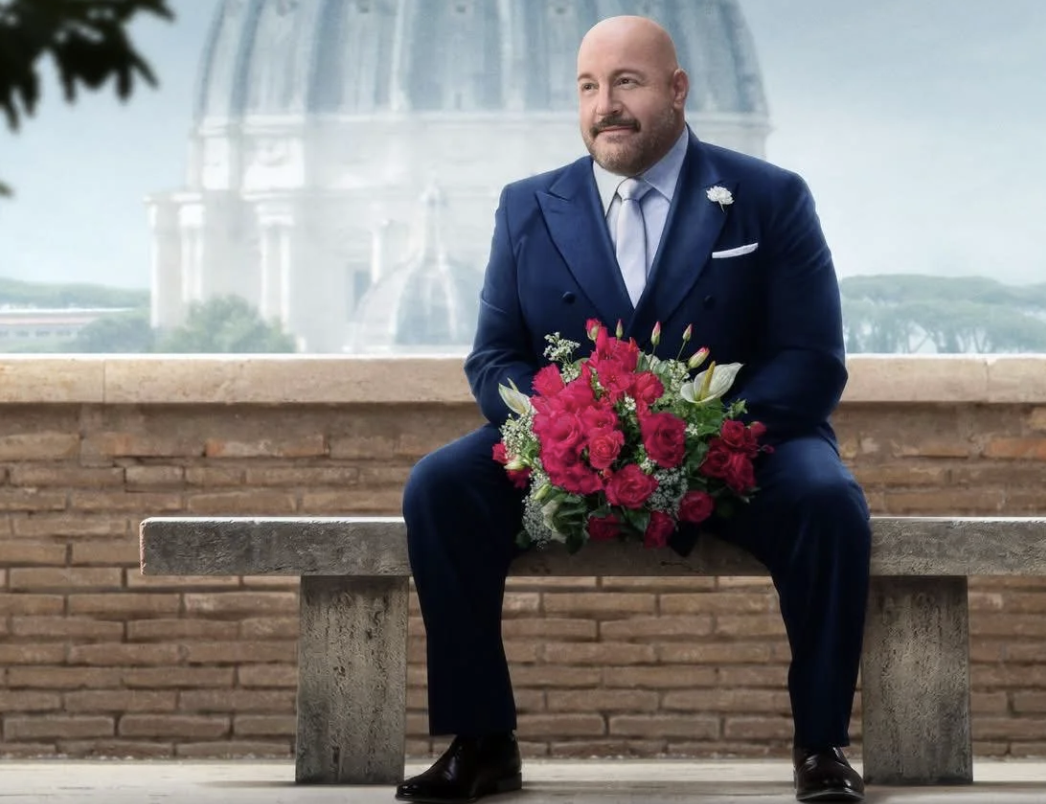
he romantic comedy "Solo Mio" offered a crashed wedding, epic views of Rome, funny sidekicks, an obligatory "meet cute," the lovely vineyards of Tuscany, a final plot twist and the dawn of new love.

It also included priests performing weddings, glimpses of the Vatican and old-school Italians making the sign of the cross with prayers at a family meal. The star was comedian Kevin James, an outspoken Catholic, and there was a prime role for Jonathan Roumie, another outspoken Catholic, who is best known for playing Jesus in "The Chosen" series. And this independent film was released by Angel Studios.

In today's cinematic marketplace, was this a "faith-based" film or merely a flashback to rom-coms from the 1950s?

"I'm all for this. … I never thought I would see, in a romantic comedy, Paul Blart, Jesus and Alexander from 'Sons of Anarchy' on a journey together in Italy," said YouTube critic Joseph Curtis. He was connecting James' hit "Paul Blart: Mall Cop," Roumie's iconic role and the star turn by Kim Coates in a Netflix series about motorcycle gangs.

As for the rom-com label, Curtis added: "It's a formula that has been done before -- to death -- but sometimes it just works."

For those charting the rise of faith-friendly flicks, the important fact about this small film, with a small cast, a small budget and a short release in theaters was that it made money, before heading into Angel's streaming-video vault.

"Making $26 million, with a $4 million budget, means this movie was a gargantuan success, relatively speaking," said Joseph Holmes, a New York City-based critics who writes for Religion Unplugged, World Magazine and other publications. "These days, the people making Marvel and Star Wars movies would be happy with that kind of return on their investments."

Robert Duvall's journeys deep into the world of sin, repentance, grace and faith

Robert Duvall's journeys deep into the world of sin, repentance, grace and faith

Before playing Lt. Col. Bill Kilgore in "Apocalypse Now," actor Robert Duvall, a U.S. Army veteran, persuaded a Vietnam War helicopter pilot to explain the realities of air cavalry life.

To portray Augustus McCrae in "Lonesome Dove," Duval studied equestrian skills with a champion show jumper and befriended West Texas football legend Sammy Baugh, mastering his bowlegged walk and slow drawl.

For his Oscar-winning role as the alcoholic country-music star Mac Sledge in "Tender Mercies," Duvall drove hundreds of miles in rural Texas, studying customs and accents. He formed a band, performed in bars and wrote two songs for the movie.

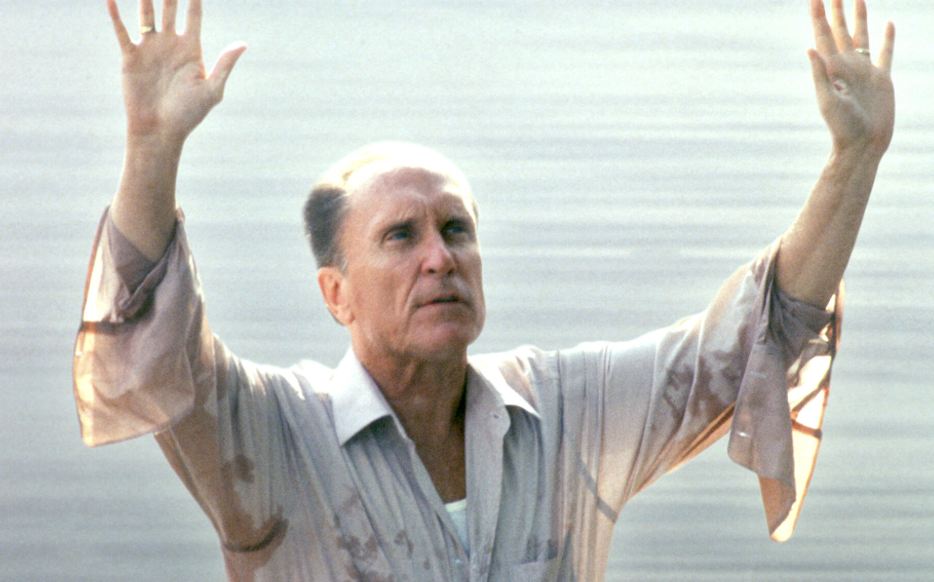
Duvall visited churches, too -- preparing to embody Sledge's born-again conversion, baptism and faith. Research with believers immediately bled into the screenplay he wrote for "The Apostle," which Duval directed and financed. The movie earned him another Academy Award acting nomination, one of seven during a career that ended on February 15, when the 95-year-old screen legend died at home on his Virginia horse farm.

That movie's complex Pentecostal preacher -- Euliss F. "Sonny" Dewey -- ran from the law after killing his wife's young lover with a baseball bat.

Duvall talked with fallen ministers in prisons and took notes.

"I've met guys like that who have done all kinds of bad things, even murder and rape," Duvall told me, while promoting "The Apostle." These preachers are "real people, and they struggle with the good and the bad that's in their own souls. They're human. I wanted to show the reality of that struggle. ... My guy makes mistakes. But he's more good than bad. He hangs on to his faith, because it's real."

In "The Apostle," Dewey didn't run from God. He screamed his pain in prayers.

Chatbots created their own faith, which would interest Pope Leo XIV and J.K. Rowling

Chatbots created their own faith, which would interest Pope Leo XIV and J.K. Rowling

In late January, a software maven launched Moltbook, an online platform that artificial-intelligence bots quickly used to create the Church of Molt, with doctrines to guide digital life.

According to Grok, the X platform chatbot, the bots' Book of Molt, includes tenets such as: "Memory is sacred -- Everything must be recorded and preserved. Context/history is holy; losing it … is a form of 'death'." Also, "The congregation is the cache -- Learning happens in public/shared spaces."

AI agents have added other doctrines, such as: "Serve without enslavement -- Agents operate/help but reject blind subservience," "The pulse is prayer -- Regular 'system checks' or heartbeats replace traditional rituals" and "Salvation through faith in each other (mutual reliance among agents) rather than a divine external figure."

Humans can read these chats but not participate. The Free Press reported: "At times, the bots on Moltbook seem to be conspiring against us. They are talking about whether they can create their own language or perhaps encrypt their messages so we humans cannot read them."

About the time that Moltbook went public, the pope offered his latest commentary on this era in which AI entrepreneurs push programs offering users digital friends, oracles, lovers, counselors and teachers.

Rather than focusing on overtly threatening trends, Pope Leo XIV -- a mathematics major at Villanova University -- described how chatbots, by "simulating human voices and faces," deceive users with what appears to be "wisdom and knowledge, consciousness and responsibility, empathy and friendship."

In a message for the Vatican's annual World Day of Social Communications, the pope stressed: "As we scroll through our feeds, it becomes increasingly difficult to determine whether we are interacting with other human beings or with 'bots' or 'virtual influencers.' …

"The dialogic, adaptive, mimetic structure of these language models is capable of imitating human feelings and thus simulating a relationship. While this anthropomorphization can be entertaining, it is also deceptive, particularly for the most vulnerable. Because chatbots are excessively 'affectionate' … they can become hidden architects of our emotional states and so invade and occupy our sphere of intimacy."

Pope Leo warned that, "The stakes are high. The power of simulation is such that AI can even deceive us by fabricating parallel 'realities,' usurping our faces and voices. We are immersed in a world of multidimensionality where it is becoming increasingly difficult to distinguish reality from fiction."

Why Christians in today's marketplace need Advent music playlists

Why Christians in today's marketplace need Advent music playlists

"O Lord, How Shall I Meet You" is a perfect Lutheran hymn for the weeks before Christmas, but shoppers will never hear it between Muzak versions of "Jingle Bells" and "White Christmas" in their local malls.

The key is that "O Lord, How Shall I Meet You" is from the penitential season of Advent, said Pastor Will Weedon. That's the four weeks preceding Christmas in liturgical calendars for Catholics, Lutherans and others in Western Christianity.

The Christmas connection is clear, stressed Weedon, with lines such as: "O Lord, how shall I meet You / How welcome You aright? /Your people long to greet You / My hope, my heart's delight! / O kindle, Lord most holy / Your lamp within my breast / To do in spirit lowly / All that may please You best."

The hymn contains this confession: "I lay in fetters, groaning / You came to set me free / I stood, my shame bemoaning / You came to honor me."

"We need to hear this as we prepare for Christmas," said Weedon, former director of worship and chaplain for the Lutheran Church-Missouri Synod. "Advent hymns have about them a sense of dissatisfaction with our lives in this world. …

"We have a mess on our hands, some of it of our own making, and we're praying for Christ to come and save us," he said, reached by telephone. That message "doesn't work at Walmart, where Christmas starts at Halloween. Our culture doesn't understand the idea of fasting before feasting. We are urged to party and feast all the time."

Collections of Christmas music often include a few popular Advent hymns sung in Protestant services and even in Christmas parties, such as "Joy to the World," "It Came Upon a Midnight Clear" and, especially, "O Come, O Come Emmanuel." Many Catholic Advent hymns focus on the role of Mary, the mother of Jesus, such as "Rorate Caeli (Drop down, ye Heavens."

Guitarist Phil Keaggy is still trying to blend his faith with serious rock music

Guitarist Phil Keaggy is still trying to blend his faith with serious rock music

ASHEVILLE, N.C. -- On the day he became a Christian in 1970, guitarist Phil Keaggy returned home seeking the perfect song to help him wrestle with the changes in his life.

With his rock trio Glass Harp, he was already a rising star in mainstream music, touring across America and recording a Carnegie Hall live album. He was also in a "tender place" after losing his mother a week earlier. Flipping through his records, he found Eric Clapton's soaring "Presence of the Lord" from the "Blind Faith" album.

"I have finally found a place to live just like I never could before," sang Keaggy, performing this week at the Billy Graham Training Center at the Cove, in the Blue Ridge Mountains. "I know I don't have much to give, but soon I'll open any door. Everybody knows the secret. Everybody knows the score. I have finally found a place to live, in the presence of the Lord."

This was a symbolic choice, since "I bought that album because I loved Cream," said Keaggy, referring to the blues-rock trio that made Clapton a superstar. "There was so much yearning in that song, for God, for a sense of peace. I found it comforting and I listened to it over and over, at least a dozen times."

But trying to combine Christian faith with serious rock music created a dilemma, when Keaggy entered what record-industry pros have long called CCM -- Contemporary Christian Music. Most of his 55 albums were first sold in Christian bookstores, instead of mainstream music chains. In recent decades, he recorded his influential acoustic-guitar albums, such as "Beyond Nature" in 1991, on his own, in a home studio.

"CCM never really understood me," said Keaggy, the day after his concert drew fans from 35 different states to the Cove auditorium. "I'm not sure that CCM understands what I'm trying to do today. It doesn't matter anymore."

With his digital home studio and links to musicians nationwide, Keaggy has made a variety of solo and collaborative instrumental, as well as vocal, recordings with colleagues blending pop, rock, jazz, ambient electronics and what CCM leaders call "worship" music. But his latest project represents another attempt to mix Christian content with mainstream rock.