

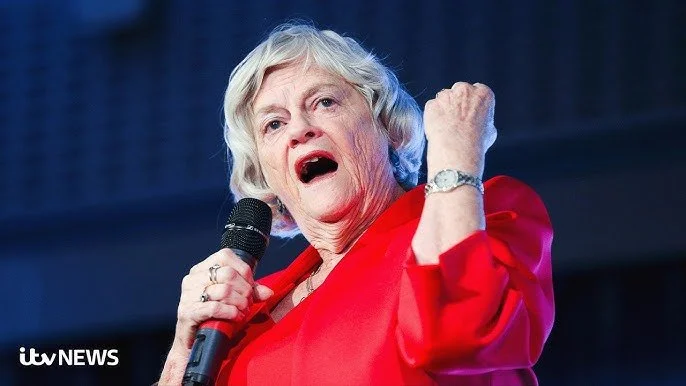
In her student days, Ann Widdecombe's first Oxford Union presentation was an attack on censorship, even if practicing free speech turned out to be risky or painful.
A half century later, the former Conservative MP and outspoken Catholic returned to the legendary debate club to address the same subject, at one point explaining why she once agreed to share a speaker's platform with an Irish Republican Army activist.
"So, you wanted to blow me up," Widdecombe said in 2019, referring to the 1984 Grand Hotel bombing in Brighton, England, that killed five people and injured 31. The target was Prime Minister Margaret Thatcher and the assembled Conservative Party conference.
Widdecombe said the IRA supporter responded: "Well, I didn't want to do it myself."
Enemies of free speech are "snowflakes and totalitarians," said Widdecombe, in the brash style that made her one of England's most loved, and hated, public figures. "Nobody has the right to live their lives being protected from offense, or from insult, or from hurt feelings. It is an occupational hazard … and if you really cannot take it, become a hermit."
Widdecombe, 78, was found dead on July 9 after what police first called a burglary that led to murder. The case is now being investigated as terrorism. The accused attacker drove nearly 300 miles to her isolated Devon home, where he struck her in the head 21 times with a hammer during an encounter that appears to have lasted two minutes.
A key question: Was she killed because of her beliefs?
"She was the most prominent British Catholic politician whose faith actually informed her politics," noted philosopher Joseph Shaw, of the Catholic Answers organization.