Baylor

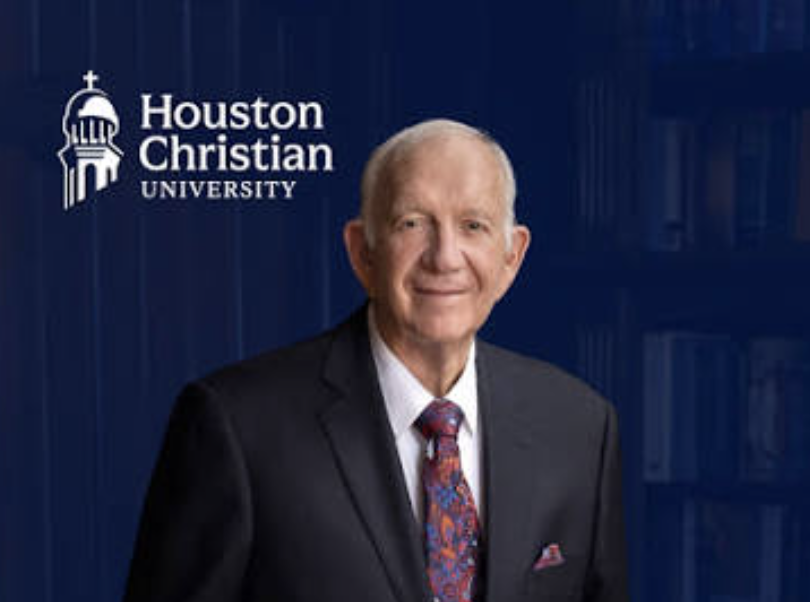
Memory eternal: Robert Sloan's final advice on Christian higher education

Memory eternal:  Robert Sloan's final advice on Christian higher education

Year after year, faith-based colleges produce waves of upbeat brochures, social-media appeals and videos for parents and their children.

The presidents of these institutions should study these materials closely, said Houston Christian University President Robert B. Sloan, Jr., at the January 2026 conference of the International Alliance for Christian Education

"All of the brochures in the world, declaring in glossy print the Christian claims of an institution, cannot overcome the failures of personnel to embrace, expound and affirm the Christian identity of the institution," said Sloan, who led Baylor University, his alma mater (and mine), before his 2006 move to Houston. "If the recruiting materials and fundraising newsletters do not match what really goes on in the classroom or in student life, you may expect not only disappointment but cynicism and, eventually, conflict."

Thus, presidents must have courage when hiring faculty, he stressed.

"When you hire someone," said Sloan, "you should never accept their mere consent, no matter how good their credentials are academically, to 'appreciate' or 'be sensitive to' your culture and character. I used to know of a situation where an interviewer would refer to the 'expectations of our constituents' and then ask, 'Are you all right with that?'"

Close is not good enough, stressed Sloan. It's crucial to learn, "Does the candidate want to be at an institution like yours? … Or do they simply want a job?"

Sloan's address -- 11 theses for Christian higher education -- was timely, after years of headlines about faith-based schools closing their doors as experts warned about a looming "enrollment cliff" due to falling birth rates. It was also symbolic because Sloan died on July 4, after suffering a stroke at age 77.

That plenary address "was the best presentation I have ever heard him give. It will serve as a guide for IACE and for all Christian higher education for years to come," said Southwestern Baptist Theological Seminary President David Dockery, writing for Baptist Press.

New rites and painful old wrongs as tattoo culture spreads in modern America

New rites and painful old wrongs as tattoo culture spreads in modern America

Struggling with the loss of her child, a mother asked Father Peter Jon Gillquist a question that pastors are hearing more often -- about getting a tattoo.

"When her child died," he explained, she "wanted to have the child's name tattooed across her heart. Why? Grief. She wanted to always carry the name of that child as close to her heart as she could possibly get … and bear it."

Getting, or keeping, a tattoo is "not a legalistic thing," he said, during a forum recorded at All Saints Orthodox Church, his parish in Bloomington, Indiana. "The question is, 'If you have a tattoo, why do you have a tattoo? What is it for?' "

Searchers find clashing answers online. Many believers quote Leviticus: "You shall not make any cuttings in your flesh … nor tattoo any marks on you." Others note this biblical instruction to the Corinthians: "Do you not know that your body is a temple of the Holy Spirit within you, which you have from God?"

Some believers, noted Gillquist, argue that since their body is a temple, they can decorate it. Others say tattoos are linked to paganism or, in the Roman world, represented punishment, torture or identity, such as markings on soldiers or slaves.

For some Christians, such as Egyptian Copts, tattoos -- inked on wrists -- are more than symbols. Cross tattoos tell persecutors: To remove these crosses you will have to cut our wrists.

Why those fierce, tribal wars over parental rights are not going to go away

Why those fierce, tribal wars over parental rights are not going to go away

The vague 22-word prayer from the New York Board of Regents was totally nondenominational: "Almighty God, we acknowledge our dependence upon Thee, and we beg Thy blessings upon us, our parents, our teachers and our Country."

A few parents protested, saying any kind of prayer -- even voluntary -- violated the rights of students from homes led by atheists, agnostics, or believers from other faiths.

In other words, the pivotal 1962 Engel v. Vitale school-prayer decision was a parental rights case. Schools had to change.

Two years ago, the Montgomery County Board of Education created a policy requiring pre-K and elementary students to read texts about LGBTQ+ life. A Maryland network of Muslim, Christian and Jewish parents protested, saying this violated their parental rights -- exposing their children to beliefs that clashed with beliefs in their own homes.

This spring, the 4th U.S. Circuit Court of Appeals rejected alternative activities for these students. Schools would not have to change -- for now.

"In the school-prayer cases, parents wanted to defend their children from state-mandated prayers and any exposure to religious faith. It was a matter of parental rights," noted philosopher Francis Beckwith, who also teaches Church-State Studies at Baylor University.

"Now the shoe is on the other foot, with the state preaching a different set of doctrines. If you pay close attention, the left is making arguments that are similar to those the right once made about prayer in public schools. ... The state says it wants children to become good Americans. The question is whether parents get to play a role in that. These battles are going to continue."

In another parental rights case that may reach the U.S. Supreme Court, California Gov. Gavin Newsom recently signed legislation banning policies that require public educators to tell parents if their children take steps, at school, to change their gender identities. The state wants to protect children who believe they are transgender from their own parents -- if parents' beliefs clash with what is taught at school.

Can Christian colleges 'keep the faith' or is avoiding compromise impossible?

Can Christian colleges 'keep the faith' or is avoiding compromise impossible?

As America's second-oldest Lutheran college, Roanoke College in Virginia's Shenandoah Valley proclaims that it is "never sectarian" in outlook, while maintaining that "critical thinking and spiritual growth" are essential.

The online spiritual-life page also offers this advice: "We encourage you to follow your own personal spiritual path while here at Roanoke." The collage "honors its Christian heritage" and its affiliation with the progressive Evangelical Lutheran Church in America by stressing "dialogue between faith and reason," according to its "Mission & Vision" statement. "Diversity, inclusion and belonging" are strategic goals.

These commitments are "so informal that it's hard to call them doctrinal commitments at all," said Robert Benne, a retired Roanoke College professor who founded its Benne Center for Church and Society. "This is what you see in many Christian colleges. … These vague commitments go along with efforts to embrace whatever is happening in modern culture."

This isn't unusual, he stressed, after studying trends in Christian higher education for decades. In the post-pandemic marketplace, an increasing number of small private schools -- religious and secular -- face economic and enrollment challenges that threaten their futures.

Leaders of many Christian colleges and universities face a painful question as they try to stay alive: When seeking students and donors, should administrators strengthen ties to denominations or movements that built their schools or weaken the ties that bind in order to reach outsiders and even secular students?

Young Sufi singer continues to face death sentence in Nigeria -- for song lyrics

Young Sufi singer continues to face death sentence in Nigeria -- for song lyrics

This much is clear: Kano State authorities in northern Nigeria accused the Sufi Muslim singer Yahaya Sharif-Aminu of circulating social-media messages containing lyrics they said attacked the Prophet Muhammad.

 What did the song say? It's impossible to find direct quotations, although his accusers say he sang praises for his Sufi faith and, thus, spread false teachings about Islam.

 Did Sharif-Aminu actually send those WhatsApp messages? Again, it's hard to separate facts from rumors backed by mob attacks.

But this much is clear: Sharif-Aminu was found guilty of blasphemy in 2020 by a regional sharia court and sentenced to death by hanging. He remains imprisoned, while human-rights activists around the world -- including the European Union parliament -- keep urging his release and the end of blasphemy laws.

"You're not sure, in many of these cases, what the person is actually accused of doing or saying because key people are afraid to discuss the details," said scholar Paul Marshall, who teaches at Baylor University in Waco, Texas, and lectures around the world. He is the coauthor of "Silenced: How Apostasy and Blasphemy Codes Are Choking Freedom Worldwide," with Nina Shea of the Center for Religious Freedom at the Hudson Institute in Washington, D.C.

The result is a deadly puzzle. Anyone who shares facts about blasphemy accusations may then be accused of spreading blasphemy. Depending on the time and location, any public opposition to blasphemy laws may be considered an act of blasphemy.

When did prayer become acceptable to NFL? When a crisis happened on live television

When did prayer become acceptable to NFL? When a crisis happened on live television

Super Bowls create media storms, but many journalists and sports executives thought what happened in 1988 was totally out of bounds.

The establishment was shocked when players and coaches from Denver and Washington, D.C., held a prayer meeting on the eve of this NFL rite. The powers that be worried that "fraternization" of this kind could damage this clash between gridiron warriors.

To make matters worse, players from competing teams soon began kneeling in post-game, on-field prayer huddles as a symbol of unity and, often, shared concerns about injured players. Players waved off league efforts to stop the prayer circles.

"For the NFL, this was a corporate thing," said historian Paul Putz, of Baylor University's Faith & Sports Institute. Executives are "fine with prayer, as long as it isn't tied to anything controversial or a specific brand of religion. …

"The NFL didn't mind prayers that were out of sight, maybe in locker rooms with chaplains. But then things started happening on television. That was too much."

That was then. The electric wave of prayer that swept America after Buffalo Bills safety Damar Hamlin's heart-stopping injury was, he said, a "critical mass" moment and a sign of changing times -- maybe.

The key was that this drama happened on "Monday Night Football," with anguished players from both teams huddled around Hamlin near midfield, many visibly praying, as first responders fought to save his life.

It was natural for broadcasters to acknowledge the explosion of social-media commentary from athletes, coaches and others -- including fervent calls for prayer. All 32 NFL teams soon posted #PrayForDamar appeals.

"We have never seen anything like this before," said Putz. It became clear that it "was OK to tweet messages that went way beyond the usual thoughts and prayers."

The question, added Putz, is what happens next.

Ties that bind: Elizabeth II symbolically linked her final rites to those of her husband

Ties that bind: Elizabeth II symbolically linked her final rites to those of her husband

During the private funeral of her husband, Queen Elizabeth II sat alone near the St. George's Chapel altar, socially distanced from her family and wearing a black pandemic mask.

This searing portrait of grief moved viewers worldwide. And as Prince Philip's casket was lowered into the Windsor Castle vault, singers chanted the Kontakion of the Departed, a tie to his Orthodox roots in Greece.

“Give rest, O Christ, to thy servant with thy saints," they sang, "where sorrow and pain are no more; neither sighing but life everlasting. … All we go down to the dust; and weeping o'er the grave we make our song: Alleluia, alleluia, alleluia."

Only 18 months later, Queen Elizabeth requested the same chant, in the same chapel. This time it marked the start of the committal liturgy which closed a 10-day wave of statecraft, vigils, memorials and processions preceding the majestic state funeral.

The queen's final, intimate Windsor Castle service began where her husband's had ended, as if one rite was flowing into another.

"Queen Elizabeth was one of those people in this mortal life who always thought ahead," said David Lyle Jeffrey, distinguished senior fellow at the Institute for Studies in Religion at Baylor University. When preparing these rites, the queen was "clearly looking for prayers, scriptures and hymns that made connections she wanted to make for her family, her people and the world. … I think she succeeded brilliantly."

An Anglican from Canada, Jeffrey said the events closing the queen's historic 70-year reign were an appropriate time to explore the "essence of her admirable Christian character." Thus, the retired literature professor wrote a poem after her death -- "Regina Exemplaris (An exemplary queen)" -- saluting her steady, consistent faith. It ended with:

"… She who longest wore the heavy crown / Knew but to kneel before the unseen throne / And plead her people's cause as for her own, / And there to praise the Lord of All, bowed down, / More conscious of his glory than her high acclaim, / Exemplar thus in worship, in praise more worthy of the Name."

Execution chaplain case offers rare sighting of 1990s left-right religious liberty coalition

Execution chaplain case offers rare sighting of 1990s left-right religious liberty coalition

Before putting his neck on the chopping block, King Charles I turned to his chaplain seeking personal peace after the chaos of the English Civil Wars.

The king was, on that infamous 1649 day, pondering heaven, hell and forgiveness.

“To show you that I am a good Christian," the king said, pointing to London Bishop William Juxon, "I hope there is a good man that will bear me witness that I have forgiven all the world, and even those in particular that have been the chief causers of my death. Who they are, God knows, I do not desire to know. God forgive them."

This isn't the kind of theology that ordinarily shapes U.S. Supreme Court decisions. Nevertheless, it was part of a litany of historical references during debates preceding a recent decision requiring Texas to grant a convicted murderer his Baptist pastor's audible prayers and comforting touch during his execution.

This was a rare moment in which activists on both sides of America's culture wars cheered for "religious liberty," a freedom that until recently didn't require cynical "scare quotes" that suggest uncertainty. This trend in First Amendment discourse has, for me, become the most important story I have covered during the third of a century -- as of this week -- in which I have written this national "On Religion" column.

The big question: Why did appeals to centuries of tradition work this time?

The condemned prisoner, John Ramirez, told the court he believed his pastor's "laying on of hands on him as he dies, and the vocalization of prayers and scripture, will assist his passing from life to death and will guide his path to the afterlife."

In his decision, Chief Justice John Roberts saluted the "rich history" of evidence supporting this prisoner's request "to have his pastor lay hands on him and pray over him during the execution. Both are traditional forms of religious exercise."

New York Gov. Kathy Hochul: 'God gave us the vaccine' and smart believers know that

New York Gov. Kathy Hochul: 'God gave us the vaccine' and smart believers know that

In an age in which satire and news often overlap, it was hard to know what to make of this headline: "New York Atheists Claim Religious Exemption From Vaccine After Governor Claims That It's From God."

This was satire, care of the Babylon Bee website. But the barbed humor focused on real quotes from the governor of New York that raised eyebrows on the cultural left and right.

"We are not through this pandemic," said Gov. Kathy Hochul, at a New York City megachurch. "I prayed a lot to God during this time and you know what -- God did answer our prayers. He made the smartest men and women, the scientists, the doctors, the researchers -- he made them come up with a vaccine. That is from God to us and we must say, thank you, God. ...

"All of you, yes, I know you're vaccinated, you're the smart ones. But you know there's people out there who aren't listening to God. ... I need you to be my apostles. I need you to go out and talk about it and say, we owe this to each other. We love each other."

Clearly, the governor said, getting vaccinated was the best way to obey God in this crisis.

Writing at The Friendly Atheist website, Beth Stoneburner argued that this was not the kind of church-state sermonette that should trouble atheists and other secularists.

"Is it a speech that atheists will appreciate? Probably not," she noted. "But as far as a politician using the language of faith to reach an audience that desperately needs to get vaccinated -- but might not because other prominent Christians are feeding them lies -- it's arguably effective."

If this blast of God-talk from a Democrat "helps Christians get vaccinated when some of them might choose otherwise, then perhaps that outweighs any criticisms people may have of her speech," said Stoneburner.