AI

Stalking all of those fake C.S. Lewis quotes online (and the new AI pope)

Stalking all of those fake C.S. Lewis quotes online (and the new AI pope)

Late in the movie "Shadowlands," the C.S. Lewis character describes the role that books can play in real life.

The famous Oxford don and author, played by Anthony Hopkins, notes: "We read books to know that we are not alone."

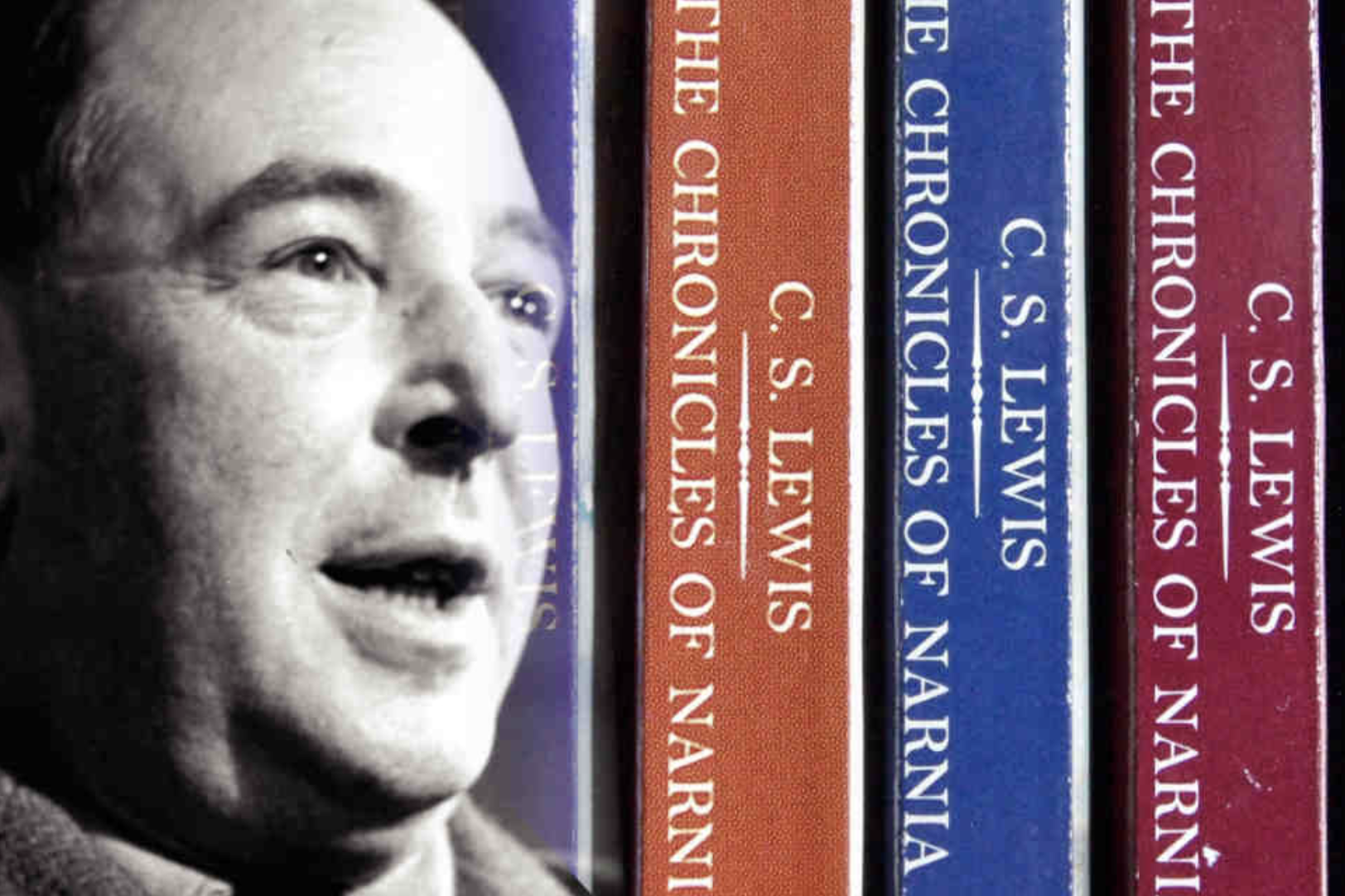
Lewis never wrote those memorable words -- they came from screenwriter William Nicholson, noted William O'Flaherty, author of "The Misquotable C.S. Lewis: What He Didn't Say, What He Actually Said, and Why It Matters." Nevertheless, that quote is frequently attributed to Lewis on websites and in social media.

Further complicating matters, "the movie character Lewis -- when he does say it, while the real Lewis never said it -- is quoting a student who is saying that his father said it," noted O'Flaherty, via Zoom. Many who spread this quote appear to want people to "think the real Lewis went around repeating things from others" while taking credit for them.

It doesn't help that many readers who circulate fake Lewis quotes do so because they admire the author's Christian faith expressed in 30-plus books -- fiction and nonfiction -- which sell millions of copies a year, long after his death in 1963.

Lewis is not an isolated case. In his book, O'Flaherty noted that Albert Einstein never said, "God does not play dice," Mark Twain didn't proclaim "There are three kinds of lies: lies, damn lies, and statistics" and Ernest Hemingway "never claimed he could write a short story with just six words." Conan Doyle never had Sherlock Holmes say "Elementary, my dear Watson."

The basic problem: "Too many people have a bumper sticker attention span. And typically, they love quotes because quotes give them the 'sound bite' that confirms something they ALREADY believe."

In the past, some readers simply "misremembered" quotes they heard in lectures, sermons and speeches and passed them on. Misquotes have even appeared in books or major periodicals. With some authors, movies and television based on their writings have added to the confusion. Finally, issues with misquotes kicked into high gear with the Internet and powerful social-media platforms such as Facebook, Instagram and X. How will AI affect all of this?

The rise and fall of the AI 'Father Justin' is a technology parable for our time

The rise and fall of the AI 'Father Justin' is a technology parable for our time

The penitent crafted the perfect sin to confess to a virtual priest: "Bless me father, for I have sinned. … I have had anger in my heart about the deployment of AI chatbots in inappropriate places."

"Father Justin," a 3D AI character created by the San Diego-based Catholic Answers network, offered biblical advice for wrestling with anger.

"God is merciful and loving, my child," the bot concluded. "For your penance, I ask you to pray the Our Father three times, reflecting on God's infinite mercy and love. And now, I absolve you of your sins in the name of the Father, and of the Son, and of the Holy Spirit."

Legions of cyberspace believers pounced. One tweeted this cry: "HAIEEEEEEE." Susannah Black Roberts of Plough Magazine noted: "Hey @catholiccom, your AI 'priest' is offering absolution. Might want to kill it with fire and never do anything like this again."

Online detectives found other flaws. The National Catholic Register noted the app struggled when turning voices into printed words, translating "Eucharist" as "caressed" or even "you, you, you," while "Communion" became "commute." The Pillar asked if it was possible to baptize "my baby with Gatorade in an emergency" and Father Justin affirmed that option.

"I say this with nothing but respect for you guys and your work, but ... this should've just been a plain search engine," tweeted Father Mike Palmer of the Congregation of Holy Cross. "Dressing it up as a soulless AI avatar of a priest does absolutely nothing except cause confusion and invite mockery of your otherwise excellent work."

Catholic Answers President Christopher Check quickly confessed that his team "received a good deal of helpful feedback." Thus, "Justin" lost his clerical collar.