
trans

C.S. Lewis readers brace for big-screen arrival of 'Ziggy Aslan' in Narnia flick

C.S. Lewis readers brace for big-screen arrival of 'Ziggy Aslan' in Narnia flick

During a fistfight, young David Bowie suffered an injury to his left eye, leaving its pupil permanently wide open, with one blue eye looking radically different than the other.

Bowie didn't have heterochromia -- different-colored eyes. But his mysterious gaze was a key trait of Ziggy Stardust, his genderbending, rainbow-hued stage persona mixing glitter, bright lipstick, platform shoes and various female fashion trends.

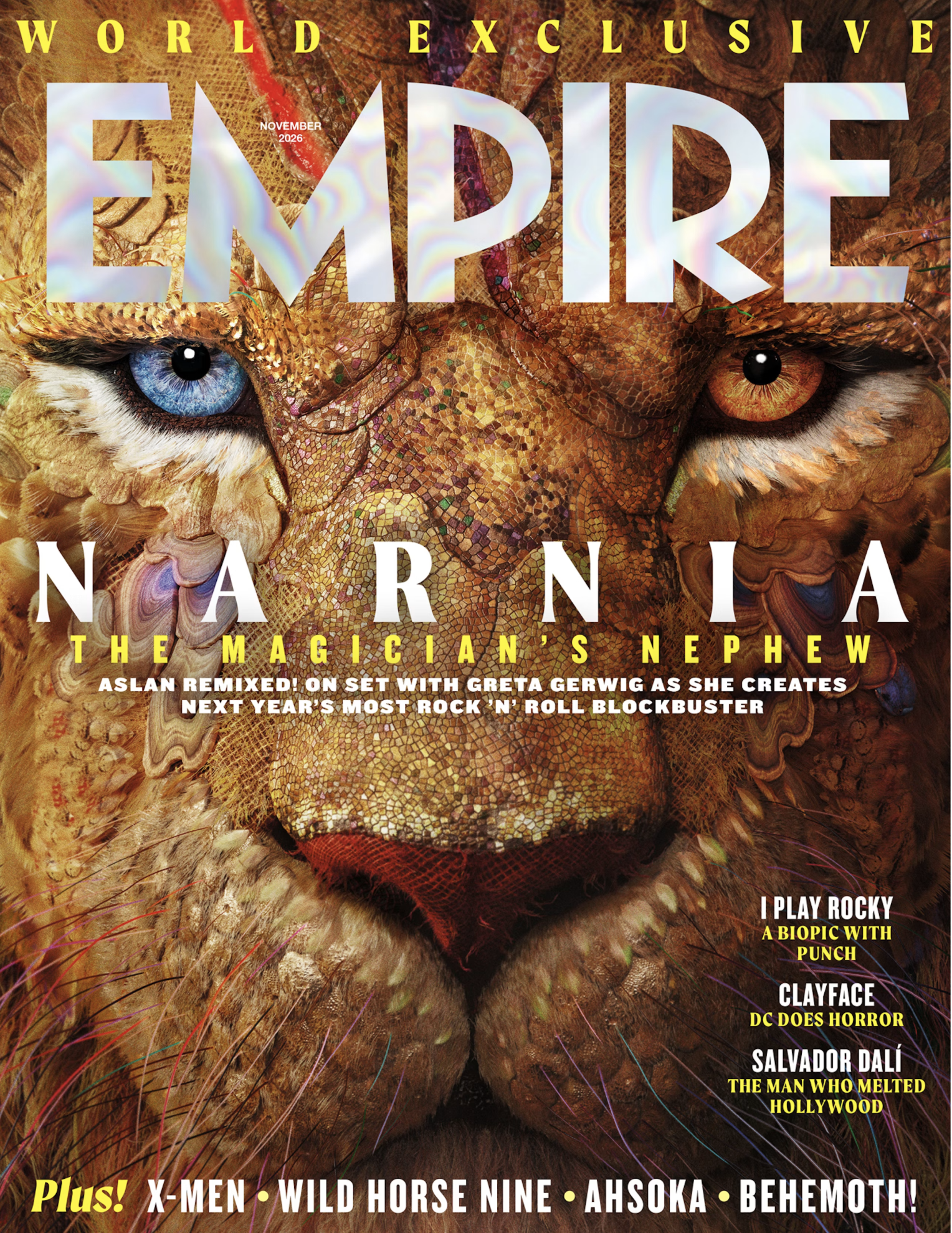
This early 1970s bolt of glam-rock lightning was part of the cultural storm that shaped Greta Gerwig's imagination, leading to her "rock opera" vision of "The Chronicles of Narnia," the classic C.S. Lewis novels for children.

"David Bowie saved my life," Gerwig told Empire Magazine, while discussing "Narnia: The Magician's Nephew," poised for release in early 2027.

"Paul McCartney saved my life. David Gilmour saved my life. Pete Townshend saved my life. … When I heard their music, I had this deep sense of [thinking], 'You're gonna be okay.'" She added: "Narnia is literally a world made out of music. It is a world sung to life by Aslan."

In Narnia, Aslan is the Christ figure, repeatedly described by Lewis -- an Oxford don and Christian apologist -- as the "King of the wood and the son of the great Emperor-Beyond-the-Sea. … The Lion, the great Lion." In "The Magician's Nephew," Narnia's creation story, Aslan is first described as "a Lion. Huge, shaggy and bright," with a basso profundo voice "deep enough to be the voice of the earth."

Gerwig ignited an online firestorm by choosing the legendary actress Meryl Streep to provide Aslan's voice. And the director moved "The Magician's Nephew" from the early-1900s to the 1950s, so that its young hero Digory Kirke would grow up in the world that produced Bowie and other rock visionaries. Thus, the Narnia timeline created by Lewis will, in its climactic books, move from World War II Britain to the cultural and sexual revolutions of the 1960s and '70s.

Also, the Empire cover offers the first portrait of the character some call "Ziggy Aslan."

Dreams at Ignatian Q: LGBTQ Catholics see progress toward a changed Catholicism

Dreams at Ignatian Q: LGBTQ Catholics see progress toward a changed Catholicism

As a child in inner-city Milwaukee, Father Bryan Massingale's grandmother gave him a leather-bound copy of The New Webster Encyclopedic Dictionary of the English Language, along with a dream that he might need it someday.

"My grandmother was not delusional. She did not live in denial of reality," said Massingale, a Jesuit priest who holds an endowed chair in ethics at Fordham University, in New York City. "Her gift was a vision, an act of hope. It was a dream, a hope, a reminder that the neighborhood, with its drugs, violence and rodent-infested corner store with overpriced goods, did not define or limit who I could be."

That's important to know, he declared, since he was speaking as "a Black, gay priest and theologian" at Fordham's recent Ignatian Q Conference for LGBTQ students from Jesuit campuses. This event was a "space for our dreaming, for queer dreams" of hope for "despised and disdained and stigmatized peoples," he added.

"I dream of a church where gay priests and lesbian sisters are acknowledged as the holy and faithful leaders they already are," he said, in a published version of his address. "I dream of a church where LGBTQ employees and schoolteachers can teach our children, serve God's people and have their vocations, sexuality and committed loves affirmed. …

"I dream of a church that enthusiastically celebrates same-sex loves as incarnations of God's love among us."

Theological visions of this kind inspire hope for some Catholics and concern for others.

Thus, the North American phase of the Vatican's global Synod on Synodality found "strong tensions within the Church," while participants in the virtual assemblies also "felt hope and encouragement and a desire for the synodal process to continue," according to the 36-page report (.pdf here) released on April 12 by U.S. and Canadian Catholic leaders.