
Greta Gerwig

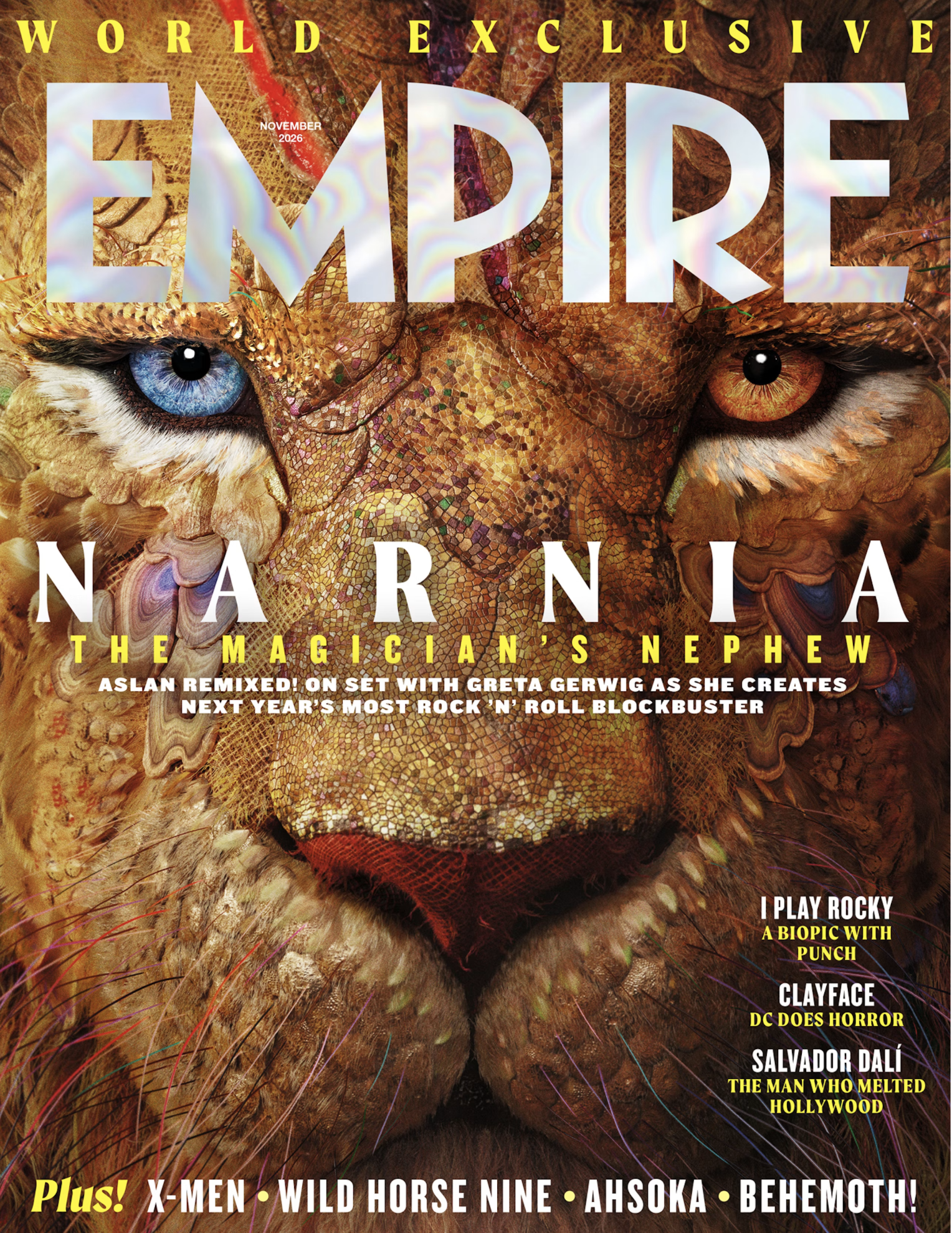
C.S. Lewis readers brace for big-screen arrival of 'Ziggy Aslan' in Narnia flick

C.S. Lewis readers brace for big-screen arrival of 'Ziggy Aslan' in Narnia flick

During a fistfight, young David Bowie suffered an injury to his left eye, leaving its pupil permanently wide open, with one blue eye looking radically different than the other.

Bowie didn't have heterochromia -- different-colored eyes. But his mysterious gaze was a key trait of Ziggy Stardust, his genderbending, rainbow-hued stage persona mixing glitter, bright lipstick, platform shoes and various female fashion trends.

This early 1970s bolt of glam-rock lightning was part of the cultural storm that shaped Greta Gerwig's imagination, leading to her "rock opera" vision of "The Chronicles of Narnia," the classic C.S. Lewis novels for children.

"David Bowie saved my life," Gerwig told Empire Magazine, while discussing "Narnia: The Magician's Nephew," poised for release in early 2027.

"Paul McCartney saved my life. David Gilmour saved my life. Pete Townshend saved my life. … When I heard their music, I had this deep sense of [thinking], 'You're gonna be okay.'" She added: "Narnia is literally a world made out of music. It is a world sung to life by Aslan."

In Narnia, Aslan is the Christ figure, repeatedly described by Lewis -- an Oxford don and Christian apologist -- as the "King of the wood and the son of the great Emperor-Beyond-the-Sea. … The Lion, the great Lion." In "The Magician's Nephew," Narnia's creation story, Aslan is first described as "a Lion. Huge, shaggy and bright," with a basso profundo voice "deep enough to be the voice of the earth."

Gerwig ignited an online firestorm by choosing the legendary actress Meryl Streep to provide Aslan's voice. And the director moved "The Magician's Nephew" from the early-1900s to the 1950s, so that its young hero Digory Kirke would grow up in the world that produced Bowie and other rock visionaries. Thus, the Narnia timeline created by Lewis will, in its climactic books, move from World War II Britain to the cultural and sexual revolutions of the 1960s and '70s.

Also, the Empire cover offers the first portrait of the character some call "Ziggy Aslan."

2023: A 'Barbie' Odyssey does raise (wink, wink) moral, cultural and theological issues

2023: A 'Barbie' Odyssey does raise (wink, wink) moral, cultural and theological issues

Hollywood worships big movie franchises, so fans can expect "Barbie" sequels.

One plot proposal quickly emerged from an unlikely source -- Sister Mary Joseph Calore of the Society Devoted to the Sacred Heart of Jesus in St. Cresson, Pennsylvania.

"'Barbie becomes a nun' would be a great sequel," she wrote, on the X platform. Her post contained this pitch to Warner Bros. executives: "Dissatisfied by endless parties and user friends, an eating disorder, spending addictions with clothes and shoes, and cohabitating with the shallow & unemployed playboy Ken, Barbie's sportscar has been parked more and more at an adoration chapel. She is seriously giving thought to draining the pool, putting her condo on the market, cutting her hair and donning the religious habit."

That would be a twist, after a cinematic manifesto arguing that life as a real woman is painful and complicated, but it's better than being an iconic plastic doll.

"This movie should have been silly and fun, but it ended up being preachy and earnest," said Barbara Nicolosi Harrington, a former Catholic nun who became a screenwriter and Hollywood script doctor. "I mean, how far can you go with a story about Barbie?"

Writer-director Greta Gerwig's previous work has been impressive, stressed Harrington, who teaches at Regent University in Virginia Beach, Virginia. With "Little Women," Gerwig showed the ability to offer a fresh take on a familiar story. Now, "Barbie" will draw intense scrutiny, since she will direct at least one movie in the upcoming Netflix take on "The Chronicles of Narnia" novels by the Christian apologist C.S. Lewis.

"Barbie" contains ambitious attempts to mix serious, even if tongue in cheek, social commentary with pop-culture mythology -- such as a shot-for-shot homage to Stanley Kubrick's legendary dawn-of-consciousness scene in "2001: A Space Odyssey."

The big "Barbie" question, noted Other Feminisms writer Leah Libresco Sargeant, is stated in a soundtrack ballad -- "What Was I Made For?"