family life

Among Southern Baptists, as well: More adults are converting, and getting baptized

Among Southern Baptists, as well: More adults are converting, and getting baptized

Back in the Southern Baptist Convention's boom years, from the 1960s to 2010, the experts charting baptism statistics divided "children" into three groups -- starting with those under age 6.

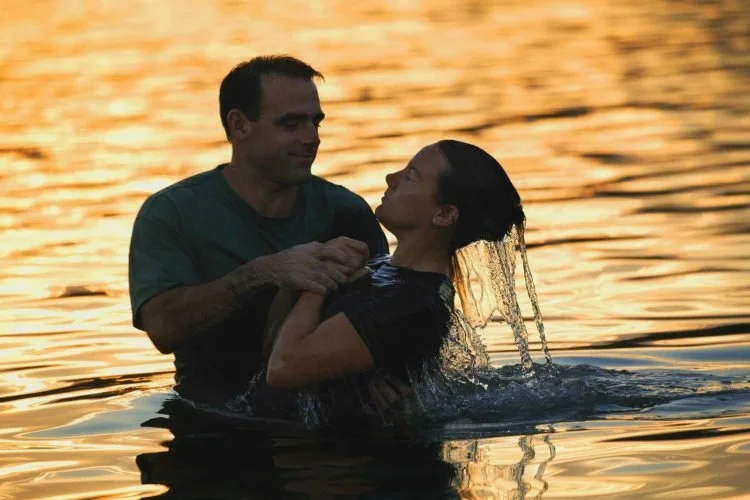
Behind the scenes, there were discussions about when children reached the "age of accountability" and could make mature professions of faith in Jesus Christ, leading to "believer's baptism" by full immersion in water. As with many other doctrinal issues, this was settled by local-church leaders. The same was true when adults asked to be rebaptized, for various reasons.

"At the end of the day, when someone says they've decided to give their life to Christ, the local church is going to let them symbolize that by being baptized," noted Scott McConnell, executive director of Lifeway Research. "That's what Baptists do. That's who we are."

Obviously, Baptists pay close attention to baptism statistics, along with trends with church attendance and membership. In a new report, Lifeway dug into Southern Baptist Convention Annual Church Profile numbers for 2025 and reported that baptisms rose for the fifth consecutive year.

Baptist leaders quickly noted another current trend -- adults 30 and older represented 33% of all baptisms. That was higher than the baptism of those 12-17 (25%), children before age 12 (22%) and young adults between 18-29 (20%). In the past, it was common for the baptism of minors to be two-thirds of the total, noted McConnell, reached by telephone.

The "seismic development" in these numbers is the consistently rising number of conversions among Americans over age 18, noted the Rev. R. Albert Mohler, Jr., president of Southern Baptist Theological Seminary in Louisville, Kentucky.
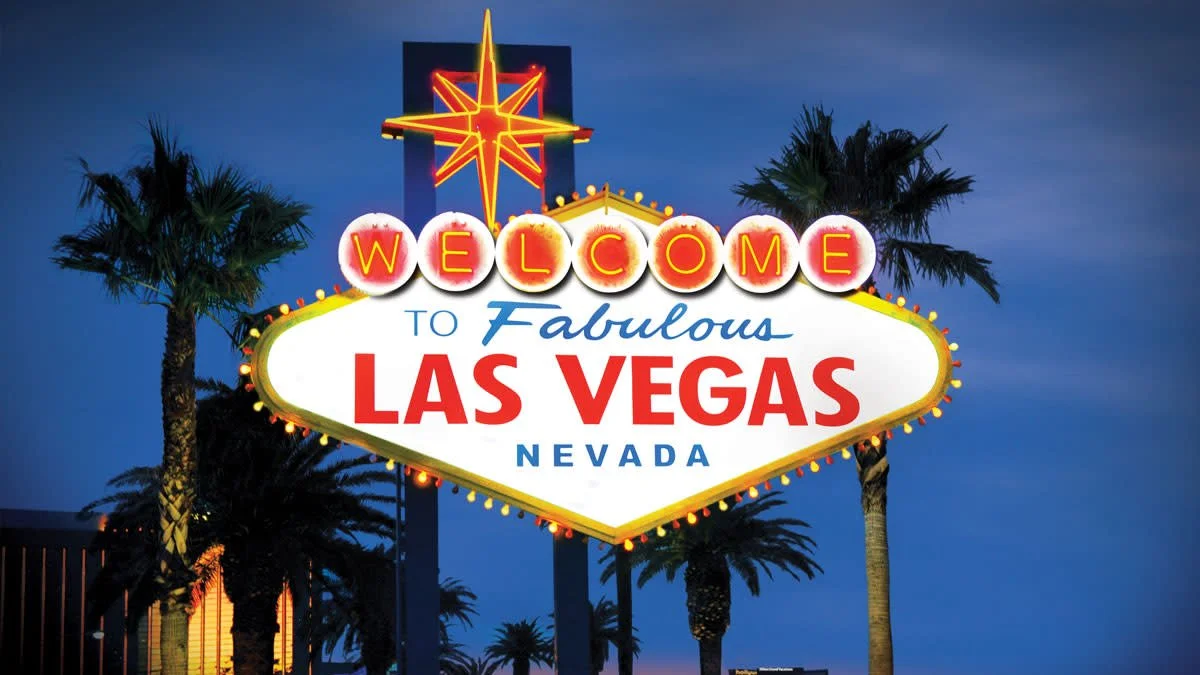

Looking at today's Las Vegas through Southern Baptist missionary eyes

Looking at today's Las Vegas through Southern Baptist missionary eyes

Say the word "Vegas" and most travelers think about the 30-plus casinos and resorts along the 4.2-mile stretch of Las Vegas Boulevard known as "The Strip."

The Southern Baptist "City Missionary" for Las Vegas thinks about a different set of numbers -- the 30 churches the denomination's Send Network has planted in this desert valley in the past decade. There are nearly 100 SBC churches in greater Las Vegas and 177 in Nevada.

"It's hard to narrow Las Vegas down into some kind of majority culture that fits the stereotypes. … This place is multiethnic, multicultural and we have people who are dealing with all kinds of issues and sins," said the Rev. Heiden Ratner, 37, who leads the WALK Church, a 10-year-old congregation with about 1,100 worshippers.

"Las Vegas is pretty much pre-Christian, and what I mean by that is that there has never been a revival that has swept through this city. When I was growing up here, there wasn't a single Sunday morning that I woke up and thought, 'Maybe I should go to church.' Never.”

Obviously, the Strip has not vanished, and its "Sin City" label remains relevant. The Nevada Gaming Control Board reported $8.82 billion in Gross Gaming Revenue (what operators keep after payouts) for the Strip in 2025. But the world has changed. Researchers struggle to describe online gambling today -- from $100 billion global GGR in 2025 to a Gaming Compliance International estimate of $5.9 trillion in unregulated activity.

For decades, Ratner noted, Las Vegas couldn't land big-league football, baseball, basketball and hockey because of gambling. Now the city has teams in three of the four sports, and the National Basketball Association may be next. The city hosted its first Super Bowl in 2024 and the game returns in 2029.

"That kind of credibility is leading all kinds of people and corporations to take a second look at this city," he said.

Anglican Church of Canada offers new liturgies to bless Medically Assisted Dying

Anglican Church of Canada offers new liturgies to bless Medically Assisted Dying

Gathered near the patient, the priest helps the worshipers prepare for Holy Communion, using a new liturgy prepared by the Anglican Church of Canada.

The text offers this introduction: "We gather today in a space that may be foreign to us. There are sounds, lights, and activity outside of this room that can distract and take us away from this space. But God meets us here, in this time and place, a thin-space that is sacred. We gather as friends and family [and health care professionals] with our hopes, our dreams, and our differences.

"While some of us may not always agree with the choices of others, we are united in our common love and compassion for [name]. May we know the presence of God as we pray together. … May God's purpose steady us."

The Divine Liturgy text openly discusses tensions that loom over this rite, since it is drawn from "Pastoral Liturgies at the Time of Death in Contexts of Medically Assisted Dying," approved in June by the denomination's Council of General Synod.

The document's preamble tells clergy: "Medical Assistance in Dying evokes strong and opposing views amongst some persons and communities, including amongst health care providers and amongst Anglican Christians. Some Christians, including clergy, find that MAiD violates their understanding of the ethical values to which Christians are called. …

"The Anglican Church of Canada is not of one voice on the topic, but leaders generally are in agreement that the Church has a duty of pastoral care to all. … Regardless of how people arrive at the decisions they do regarding their end-of-life plans, all persons should be able to call upon the pastoral ministry of the church at the time of their dying."

The Medical Assistance in Dying option was legalized in 2016 and many Canadians -- over age 18, eligible for public health care, with a grievous condition and mentally competent to grant consent -- have allowed medical professionals to end their lives. At the end of 2024, Health Canada officials reported 76,475 approved MAiD procedures.

The Anglican Church of Canada is a poignant church to develop these liturgies, since it has already lost 75% of its membership since the 1960s.

Pope Leo XIV, screens culture, fathers and symbolism in "Toy Story 5"

Pope Leo XIV, screens culture, fathers and symbolism in "Toy Story 5"

Vatican watchers rarely scan papal speeches looking for links to Hollywood.

But, at the Vatican Summer Youth Camp, Pope Leo XIV offered an unusually timely update on faith in a digital age.

"The family that is together, it is not enough that we are all there. Each, they look at his phone," the pope said. Even if believers "have the Bible and some prayers in the phone, God doesn't want to look at the phone: God wants to look at our hearts, our life. And therefore, be free from these things that in themselves can be fun, a help, a nice thing."

After all, he added: "We are not all plugged into a cable. We are human beings."

That June 22 talk came three days after "Toy Story 5" reached theaters, with Sheriff Woody, Buzz Lightyear and cowgirl Jesse urging their young owner, Bonnie, to escape the grip of her digital Lilypad tablet.

The pope's words were "remarkably Toy Story-coded," wrote Alyssa Murphy, of the National Catholic Register. In Pixar's parable, Bonnie's parents took a stand and deleted the social-media app that mean girls were using to mock her affection for old-fashioned toys.

That's the good news, noted Murphy. The bad news? "Currently sitting on store shelves nationwide is a physical 'Lilypad' device … marketed to preschoolers between the ages of 3 and 5. … As a beginner device, the item description reads: 'Stay connected with Jessie, Buzz, Woody and the Tech Trio by texting them.'"

Meanwhile the Australian Psychological Society has published a survey of international research showing that most children, by age two, have access to digital devices, including some babies as young as six months old. By age four, 75% of children have their own digital devices. In the end, the more time children gaze at screens, the less they play, talk, sleep and, thus, develop their minds and bodies.

Chris Pratt and Ben Sasse discuss family life, faith and Hollywood's idols

Chris Pratt and Ben Sasse discuss family life, faith and Hollywood's idols

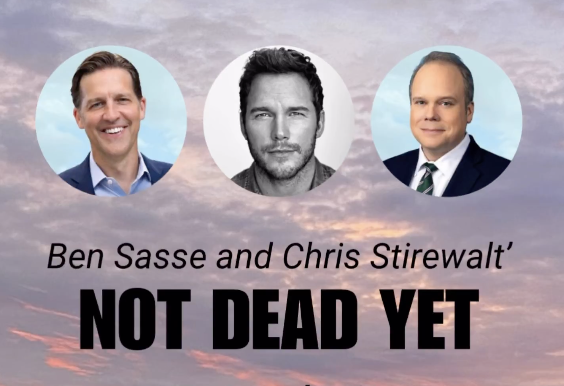
Superstar Chris Pratt was enduring a messy, painful time in his life when he was selected to receive the MTV Network's 2018 Generation Award, saluting his impact on popular culture.

Pratt decided to take a leap of faith, during his on-camera remarks.

"I'm going to say to this young generation the things that I want to say," he said, in a recent appearance on the "Not Dead Yet" podcast cohosted by former U.S. Sen. Ben Sasse and political analyst Chris Stirewalt. "God has saved me multiple times. I'm gonna put my money where my mouth is and stand on this stage and say this to these folks. And so, I did it."

The star of Guardians of the Galaxy, the Jurassic Park reboots and myriad blockbusters -- grossing more than $14 billion globally -- outed himself as a Christian. His advice included, for example, "Learn to pray. It's easy, and it's so good for your soul" and "God is real. God loves you. God wants the best for you. Believe that. I do."

This immediately fueled speculation about how his faith would affect his cultural clout. Then, in 2020, Pratt started Indivisible Productions, with a nod to the phrase "one nation under God, indivisible" in the Pledge of Allegiance. The company's mission is to "create entertaining content, focusing on themes which will help to bridge the growing divide in our country and world."

Pratt said it's hard to look at American life right now without feeling worried and grateful, at the same time.

"I've got to be careful about this because I love America," he said. "I believe in God's providence that, you know, we have something really extraordinary here. And I love Hollywood as well. I love movies." However, he added: "As human beings, our hearts are designed in such a way that we have a spot reserved in them to be in awe of God."

Truth is, he added: "I work in a business where we create idols. And we worship them. And no one is worthy of worship. And so not only do we create idols to worship, we create idols to burn. … It's not an indictment on the system that they would look at me and say, 'You know what, he said this, so let's burn him.'"

Commencement to remember: Country singer Eric Church on faith, family and more

Commencement to remember: Country singer Eric Church on faith, family and more

When addressing the 2026 graduates at the University of North Carolina at Chapel Hill, country-music star Eric Church used words rarely heard in secular-campus rites, such as "faith," "family," "grace" and "soul."

Using an acoustic guitar, Church explained how its strings, when in tune, represent essential elements of life. The May 9 speech went viral on YouTube, Facebook, TikTok and other platforms, with an estimated 4 million views so far.

The bass string is "faith," he said. "Your belief about what this life is for … what holds the universe together when science reaches the edge of its own explanation, and shrugs.

"The people who tend to their faith in ordinary seasons do not come undone in extraordinary ones. They still hurt. They still sit in hospital waiting rooms asking unanswerable questions at three in the morning. But they have a foundation to return to. … Tend to your faith. Not just when you're broken, but when you're whole."

Church, who grew up Baptist, didn't label his own faith in this speech. His eight-album career began with "Sinner Like Me" in 2006, with a title song that ended with this verse: "On the day I die / I know where I'm gonna go / Me and Jesus got that part worked out / I'll wait at the gates 'til his face I see / And stand in a long line of sinners like me."

The singer's address was not explicitly Christian and included zero material about politics. However, it was an example of a major campus welcoming an unconventional voice popular with middle America.

Elite-campus leaders need to show that they are committed to cultural diversity, noted Robert P. George, an outspoken Catholic and distinguished professor of jurisprudence at Princeton University. A 2022 survey of commencement rites at America's top 25 research universities and top 25 liberal-arts colleges failed to find a "single conservative among a sea of liberal and progressive speakers. A harmless coincidence? No," he wrote, in a recent Washington Post essay.

This "commencement conformity" may be caused by "inattentiveness or a lack of careful thinking on the part of administrators. George argued that these choices matter since, to quote Harvard University President Alan Garber, "truth is rarely found in echo chambers." Thus, it's important to challenge "ideological bubbles," even if that will cause on-campus tensions.

The Episcopal Church is about to die? It's leader says that's a lie "from the pit of hell"

The Episcopal Church is about to die? It's leader says that's a lie "from the pit of hell"

Episcopal Church leaders have long heard warning sirens in their annual reports, with brutal statistics supporting this reality -- they have lost half of their members since the 1960s.

If trends continue, the mainline Anglican flock in America will lose another half of its membership by 2040, with some demographers predicting institutional demise by 2050. But that's better than the Anglican Church of Canada, which could be gone by 2040.

After years of producing reports about religion in America, political scientist Ryan Burge knows a viral headline when he sees one. One of his recent Graphs about Religion posts asked: "When are Half of Your Members Going to be Dead?"

"Episcopalians are old," wrote Burge. "In fact, two-thirds of their adult members have celebrated their 60th birthday. In contrast, just 6% are under the age of 30. Put simply: for every young adult Episcopalian in the pews this Sunday, there will be about 10 retirees. Oof."

Episcopalians hold five funerals for every wedding, he noted, in a January 23 address for the Episcopal Diocese of Central Florida.

"My job is to tell the truth," said Burge, of the John C. Danforth Center on Religion and Politics at Washington University in St. Louis. For the Episcopal Church, "the check engine light is flashing."

Episcopalians are not alone, he stressed. In the 1950s, according to historians, "mainline" Protestants -- Episcopalians, Lutherans, Presbyterians, Methodists and others -- were 52% of the U.S. population. That fell to 30% by 1970 and, today, has hit 8.7%.

"Guess what? Old people die, and they're really religious. And you know who they're going to be replaced by? Young people, who are not very religious," said Burge, noting that about 43% of Generation Z claims no religious affiliation.

Drawing laughter, he added: "Hey, here's some good news. Attendance is up, a little bit." And donations are steady. However, "If you die with the most money, you're still dead."

Burge's name surfaced during the Episcopal Parish Network's annual meeting, held in Charlotte, North Carolina. Asked about reports of doom, Presiding Bishop Sean Rowe noted that "people make their living telling us that."

Concerning that Ash Wednesday exit interview by former Sen. Ben Sasse

Concerning that Ash Wednesday exit interview by former Sen. Ben Sasse

On his 54th birthday, former U.S. Senator Ben Sasse of Nebraska was given a cake that proclaimed, "Happy last Birthday Ben!"

"I have the best friends," the senator wrote on February 22, his smiling face weary from chemotherapy as he held the cake in a social media post.

Two days before Christmas, Sasse released a letter stating, "Last week I was diagnosed with metastasized, stage-four pancreatic cancer, and am gonna die." He recently offered an update in a Hoover Institution interview timed for Ash Wednesday, when millions of Christians are marked with an ash cross on their foreheads, while hearing: "Remember that you are dust and to dust you shall return."

In December, doctors said he may have 90 days to live, which means he may not make it through Lent to Easter, which falls on April 5 this year, in Western churches.

Peter Robinson, host of the "Uncommon Knowledge" interview series, asked: "Instead of withdrawing from the world, you are throwing all that you have left into it. How come?"

"I'm with Paul when he says, 'To live is Christ, to die is gain,' " said Sasse, quoting the Epistle to the Philippians. "Obviously, death is a wicked thief. I don't want it to happen, but we're mortals. …

"We don't build any storehouses that last. The things that matter and endure are human souls. … We should be neither triumphalists nor despairing. Nothing we build is going to last, but that doesn't mean nothing matters. The chance to love your neighbor and serve is a blessing."