
baptism

Among Southern Baptists, as well: More adults are converting, and getting baptized

Among Southern Baptists, as well: More adults are converting, and getting baptized

Back in the Southern Baptist Convention's boom years, from the 1960s to 2010, the experts charting baptism statistics divided "children" into three groups -- starting with those under age 6.

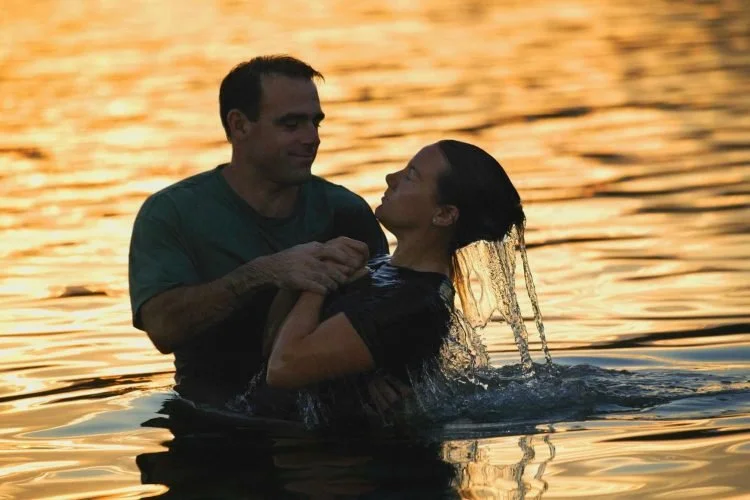
Behind the scenes, there were discussions about when children reached the "age of accountability" and could make mature professions of faith in Jesus Christ, leading to "believer's baptism" by full immersion in water. As with many other doctrinal issues, this was settled by local-church leaders. The same was true when adults asked to be rebaptized, for various reasons.

"At the end of the day, when someone says they've decided to give their life to Christ, the local church is going to let them symbolize that by being baptized," noted Scott McConnell, executive director of Lifeway Research. "That's what Baptists do. That's who we are."

Obviously, Baptists pay close attention to baptism statistics, along with trends with church attendance and membership. In a new report, Lifeway dug into Southern Baptist Convention Annual Church Profile numbers for 2025 and reported that baptisms rose for the fifth consecutive year.

Baptist leaders quickly noted another current trend -- adults 30 and older represented 33% of all baptisms. That was higher than the baptism of those 12-17 (25%), children before age 12 (22%) and young adults between 18-29 (20%). In the past, it was common for the baptism of minors to be two-thirds of the total, noted McConnell, reached by telephone.

The "seismic development" in these numbers is the consistently rising number of conversions among Americans over age 18, noted the Rev. R. Albert Mohler, Jr., president of Southern Baptist Theological Seminary in Louisville, Kentucky.

Superstar Denzel Washington has officially claimed the freedom to preach

Superstar Denzel Washington has officially claimed the freedom to preach

When describing his life, Denzel Washington often notes a mysterious encounter on March 27, 1975, offering it as a parable about his Christian faith and his acting career.

The young Washington was in his mother's Mount Vernon, New York, beauty parlor, after horrible grades forced a leave of absence from Fordham University. An elderly church woman, who many believed had unique spiritual gifts, looked him in the eye and asked for a piece of paper.

Scribbling the details, Ruth Green announced: "I have a prophecy. Boy, you are going to travel the world and speak to millions of people."

Sharing this story at Dillard University in New Orleans in 2015, Washington added pulpit friendly advice: "What she told me that day has stayed with me ever since. I've been protected. I've been directed. I've been corrected. I've kept God in my life."

The actor stressed these words: "Put. God. First.”

After a press screening of "The Book of Eli" in 2010, he added another wrinkle, pondering the prophecy's implications. At one point, Washington, a member of the giant West Angeles Church of God in Christ, wondered if he was supposed to have been ordained.

Washington said his pastor noted: "Well, aren't you talking to millions of people? Haven't you traveled the world?"

That question recently surfaced, once again, when the two-time Oscar winner received a minister's license at the Kelly Temple Church of God in Christ in Harlem, a congregation he attended as a child. During this December 21 baptism rite -- broadcast online -- Washington rededicated his life to God and moved one step from full ordination. As a licensed minister, he can preach, perform weddings and lead some religious services.

"We celebrate the addition of Minister Denzel Washington into the clergy … in a truly uplifting moment," Archbishop Christopher Bryant wrote on Facebook.

Loretta Lynn's art put rhinestone feminism and Gospel truth in the same package

Loretta Lynn's art put rhinestone feminism and Gospel truth in the same package

On many Sundays, Loretta Lynn sent her social-media followers a thought for the day from Scripture.

Two days before her death at her ranch in Hurricane Mills, Tenn., the 90-year-old country-music legend posted two verses, repeating the second verse to stress her point.

Lynn's final Instagram post said: "Everyone who does evil hates the light, and will not come into the light for fear that their deeds will be exposed. But whoever lives by the truth comes into the light, so that it may be seen plainly that what they have done has been done in the sight of God. John 3:20-21"

The feisty superstar experienced plenty of darkness and light and shared the gritty details in a career that changed the role of women in Nashville. Lynn was raised poor in the Kentucky hills and spent years in church pews before she started singing in honky-tonks. Her husband Oliver "Dolittle" Lynn struggled with alcoholism, but they stuck together in a union that inspired songs about love and loyalty, as well as break-ups and fist fights, such as "Don't Come Home A-Drinkin' (With Lovin' On Your Mind)."

Lynn vowed to tell the truth about both sides of her life. She loved to sing hymns and gospel music, while critics hailed the rhinestone feminism of her hits such as "You Ain't Woman Enough," "The Pill," "Rated X" and "You're Looking at Country."

In her "Coal Miner's Daughter" memoir, Lynn described her faith journey: "I believed it all, but for some reason I was never baptized. After I started in music, I got away from going to church and reading the Bible. I believe I was living the way God meant me to, but I wasn't giving God the right attention."

In that same 1976 memoir, she added: "I'm trying to lead a good Christian life, especially since I got baptized two years ago. So there ain't too much spicy to tell about me -- just the truth." Christian Chronicle editor Bobby Ross, Jr., noted that she later added a strong kicker to that: "Nobody's perfect. The only one that ever was, was crucified.”

Anyone who explored the details of Lynn's life and music knew that she wasn't a good fit in the "elite feminist establishment" or among advocates of a "status-quo idea of domesticity," noted Russell Moore, Christianity Today's editor in chief.