
Albert Mohler

Among Southern Baptists, as well: More adults are converting, and getting baptized

Among Southern Baptists, as well: More adults are converting, and getting baptized

Back in the Southern Baptist Convention's boom years, from the 1960s to 2010, the experts charting baptism statistics divided "children" into three groups -- starting with those under age 6.

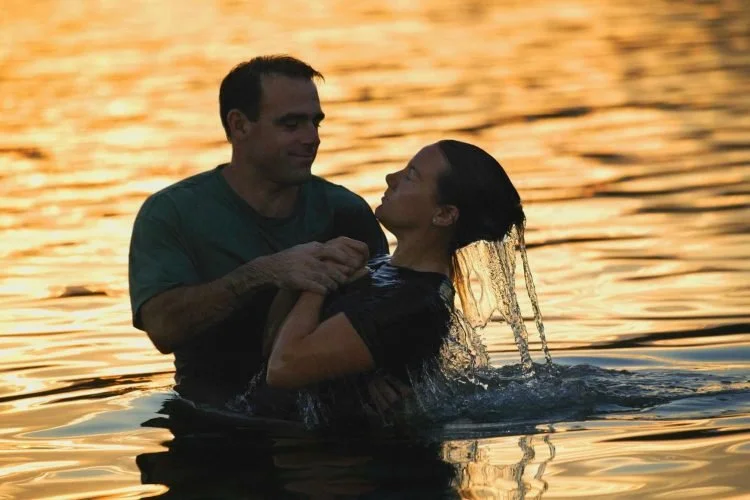
Behind the scenes, there were discussions about when children reached the "age of accountability" and could make mature professions of faith in Jesus Christ, leading to "believer's baptism" by full immersion in water. As with many other doctrinal issues, this was settled by local-church leaders. The same was true when adults asked to be rebaptized, for various reasons.

"At the end of the day, when someone says they've decided to give their life to Christ, the local church is going to let them symbolize that by being baptized," noted Scott McConnell, executive director of Lifeway Research. "That's what Baptists do. That's who we are."

Obviously, Baptists pay close attention to baptism statistics, along with trends with church attendance and membership. In a new report, Lifeway dug into Southern Baptist Convention Annual Church Profile numbers for 2025 and reported that baptisms rose for the fifth consecutive year.

Baptist leaders quickly noted another current trend -- adults 30 and older represented 33% of all baptisms. That was higher than the baptism of those 12-17 (25%), children before age 12 (22%) and young adults between 18-29 (20%). In the past, it was common for the baptism of minors to be two-thirds of the total, noted McConnell, reached by telephone.

The "seismic development" in these numbers is the consistently rising number of conversions among Americans over age 18, noted the Rev. R. Albert Mohler, Jr., president of Southern Baptist Theological Seminary in Louisville, Kentucky.

Has the DNA of Southern Baptist Convention doctrine changed on ordaining women?

Has the DNA of Southern Baptist Convention doctrine changed on ordaining women?

After decades as America's most famous Sunday school teacher, Jimmy Carter decided to cut the symbolic ties binding him to the Southern Baptist Convention.

The former president remained active at Maranatha Baptist Church in Plains, Georgia, and didn't renounce his faith. His 2000 letter to 75,000 American Baptists explained that he rejected a revision of the SBC's Baptist Faith and Message document, months earlier, to oppose the ordination of women.

"I have been disappointed and feel excluded by the adoption of policies and an increasingly rigid SBC creed," wrote Carter, who is now 98 years old and in hospice care. He stressed that, with his wife Rosalynn, he would cooperate with "traditional Baptists who share such beliefs as separation of church and state, servanthood of pastors, priesthood of believers, a free religious press, and equality of women."

From Carter's point of view, the SBC had evolved from a convention of autonomous churches -- with individuals claiming "soul competency" when choosing their own beliefs -- into a denomination that defines orthodoxy on doctrines.

The issue isn't who is a Baptist and who is not. Church historians struggle to count the number of organized Baptist groups and thousands of Baptist churches are totally independent. The question is whether the SBC's DNA has changed in ways that will affect local churches, as well as agencies, boards and seminaries at the state and national levels.

The Rev. Rick Warren -- an American evangelical superstar -- urged the recent national convention in New Orleans not to "disfellowship" congregations that ordain women, such as the giant Saddleback Church he founded in 1980.

"For 178 years, the SBC has been a blend of at least a dozen different tribes of Baptists," said Warren, during floor debates. "If you think every Baptist thinks like you, you're mistaken. What we share in common is a mutual commitment to the inerrancy and infallibility of God's Word, and the Great Commission of Jesus.

"No one is asking any Southern Baptist to change their theology. I am not asking you to agree with my church. I am asking you to act like a Southern Baptist -- who have historically 'agreed to disagree' on dozens of doctrines in order to share a common mission."