Lent

Concerning that Ash Wednesday exit interview by former Sen. Ben Sasse

Concerning that Ash Wednesday exit interview by former Sen. Ben Sasse

On his 54th birthday, former U.S. Senator Ben Sasse of Nebraska was given a cake that proclaimed, "Happy last Birthday Ben!"

"I have the best friends," the senator wrote on February 22, his smiling face weary from chemotherapy as he held the cake in a social media post.

Two days before Christmas, Sasse released a letter stating, "Last week I was diagnosed with metastasized, stage-four pancreatic cancer, and am gonna die." He recently offered an update in a Hoover Institution interview timed for Ash Wednesday, when millions of Christians are marked with an ash cross on their foreheads, while hearing: "Remember that you are dust and to dust you shall return."

In December, doctors said he may have 90 days to live, which means he may not make it through Lent to Easter, which falls on April 5 this year, in Western churches.

Peter Robinson, host of the "Uncommon Knowledge" interview series, asked: "Instead of withdrawing from the world, you are throwing all that you have left into it. How come?"

"I'm with Paul when he says, 'To live is Christ, to die is gain,' " said Sasse, quoting the Epistle to the Philippians. "Obviously, death is a wicked thief. I don't want it to happen, but we're mortals. …

"We don't build any storehouses that last. The things that matter and endure are human souls. … We should be neither triumphalists nor despairing. Nothing we build is going to last, but that doesn't mean nothing matters. The chance to love your neighbor and serve is a blessing."

A bridge between Ash Wednesday and Easter: Most Americans do not 'get' Lent

A bridge between Ash Wednesday and Easter: Most Americans do not 'get' Lent

When it comes to pulling Catholics into pews, Christmas rites top the list -- followed by a tie between Easter, the Christian calendar's most joyous day, and Ash Wednesday, which is the most sobering.

Last year, 51% of U.S. Catholics attended Mass on Easter, the same percentage as Ash Wednesday, according to the Center for Applied Research in the Apostolate at Georgetown University. Christmas drew 68%.

The bridge between Ash Wednesday and Easter is the penitential season of Lent.

"Participating in Ash Wednesday which leaves a black cross on the forehead is one way for Catholics to identify themselves publicly and to express pride in their religious tradition," noted Father James J. Bacik, writing for the Association of U.S. Catholic Priests. "It is also a way of indicating an intention to take Lent seriously."

Ash Wednesday services have, in recent decades, become common in some Protestant denominations. But what about Lent?

Lent is "not on the radar" for most Americans, according to a new Lifeway Research study focusing on Catholics, Protestants and the unchurched. One in four participants in the survey (26%) say they observe Lent, to one degree or another. That's lower than the 31% of Americans who claim to attend worship services weekly or almost weekly, according to 2023 polling by Gallup.

Most believers who observe Lent find their own ways to mark the season, with some form of the "give up one thing for Lent" pattern as the norm. It's hard to find evidence of ancient Christian patterns of fasting and abstinence in the survey results.

"Fasting is on the Christian liturgical calendar not unlike the Jewish Yom Kippur and Muslim Ramadan," noted Lifeway executive director Scott McConnell, in the organization's summary of the study. "For Christians attending non-liturgical churches, they may not even notice the season of Lent has arrived. It is not that they look down on the practices of fasting, prayer and charity. But if they participate, they may be exchanging additional time with God for other forms of self-denial."

Covenant pastor preached on death, grief and the tears of Jesus -- weeks before the attack

Covenant pastor preached on death, grief and the tears of Jesus -- weeks before the attack

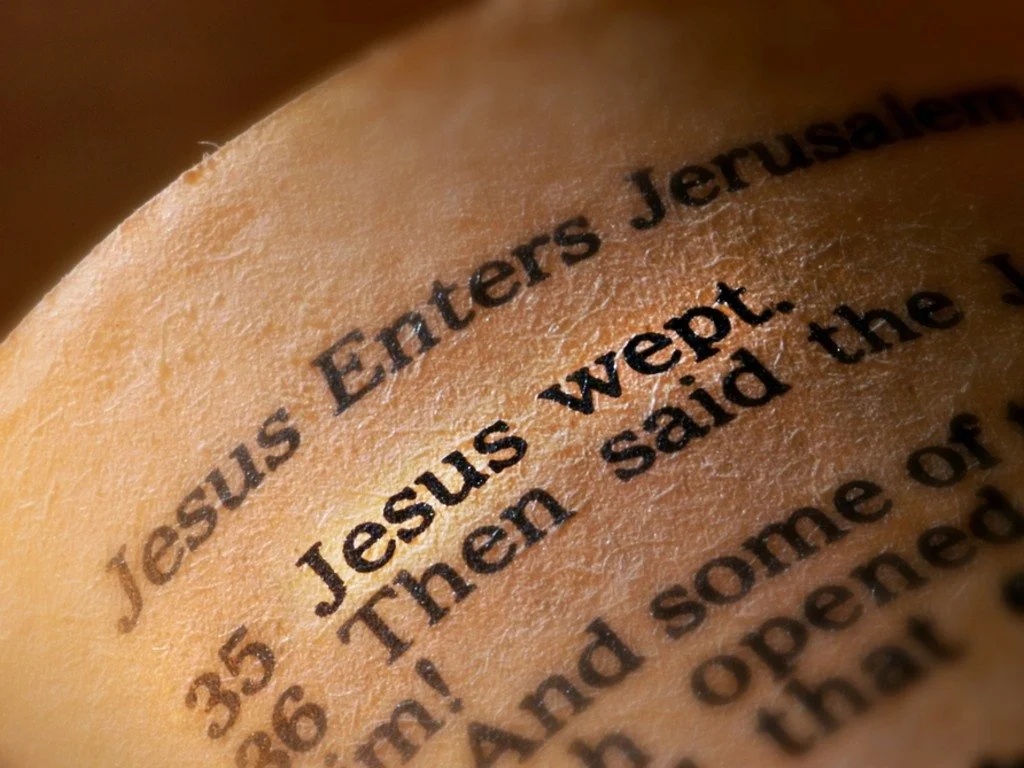
The Bible's shortest verse -- "Jesus wept" -- is also one of its most important.

That was the message delivered by the Rev. Chad Scruggs in a March 5 sermon -- "Death's Conqueror" -- as the faithful at Nashville's Covenant Presbyterian Church continued their Lenten journey toward Holy Week and Easter's promise of new life after death.

"How do we face death in our world," he asked, "especially untimely deaths, without the pain and confusion of death leading us to despair?"

That was three weeks before a gunman crashed through the glass doors of his church's Covenant School and killed three staff members and three 9-year-old students -- including the pastor's daughter, Hallie Scruggs. Police fatally shot the attacker, 28-year-old Audrey Hale, a former Covenant student who had taken the name "Aiden" and male pronouns online

Police confirmed that Covenant had been targeted. But Nashville officials and the FBI have declined to release a "manifesto" referenced in Hale's final social-media warning: "One day this will make more sense. I've left more than enough evidence behind."

The families of those killed have mourned in private, even as solemn Holy Week rites flowed toward Easter (April 9) -- surrounded by a whirlwind of familiar arguments about gun control and a mental-health crisis that has shattered so many lives.

In his sermon before the attack, Scruggs had already plunged into deeper, ancient, mysteries -- stressing that believers can trust that God understands the grief, anger and confusion caused by violence and death.

When meeting the grieving family of his friend Lazarus, Jesus responded with anger, as well as compassion. Thus, the importance of the Gospel of John's blunt words: "Jesus wept."

Coronavirus crisis creates a legal, doctrinal minefield for priests and their flocks

Coronavirus crisis creates a legal, doctrinal minefield for priests and their flocks

Every now and then, while a priest is traveling or out running errands, a stranger will approach and ask: "Father, will you hear my confession?"

This can happen on a city sidewalk or in a quiet corner of a big-box store. Often the question is urgent -- because something disturbing has shaken someone's faith.

"I've been asked for confession in a taxi. I've been asked while on a train," said Father Fergal O'Duill, part of the Dallas-Fort Worth branch of the Catholic movement Regnum Christi. His name is pronounced "O'Doul" and he is originally from Dublin, Ireland.

These requests happen, he added, because "people see you and they know you're a priest. We're priests no matter where we go."

Hearing confessions is crucial during the penitential season of Lent, which precedes Easter, which is on April 12th this year for Catholics and Protestants (and April 19th for Eastern Orthodox Christians). Centuries of Catholic and Orthodox tradition urge believers to go to confession during Lent, before receiving Holy Communion on Easter.

The irony, right now, is that O'Duill can hear confessions during chance encounters, but not during scheduled times at the school where is serves as a chaplain.

The evolving coronavirus pandemic has turned Lent into a confusing minefield of legal and doctrinal questions for pastors and their flocks. In many communities, but not all, state or local officials have ordered people to "shelter in place" -- staying home unless they have "essential" needs elsewhere. This has raised an obvious question: Is going to confession "essential," even if Catholics are preparing for Holy Week and Easter rites they will have to watch on digital screens at home?

For most of March, O'Duill was one of several priests who heard confessions in a giant parking lot, or in a pair of tents, near the Highlands School in Irving, Texas. Every effort was made to provide enough privacy to maintain the "dignity" of the sacrament, he said, while priests remained a safe distance from the penitents. Priests offered similar "drive-through" confession opportunities in a few other parts of America.

Then, on March 22, Dallas County Judge Clay Jenkins issued a "shelter in place" order effective through April 3 and, perhaps, beyond.

The ground rules changed.

Our new normal isn't really new -- ancient prayers go online during latest epidemic

Our new normal isn't really new -- ancient prayers go online during latest epidemic

For centuries, Eastern Orthodox Christians have shared prayers "for the sick, the suffering, the captive and for their safety and salvation" as well as petitions that "we may be delivered from all affliction, wrath and need."

The faithful respond: "Lord, have mercy."

This past Sunday, some worshippers heard modern phrases woven into the ancient cadences of the Divine Liturgy of St. Basil the Great.

During the Litany of Fervent Supplication, priests in the Orthodox Church in America added: "O Lord who lovest mankind, deliver us from the impending threat of the Corona Virus. Send thine angel to watch over us and protect us. Grant health and recovery to those suffering from this virus. Guide the hands of physicians and preserve those who are healthy. Enable us to continue to serve our suffering brothers and sisters in peace that together we may glorify thy most honorable and majestic name of the Father and of the Son and of the Holy Spirit, now and ever and unto ages of ages."

Following instructions from our bishop, most members of parishes in the Diocese of the South heard these words while gathered around home computers.

This was part of America's new normal as religious leaders -- some already tech-friendly, others veering into new territory -- worked to develop online forms of worship, education and fellowship. For Catholics, the Orthodox and others in liturgical traditions, all of this is happening at a highly symbolic time -- the penitential season of Lent. Easter is April 12 for Western churches. For the Orthodox, Pascha is April 19.

This is not the season of Great Lent we anticipated, but it is nonetheless a fitting Lenten effort, "explained Archbishop Alexander, OCA bishop of Dallas and the South. In his letter to priests and parishioners he urged believers -- using a monastic image -- to recognize "that this initial response to this pandemic will work for the greater good of our faithful and our neighbors. Use this time of 'social distancing' for prayer and to keep vigil 'in one's cell.' "

Across the nation, some religious congregations met, drawing smaller flocks, while many closed their doors. Things were different at my home Orthodox parish in Oak Ridge, Tenn. We were somewhere in between.

The often overlooked Christian holy day that is precisely nine months before Christmas

The often overlooked Christian holy day that is precisely nine months before Christmas

Anyone who can do basic math knows that something mysterious happened to a young Jewish girl named Mary nine months before Christmas.

On the early Christian calendar, March 25 was designated as the Feast of the Annunciation -- one of Christianity's great holy days. This feast centers on the passage in the Gospel of Luke in which the Archangel Gabriel appears to the Virgin Mary, announcing that she will conceive and bear a son.

"You have to think this through," said the Rev. Rudy Gray, a veteran Southern Baptist pastor in South Carolina who now leads the state's Baptist Courier newspaper. "If there is no conception, there is no virgin birth of Jesus. Without that you have no sinless life that leads to the crucifixion. Without the cross you don't have the resurrection and the resurrection is the heart of the Christian faith."

In St. Luke's Gospel, Mary responds with a poetic song that begins: "My soul doth magnify the Lord, and my spirit hath rejoiced in God my Savior. For he hath regarded the low estate of his handmaiden: for, behold, from henceforth all generations shall call me blessed."

The Latin translation became known as "The Magnificat," a text familiar to all Catholics who follow the church's holidays. The Annunciation is a major feast in Eastern Orthodoxy and this holy day is observed, to some degree, in other Christian bodies that use the ancient church calendar.

However, in many churches this holy day has vanished. The bottom line is that many Protestants are clear when it comes to knowing what they don't believe about Mary, but not at all sure about what they do believe about this crucial biblical character.

Time for another rant about Lent

With Ash Wednesday behind them, online friends of Hollywood screenwriter Barbara Nicolosi braced themselves for what has become a Lenten tradition -- fasting-day manifestos from the witty former nun. "It's a Friday of Lent dear Catholic brethren. And you know what that means," she wrote on Facebook. "Corporate Sacrifice Power Activate! No meat. No braised oxtail. No venison medallions. No veal short ribs. No rabbit sausage. NO MEAT. No Muscovy Duck. No Turkey jerky. No Kangaroo Loin Fillets. nO mEAt. No elk flank steaks. No Wagyu beef. No Chicken Kiev. No MeAt. No meat. No meat. NO MEAT."

In case anyone missed the point, Nicolosi has strong convictions about the tendency these days among Sunday Mass Catholics to assume that centuries of traditions about fasting and the spiritual disciplines of Lent have been erased from the church's teachings and canon law.

Yes, skipping that Friday cheeseburger may seem like a symbolic gesture for many Americans, she said, reached by telephone. Nevertheless, these kinds of small sacrifices add up and they can help believers focus on bigger questions about this life and the life to come.

"The attitude among way too many people these days is that there's no real sin in anything, anywhere, anymore," said Nicolosi, who leads The Story Institute at Azusa Pacific University. "Everyone has taken in the idea that God loves them and then decided that the whole idea of sin and repentance and sacrifice and punishment and hell just doesn't make any sense. ...

"It's like there are no bare minimum membership requirements for being a Catholic and there's no bare minimum requirements for Lent. There's no eternal accountability. Everyone thinks they're basically OK and that everything they want is basically OK."

Meanwhile, in an ironic twist, it seems that more Americans are talking about the 40-plus day penitential season before Easter. And Lent isn't just for Catholics and the Eastern Orthodox anymore. Lent is for bookish evangelicals and all kinds of liberal mainline Protestants, not just Episcopalians. Ministers in a variety of churches are distributing Lenten meditation booklets, planning special retreats and even adding midweek services for truly die-hard worshipers.

But at the heart of this modernized version of Lent is a popular concept that has little or nothing to do with ancient church traditions. This is, of course, the idea of each individual believer choosing to "give up one thing" for Lent and then, apparently, sharing this choice with the world through social media.

A recent glance at the 2014 Twitter Lent Tracker found that the Top 10 items to sacrifice during Lent were school, chocolate, Twitter, swearing, alcohol, soda, online social networking, sweets, fast food and, wait for it, Lent. Giving up meat came in 11th and surrendering coffee was the 14th choice. Those in need of guidance may turn to WhatToGiveUpForLent.com for help.

"To the extent people avoid 'real Lent,' I would suppose it's because of our society's difficulty with the idea of religion making claims on our lives and obligations," said Jimmy Akin, director of apologetics for the Catholic.com website.

"To the extent people embrace this 'do-it-yourself Lent,' I would think it's because of two factors: first, our innate religious impulse seeking a way to express itself and, second, the therapeutic, self-help current in our culture."

Meanwhile, the updated online resources in what Akin calls his annual "Lenten rant" continue to note that Catholics are supposed to fast on Ash Wednesday and Good Friday and abstain from meat on Ash Wednesday, the Fridays of Lent and Good Friday. He added: "The law of abstinence binds everyone who is 14 years old and up unless they have a medical condition that would interfere significantly with abstinence from meat."

Meanwhile, Nicolosi noted, it may be a good thing that the spiritual curious are at least experimenting with the "give up one thing" Lite Lent concept. The problem is that so many Catholics have settled for this radically individualized take on a crucial season in church life.

"Come on, people! It's Lent," she said. "We are supposed to believe in the power of corporate prayer and sacrifice and we should be hearing about that from our priests and bishops. ... It totally frosts my cookies that I have heard more about Lent this year on Fox News than I have from the pulpit of my own church. That's just not right."

Lent and Easter, in blood, sweat and ink

The graphic tattoos that cover the bodies of millions of Russian prisoners symbolize their sins and crimes, their pain and suffering. Some of the tattoos are beautiful and hint at redemption. Others are disgusting, especially those etched involuntarily into the faces of victims by other prisoners as punishment for especially shameful crimes behind bars or on the outside.

Put all of these images together, said artist Scott Erickson, and they tell the stories of broken people. That's the big idea that gripped him as he studied tattoo culture while creating a set of "Stations of the Cross" images for a Lenten art exhibit at Ecclesia Church in hip, edgy Montrose neighborhood near downtown Houston.

For many young Americans, it's impossible to talk about their tattoos without needing to candidly describe the peaks and valleys of their own lives. The tattoos are like emotional maps that are hard to hide.

"We have lots of people who have tattoos. Some members of our church have criminal records. Some have been shamed and abused. Some have struggled with drugs," explained Erickson, who serves as "artist in residence" at Ecclesia.

"A lot of these people thought that needed to cover up their tattoos when they started coming to church. They weren't sure that they wanted to share those parts of their lives with others. ... What we're trying to do is tell them that their tattoos are part of who they are and now we want to talk about who they are becoming."

Thus, the leaders of Ecclesia Church -- created in 1999 by a coalition of Southern Baptists, Presbyterians and others -- have raised eyebrows and inspired headlines by embracing tattoos as the artistic medium for their eighth annual art exhibit during the 40-day season that leads to Easter. The title is "Cruciformity: Stations of the Cross on Skin."

The plan, explained the Rev. Chris Seay, was for 10 members to have Erickson's images permanently tattooed onto their bodies shortly before Ash Wednesday. These volunteers would stand in the church's gallery on the first night of Lent, surrounded by photos of their tattoos -- photos that would then remain on display throughout the season.

Instead, at least 60 members of the church have visited one of the dozen or so nearby tattoo studios to mix blood, sweat and ink and another dozen have scheduled appointments. Seay said as many as 150 may end up taking part, out of a flock averaging about 1,500 worshippers in five weekend services.

"I have spent way more time than I ever expected trying to talk some people out of doing this," he said. "People need to give this decision some serious thought. ... It's also good to seek the permission of your spouse."

The pastor decided to cover his right upper arm with an image of a tree growing out of an empty coffin -- Erickson's symbol for Jesus rising from the dead. Seay had a tattoo artist inscribe a tribute on the trunk in honor of his grandfather, a prominent Southern Baptist pastor who died this past year.

"I was a bit worried at first," he said, "but my grandmother said she thought it was beautiful."

One church member, who works with cancer patients, had the "Jesus is Laid in the Tomb" image -- a rose in a coffin -- tattooed on one foot and plans to add the resurrection image on her other foot. One mother selected the "Jesus Meets His Mother" image, which is a rose surrounded by symbols of suffering. Another member, with his wife's blessing, plans to have all 10 images tattooed onto his body.

The project has already created buzz in the tattooing community, said Erickson.

But the key is not that some members of this church decided get tattoos. The key is that more than half of its members already had tattoos -- like 36 percent of Americans between 18 and 25, according to a Pew Forum study.

"Our invitation to do this was not for everybody," said Erickson. "We're not creating a tribe, here. You don't have to have a tattoo to come to this church. ... But we already have so many people here who do have tattoos and those images are part of their stories. We're telling them that it's good for them, that it's normal, to add Christian symbols into that mix. They get it."

Now that's a tough Lent

It was a decade ago during Lent that author Lauren Winner was visited by an angel, unawares. "Actually, it was my priest," said Winner, who teaches Christian spirituality at Duke Divinity School. "I have learned that people in my life often tell me what I need to do during Lent. ... It's kind of like hearing from angels."

Although the voice wasn't miraculous, Winner thought it would take a miracle to follow her spiritual guide's advice. The challenge was deceptively simple: Could she give up reading during Lent?

At the time, Winner was working as book review editor for Beliefnet.com and studying for her doctorate at Columbia University. She was a writer, editor and student and, naturally, was surrounded by books day after day.

How in the name of God was she supposed to stop reading?

Nevertheless, she decided to try.

"This was not your normal 40 days of work," said Winner, author of "Girl Meets God: A Memoir" and other works of contemporary spirituality. "What I was doing was attacking my own work obsessions. This forced me to examine the place of work in my life. It made me examine other parts of my life, as well."

Fasting traditions during Lent -- the 40-day penitential season before Easter -- have evolved through the ages, especially in Catholic, Eastern Orthodox and liturgical Protestant churches that emphasize the church calendar. Winner is active in the Episcopal Church.

For centuries, Catholics ate only one real meal a day, with no meat or fish. Today, Catholics are supposed to observe a strict fast and abstain from meat on Ash Wednesday at the start of Lent and Good Friday at the end. In many parishes, the faithful are still urged to avoid meat on Fridays during Lent. Orthodox Christians strive to fast from meat and dairy products during all of Lent and Holy Week.

Meanwhile, millions of Americans in a variety of churches follow an informal tradition in which they choose to fast from "one thing" -- such as chocolate or soft drinks -- during Lent. This practice may be linked to a passage in the sixth century monastic Rule of St. Benedict, which states:

"During these days, therefore, let us add something to the usual amount of our service, special prayers, abstinence from food and drink, that each one offer to God … something above his prescribed measure. Namely, let him withdraw from his body somewhat of food, drink, sleep, speech, merriment, and with the gladness of spiritual desire await holy Easter."

Winner noted that this practice of "giving up one thing" was supposed to build on the traditional Lenten disciplines linked to food, prayer and almsgiving -- not replace them. The goal was to shine a spotlight into some unexamined corner of one's life.

It didn't take her long, for example, for Winner to realize that she couldn't stop reading -- period. She needed, for example, to reread one book to prepare for an exam. She had to do some reading in order to do her day job, but she asked if she could be relieved from some assignments that she would have accepted, if not for this unique Lenten discipline.

The surprise, said Winner, was how this fast touched her life after the working day. That's when she could almost hear her favorite volumes of history and fiction calling her name (especially the detective novels).

"What this showed me was that I was using reading as an escape. I was reading books as a way to get away from some things," she said, and then laughed. "Fiction is probably a better way to cope with some issues in your life than heroin. But if books are what you're using, then you need to find that out."

In the years since, Winner has repeated this bookish fast several times, while searching for other disciplines that would have a similar impact. This year she is trying to fast from "saying 'yes' all the time," which is harder than it sounds.

"The thing is, Lent isn't a therapeutic self-improvement project," she said. "We're supposed to take a hard look at our sins and then repent. But how do we get to repentance if we have never truly paused to examine our lives? ...

"Most of us are morally and spiritually sleepwalking. We need to wake up and see where we are and what we're doing."