
Washington

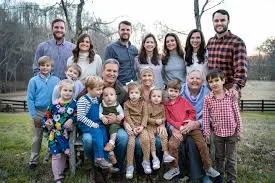
Gov. Bill Lee of Tennessee offers a testimony on grief and renewal (with no politics)

Gov. Bill Lee of Tennessee offers a testimony on grief and renewal (with no politics)

There was nothing unusual about Tennessee Gov. Bill Lee meeting with Jelly Roll before pardoning him for the felony robbery and drug-related crimes in his past.

What the governor didn't realize was that they had met years earlier, when Lee offered a prison testimony about the impact of grief on his family. That audience included the future country-music superstar.

At the recent National Prayer Breakfast, Lee said the man previously known as Jason DeFord told him: "You don't remember me, but we met in 2008. …You were not the governor, and I was not Jelly Roll. And here we are, 17 years later."

Lee said his Jelly Roll reunion reminded him of truths he learned after his wife's fatal horse-riding accident in 2000.

"There are very few things in life that matter and we should be about them," he said. "I have a belief that within every human being, there's this innate sense that we all need a pardon. And there is only one who can grant that pardon, and He has to be asked. … His name is Jesus."

The governor was asked to be the keynoter on one day's notice. His testimony contrasted sharply with the politically charged atmosphere in recent prayer breakfasts. In fact, there are now two competing events, with many lawmakers attending a smaller U.S. Capitol event.

News after the larger Washington Hilton rite focused on President Donald Trump's claim that, "I've done more for religion than any other president," referring to his actions on religious-freedom issues at home and abroad.

Flowers and the First Amendment: Once again, the Supreme Court elects to punt

Flowers and the First Amendment: Once again, the Supreme Court elects to punt

Florist Barronelle Stutzman and Robert Ingersoll have shared many details from the 2013 conversation that changed their lives and, perhaps, trends in First Amendment law.

For nine years, Ingersoll was a loyal customer at Arlene's Flowers in Richland, Wash., and that included special work Stutzman did for Valentine's Day and anniversaries with his partner Curt Freed. Then, a year after the state legalized same-sex marriages, Ingersoll asked her to design the flower arrangements for his wedding.

Stutzman took his hand, Ingersoll recalled, and said: "You know I love you dearly. I think you are a wonderful person, but my religion doesn't allow me to do this."

In a written statement to the Christian Science Monitor, Ingersoll wrote: "While trying to remain composed, I was … flooded with emotions and disbelief of what just happened." He knew many Christians rejected gay marriage but was stunned to learn this was true for Stutzman.

As stated in recent U.S. Supreme Court documents: "Barronelle Stutzman is a Christian artist who imagines, designs and creates floral art. … She cannot take part in or create custom art that celebrates sacred ceremonies that violate her faith."

This legal drama appears to have ended with Stutzman's second trip to the high court and its July 2 refusal to review a Washington Supreme Court decision the drew a red line between a citizen's right to hold religious beliefs and the right to freely exercise these beliefs in public life. Supreme Court justices Clarence Thomas, Samuel Alito and Neil Gorsuch backed a review, but lacked a fourth vote.

"This was shocking" to religious conservatives "because Barronelle seemed to have so many favorable facts on her side," said Andrew T. Walker, who teaches ethics at Southern Baptist Theological Seminary.

Stutzman is a 76-year-old grandmother and great-grandmother who faces the loss of her small business and her retirement savings. She has employed gay staffers. She helped Ingersoll find another designer for his wedding flowers. In the progressive Northwest, her Southern Baptist faith clearly makes her part of a religious minority.

"Barronelle is a heretic because she has clashed with today's version of progressivism," said Walker.

Letter from Catholic women: Papal silence isn't going to lessen pain, anger in the church

Letter from Catholic women: Papal silence isn't going to lessen pain, anger in the church

After a week of headlines and dissent, Pope Francis delivered a sermon that -- once again -- offered silence as his strategic response to critics.

The "father of lies, the accuser, the devil" is trying to divide Catholics, said the pope. When faced with "people who do not have good will, with people who seek only scandal, who seek only division, who seek only destruction, even within families" the proper response is "silence, and prayer."

This echoed earlier remarks when, asked about a scathing epistle by the Vatican's former U.S. ambassador, Pope Francis said, "I will not say a single word on this."

Silence isn't what the authors of a "Letter to Pope Francis from Catholic Women" want to hear, right now. They want the pope to answer Archbishop Carlo Vigano's key accusations -- especially claims that Francis ignored evidence of sexual abuse against children and seminarians by ex-cardinal Theodore McCarrick of Washington, D.C.

"Our hearts are broken, our faith tested, by the escalating crisis engulfing our beloved Church," said the online petition, with more than 30,000 signatures at midweek. "The pain and suffering of the victims never ends, as each news cycle brings more horrific revelations of sexual abuse, sexual misconduct, cover-ups, and deceit -- even at the Church's highest levels."

Several of the Vigano's charges "require neither lengthy investigations nor physical evidence. They require only YOUR direct response, Holy Father."

Tensions have worsened in recent weeks, especially after a hellish grand-jury report about the crimes of 300 priests in six Pennsylvania dioceses. Then came news coverage validating decades of rumors about McCarrick, including testimony about his seduction and abuse of seminarians. Then came Vigano's blast, including charges that Francis trumped efforts by Pope Benedict XVI to push McCarrick out of the spotlight.

The women's statement was triggered by a "wave of problems that has produced so much anguish, confusion, dismay and anger," said Mary Rice Hasson, a Catholic scholar at the Ethics and Public Policy Center in Washington. "It's not like there has been one problem that we could solve with a few reforms. … The problems just keep coming at us, one after another."