
LGBTQ

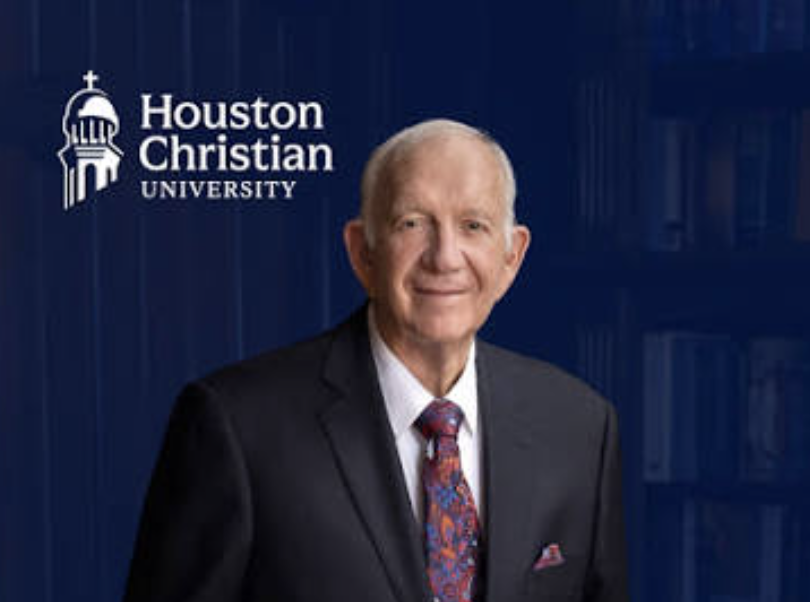
Memory eternal: Robert Sloan's final advice on Christian higher education

Memory eternal:  Robert Sloan's final advice on Christian higher education

Year after year, faith-based colleges produce waves of upbeat brochures, social-media appeals and videos for parents and their children.

The presidents of these institutions should study these materials closely, said Houston Christian University President Robert B. Sloan, Jr., at the January 2026 conference of the International Alliance for Christian Education

"All of the brochures in the world, declaring in glossy print the Christian claims of an institution, cannot overcome the failures of personnel to embrace, expound and affirm the Christian identity of the institution," said Sloan, who led Baylor University, his alma mater (and mine), before his 2006 move to Houston. "If the recruiting materials and fundraising newsletters do not match what really goes on in the classroom or in student life, you may expect not only disappointment but cynicism and, eventually, conflict."

Thus, presidents must have courage when hiring faculty, he stressed.

"When you hire someone," said Sloan, "you should never accept their mere consent, no matter how good their credentials are academically, to 'appreciate' or 'be sensitive to' your culture and character. I used to know of a situation where an interviewer would refer to the 'expectations of our constituents' and then ask, 'Are you all right with that?'"

Close is not good enough, stressed Sloan. It's crucial to learn, "Does the candidate want to be at an institution like yours? … Or do they simply want a job?"

Sloan's address -- 11 theses for Christian higher education -- was timely, after years of headlines about faith-based schools closing their doors as experts warned about a looming "enrollment cliff" due to falling birth rates. It was also symbolic because Sloan died on July 4, after suffering a stroke at age 77.

That plenary address "was the best presentation I have ever heard him give. It will serve as a guide for IACE and for all Christian higher education for years to come," said Southwestern Baptist Theological Seminary President David Dockery, writing for Baptist Press.

Baseball cap wars: Can the biblical rainbow coexist with a Pride Night rainbow?

Baseball cap wars: Can the biblical rainbow coexist with a Pride Night rainbow?

After the great flood in the Book of Genesis, God offered a timeless symbol of hope.

The Bible says God promised: "I have set my rainbow in the clouds, and it will be the sign of the covenant between me and the earth. Whenever … the rainbow appears in the clouds, I will remember my covenant between me and you and all living creatures of every kind. Never again will the waters become a flood to destroy all life."

Nevertheless, clashing rainbow symbols recently created a storm in Major League Baseball when powers wielded by team owners clashed with the religious beliefs of players.

The big question: Can the biblical rainbow coexist on the same Pride Night baseball cap with the today's rainbow celebrating LGBTQ+ rights?

This controversy raised legitimate First Amendment issues, but also helped clarify the workplace rights of employers, said Hal Frampton, senior counsel for Alliance Defending Freedom and director of the group's Center for Conscience Initiatives.

The clash between MLB leaders and several San Francisco Giants pitchers "was about both issues, really," he said, reached by telephone. "It was about not being discriminated against" in the workplace, especially if there were questions about whether an employer was "enforcing a rule consistently," or only enforcing it when there was "religious expression that was seen as troublesome" to employers.

The firestorm began when Giants starting pitcher Landen Roupp, along with relievers J.T. Brubaker and Ryan Walker, wrote Bible verse references -- variations on Genesis 9: 12-16 -- next to the rainbow logo on their Pride Night caps. Relief pitcher Sam Hentges chose to wear his standard black-and-orange Giants cap, without the rainbow logo.

Another year on the religion beat: The great Russell Shaw on secrecy in Catholic life

Another year on the religion beat: The great Russell Shaw on secrecy in Catholic life

In the spring of 1972, Catholic bishops gathered in Atlanta for an historic event -- their first gathering under a policy that would allow journalists inside the doors of their meetings.

Cardinal John Krol of Philadelphia, the conference president, promised to honor the policy approved by the bishops, which did allow many sensitive topics to be discussed during closed executive sessions.

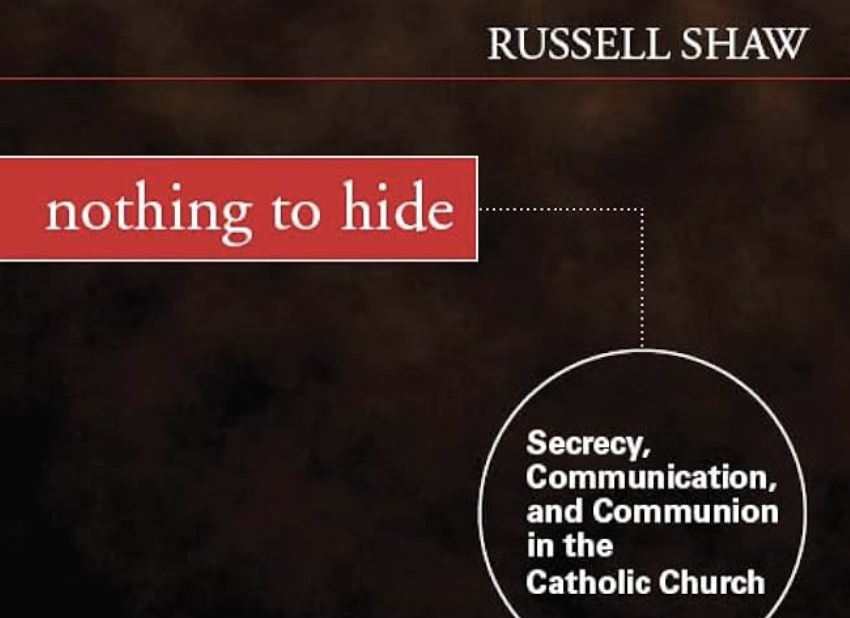
"Cardinal Krol managed to get his own back, after his own fashion," wrote journalist Russell Shaw, in his book "Nothing to Hide: Secrecy, Communication and Communion in the Catholic Church." He served, with different titles, as press aide for the bishops from 1969-1987 and wrote more than 20 books and thousands of articles for Catholic and mainstream publications.

"At the start of the meeting, after the bishops had prayed and taken care of preliminaries, the cardinal rose to speak. He spoke rapidly and at length -- in Latin! Nervous coughing and shuffling of papers could be heard from the press section."

Eventually the cardinal faced the journalists, with what Shaw called a "wicked grin." Krol quipped: "We told you we'd let you in. We didn't tell you what language we'd speak."

Krol was a conservative, but progressives have used similar tactics. I once asked Cardinal Joseph Bernardin of Chicago, after tense debates about the morality of nuclear weapons, if several bishops -- by switching to Latin at key moments -- had "launched a preemptive strike" on newspaper headline writers. He smiled and said, "Yes."

This past week marked the start of my 38th year writing this "On Religion" column, and I spent 20 years leading GetReligion.org, a website that critiqued mainstream coverage of religion news. Over the decades, I had many encounters with Shaw and his January death, at age 90, reminded me that choices made by powerful clergy, as well as newsroom managers, often determine what news makes it into print.

One story loomed over Shaw's career more than any other -- decades of hidden and then public scandals about the sexual abuse of children, teens and adults by Catholic clergy.

The Episcopal Church is about to die? It's leader says that's a lie "from the pit of hell"

The Episcopal Church is about to die? It's leader says that's a lie "from the pit of hell"

Episcopal Church leaders have long heard warning sirens in their annual reports, with brutal statistics supporting this reality -- they have lost half of their members since the 1960s.

If trends continue, the mainline Anglican flock in America will lose another half of its membership by 2040, with some demographers predicting institutional demise by 2050. But that's better than the Anglican Church of Canada, which could be gone by 2040.

After years of producing reports about religion in America, political scientist Ryan Burge knows a viral headline when he sees one. One of his recent Graphs about Religion posts asked: "When are Half of Your Members Going to be Dead?"

"Episcopalians are old," wrote Burge. "In fact, two-thirds of their adult members have celebrated their 60th birthday. In contrast, just 6% are under the age of 30. Put simply: for every young adult Episcopalian in the pews this Sunday, there will be about 10 retirees. Oof."

Episcopalians hold five funerals for every wedding, he noted, in a January 23 address for the Episcopal Diocese of Central Florida.

"My job is to tell the truth," said Burge, of the John C. Danforth Center on Religion and Politics at Washington University in St. Louis. For the Episcopal Church, "the check engine light is flashing."

Episcopalians are not alone, he stressed. In the 1950s, according to historians, "mainline" Protestants -- Episcopalians, Lutherans, Presbyterians, Methodists and others -- were 52% of the U.S. population. That fell to 30% by 1970 and, today, has hit 8.7%.

"Guess what? Old people die, and they're really religious. And you know who they're going to be replaced by? Young people, who are not very religious," said Burge, noting that about 43% of Generation Z claims no religious affiliation.

Drawing laughter, he added: "Hey, here's some good news. Attendance is up, a little bit." And donations are steady. However, "If you die with the most money, you're still dead."

Burge's name surfaced during the Episcopal Parish Network's annual meeting, held in Charlotte, North Carolina. Asked about reports of doom, Presiding Bishop Sean Rowe noted that "people make their living telling us that."

2025 headlines: The year of Pope Leo XIV and immigration fights with Donald Trump

2025 headlines: The year of Pope Leo XIV and immigration fights with Donald Trump

On Pentecost Sunday, Pope Leo XIV left few doubts about the issue he wanted listeners to ponder during this symbolic event early in his papacy.

"The Spirit opens borders, first of all, in our hearts," he said, in the June 8 sermon. He later added, "The Spirit also opens borders in our relationship with others," thus "opening our hearts to our brothers and sisters, overcoming our rigidity, moving beyond our fear of those who are different."

Finally, he stressed: "The Spirit also opens borders between peoples. …Where there is love, there is no room for prejudice, for 'security' zones separating us from our neighbors, for the exclusionary mindset that, tragically, we now see emerging also in political nationalisms."

For members of the Religion News Association, this was the kind of dramatic appeal that made the Chicago native the top Religion Newsmaker of 2025. The runner-up was Democratic Socialist Zohran Mamdani, who was elected as New York City's first Muslim mayor. The assassinated evangelical activist Charlie Kirk placed third.

The top U.S. religion news story was a tie between the papal election and ongoing debates about President Donald Trump and immigration. The poll stressed the White House call for "sweeping deportations of immigrants lacking legal status. … Catholic bishops and other faith-based groups protest and report parishioners avoiding worship for fear of arrest."

The rise of Pope Leo XIV was the top 2025 international religion story, with the death of Pope Francis finishing second.

In November, the U.S. Conference of Catholic Bishops overwhelming approved a statement rejecting "a climate of fear and anxiety around questions of profiling and immigration enforcement. We are saddened by the state of contemporary debate and the vilification of immigrants." They condemned the "indiscriminate mass deportation of people."

While backing the U.S. bishops, Pope Leo told journalists outside Castel Gandolfo: "No one has said that the United States should have open borders. I think every country has a right to determine who and how and when people enter." Still, he criticized what he called "extremely disrespectful" or "inhuman" treatment of long-term immigrants who are living productive lives.

Graffiti tales at Canterbury, and a new leader for divided Anglican Communion

Graffiti tales at Canterbury, and a new leader for divided Anglican Communion

In ordinary times, the arrival of a new Archbishop of Canterbury would be a headline that stood alone, especially if England's monarch had just approved the first woman to serve as the symbolic leader of the Anglican Communion.

But the recent decision to add decorative graffiti inside Canterbury Cathedral, founded in 597, added tension to debates surrounding the October 2 appointment of the Right Reverend and Right Honorable Dame Sarah Mullally as the 106th successor to St. Augustine.

The "Hear Us" exhibition added flashy decals to the columns, walls and floors of the iconic sanctuary, imitating the spray-paint art common in alleys, road underpasses and urban neighborhoods. The images offered bold challenges, such as: "God, what happens when we die?", "Are you there?", "Why did you create hate?" and "Do you ever regret your decisions?"

Cathedral Dean David Monteith explained: "There is a rawness which is magnified by the graffiti style which is disruptive." The exhibit, which ends in January, "allows us to receive the gifts of younger people who have much to say."

Among Anglicans, Monteith's leadership role has fueled debates because of his public decision to enter a same-sex civil partnership -- a stance rejected by traditional clergy in England and around the world. He also made headlines in 2024 with "Rave in the Nave" disco nights, with a temporary alcoholic bar located near where St. Thomas Becket was martyred in 1170.

In her first sermon after being named Archbishop of Canterbury, Mullally alluded to the messy divisions inside the worldwide Anglican Communion, with its 85-110 million believers.

"In an age that craves certainty and tribalism, Anglicanism offers something quieter but stronger: shared history, held in tension, shaped by prayer, and lit from within by the glory of Christ," she said.

"Across our nation today, we are wrestling with complex moral and political questions. The legal right of terminally ill people to end their own lives. Our response to people fleeing war and persecution. … The deep-rooted question of who we are as a nation, in a world that is so often on the brink."

When did Stephen Colbert's satire, with it's Catholic grace, veer into ridicule and rage?

When did Stephen Colbert's satire, with it's Catholic grace, veer into ridicule and rage?

Soon after Stephen Colbert landed "The Late Show" he welcomed tycoon Donald Trump as a guest and did something shocking — he apologized.

"I said a few things about you over the years that, that are, you know, in polite company, perhaps, are unforgivable," Colbert said, in 2015.

"Accepted," said Trump, smiling.

That encounter was light years from what happened after Trump celebrated the recent CBS decision to cancel "The Late Show."

On social media, the president said Colbert's "talent was even less than his ratings."

Colbert fired back in his monologue: "Would an untalented man be able to compose the following satirical witticism? Go f*** yourself."

While Colbert retains a faithful congregation, some fans who loved his sly blend of satire and progressive Catholicism mourn his decision to preach to only half of America, said media scholar Terry Lindvall, author of "God Mocks: A History of Religious Satire from the Hebrew Prophets to Stephen Colbert," published in 2015.

"He made you laugh and think," said Lindvall, reached by telephone. "When he turned on the rage, he turned mean. He turned bitter. He acted like he was a prophet, not a jester." Sadly, Lindvall added, the Trump era turned Colbert into "a liberal fundamentalist. … He drank the Kool-Aid."

The goal, in "God Mocks," was to offer a "bumpy tour through Rome, Jerusalem and Lilliput," arriving at Comedy Central. Lindvall praised Colbert's early work on "The Colbert Report," in which he pretended to be a blow-hard conservative pundit, creating an upside-down persona who could mock secular progressives and atheists, as well as thinkers on the right. Conservative guests, especially Catholics, were often treated with respect.

That was satire, wrote Lindvall, recognizing "a moral discrepancy between what is proclaimed and what is practiced. … The biblical satirist shares in the blame and shame of his defendants.

Does the Anglican Church of Canada have a future?

Does the Anglican Church of Canada have a future?

In the year of our Lord 1967, the Anglican Church of Canada had 1,218,666 members and 272,400 worshippers on a typical Sunday.

In a recent report, the church found 294,382 members on parish rolls and 58,871 people attending worship services.

”The religious institution many of us have long known and loved does not look now as it did even 20 years ago, and it will not look the same 20 years from now," noted a report from church leaders, "Creating Pathways for the Transformational Change of the General Synod (.pdf)."

Waves of declining statistics will "evoke grief, fear and longing. …This report does not seek to reverse current trends, but to respond to them to empower a much smaller church to thrive as it proclaims the gospel today and in the future."

Obviously, the "church is changing. … But that change is not the same as the end of the church. That change may be uncomfortable, but being uncomfortable is not the same as the end of the church," noted the Rev. Neil Elliot of the Province of British Columbia, in the report's executive summary. His X profile says he is the "official stats nurd" for Canadian Anglicans.

The "Creating Pathways" text noted that, while pew-level statistics have plunged 75%, the denomination still has 1474 parishes, compared to 1849 in 1967. Meanwhile, the number of bishops has increased from 36 to 39.

While promising to offer "prophetic imagination" and a "refusal to ignore difficult conversations," the report focuses on cuts and consolidations to increase efficiency, perhaps through remote work, AI advances and better communication networks. The bottom line: The church's 30 dioceses, four provinces and two national administrative bodies have "been sustained with a drastically decreased base of support." The General Synod staff has, in recent decades, been cut from 94 to 39.

Pope Leo XIV will have to face the gospel according to his German bishops

Pope Leo XIV will have to face the gospel according to his German bishops

The days after a pope's death are hectic and it's a hard time for Vatican officials to examine complex, controversial documents.

Nevertheless, the bishops of German -- two days Pope Francis died on April 21 -- announced guidelines for handling blessings for same-sex couples and other "irregular" relationships. The "Blessing gives strength to love" summary mentioned, with a nod to the Vatican, that these rites "should be designed in such a way that there is no confusion with the liturgical celebration of the sacrament of marriage."

The instructions, however, noted the need to consider a "couple's wishes" about the setting, choosing details "in a theologically meaningful way." Also, the "aesthetics, including music and singing, should express the appreciation of the people who ask for the blessing, their togetherness and their faith." Appropriate "biblical texts should be recited" and interpreted.

Blessing prayers should proclaim: "Those God blesses, upon whom he 'makes his face shine' " are blessed to thrive "under God's loving gaze."

Then, on May 2, a committee of German bishops and laity announced plans to discuss a text entitled "Respecting decisions of conscience in matters of birth control." On May 3, Bishop Georg Bätzing -- chair of the German bishops' conference -- voiced his full support for the ordination of women in Catholic ministry.

Welcome to the Chair of St. Peter, Pope Leo XIV.

While outsiders have focused on the political impact of the 267th pope -- an American who has served in Peru and Rome -- insiders have searched the career of Robert Francis Prevost for hints as to how he will handle conflicts about Catholic worship and doctrine. Germany is ground zero.

"Both orthodox Catholics and modernists have been celebrating, while there have been naysayers on both sides, too," noted Vatican analyst Serre Verweij, writing for Rorate Caeli (Drop down, O heavens). "This reflects the fact Prevost was touted as a 'compromise candidate' and pushed by strong prelates on both sides. Both the orthodox and the modernists seem to think, or hope, that the new Pope actually leans more in their direction. … So, to put it crudely, the real question is: who got played?"

Texts -- past and present -- produced by Prevost are being analyzed and reanalyzed by his supporters and critics.