
David Dockery

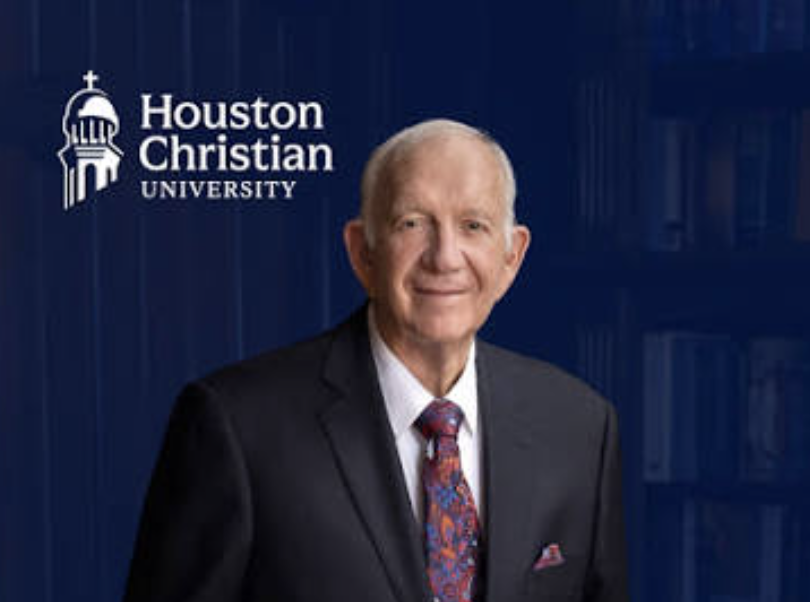
Memory eternal: Robert Sloan's final advice on Christian higher education

Memory eternal:  Robert Sloan's final advice on Christian higher education

Year after year, faith-based colleges produce waves of upbeat brochures, social-media appeals and videos for parents and their children.

The presidents of these institutions should study these materials closely, said Houston Christian University President Robert B. Sloan, Jr., at the January 2026 conference of the International Alliance for Christian Education

"All of the brochures in the world, declaring in glossy print the Christian claims of an institution, cannot overcome the failures of personnel to embrace, expound and affirm the Christian identity of the institution," said Sloan, who led Baylor University, his alma mater (and mine), before his 2006 move to Houston. "If the recruiting materials and fundraising newsletters do not match what really goes on in the classroom or in student life, you may expect not only disappointment but cynicism and, eventually, conflict."

Thus, presidents must have courage when hiring faculty, he stressed.

"When you hire someone," said Sloan, "you should never accept their mere consent, no matter how good their credentials are academically, to 'appreciate' or 'be sensitive to' your culture and character. I used to know of a situation where an interviewer would refer to the 'expectations of our constituents' and then ask, 'Are you all right with that?'"

Close is not good enough, stressed Sloan. It's crucial to learn, "Does the candidate want to be at an institution like yours? … Or do they simply want a job?"

Sloan's address -- 11 theses for Christian higher education -- was timely, after years of headlines about faith-based schools closing their doors as experts warned about a looming "enrollment cliff" due to falling birth rates. It was also symbolic because Sloan died on July 4, after suffering a stroke at age 77.

That plenary address "was the best presentation I have ever heard him give. It will serve as a guide for IACE and for all Christian higher education for years to come," said Southwestern Baptist Theological Seminary President David Dockery, writing for Baptist Press.

Do many believers fear 'theology'? This affects the work done at seminaries today

Do many believers fear 'theology'? This affects the work done at seminaries today

During the 1970s and '80s, the flocks gathered in conservative Protestant pews kept growing and growing — until a third of the U.S. population could be defined as "evangelical."

Times were already getting tough for leaders of progressive Mainline churches, with sharp declines in budgets and worship attendance. But the waters were smooth for evangelicals.

"One might be considered a capable kayaker if the river currents are moving along at only a few miles per hour," said theologian David Dockery, during the recent convocation rites at Southwestern Baptist Theological Seminary in Ft. Worth, Texas, after he was inaugurated as its 10th president.

But the currents changed, while many contented evangelical leaders didn't spot the dangerous waves around them. "I fear that the waters of our cultural context have become much choppier and are moving evermore rapidly with each passing year," said Dockery, who noted that he was beginning his 40th year working in Christian higher education.

Consider a sobering new study -- "The Great Dechurching. Who's Leaving, Why Are They Going, and What Will It Take to Bring Them Back" -- by researchers Jim Davis, Michel Graham and Ryan Burge. Their numbers indicate that evangelicalism has backslid to where it was 50 years ago.

The big question is, "Why?" Dockery said he accepts the study's thesis that many boom-era evangelicals lacked "deep roots in their understanding of the Christian faith." Many evangelicals failed to teach practical discipleship in daily life and seemed reluctant to defend the truths "delivered to the saints" through the ages. This fear of theology has proven to be a disaster as America "has become more secularized, polarized and confused," he said.

Thus, the "Dechurching" trend leads straight to hard questions about seminaries, noted Burge, in his "Graphs about Religion" newsletter.