Godbeat

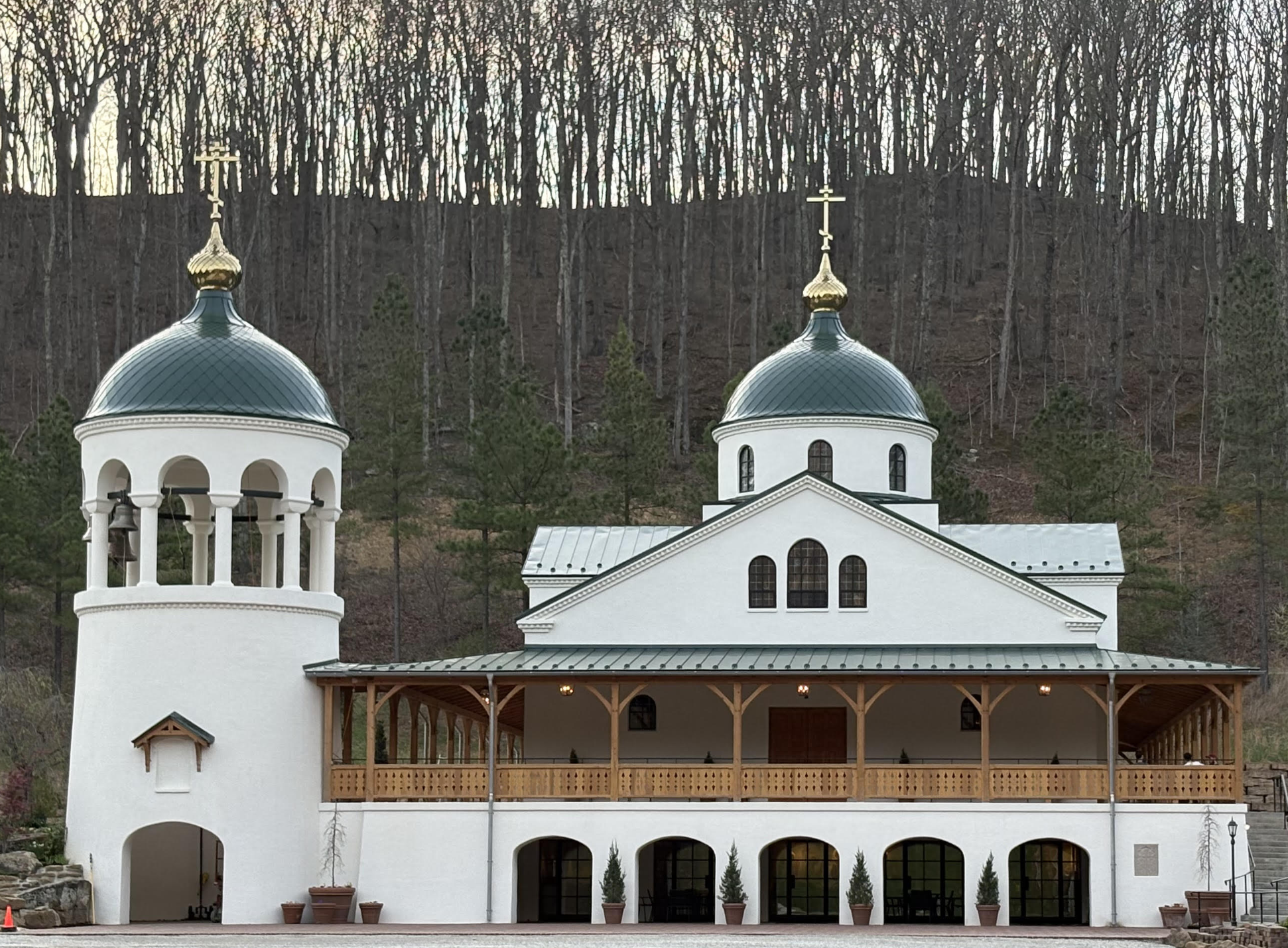
Soaring Orthodox crosses at monastery in a holler in the mountains of West Virginia

Soaring Orthodox crosses at monastery in a holler in the mountains of West Virginia

There is nothing unusual about turning a corner in West Virginia's maze of rough mountain roads and seeing churches with plain white walls and big porches.

But the new sanctuary at the Hermitage of the Holy Cross -- 10 miles of twists and turns into a holler outside the town of Wayne -- offers a variation on that vision. Its green-metal roof has domes resembling medieval Russian helmets, topped with golden cupolas and soaring Slavic crosses.

"When you go to the monastery you begin to think that you're driving off the edge of the world, but then you come around the bend and they've built this whole civilization up there," said Andrew Gould, the Orthodox artist from Charleston, South Carolina, who designed this church for a compound of log-cabins and rustic buildings.

The goal was to blend Orthodox tradition and the simplicity of the local culture.

"We needed people to see this building and immediately say, 'That's a church. That's a beautiful church.' It is always my goal to design churches that are linked to Orthodox traditions but still look like churches to people here in America, even in Appalachia," he said.

The church can hold 50 monks and 150 worshippers -- but the giant, wraparound porch can welcome twice that for feast-day celebrations and special events, especially on rainy mountain days.

"The porch was something we had in the plans, but it is serving a purpose greater than what we intended. It was something God intended," said Abbot Gabriel, 39, a native of Appalachia who converted to Orthodoxy in 2007 and became a novice in 2011.

"The locals have become more and more comfortable with our presence" even if some may not enter the sanctuary, he said. "But gathering on a big porch for food and fellowship, that's different. That's what the locals do. That's mountain hospitality."
Another year on the religion beat: The great Russell Shaw on secrecy in Catholic life

Another year on the religion beat: The great Russell Shaw on secrecy in Catholic life

In the spring of 1972, Catholic bishops gathered in Atlanta for an historic event -- their first gathering under a policy that would allow journalists inside the doors of their meetings.

Cardinal John Krol of Philadelphia, the conference president, promised to honor the policy approved by the bishops, which did allow many sensitive topics to be discussed during closed executive sessions.

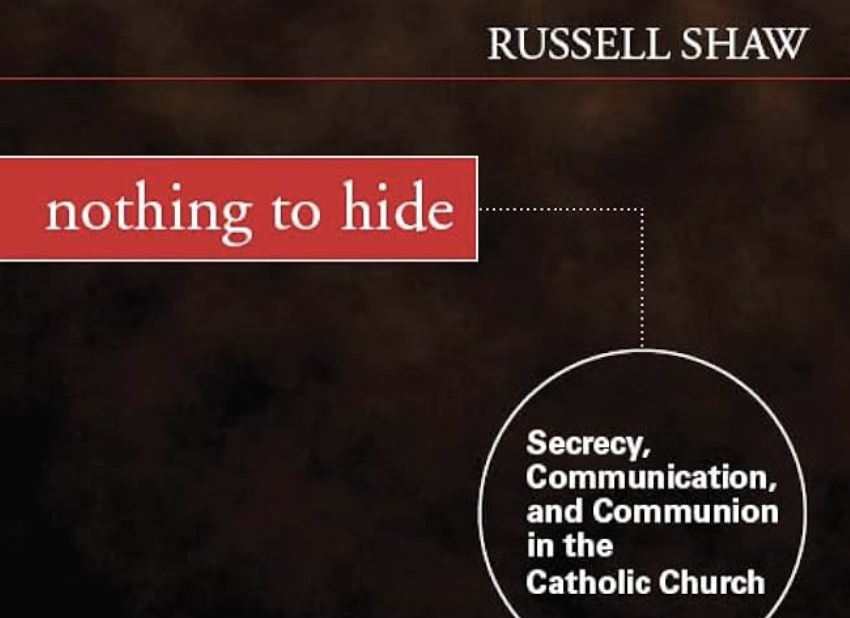
"Cardinal Krol managed to get his own back, after his own fashion," wrote journalist Russell Shaw, in his book "Nothing to Hide: Secrecy, Communication and Communion in the Catholic Church." He served, with different titles, as press aide for the bishops from 1969-1987 and wrote more than 20 books and thousands of articles for Catholic and mainstream publications.

"At the start of the meeting, after the bishops had prayed and taken care of preliminaries, the cardinal rose to speak. He spoke rapidly and at length -- in Latin! Nervous coughing and shuffling of papers could be heard from the press section."

Eventually the cardinal faced the journalists, with what Shaw called a "wicked grin." Krol quipped: "We told you we'd let you in. We didn't tell you what language we'd speak."

Krol was a conservative, but progressives have used similar tactics. I once asked Cardinal Joseph Bernardin of Chicago, after tense debates about the morality of nuclear weapons, if several bishops -- by switching to Latin at key moments -- had "launched a preemptive strike" on newspaper headline writers. He smiled and said, "Yes."

This past week marked the start of my 38th year writing this "On Religion" column, and I spent 20 years leading GetReligion.org, a website that critiqued mainstream coverage of religion news. Over the decades, I had many encounters with Shaw and his January death, at age 90, reminded me that choices made by powerful clergy, as well as newsroom managers, often determine what news makes it into print.

One story loomed over Shaw's career more than any other -- decades of hidden and then public scandals about the sexual abuse of children, teens and adults by Catholic clergy.

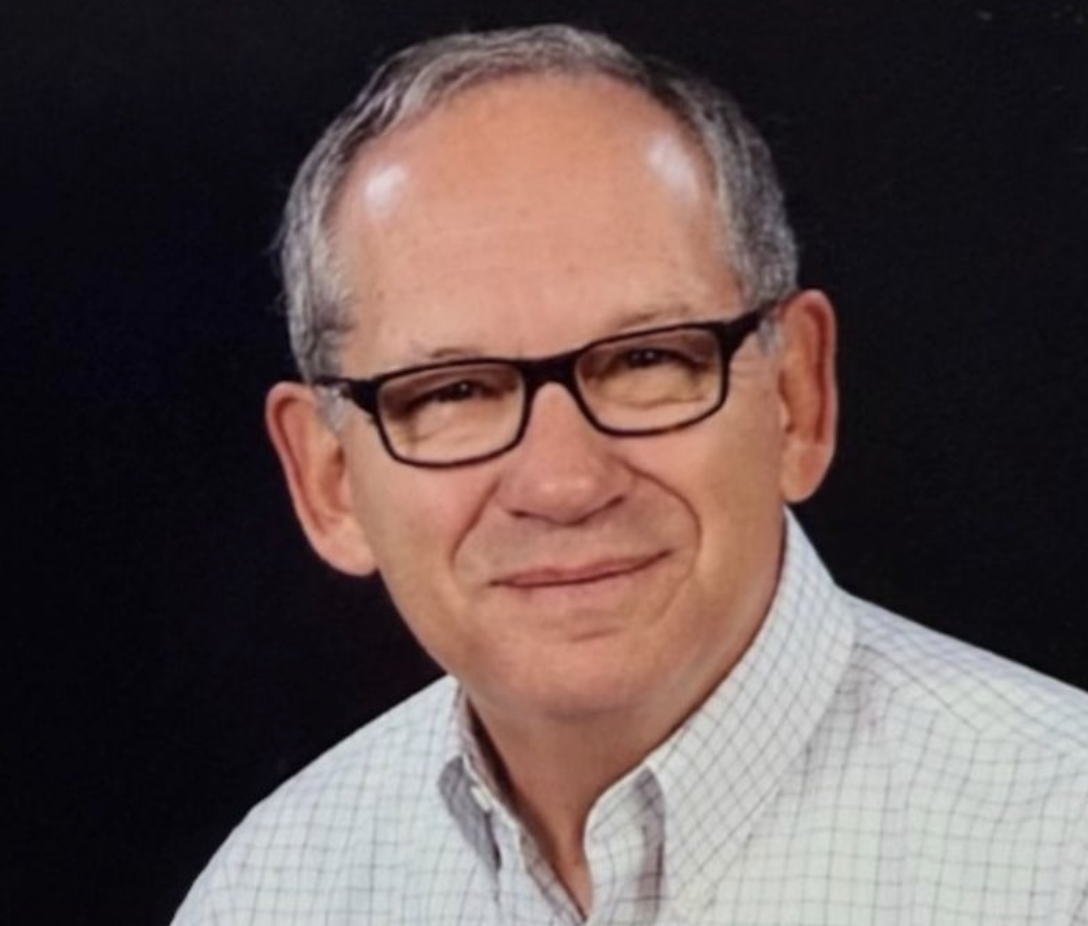
Memory eternal: For my brother Don Mattingly, a pioneer in youth ministry

Memory eternal: For my brother Don Mattingly, a pioneer in youth ministry

The Dictionary.com definition for "centrifuge" offers this: "An apparatus that rotates at high speed and by centrifugal force separates substances of different densities, as milk and cream."

It was a strange name, in the late 1970s, for a Southern Baptist Convention youth leadership project. But there was logic to it, according to the man behind the idea -- my brother Don Mattingly.

Centrifuge camps "would spin kids out into their futures, that's what Don always said. Out into ministries. Out into careers they wouldn't have thought of before. Out into projects back home, helping people," said Joe Palmer, the second Centrifuge leader. "It's not all playing volleyball, basketball and games. … They're learning about the rest of their lives."

For my older brother -- who died on March 18 -- the centrifuge of change in young lives was a major theme during his decades as a leader on the national SBC staff, at Baylor University and in countless youth-education events across America.

As the world whirled faster and faster, Don argued that religious leaders needed to create ministries that could spin young people in positive ways, helping them discover what mattered in their hearts, minds and souls.

Centrifuge began in 1979 in Glorieta, New Mexico, quickly attracting flocks of campers, with many Bible studies held in stairwells due to lack of space. This summer, during a "Fuge" (the nickname that stuck) somewhere in America, the network will register the 2 millionth participant in these unique camps.

At the heart of my brother's vision was a track system of classes and forums in which teens heard young leaders -- often seminary or graduate students -- address a variety of potential vocations. Fuge camps still offer tracks on sports, "STEM" careers, sign language, drama, "Random acts of service," music, "spiritual gifts" and more. "MFuge" camps cover work in local, national and global missions.

This was one of my brother's big ideas, as he planned and worked, while earning a religious education doctorate along the way: Young people needed to know that God can call them to work in pulpits or in classrooms, in missions or in coaching, in arts or hard sciences. The church should help them consider their options.

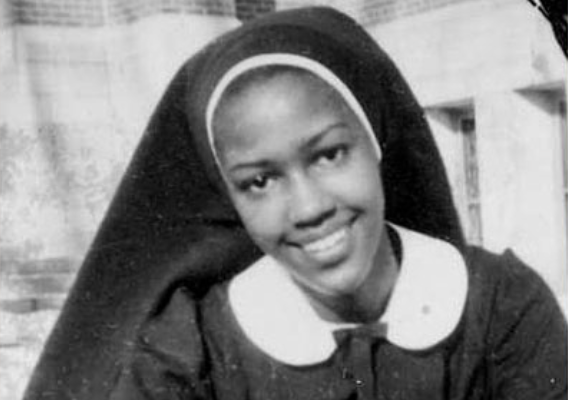
St. Thea of Mississippi? The case for her canonization has reached the Vatican

St. Thea of Mississippi? The case for her canonization has reached the Vatican

In the final months of her life, Sister Thea Bowman heard the whispers.

She appreciated the hugs that lingered longer, as believers promised to keep praying that she would win her battle with cancer. She saw the warm glances, containing a touch of awe, as Catholics -- especially Black Catholics -- quietly discussed whether Rome would someday recognize her as St. Thea of Mississippi.

"People who really know me know my struggles," she said, before an Aurora, Colorado, prayer service in 1989.

The word "saint" didn't bother her, she added. But she wanted to know why many Catholics hesitate to apply that term to others whose faith touched their lives.

"You see, I'm Black," she said, with a quiet laugh. "I guess the word 'saint' has a different meaning for me. I was raised in a community where everyone grew up believing we were supposed to be what we called a 'saint.' We were always saying things like, 'The saints would be coming to church today' or 'The saints will really be dancing and singing this Sunday.'"

Sister Thea died less than a year later at the age of 52, after spending most of her life teaching children in rural Mississippi schools. Then, in 1987, she was featured in a CBS News "60 Minutes" profile, leading to opportunities to speak and sing across America.

Now, after years of studying the life of Sister Thea, the Diocese of Jackson, Mississippi, has officially sealed the documents and materials it gathered and sent them to the Vatican Dicastery for the Causes of Saints. Before the February 9th Mass marking that event, Bishop Joseph Kopacz said: "Her life continues to inspire faith, hope and joy, not only within our diocese but throughout the church in the United States and beyond."

Sister Thea's grandfather was a slave, her father a physician. She converted to Catholicism when the Franciscan Sisters of Perpetual Adoration opened a school in central Mississippi. She entered a convent in the 10th grade and later earned a doctorate in English language and literature from the Catholic University of America.

Gov. Bill Lee of Tennessee offers a testimony on grief and renewal (with no politics)

Gov. Bill Lee of Tennessee offers a testimony on grief and renewal (with no politics)

There was nothing unusual about Tennessee Gov. Bill Lee meeting with Jelly Roll before pardoning him for the felony robbery and drug-related crimes in his past.

What the governor didn't realize was that they had met years earlier, when Lee offered a prison testimony about the impact of grief on his family. That audience included the future country-music superstar.

At the recent National Prayer Breakfast, Lee said the man previously known as Jason DeFord told him: "You don't remember me, but we met in 2008. …You were not the governor, and I was not Jelly Roll. And here we are, 17 years later."

Lee said his Jelly Roll reunion reminded him of truths he learned after his wife's fatal horse-riding accident in 2000.

"There are very few things in life that matter and we should be about them," he said. "I have a belief that within every human being, there's this innate sense that we all need a pardon. And there is only one who can grant that pardon, and He has to be asked. … His name is Jesus."

The governor was asked to be the keynoter on one day's notice. His testimony contrasted sharply with the politically charged atmosphere in recent prayer breakfasts. In fact, there are now two competing events, with many lawmakers attending a smaller U.S. Capitol event.

News after the larger Washington Hilton rite focused on President Donald Trump's claim that, "I've done more for religion than any other president," referring to his actions on religious-freedom issues at home and abroad.

Memory eternal, John L. Allen, Jr. -- Catholic journalist and a journalist who was Catholic

Memory eternal, John L. Allen, Jr. -- Catholic journalist and a journalist who was Catholic

The Boston Globe headline was blunt: "Church allowed abuse by priest for years."

This massive investigation into sexual abuse by Catholic clergy won the 2003 Pulitzer Prize for Public Service, forcing major newsrooms to cover a scandal that had festered for decades. The shockwaves continued in Boston and, more than a decade later, The Globe began a website -- Crux (Latin for "cross") -- to cover Catholic news.

Reporter John L. Allen, Jr., was a pivotal figure in that project, since he was already an established expert on all the roads that lead to Rome. However, Crux quickly showed that the news was there, the readers were there, but the dollars didn't add up -- yet.

Allen got the green light to create an independent Crux, which launched on April 1, 2016. The question was whether he could build a coalition of donors and organizations -- the Knights of Columbus, for example -- that would support real journalism.

Truth is, the "people on the other side of the deal have to believe in what you are doing and see the wisdom of becoming part of your brand," Allen told me at that time, via telephone from Rome. "Your partners also have to be smart enough to realize that a key part of your brand is that you are seen -- by your readers -- as being truly independent."

The bottom line: Allen was a journalist who was a Catholic and an active Catholic who was a real journalist and he fought to balance that equation, in his daily reporting, his 11 books and his commentary for CNN, CBS and others. His death on January 22, after a long battle with cancer, left a strategic hole in Catholic life. His funeral Mass was celebrated on Monday (January 26) at the Basilica of Sant'Eugenio in Rome. He was 61.

When describing the "brand" he wanted, Allen stressed this word -- "balance." In an early update to Crux 2.0 readers, he wrote: "We’re unambiguously committed to the teaching and tradition of the Catholic Church. We believe the Church, for all of its undeniable failures and challenges, is fundamentally a force for good in the world. …

"We also believe deeply in that famous line from Chesterton: 'Catholic doctrine and discipline may be walls; but they are the walls of a playground.' … My personal definition of success will be if, over the long haul, smart readers have a hard time saying whether they find us 'liberal' or 'conservative.'"

Concerning Pope Leo XIV, religious freedom and the legacy of George Orwell

Concerning Pope Leo XIV, religious freedom and the legacy of George Orwell

After a year in which 8 million Christians faced persecution, activists with the Netherlands-based Open Door network released a report claiming that 3,490 Christians were killed in Nigeria, out of 4,849 worldwide.

While the Holy See has remained cautious on this issue, Pope Leo XIV made his concerns clear when facing the Vatican diplomatic corps.

"It cannot be overlooked that the persecution of Christians remains one of the most widespread human rights crises today," he said, in a January 9 address. "This phenomenon impinges on approximately one in seven Christians globally. … Sadly, all of this demonstrates that religious freedom is considered in many contexts more as a 'privilege' or concession than a fundamental human right.

"Here, I would especially call to mind the many victims of violence, including religiously motivated violence in Bangladesh, in the Sahel region and in Nigeria, as well as those of the serious terrorist attack last June on the parish of Saint Elias in Damascus."

In a wide-ranging address that avoided criticizing specific governments, Pope Leo linked Catholic moral teachings to the rights of migrants, prisoners, noncombatants, the poor and the unborn, while also opposing what he called "a diplomacy based on force." He bluntly warned: "War is back in vogue and a zeal for war is spreading."

The pope also addressed forms of discrimination and even persecution based on efforts to undercut core human rights, such as religious liberty and freedom of speech. This is even happening, he said, in countries where Christians "are in the majority, such as in Europe or the Americas," where believers are "sometimes restricted in their ability to proclaim the truths of the Gospel for political or ideological reasons."

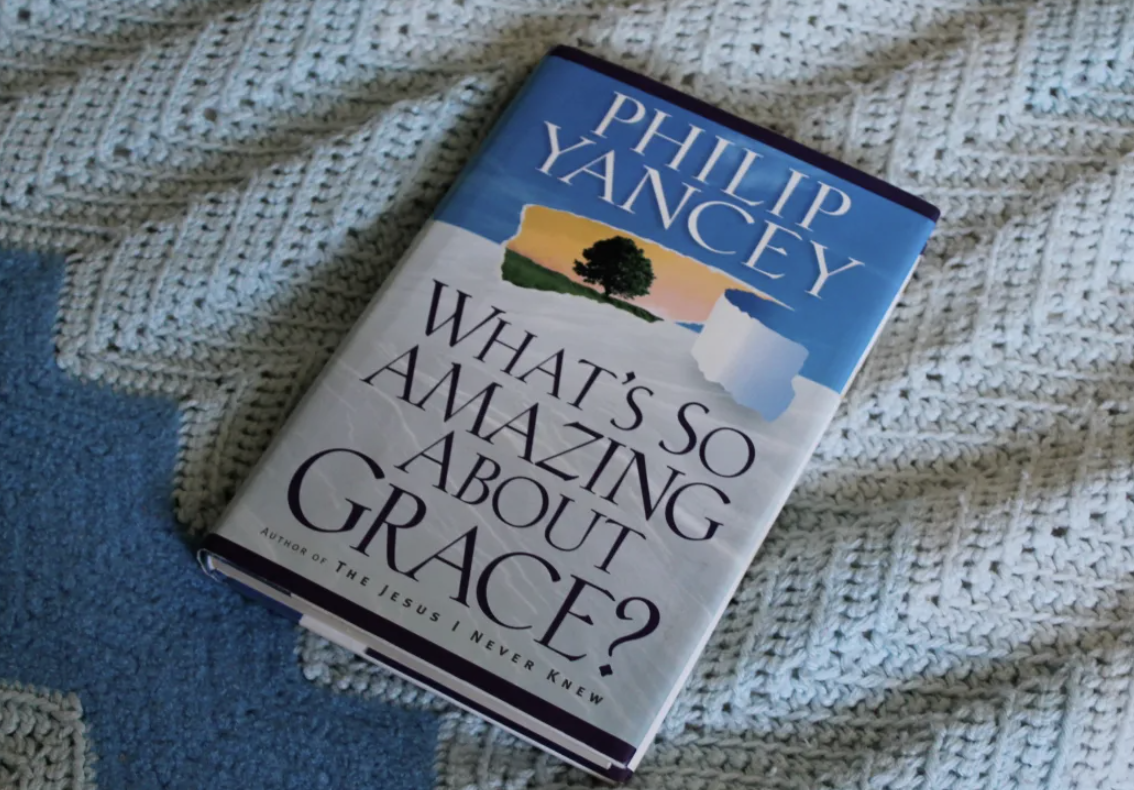
Philip Yancey is, once again, counting on the mercy and grace of God

Philip Yancey is, once again, counting on the mercy and grace of God

Asked to judge a woman "caught in the act of adultery," the Gospel of John says Jesus stooped, wrote something in the dust, then told her accusers: "Let anyone among you who is without sin be the first to throw a stone at her."

Then he wrote again. The silent religious leaders drifted away. What happened next sums up Christian teachings on sin, grace and forgiveness, according to Philip Yancey, long one of America's most popular evangelical writers.

Jesus asked the woman: "Didn't even one of them condemn you?" She said, "No, Lord," to which he replied, "Neither do I. Go and sin no more."

Fundamentalist preachers often portray God as a "cosmic policeman, someone who was just waiting to smash somebody who does something wrong," said Yancey, during a podcast with the Rev. Russell Moore, editor-at-large of Christianity Today.

That's wrong, said Yancey. Instead, church leaders should, "Start with Jesus and end with Jesus. … Jesus wasn't a pushover, by any means, but he was always full of compassion. … He never turned someone away who had an attitude of repentance."

Yancey has repeatedly delivered this message during a half century of addressing Christian denominations, colleges and myriad other gatherings. His books, such as "The Scandal of Forgiveness," have sold 20 million copies in 49 languages.

But the Moore podcast, on "The Problem of Pain and Suffering," was posted only four months before Yancey, 76, announced his retirement -- due to an eight-year sexual relationship with a married woman.

"My conduct defied everything that I believe about marriage. It was also totally inconsistent with my faith and my writings and caused deep pain for her husband and both of our families," wrote Yancey, to Christianity Today, where he was a columnist for decades.