
Mississippi

St. Thea of Mississippi? The case for her canonization has reached the Vatican

St. Thea of Mississippi? The case for her canonization has reached the Vatican

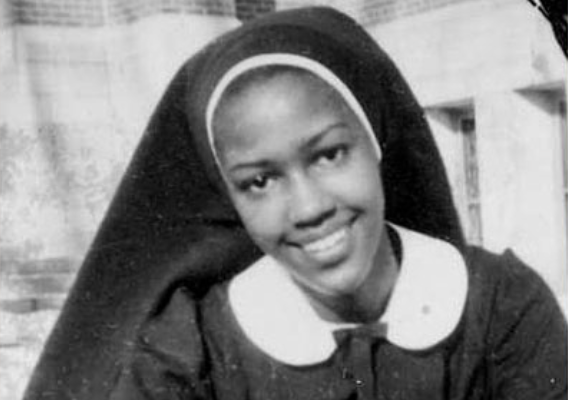
In the final months of her life, Sister Thea Bowman heard the whispers.

She appreciated the hugs that lingered longer, as believers promised to keep praying that she would win her battle with cancer. She saw the warm glances, containing a touch of awe, as Catholics -- especially Black Catholics -- quietly discussed whether Rome would someday recognize her as St. Thea of Mississippi.

"People who really know me know my struggles," she said, before an Aurora, Colorado, prayer service in 1989.

The word "saint" didn't bother her, she added. But she wanted to know why many Catholics hesitate to apply that term to others whose faith touched their lives.

"You see, I'm Black," she said, with a quiet laugh. "I guess the word 'saint' has a different meaning for me. I was raised in a community where everyone grew up believing we were supposed to be what we called a 'saint.' We were always saying things like, 'The saints would be coming to church today' or 'The saints will really be dancing and singing this Sunday.'"

Sister Thea died less than a year later at the age of 52, after spending most of her life teaching children in rural Mississippi schools. Then, in 1987, she was featured in a CBS News "60 Minutes" profile, leading to opportunities to speak and sing across America.

Now, after years of studying the life of Sister Thea, the Diocese of Jackson, Mississippi, has officially sealed the documents and materials it gathered and sent them to the Vatican Dicastery for the Causes of Saints. Before the February 9th Mass marking that event, Bishop Joseph Kopacz said: "Her life continues to inspire faith, hope and joy, not only within our diocese but throughout the church in the United States and beyond."

Sister Thea's grandfather was a slave, her father a physician. She converted to Catholicism when the Franciscan Sisters of Perpetual Adoration opened a school in central Mississippi. She entered a convent in the 10th grade and later earned a doctorate in English language and literature from the Catholic University of America.

Old Time Religion -- Meeting the woman who could become St. Thea of Mississippi

Old Time Religion -- Meeting the woman who could become St. Thea of Mississippi

The whispers began before Sister Thea Bowman reached Colorado for one of the final mission trips she would make before dying in 1990 at the age of 52.

The only African-American in the Franciscan Sisters of Perpetual Adoration, Bowman was a charismatic teacher, singer and evangelist and her ministry continued after cancer put her in a wheel chair.

Behind the scenes, folks at Our Queen of Peace parish near Denver were asking this question: Would this woman someday be hailed as St. Thea of Mississippi?

After her arrival, a local priest watched as Sister Thea led an interracial youth choir, rehearsing a gospel hymn, "Give Me That Old Time Religion," as well as the children's song she included in each service -- "This Little Light of Mine (I'm Gonna Let It Shine)."

Yes, people were talking about Sister Thea and sainthood, said Father William Breslin, pastor of this Aurora parish in 1989.

"Sometimes you have that sneaking suspicion," he said. "It's neat to be able to meet a person and experience. … It's neat to be able to put your finger on that special quality we can only call 'holiness.' "

Three decades later the U.S. Catholic bishops paused in Baltimore for a "canonical consultation," considering requests for a Vatican tribunal to begin investigating whether to declare Sister Thea a saint. On Nov. 14 the bishops said, "yes."

"The faithful in, and well beyond, the Diocese of Jackson" have made this request, Bishop Joseph Kopacz told the bishops. "Well before I arrived in Jackson" in 2014, "the requests were coming in. …The church embraced Sister Thea from her early years, but there were times when she felt like a motherless child."

During her 1989 "Sharing the Good News" mission -- which I covered for The Rocky Mountain News -- Sister Thea smiled, but shook her head, when asked about the whispers. She would talk about the word "saint," as long as she could define the term.

"People who really know me, they know all about my struggles," said an exhausted Bowman, leaning on the arm of her wheelchair after one service.

"You see, I'm black," she added, with a quiet laugh. "I guess the word 'saint' has a different meaning for me. I was raised in a community where … we were always saying things like, 'The saints would be coming in to church today' or 'The saints will really be dancing and singing this Sunday.' "