
Southern Baptist Convention

Life in a fishbowl: Southern Baptist pastors' wives get a chance to tell their stories

Life in a fishbowl: Southern Baptist pastors' wives get a chance to tell their stories

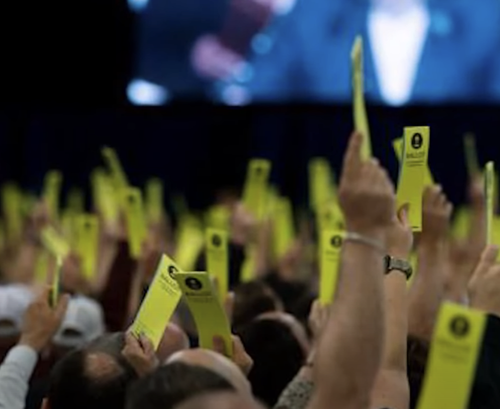
The Orange County Convention Center in Orlando will be buzzing when 20,000 Southern Baptists gather for their annual national meeting, rushing between forums, worship, reunions, business sessions and politicking about their elections and resolutions.

But there will be an upstairs room set aside June 8-9, divided into spaces for one-on-one encounters while a white-noise machine creates as much privacy as possible. For the second time, leaders connected to a network of Southern Baptist women will meet with pastors' wives who applied, in advance, for counseling.

One 2025 participant offered confidential feedback: "On top of church ministry concerns, I was broken over my relationship with our prodigal daughter and burdened by the time-consuming caregiving responsibilities with my aging mother. Though I had never gone to counseling, I knew its value. … I was given the freedom to be completely honest, without fear of damaging our family or my testimony."

Counselors later discussed the most common concerns, said Cheryl Bell, a former nurse who has a doctorate in biblical counseling. She teaches at Southwestern Baptist Seminary in Fort Worth, Texas, and also helps women who are pursuing doctoral degrees.

Many pastors' wives say they "live in fishbowls." Others describe being on the "front lines" of ministry, striving to help husbands who seem to have targets on their backs. In these sessions, participants often expressed anxiety, anger, loneliness and discouragement.

"They are always being observed," said Bell, reached by Zoom. "It's a critical gaze. … I think church members expect their pastors and their wives to be unique -- spiritually. … When they show that they have a sin nature they feel like they are immediately under judgement."

Can families hide in a fishbowl? Bell laughed and added: "That would take a lot of energy. Period."
Memory eternal: For my brother Don Mattingly, a pioneer in youth ministry

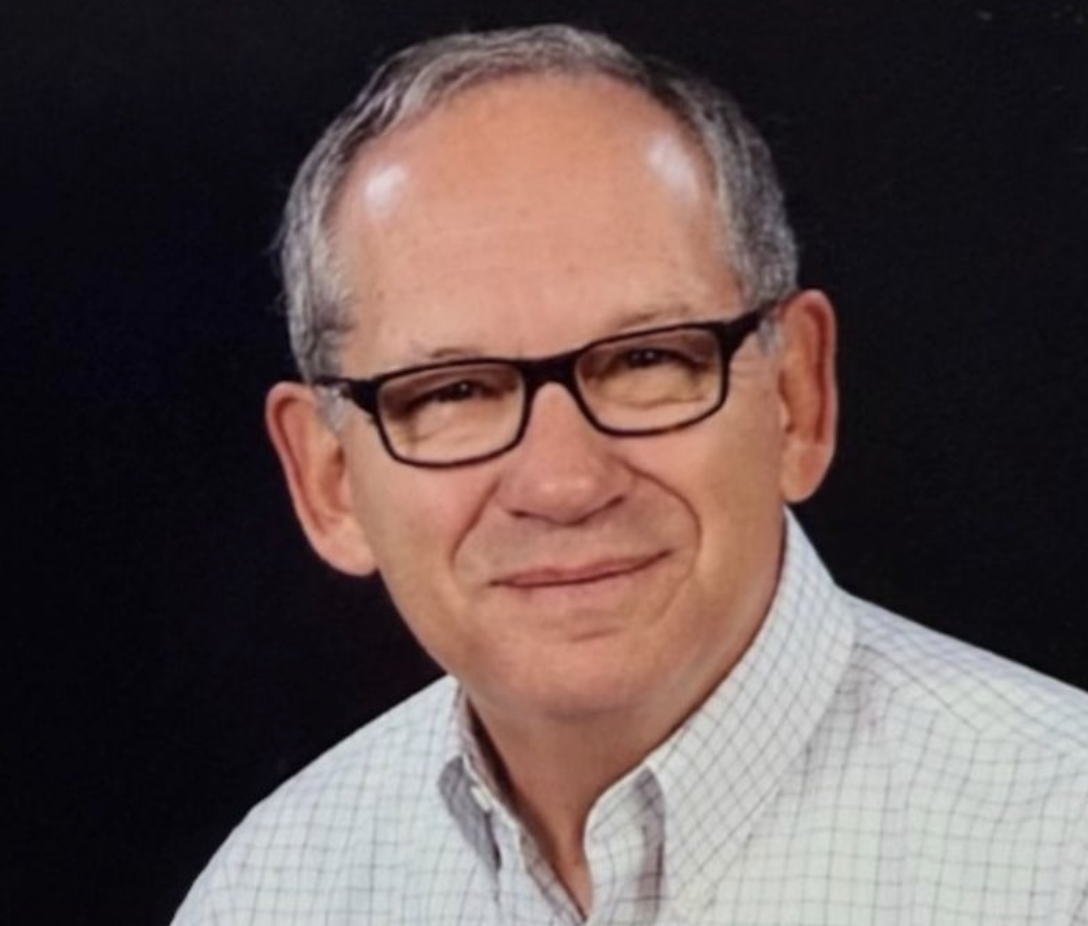
Memory eternal: For my brother Don Mattingly, a pioneer in youth ministry

The Dictionary.com definition for "centrifuge" offers this: "An apparatus that rotates at high speed and by centrifugal force separates substances of different densities, as milk and cream."

It was a strange name, in the late 1970s, for a Southern Baptist Convention youth leadership project. But there was logic to it, according to the man behind the idea -- my brother Don Mattingly.

Centrifuge camps "would spin kids out into their futures, that's what Don always said. Out into ministries. Out into careers they wouldn't have thought of before. Out into projects back home, helping people," said Joe Palmer, the second Centrifuge leader. "It's not all playing volleyball, basketball and games. … They're learning about the rest of their lives."

For my older brother -- who died on March 18 -- the centrifuge of change in young lives was a major theme during his decades as a leader on the national SBC staff, at Baylor University and in countless youth-education events across America.

As the world whirled faster and faster, Don argued that religious leaders needed to create ministries that could spin young people in positive ways, helping them discover what mattered in their hearts, minds and souls.

Centrifuge began in 1979 in Glorieta, New Mexico, quickly attracting flocks of campers, with many Bible studies held in stairwells due to lack of space. This summer, during a "Fuge" (the nickname that stuck) somewhere in America, the network will register the 2 millionth participant in these unique camps.

At the heart of my brother's vision was a track system of classes and forums in which teens heard young leaders -- often seminary or graduate students -- address a variety of potential vocations. Fuge camps still offer tracks on sports, "STEM" careers, sign language, drama, "Random acts of service," music, "spiritual gifts" and more. "MFuge" camps cover work in local, national and global missions.

This was one of my brother's big ideas, as he planned and worked, while earning a religious education doctorate along the way: Young people needed to know that God can call them to work in pulpits or in classrooms, in missions or in coaching, in arts or hard sciences. The church should help them consider their options.

Southern Baptists wade into the troubled waters of religious liberty -- once again

Southern Baptists wade into the troubled waters of religious liberty -- once again

In the midst of heated debates about female pastors and the morality of in vitro fertilization, the national Southern Baptist Convention recently passed a religious liberty resolution that -- in terms of Baptist history -- was rather ordinary.

But these are not ordinary times in American life.

"Messengers" from autonomous SBC congregations resolved: "That we encourage and support robust Christian engagement in the public square, including individual Christians who pursue elected or appointed office in order to influence government by living out their Christian worldview while advocating Christian morals with respect for the consciences of all people."

The "resolved" clauses then became much more specific.

"That we oppose any effort to establish a state religion of any nation, including the United States of America; that we refute the idea that God has commanded any state to establish any religion or any denomination; and we reject any government coercion or enforcement of religious belief, including blasphemy laws. …

"That we oppose any effort to use the people and the churches of the Southern Baptist Convention to establish Christianity as the state religion of the United States of America."

During debates on convention-floor debates, that blunt line in Resolution 2 -- opposing efforts to establish a Christian "state religion" -- was challenged by the Rev. Justin Ramey of Crider Baptist Church in Eddyville, Kentucky.

"What does that mean?", he asked. "Should we remove 'In God We Trust' from our currency? Does it mean we should remove 'under God' from our pledge? I'm grateful that our government at one time at least acknowledged Christianity as our foundation and encouraged it."

The final Resolution 2 text failed to include two important words in today's fiery debates about religion in American life, according to Mark Wingfield of the progressive Baptist News Global website.

Do many believers fear 'theology'? This affects the work done at seminaries today

Do many believers fear 'theology'? This affects the work done at seminaries today

During the 1970s and '80s, the flocks gathered in conservative Protestant pews kept growing and growing — until a third of the U.S. population could be defined as "evangelical."

Times were already getting tough for leaders of progressive Mainline churches, with sharp declines in budgets and worship attendance. But the waters were smooth for evangelicals.

"One might be considered a capable kayaker if the river currents are moving along at only a few miles per hour," said theologian David Dockery, during the recent convocation rites at Southwestern Baptist Theological Seminary in Ft. Worth, Texas, after he was inaugurated as its 10th president.

But the currents changed, while many contented evangelical leaders didn't spot the dangerous waves around them. "I fear that the waters of our cultural context have become much choppier and are moving evermore rapidly with each passing year," said Dockery, who noted that he was beginning his 40th year working in Christian higher education.

Consider a sobering new study -- "The Great Dechurching. Who's Leaving, Why Are They Going, and What Will It Take to Bring Them Back" -- by researchers Jim Davis, Michel Graham and Ryan Burge. Their numbers indicate that evangelicalism has backslid to where it was 50 years ago.

The big question is, "Why?" Dockery said he accepts the study's thesis that many boom-era evangelicals lacked "deep roots in their understanding of the Christian faith." Many evangelicals failed to teach practical discipleship in daily life and seemed reluctant to defend the truths "delivered to the saints" through the ages. This fear of theology has proven to be a disaster as America "has become more secularized, polarized and confused," he said.

Thus, the "Dechurching" trend leads straight to hard questions about seminaries, noted Burge, in his "Graphs about Religion" newsletter.

Has the DNA of Southern Baptist Convention doctrine changed on ordaining women?

Has the DNA of Southern Baptist Convention doctrine changed on ordaining women?

After decades as America's most famous Sunday school teacher, Jimmy Carter decided to cut the symbolic ties binding him to the Southern Baptist Convention.

The former president remained active at Maranatha Baptist Church in Plains, Georgia, and didn't renounce his faith. His 2000 letter to 75,000 American Baptists explained that he rejected a revision of the SBC's Baptist Faith and Message document, months earlier, to oppose the ordination of women.

"I have been disappointed and feel excluded by the adoption of policies and an increasingly rigid SBC creed," wrote Carter, who is now 98 years old and in hospice care. He stressed that, with his wife Rosalynn, he would cooperate with "traditional Baptists who share such beliefs as separation of church and state, servanthood of pastors, priesthood of believers, a free religious press, and equality of women."

From Carter's point of view, the SBC had evolved from a convention of autonomous churches -- with individuals claiming "soul competency" when choosing their own beliefs -- into a denomination that defines orthodoxy on doctrines.

The issue isn't who is a Baptist and who is not. Church historians struggle to count the number of organized Baptist groups and thousands of Baptist churches are totally independent. The question is whether the SBC's DNA has changed in ways that will affect local churches, as well as agencies, boards and seminaries at the state and national levels.

The Rev. Rick Warren -- an American evangelical superstar -- urged the recent national convention in New Orleans not to "disfellowship" congregations that ordain women, such as the giant Saddleback Church he founded in 1980.

"For 178 years, the SBC has been a blend of at least a dozen different tribes of Baptists," said Warren, during floor debates. "If you think every Baptist thinks like you, you're mistaken. What we share in common is a mutual commitment to the inerrancy and infallibility of God's Word, and the Great Commission of Jesus.

"No one is asking any Southern Baptist to change their theology. I am not asking you to agree with my church. I am asking you to act like a Southern Baptist -- who have historically 'agreed to disagree' on dozens of doctrines in order to share a common mission."

All those attacks on churches? Were they part of the year's top religion-beat news story?

All those attacks on churches? Were they part of the year's top religion-beat news story?

In the years before Roe v. Wade, one of America's largest Christian flocks struggled to find a way to condemn abortion, while also opposing bans on abortion.

A 1971 resolution said: "Some advocate that there be no abortion legislation, thus making the decision a purely private matter between a woman and her doctor" while others "advocate no legal abortion," permitting it "only if the life of the mother is threatened." Thus, it backed legislation allowing "abortion under such conditions as rape, incest, clear evidence of severe fetal deformity, and carefully ascertained evidence of the likelihood of damage to the emotional, mental, and physical health of the mother."

After the 1973 Roe decision, the same body stressed the "limited role of government" in abortion questions, while supporting a "full range of medical services and personal counseling" for expectant mothers.

That was the Southern Baptist Convention -- before its conservative wing gained control, creating a powerful cultural force against abortion rights.

Churches were always active in abortion debates, with some embracing centuries of doctrine on the sanctity of human life, while overs became strategic abortion-rights supporters. Thus, journalists in the Religion News Association named the Supreme Court decision to overturn Roe v. Wade as the year's top American religion-news story. Now churches -- left and right face -- face the challenge of proclaiming certainties while many states seek compromise.

Stressing politics, the RNA stated: "The Supreme Court overturns the 1973 Roe v. Wade precedent and says there is no constitutional right to abortion, sparking battles in courts and state legislatures and driving voters to the November polls in high numbers. More than a dozen states enact abortion bans, while voters reject constitutional abortion restrictions in conservative Kansas and Kentucky and put abortion rights in three other states' constitutions."

This poll avoided other religion-news elements of this story, such as acts of violence against churches -- especially Catholic parishes -- and crisis pregnancy centers, ranging from vandalism to arson, from the interruption of sacred rites to the destruction of sacred art. Protestors marched at the homes of SCOTUS justices and police arrested an armed man who threatened to invade the house of Justice Brett Kavanaugh.

This year, the RNA added an international list, selecting Russia's war against Ukraine as the top story, in part because of bitter tensions between the Russian Orthodox Church and the new Orthodox Church of Ukraine, backed by the United States and the Orthodox Ecumenical Patriarchate in Turkey.

Olasky flashback: Back to the evangelical clashes over character and two-party politics

Olasky flashback: Back to the evangelical clashes over character and two-party politics

It was totally logical for the Southern Baptist Convention to pass its "Resolution on Moral Character of Public Officials" in 1998.

Consider this "whereas" clause: "Some journalists report that many Americans are willing to excuse or overlook immoral or illegal conduct by unrepentant public officials so long as economic prosperity prevails." This was followed by: "Tolerance of serious wrong by leaders sears the conscience of the culture, spawns unrestrained immorality and lawlessness in the society, and surely results in God's judgment."

Thus, the SBC urged American leaders to "live by the highest standards of morality both in their private actions and in their public duties."

Yes, this resolution passed soon after the infamous claim by President Bill Clinton, a Southern Baptist, that "I did not have sexual relations with that woman."

It was easy to predict who thought Clinton should exit the White House, noted conservative writer Marvin Olasky, who was writing "The American Leadership Tradition: Moral Vision from Washington to Clinton" at that time.

"In poker, you really don't know what cards someone has," said Olasky, reached by telephone. "You can't tell, with certainty, the character of a politician. … In that book, I argued that the state of a man's marriage was a strong tell. If he's faithful in his marriage, he's likely to be faithful to the nation."

Olasky's fellow religious conservatives praised the book. But things changed when he wrote a World magazine essay in 2016 entitled, "Unfit for power," arguing that Donald Trump should step aside as the Republican nominee.

"Clinton had denied having a sexual relationship with Monica Lewinsky, but her stained blue dress bearing Clinton's DNA was proof that he had used his power for adulterous purposes, and then lied about it," wrote Olasky. Then there was the videotape showing "Trump making lewd remarks about groping women's genitals. While many opponents … have criticized Trump's character, the video gave us new information about how Trump views power as a means to gratify himself."

Southern Baptists after Anaheim: Where to now when wrestling with sexual abuse?

Southern Baptists after Anaheim: Where to now when wrestling with sexual abuse?

Before the Southern Baptists Convention's strong vote to approve what supporters called "bare minimum" sexual-abuse reforms -- with victims in the crowd weeping with relief -- there was a strategic amendment to the recommendations.

Rather than stay with the independent Guidepost Solutions organization, the Abuse Reform Implementation Task Force would seek to use "best practices in keeping with Southern Baptist church polity," while a "Ministry Check" website tracking those "credibly accused" of abuse would be "established and maintained by an independent contractor."

Activist Rachel Denhollander pleaded, before the vote: "Institutions must be held accountable. It doesn't matter who they are. Justice and truth are always what we should pursue."

Afterwards, the attorney and #ChurchToo abuse survivor posted another challenge on Twitter: "It is the first, most basic steps. But it is a testament to the survivors who fought so long and so hard. I am grateful. Now let's keep working."

That work will depend on the cooperation of pastors and church leaders in the SBC's 47,000 local churches, as well as the administrators and trustees of agencies, boards, seminaries and other institutions at the state and national levels.

The bottom line: In Southern Baptist "polity" -- with sprawling structures of autonomous congregations that, to varying degrees, fund state, national and global ministries -- there are no leadership structures resembling local Presbyterian presbyteries, regional annual conferences among United Methodists or the powerful diocesan structures of Catholics, Episcopalians and others. Local churches ordain, hire and fire clergy.

Outsiders often struggle to understand the theological and practical implications of Baptist polity, said Thomas Kidd, who teaches church history at Midwestern Baptist Theological Seminary and Baylor University.

"Many people continue to think that the SBC can make its churches do this or that or the other and that simply isn't true," he said.

Healing that old Sunday morning racial divide? Start with pastors breaking bread

Healing that old Sunday morning racial divide? Start with pastors breaking bread

The Rev. Martin Luther King, Jr., faced a barrage of questions about race and politics during his landmark 1960 appearance on NBC News' "Meet the Press," but one of the most memorable exchanges concerned a blunt question about church life.

"How many white people are members of your church in Atlanta?", asked a reporter from Nashville.

"I think it is one of the tragedies of our nation, one of the shameful tragedies, that 11 o'clock on Sunday morning is one of the most segregated hours, if not the most segregated hour, in Christian America," King replied. Any church that has "a segregated body is standing against the spirit and the teachings of Jesus Christ, and it fails to be a true witness," he added.

Millions of Americans are still wrestling with this Sunday morning divide.

But another practical question emerged during a recent Southern Baptist Convention program entitled "Pursuing Unity: A Discussion of Racial Reconciliation Efforts and the SBC." Can Black and White church folks find gaps in their jammed schedules and start breaking bread together?

"It doesn't matter how many panel discussions you watch. It doesn't matter how many books you read, how many conferences you go to. None of that will do better than dinner table ministry," said the Rev. Jon Kelly of Chicago West Bible Church.

If people want progress, he said, they need to consider their circle of friends and ask "why everyone looks like me, votes like me, thinks like me. … When we talk about racial reconciliation, we want the fruit of reconciliation without the relationships. Until our dinner tables become diversified, … until we eat bread together and fellowship together, we won't make any progress."