
books

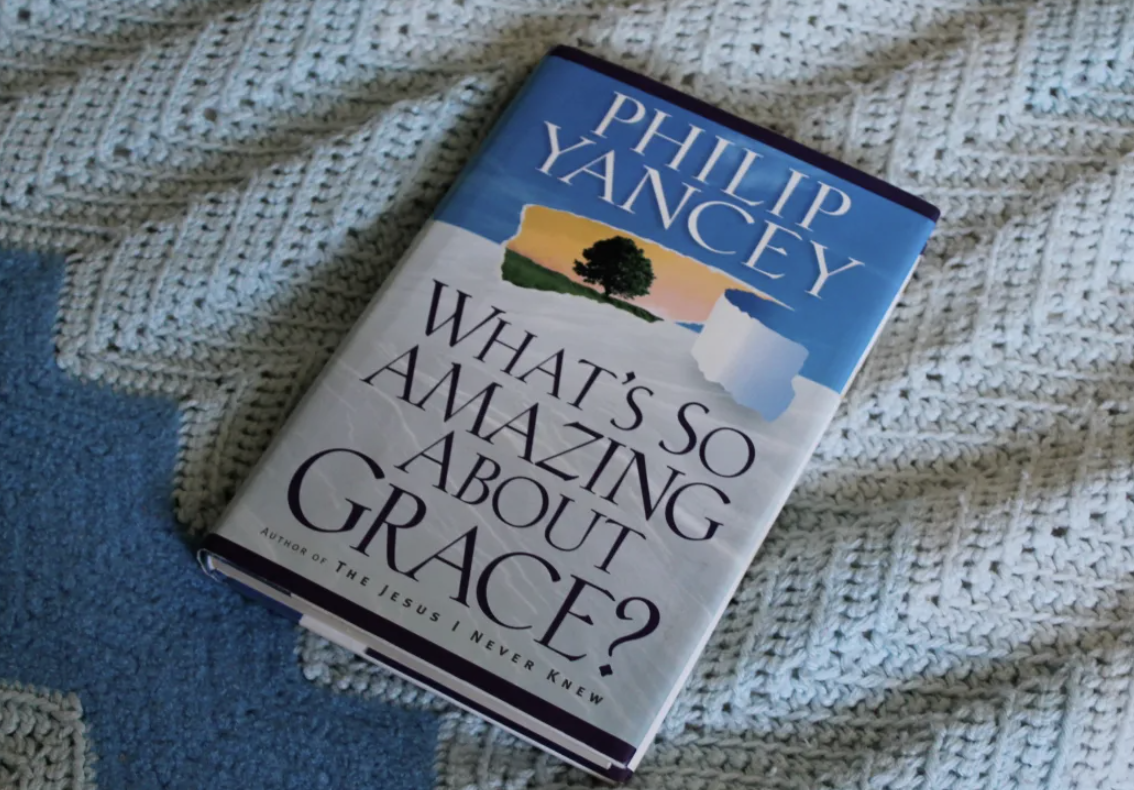
Philip Yancey is, once again, counting on the mercy and grace of God

Philip Yancey is, once again, counting on the mercy and grace of God

Asked to judge a woman "caught in the act of adultery," the Gospel of John says Jesus stooped, wrote something in the dust, then told her accusers: "Let anyone among you who is without sin be the first to throw a stone at her."

Then he wrote again. The silent religious leaders drifted away. What happened next sums up Christian teachings on sin, grace and forgiveness, according to Philip Yancey, long one of America's most popular evangelical writers.

Jesus asked the woman: "Didn't even one of them condemn you?" She said, "No, Lord," to which he replied, "Neither do I. Go and sin no more."

Fundamentalist preachers often portray God as a "cosmic policeman, someone who was just waiting to smash somebody who does something wrong," said Yancey, during a podcast with the Rev. Russell Moore, editor-at-large of Christianity Today.

That's wrong, said Yancey. Instead, church leaders should, "Start with Jesus and end with Jesus. … Jesus wasn't a pushover, by any means, but he was always full of compassion. … He never turned someone away who had an attitude of repentance."

Yancey has repeatedly delivered this message during a half century of addressing Christian denominations, colleges and myriad other gatherings. His books, such as "The Scandal of Forgiveness," have sold 20 million copies in 49 languages.

But the Moore podcast, on "The Problem of Pain and Suffering," was posted only four months before Yancey, 76, announced his retirement -- due to an eight-year sexual relationship with a married woman.

"My conduct defied everything that I believe about marriage. It was also totally inconsistent with my faith and my writings and caused deep pain for her husband and both of our families," wrote Yancey, to Christianity Today, where he was a columnist for decades.

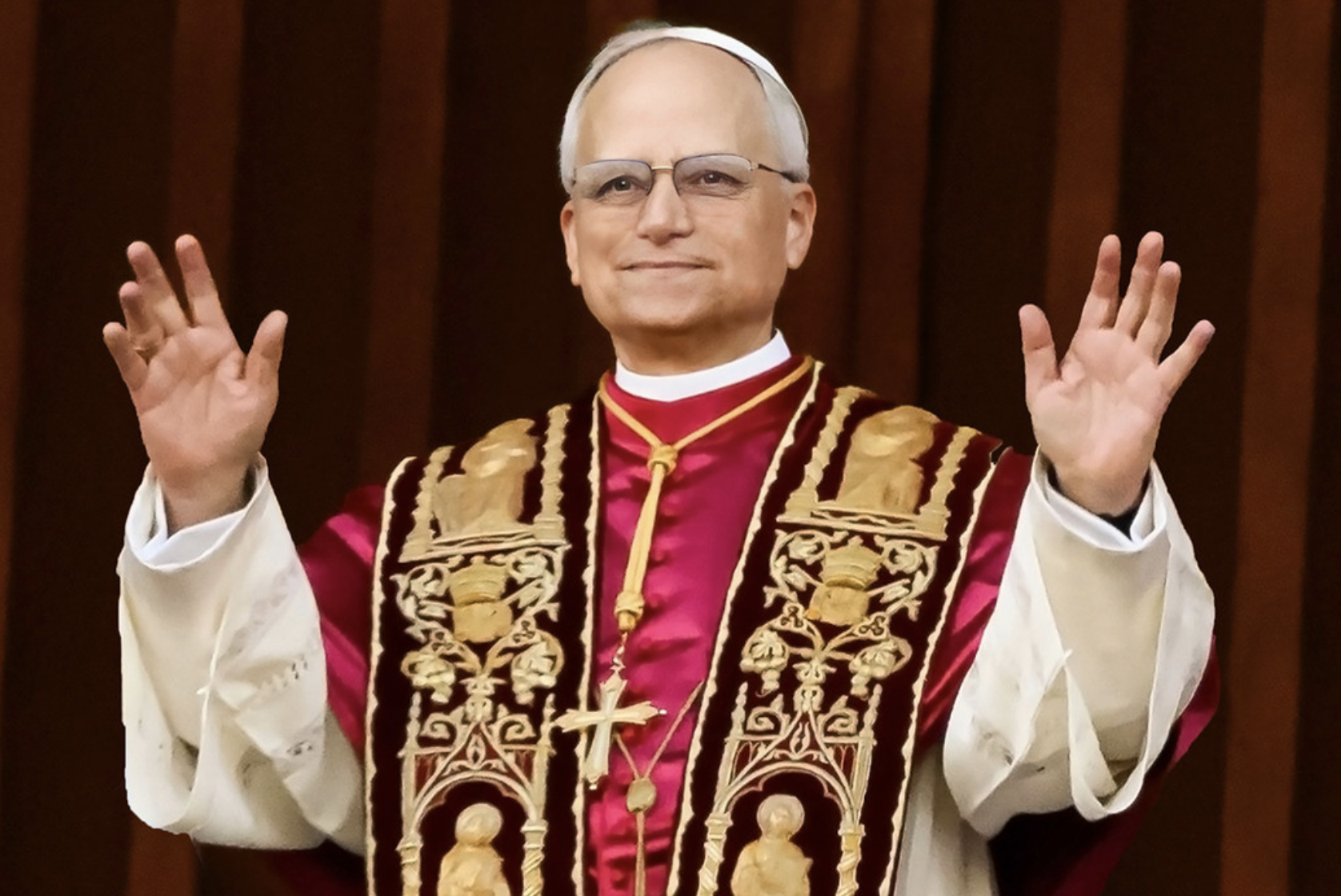
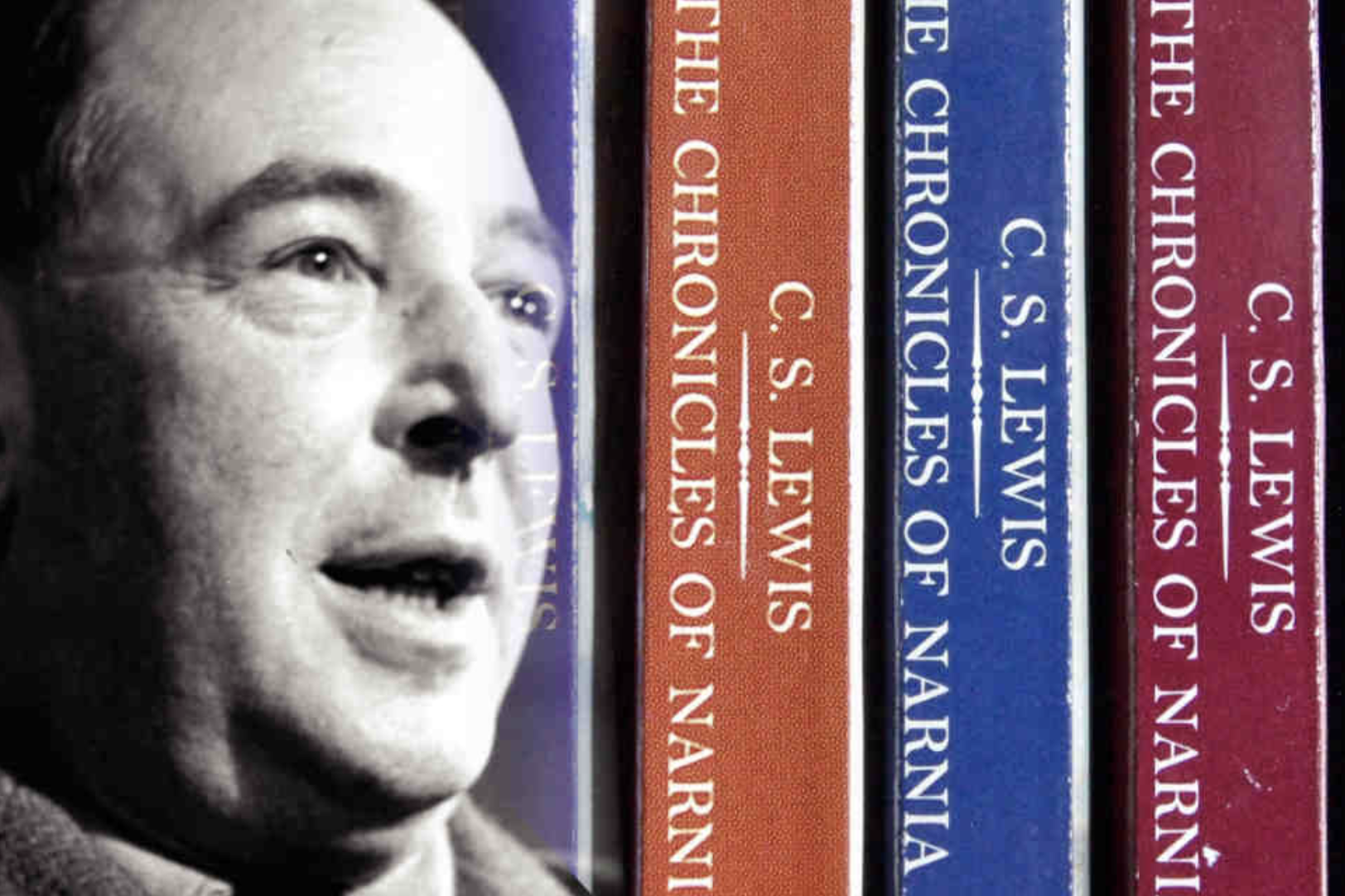
Stalking all of those fake C.S. Lewis quotes online (and the new AI pope)

Stalking all of those fake C.S. Lewis quotes online (and the new AI pope)

Late in the movie "Shadowlands," the C.S. Lewis character describes the role that books can play in real life.

The famous Oxford don and author, played by Anthony Hopkins, notes: "We read books to know that we are not alone."

Lewis never wrote those memorable words -- they came from screenwriter William Nicholson, noted William O'Flaherty, author of "The Misquotable C.S. Lewis: What He Didn't Say, What He Actually Said, and Why It Matters." Nevertheless, that quote is frequently attributed to Lewis on websites and in social media.

Further complicating matters, "the movie character Lewis -- when he does say it, while the real Lewis never said it -- is quoting a student who is saying that his father said it," noted O'Flaherty, via Zoom. Many who spread this quote appear to want people to "think the real Lewis went around repeating things from others" while taking credit for them.

It doesn't help that many readers who circulate fake Lewis quotes do so because they admire the author's Christian faith expressed in 30-plus books -- fiction and nonfiction -- which sell millions of copies a year, long after his death in 1963.

Lewis is not an isolated case. In his book, O'Flaherty noted that Albert Einstein never said, "God does not play dice," Mark Twain didn't proclaim "There are three kinds of lies: lies, damn lies, and statistics" and Ernest Hemingway "never claimed he could write a short story with just six words." Conan Doyle never had Sherlock Holmes say "Elementary, my dear Watson."

The basic problem: "Too many people have a bumper sticker attention span. And typically, they love quotes because quotes give them the 'sound bite' that confirms something they ALREADY believe."

In the past, some readers simply "misremembered" quotes they heard in lectures, sermons and speeches and passed them on. Misquotes have even appeared in books or major periodicals. With some authors, movies and television based on their writings have added to the confusion. Finally, issues with misquotes kicked into high gear with the Internet and powerful social-media platforms such as Facebook, Instagram and X. How will AI affect all of this?

The fellowship of J.R.R. Tolkien and C.S. Lewis, shaped by reality in World War I

The fellowship of J.R.R. Tolkien and C.S. Lewis, shaped by reality in World War I

A British soldier began writing "The Fall of Gondolin" while in a hospital bed, stricken by "trench disease" from the lethal front lines of World War I.

A German soldier later bemoaned the "lice, rats, barbed wire, fleas, shells, bombs, underground caves, corpses, blood, liquor, mice, cats, artillery, filth, bullets, mortars, fire, steel." Add poison gas to that ordeal.

Young J.R.R. Tolkien wrote: "The fume of the burning, and the steam of the fair fountains of Gondolin withering on the flame of the dragons of the north, fell upon the vale of Tumladen in mournful mists." The battlefields were "cold and terrible."

This was a vision of war from a man who had been there, said Joseph Loconte, author of "A Hobbit, a Wardrobe and a Great War." The book explores the many ways that World War I shaped Tolkien and C.S. Lewis.

"Tolkien wasn't writing escapist fantasy," said Loconte, reached by telephone. "If this is about escape, it's the writings of a prisoner who has escaped the world of cells, bars and keys. This kind of escapism … helps us realize that our prisons have windows and we can use them to see better things."

Tolkien later wrote that he began creating his Middle Earth mythology -- the foundation for the future "The Lord of the Rings" -- while "in grimy canteens, at lectures in cold fogs, in huts full of blasphemy and smut, or by candlelight in bell-tents, even some down in dugouts under shell fire."

Yes, the man who survived days huddled in shell craters and trenches in France would later write, in a blank page in an Oxford student's exam book, these famous words: "In a hole in the ground there lived a Hobbit."

Tolkien and Lewis remain stunningly popular -- in print and on digital screens.

When did Stephen Colbert's satire, with it's Catholic grace, veer into ridicule and rage?

When did Stephen Colbert's satire, with it's Catholic grace, veer into ridicule and rage?

Soon after Stephen Colbert landed "The Late Show" he welcomed tycoon Donald Trump as a guest and did something shocking — he apologized.

"I said a few things about you over the years that, that are, you know, in polite company, perhaps, are unforgivable," Colbert said, in 2015.

"Accepted," said Trump, smiling.

That encounter was light years from what happened after Trump celebrated the recent CBS decision to cancel "The Late Show."

On social media, the president said Colbert's "talent was even less than his ratings."

Colbert fired back in his monologue: "Would an untalented man be able to compose the following satirical witticism? Go f*** yourself."

While Colbert retains a faithful congregation, some fans who loved his sly blend of satire and progressive Catholicism mourn his decision to preach to only half of America, said media scholar Terry Lindvall, author of "God Mocks: A History of Religious Satire from the Hebrew Prophets to Stephen Colbert," published in 2015.

"He made you laugh and think," said Lindvall, reached by telephone. "When he turned on the rage, he turned mean. He turned bitter. He acted like he was a prophet, not a jester." Sadly, Lindvall added, the Trump era turned Colbert into "a liberal fundamentalist. … He drank the Kool-Aid."

The goal, in "God Mocks," was to offer a "bumpy tour through Rome, Jerusalem and Lilliput," arriving at Comedy Central. Lindvall praised Colbert's early work on "The Colbert Report," in which he pretended to be a blow-hard conservative pundit, creating an upside-down persona who could mock secular progressives and atheists, as well as thinkers on the right. Conservative guests, especially Catholics, were often treated with respect.

That was satire, wrote Lindvall, recognizing "a moral discrepancy between what is proclaimed and what is practiced. … The biblical satirist shares in the blame and shame of his defendants.

The golf world is still dissecting Scottie Scheffler's heart, mind and soul

The golf world is still dissecting Scottie Scheffler's heart, mind and soul

When Scottie Scheffler celebrated his recent victory at the British Open, it was hard to tell who drew the loudest cheers -- the world's No. 1 golfer or his toddler son.

Nike captured the family vibe with a viral advertisement showing Scheffler and Bennett, with the caption, "You've already won," before adding, "But another major never hurt."

After the win, Scheffler added fire to the week's hot story, which was his candid remarks about why he isn't obsessed with winning trophies week after week.

"My faith and my family is what's most important to me," he told reporters. "Those come first for me. … Golf is third in that order."

The key words were "in that order," noted Daniel Darling, director of the Land Center for Cultural Engagement at Southwestern Baptist Seminary. "Scottie Scheffler doesn't see golf as a god. He's thankful that God has given him the abilities that he has." However, he also "knows the challenge in life is to keep things in the right order, to focus on what really matters."

The firestorm began earlier that week, when the 29-year-old superstar drew nervous laughter by stressing: "I'm not here to inspire somebody else to be the best player in the world, because what's the point? … This is not a fulfilling life. It's fulfilling from a sense of accomplishment, but it's not fulfilling from a sense of the deepest places of your heart.

"There's a lot of people that make it to what they thought was going to fulfill them in life. And then you get there, then all of a sudden you get to No. 1 in the world, and they're like, what's the point? … That's something that I wrestle with on a daily basis."

Scheffler's remarks revealed a "human side we too often don't get to see," noted Shane Ryan, writing for Golf Digest. "For those with ears to hear it, there was a deep message at play, and an almost unbearably honest one." Perhaps, Ryan added, if "someone like Scheffler, who has been to the mountaintop of his world, finds spiritual emptiness on that summit, what hope do the rest of us have?"

Into "On Religion" year 37: There's more to religion news than politics

Into "On Religion" year 37: There's more to religion news than politics

To no one's surprise, 83% of white evangelical voters backed President Donald Trump in 2024, consistent with voting patterns in recent decades.

The news, this time, was that Cooperative Election Study numbers indicated that Trump's support rose among non-white evangelicals and Catholics. He even won 55% of the votes from mainline Protestants.

The voter base for Vice President Kamala Harris could be described as "Black Protestants + atheists," wrote political scientist Ryan Burge of Eastern Illinois University, in one of his Graphs about Religion X posts.

But in another chart, Burge shared 2022 Public Religion Research Institute data describing the attitudes of people in pews. Survey participants reacted to this statement: "I wish my church talked more about political division in this country."

Among evangelicals, 86% "completely" or "mostly" disagreed, compared to 82% of non-evangelicals and 74% of Catholics.

"Any pastor who chooses to speak up about political division in the United States is going to anger a whole lot of their flock. You just don't see a lot of church going folks who are keen on their pastor talking about … politics, just the opposite," noted Burge, author of "The American Religious Landscape: Facts, Trends, and the Future."

Meanwhile, it seems that "people who aren't religious or don't attend church on a regular basis have a misperception about what happens on a Sunday morning," he added, in his Substack newsletter. Truth is, the vast majority of churchgoers "just want to avoid politics entirely from the pulpit."

In my academic and news experience, that isn't what Americans learn from mainstream news. This week marks the start of my 37th year writing this "On Religion" column and I also spent 20 years leading the GetReligion.org project. That website's archive remains online for those studying religion and the press.

The bottom line: Religion events and trends draw intense news coverage when they are directly or indirectly linked to politics. This is especially true during tense elections.

The legacy of historian Martin Marty is much larger than shelves of books in libraries

The legacy of historian Martin Marty is much larger than shelves of books in libraries

For decades, religion-beat journalists in the mainstream press knew how to produce stories that would land on the front page.

The formula was stated in jest, but there was truth in it. I heard this version in 1982: "Three local anecdotes, some national poll numbers and a quote from Martin Marty."

At the peak of his career, Time magazine said Marty was "generally acknowledged to be the most influential living interpreter of religion in the U.S.'' The church historian wrote more than 60 books and influenced hundreds more. For 50 years he was an editor and columnist at The Christian Century and, for 41 years, wrote his own biweekly Context newsletter, followed by “Sightings” essays online.

“It is clear that we religion journalists needed Martin Marty and he needed us," said Kenneth Woodward, who spent decades at Newsweek. "We read his Context, his Sightings, his MEMO column, his books, his annual New Theology paperback, his books and we called him for quotes. In today's terms, he influenced the influencers."

Marty died on February 25 at the age of 97, a quarter of a century after retiring from teaching at the University of Chicago Divinity School. The research center he launched in 1979 was then rebranded as the Martin Marty Center for the Public Understanding of Religion. He received numerous other awards, including more than 80 honorary degrees, the 1992 National Book Award and the 1997 National Medal for the Humanities.

It mattered that, before becoming a superstar scholar, he spent a decade caring for Lutherans in pews, said Richard Ostling, known for his work at Time and the Associated Press. One reason Marty could offer analysis that connected with readers was that he was "a successful pastor and could talk to God's people without talking down to them."

Academic leaders would note that Marty's legacy includes legions of professors and scholars. He advised 115 doctoral dissertations and helped countless other graduate students.

No, seriously: Jeff Foxworthy is convinced that God has a sense of humor

No, seriously: Jeff Foxworthy is convinced that God has a sense of humor

As a rule, Jeff Foxworthy never refuses autograph requests, but the redneck comedy legend hit a wall during a funeral-home visitation for someone in his extended family.

"When you go to a funeral home, a lot of times there's more than one visitation going on," said Foxworthy, reached by telephone. "Across the hall, there was another one … and it was a rowdy bunch. In the break area they had coolers with cans of regular Budweiser. …

"At some point in the evening, somebody over there recognized me and they started coming into our side and wanting to get a picture made. You know, 'Can I get my picture with you?' … And one turned into three and that turned into seven or eight."

Then a woman arrived with a felt-tip marker and made a familiar request: "Can I ask you a favor?' … Can you sign my brother's tie?'"

Seeking an escape door back to his family, Foxworthy said: "'Where's your brother?' And she said, 'He's in here, in the casket.' And that's the only time I have ever denied somebody an autograph. … But asking me to climb up on the casket and autograph the guy's tie?"

The truth in this sobering parable is that humor often surfaces during life's big transitions, even when they involve sacred beliefs and traditions. That's one reason Foxworthy has never written "You Might Be A Redneck Churchgoer If" jokes.

Yes, audiences would yowl with laughter, especially in zip codes defined by faith, family, food and fishing. But for some people, religion jokes would cut too close to the bone, said Foxworthy.

After four decades in comedy, he said that he reminds himself, that "everybody I'm going to look at tonight is going through some kind of a struggle. It might be financial, it might be physical, it may be emotional. … I'm like, 'Just be kind to people.' You know? Have grace. You don't know their story. And I don't think humor makes people's struggles go away. But I do think … if you're able to laugh and set that burden down for a little bit, it almost, like, recharges you to where you can pick it back up and go deal with it."

Life lessons (along with some parables) in the classic comedy 'A Christmas Story'

Life lessons (along with some parables) in the classic comedy 'A Christmas Story'

Humorist Jean Shepherd was a teen-ager when his father came home from work and began packing a suitcase.

"What are ya doin', Dad?", asked Shepherd.

Describing the scene to communication scholar Quentin Schultze, he said that his father replied: "I'm leaving. You'll understand when you get older."

Shepherd's father moved away and married a "trophy wife."

This wasn't the kind of dark, life-changing event that tends to inspire a crucial symbol and theme in a beloved Christmas movie, noted Schultze. But Shepherd wove parts of his own life story into his storytelling, including work that became "A Christmas Story."

Americans who watch this 1983 family comedy -- about 40 million click into the 24-hour marathon on TBS and TNT, starting on Christmas Eve -- know that it centers on a boy named Ralphie who is obsessed with his parents giving him a 200-shot Red Ryder air rifle BB gun.

But another iconic image is the leg-shaped lamp, wearing a fishnet stocking worthy of a bordello, that Ralphie's "Old Man" received as his "major award" after winning a quiz contest. What was that all about?

Schultze learned the answer when, for three years in the 1980s, he taught a college-level storytelling class with Shepherd, while saving notebooks full of insights from their time together.

"As Shepherd told me, the leg lamp became the Old Man's trophy wife, which he had to show off to the world. He was unable to carry on his 'affair' with discretion," wrote Schultze, in "You'll Shoot Your Eye Out! Life Lessons from the movie 'A Christmas Story.'" He is now professor emeritus at Calvin University in Grand Rapids, Michigan.

The quest for the Red Ryder rifle has a heartwarming final act, with a boy bonding with his volatile "Old Man," the father's only name in the script. And the leg lamp story also has a happy ending, even though it's clear that Ralphie's mother broke it on purpose.