First person

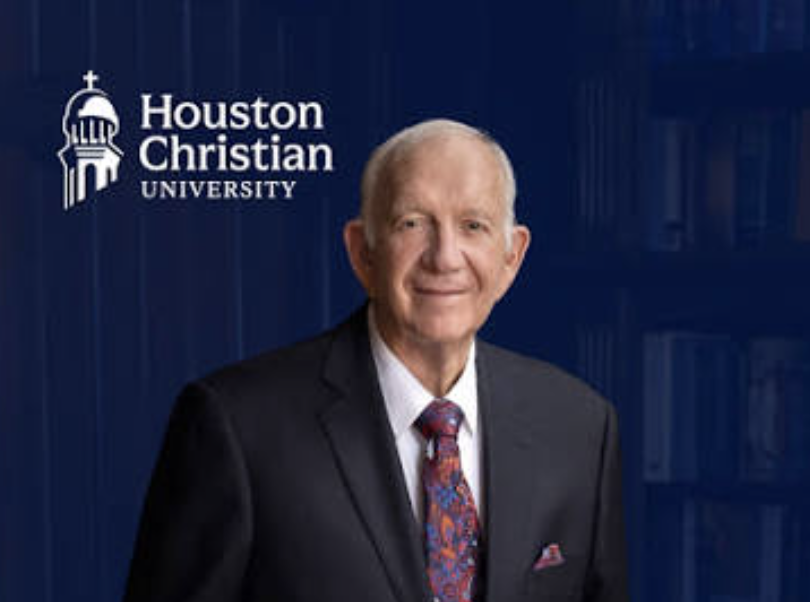
Memory eternal: Robert Sloan's final advice on Christian higher education

Memory eternal:  Robert Sloan's final advice on Christian higher education

Year after year, faith-based colleges produce waves of upbeat brochures, social-media appeals and videos for parents and their children.

The presidents of these institutions should study these materials closely, said Houston Christian University President Robert B. Sloan, Jr., at the January 2026 conference of the International Alliance for Christian Education

"All of the brochures in the world, declaring in glossy print the Christian claims of an institution, cannot overcome the failures of personnel to embrace, expound and affirm the Christian identity of the institution," said Sloan, who led Baylor University, his alma mater (and mine), before his 2006 move to Houston. "If the recruiting materials and fundraising newsletters do not match what really goes on in the classroom or in student life, you may expect not only disappointment but cynicism and, eventually, conflict."

Thus, presidents must have courage when hiring faculty, he stressed.

"When you hire someone," said Sloan, "you should never accept their mere consent, no matter how good their credentials are academically, to 'appreciate' or 'be sensitive to' your culture and character. I used to know of a situation where an interviewer would refer to the 'expectations of our constituents' and then ask, 'Are you all right with that?'"

Close is not good enough, stressed Sloan. It's crucial to learn, "Does the candidate want to be at an institution like yours? … Or do they simply want a job?"

Sloan's address -- 11 theses for Christian higher education -- was timely, after years of headlines about faith-based schools closing their doors as experts warned about a looming "enrollment cliff" due to falling birth rates. It was also symbolic because Sloan died on July 4, after suffering a stroke at age 77.

That plenary address "was the best presentation I have ever heard him give. It will serve as a guide for IACE and for all Christian higher education for years to come," said Southwestern Baptist Theological Seminary President David Dockery, writing for Baptist Press.

New rites and painful old wrongs as tattoo culture spreads in modern America

New rites and painful old wrongs as tattoo culture spreads in modern America

Struggling with the loss of her child, a mother asked Father Peter Jon Gillquist a question that pastors are hearing more often -- about getting a tattoo.

"When her child died," he explained, she "wanted to have the child's name tattooed across her heart. Why? Grief. She wanted to always carry the name of that child as close to her heart as she could possibly get … and bear it."

Getting, or keeping, a tattoo is "not a legalistic thing," he said, during a forum recorded at All Saints Orthodox Church, his parish in Bloomington, Indiana. "The question is, 'If you have a tattoo, why do you have a tattoo? What is it for?' "

Searchers find clashing answers online. Many believers quote Leviticus: "You shall not make any cuttings in your flesh … nor tattoo any marks on you." Others note this biblical instruction to the Corinthians: "Do you not know that your body is a temple of the Holy Spirit within you, which you have from God?"

Some believers, noted Gillquist, argue that since their body is a temple, they can decorate it. Others say tattoos are linked to paganism or, in the Roman world, represented punishment, torture or identity, such as markings on soldiers or slaves.

For some Christians, such as Egyptian Copts, tattoos -- inked on wrists -- are more than symbols. Cross tattoos tell persecutors: To remove these crosses you will have to cut our wrists.

Soaring Orthodox crosses at monastery in a holler in the mountains of West Virginia

Soaring Orthodox crosses at monastery in a holler in the mountains of West Virginia

There is nothing unusual about turning a corner in West Virginia's maze of rough mountain roads and seeing churches with plain white walls and big porches.

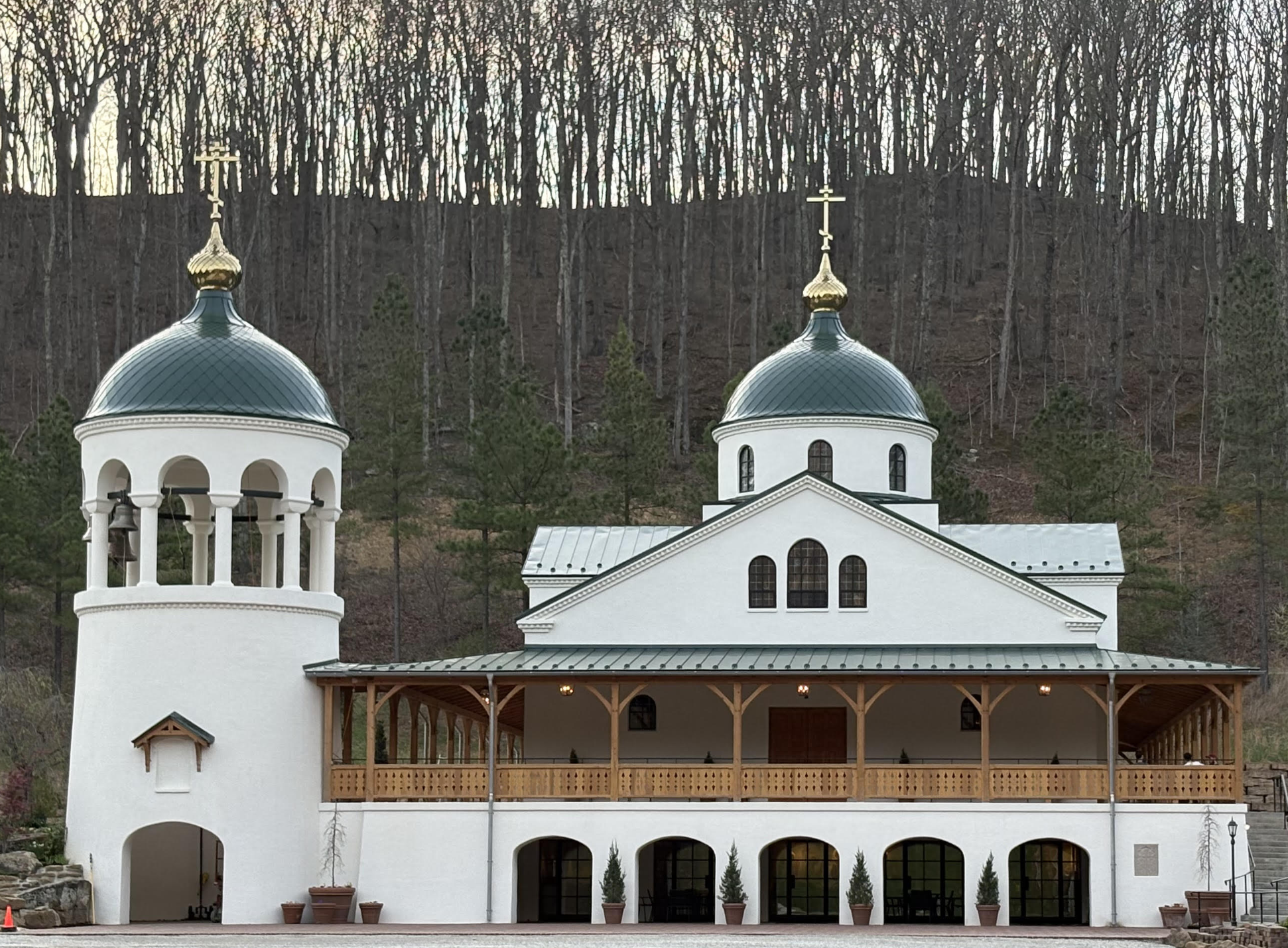
But the new sanctuary at the Hermitage of the Holy Cross -- 10 miles of twists and turns into a holler outside the town of Wayne -- offers a variation on that vision. Its green-metal roof has domes resembling medieval Russian helmets, topped with golden cupolas and soaring Slavic crosses.

"When you go to the monastery you begin to think that you're driving off the edge of the world, but then you come around the bend and they've built this whole civilization up there," said Andrew Gould, the Orthodox artist from Charleston, South Carolina, who designed this church for a compound of log-cabins and rustic buildings.

The goal was to blend Orthodox tradition and the simplicity of the local culture.

"We needed people to see this building and immediately say, 'That's a church. That's a beautiful church.' It is always my goal to design churches that are linked to Orthodox traditions but still look like churches to people here in America, even in Appalachia," he said.

The church can hold 50 monks and 150 worshippers -- but the giant, wraparound porch can welcome twice that for feast-day celebrations and special events, especially on rainy mountain days.

"The porch was something we had in the plans, but it is serving a purpose greater than what we intended. It was something God intended," said Abbot Gabriel, 39, a native of Appalachia who converted to Orthodoxy in 2007 and became a novice in 2011.

"The locals have become more and more comfortable with our presence" even if some may not enter the sanctuary, he said. "But gathering on a big porch for food and fellowship, that's different. That's what the locals do. That's mountain hospitality."

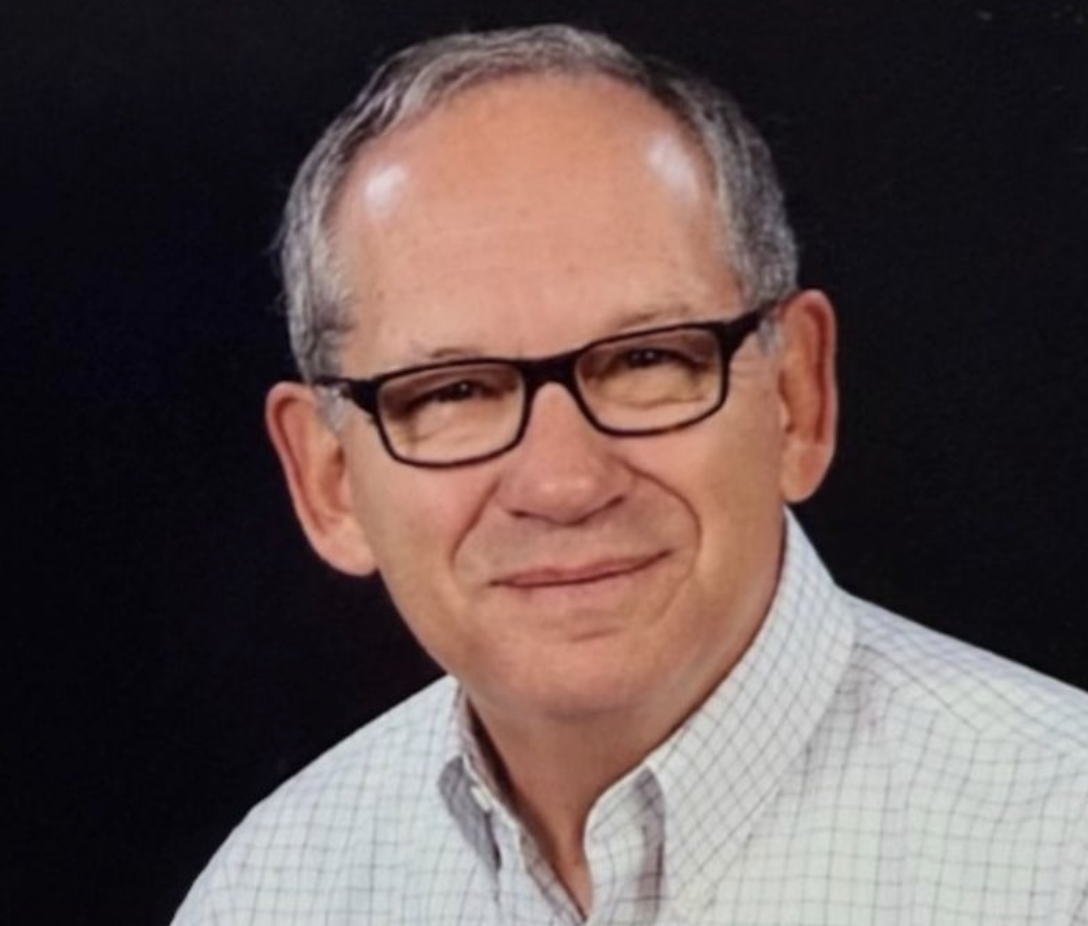
Memory eternal: For my brother Don Mattingly, a pioneer in youth ministry

Memory eternal: For my brother Don Mattingly, a pioneer in youth ministry

The Dictionary.com definition for "centrifuge" offers this: "An apparatus that rotates at high speed and by centrifugal force separates substances of different densities, as milk and cream."

It was a strange name, in the late 1970s, for a Southern Baptist Convention youth leadership project. But there was logic to it, according to the man behind the idea -- my brother Don Mattingly.

Centrifuge camps "would spin kids out into their futures, that's what Don always said. Out into ministries. Out into careers they wouldn't have thought of before. Out into projects back home, helping people," said Joe Palmer, the second Centrifuge leader. "It's not all playing volleyball, basketball and games. … They're learning about the rest of their lives."

For my older brother -- who died on March 18 -- the centrifuge of change in young lives was a major theme during his decades as a leader on the national SBC staff, at Baylor University and in countless youth-education events across America.

As the world whirled faster and faster, Don argued that religious leaders needed to create ministries that could spin young people in positive ways, helping them discover what mattered in their hearts, minds and souls.

Centrifuge began in 1979 in Glorieta, New Mexico, quickly attracting flocks of campers, with many Bible studies held in stairwells due to lack of space. This summer, during a "Fuge" (the nickname that stuck) somewhere in America, the network will register the 2 millionth participant in these unique camps.

At the heart of my brother's vision was a track system of classes and forums in which teens heard young leaders -- often seminary or graduate students -- address a variety of potential vocations. Fuge camps still offer tracks on sports, "STEM" careers, sign language, drama, "Random acts of service," music, "spiritual gifts" and more. "MFuge" camps cover work in local, national and global missions.

This was one of my brother's big ideas, as he planned and worked, while earning a religious education doctorate along the way: Young people needed to know that God can call them to work in pulpits or in classrooms, in missions or in coaching, in arts or hard sciences. The church should help them consider their options.

Robert Duvall's journeys deep into the world of sin, repentance, grace and faith

Robert Duvall's journeys deep into the world of sin, repentance, grace and faith

Before playing Lt. Col. Bill Kilgore in "Apocalypse Now," actor Robert Duvall, a U.S. Army veteran, persuaded a Vietnam War helicopter pilot to explain the realities of air cavalry life.

To portray Augustus McCrae in "Lonesome Dove," Duval studied equestrian skills with a champion show jumper and befriended West Texas football legend Sammy Baugh, mastering his bowlegged walk and slow drawl.

For his Oscar-winning role as the alcoholic country-music star Mac Sledge in "Tender Mercies," Duvall drove hundreds of miles in rural Texas, studying customs and accents. He formed a band, performed in bars and wrote two songs for the movie.

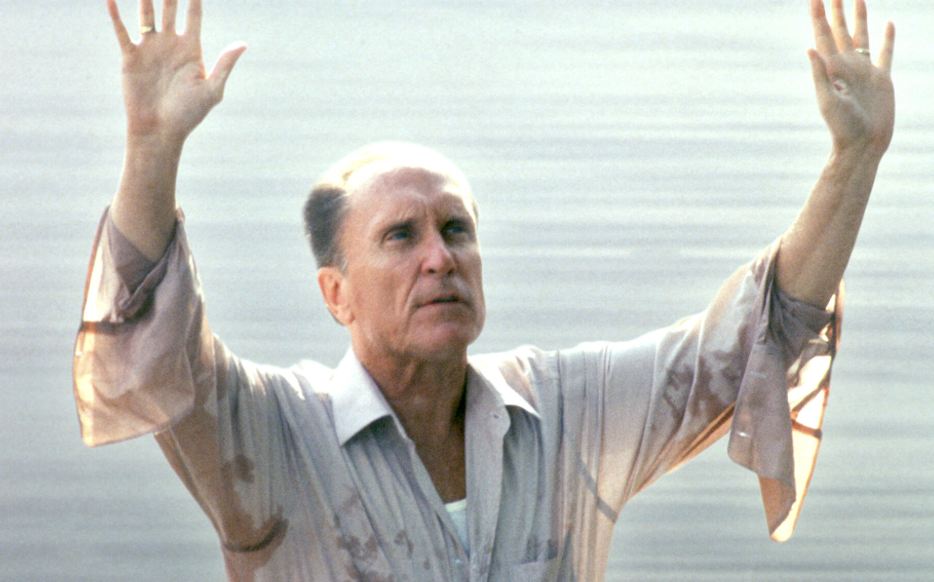
Duvall visited churches, too -- preparing to embody Sledge's born-again conversion, baptism and faith. Research with believers immediately bled into the screenplay he wrote for "The Apostle," which Duval directed and financed. The movie earned him another Academy Award acting nomination, one of seven during a career that ended on February 15, when the 95-year-old screen legend died at home on his Virginia horse farm.

That movie's complex Pentecostal preacher -- Euliss F. "Sonny" Dewey -- ran from the law after killing his wife's young lover with a baseball bat.

Duvall talked with fallen ministers in prisons and took notes.

"I've met guys like that who have done all kinds of bad things, even murder and rape," Duvall told me, while promoting "The Apostle." These preachers are "real people, and they struggle with the good and the bad that's in their own souls. They're human. I wanted to show the reality of that struggle. ... My guy makes mistakes. But he's more good than bad. He hangs on to his faith, because it's real."

In "The Apostle," Dewey didn't run from God. He screamed his pain in prayers.

The Rev. Bill Moyers clashed, early and often, with religion gaps in major newsrooms

The Rev. Bill Moyers clashed, early and often, with religion gaps in major newsrooms

The year was 1976 and Jimmy Carter, a Sunday school teacher from Georgia, had shocked major newsrooms by discussing his "born again" faith.

Presidential candidates were not supposed to do things like that.

At CBS News, special correspondent Bill Moyers received a green light for a prime-time feature, "What It Means to be Born Again." After seeing the finished piece, a network executive pulled Moyers aside to chat.

The man's face was so serious, "that I thought he was about to tell me he'd been born again," Moyers told me in 1987. No, the executive said: "That was the worst show I have ever seen in my life."

The program was "cut to bits," Moyers said. Network leaders "didn't think it was news. They just didn't understand what was going on."

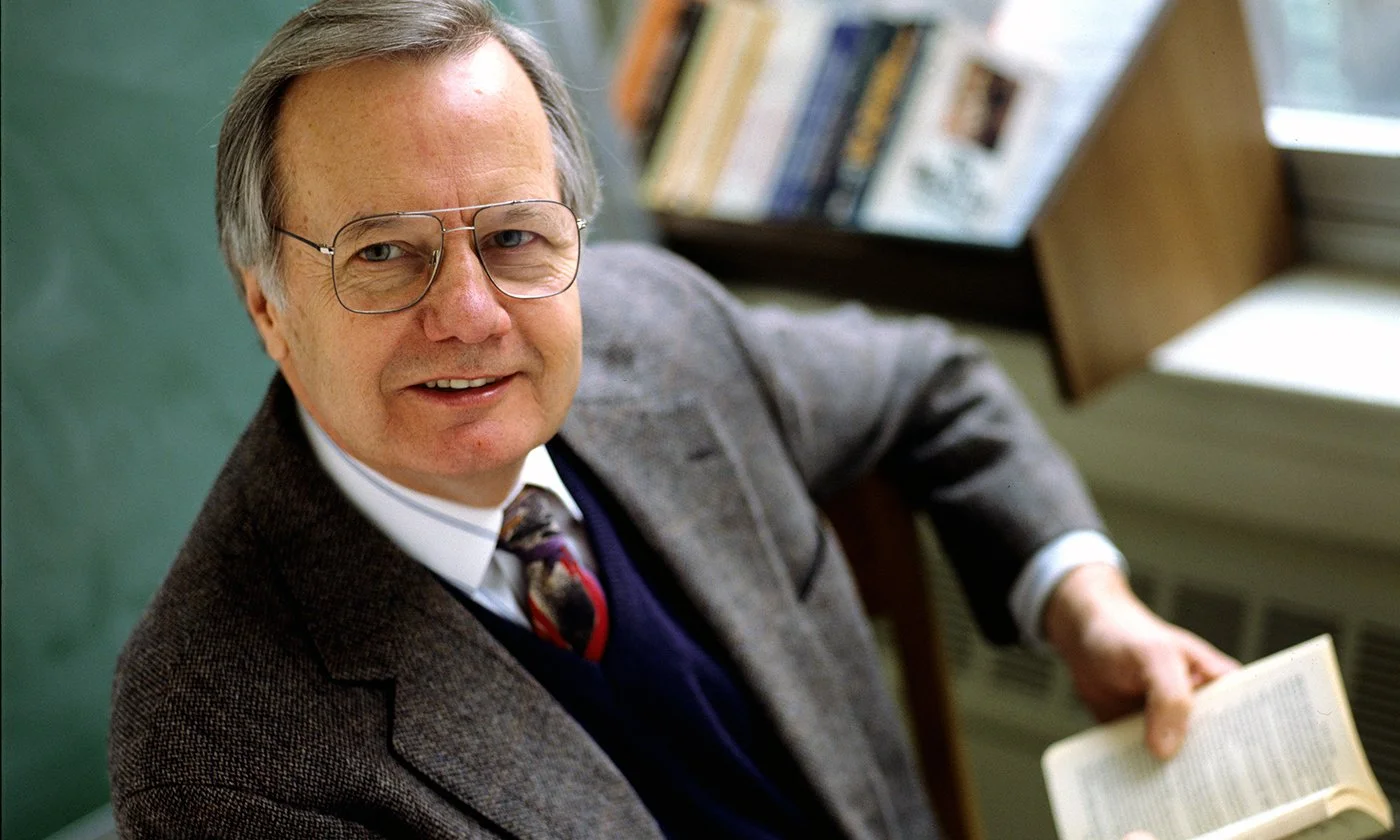
The broadcaster faced this disconnect many times. Moyers died on June 24 at the age of 91, after a long and complex career in which he served as speech writer and press secretary for President Lyndon Johnson, followed by decades of work with CBS, NBC and PBS. However, before that, the Rev. Bill Moyers was a Southern Baptist pastor in Texas towns like Brandon and Weir. He was proud of those roots and his convictions as a progressive Baptist.

"By no means is Moyers a typical Southern Baptist," I noted, in a 1993 "On Religion" column. "He is the rare Southwestern Baptist Theological Seminary graduate whose books and tapes are popular at New Age conventions. He is a hero wherever there are Baptists whose annual donations to National Public Radio are greater than their gifts to Focus on the Family."

Preaching before the first presidential inauguration of Bill Clinton, another Baptist progressive, Moyers got down to basics, sharing a saying passed on by his father -- Cain and Abel were "the first Baptists because they introduced fratricide" to the biblical drama.

At the heart of Baptist life "is what we call soul competency," he explained.

Into "On Religion" year 37: There's more to religion news than politics

Into "On Religion" year 37: There's more to religion news than politics

To no one's surprise, 83% of white evangelical voters backed President Donald Trump in 2024, consistent with voting patterns in recent decades.

The news, this time, was that Cooperative Election Study numbers indicated that Trump's support rose among non-white evangelicals and Catholics. He even won 55% of the votes from mainline Protestants.

The voter base for Vice President Kamala Harris could be described as "Black Protestants + atheists," wrote political scientist Ryan Burge of Eastern Illinois University, in one of his Graphs about Religion X posts.

But in another chart, Burge shared 2022 Public Religion Research Institute data describing the attitudes of people in pews. Survey participants reacted to this statement: "I wish my church talked more about political division in this country."

Among evangelicals, 86% "completely" or "mostly" disagreed, compared to 82% of non-evangelicals and 74% of Catholics.

"Any pastor who chooses to speak up about political division in the United States is going to anger a whole lot of their flock. You just don't see a lot of church going folks who are keen on their pastor talking about … politics, just the opposite," noted Burge, author of "The American Religious Landscape: Facts, Trends, and the Future."

Meanwhile, it seems that "people who aren't religious or don't attend church on a regular basis have a misperception about what happens on a Sunday morning," he added, in his Substack newsletter. Truth is, the vast majority of churchgoers "just want to avoid politics entirely from the pulpit."

In my academic and news experience, that isn't what Americans learn from mainstream news. This week marks the start of my 37th year writing this "On Religion" column and I also spent 20 years leading the GetReligion.org project. That website's archive remains online for those studying religion and the press.

The bottom line: Religion events and trends draw intense news coverage when they are directly or indirectly linked to politics. This is especially true during tense elections.

The legacy of historian Martin Marty is much larger than shelves of books in libraries

The legacy of historian Martin Marty is much larger than shelves of books in libraries

For decades, religion-beat journalists in the mainstream press knew how to produce stories that would land on the front page.

The formula was stated in jest, but there was truth in it. I heard this version in 1982: "Three local anecdotes, some national poll numbers and a quote from Martin Marty."

At the peak of his career, Time magazine said Marty was "generally acknowledged to be the most influential living interpreter of religion in the U.S.'' The church historian wrote more than 60 books and influenced hundreds more. For 50 years he was an editor and columnist at The Christian Century and, for 41 years, wrote his own biweekly Context newsletter, followed by “Sightings” essays online.

“It is clear that we religion journalists needed Martin Marty and he needed us," said Kenneth Woodward, who spent decades at Newsweek. "We read his Context, his Sightings, his MEMO column, his books, his annual New Theology paperback, his books and we called him for quotes. In today's terms, he influenced the influencers."

Marty died on February 25 at the age of 97, a quarter of a century after retiring from teaching at the University of Chicago Divinity School. The research center he launched in 1979 was then rebranded as the Martin Marty Center for the Public Understanding of Religion. He received numerous other awards, including more than 80 honorary degrees, the 1992 National Book Award and the 1997 National Medal for the Humanities.

It mattered that, before becoming a superstar scholar, he spent a decade caring for Lutherans in pews, said Richard Ostling, known for his work at Time and the Associated Press. One reason Marty could offer analysis that connected with readers was that he was "a successful pastor and could talk to God's people without talking down to them."

Academic leaders would note that Marty's legacy includes legions of professors and scholars. He advised 115 doctoral dissertations and helped countless other graduate students.

Chaplains: Helping the suffering journey from the "Why?" to the "When?"

Chaplains: Helping the suffering journey from the "Why?" to the "When?"

The chaplain's prayer is posted near the chapel of Baptist Hospital in Beaumont, Texas, a space shared by patients, families, visitors, doctors and the whole staff.

"Dear God, who makest thyself known in deeds rather than in mere words, deepen within us respect and appreciation for opportunities to serve. Thou has promised aid and blessing where men deal justly, show mercy, and serve humbly. Give us a faithfulness to our task, a patience in anxiety, added skill in work done. Add to our wills a readiness to follow thy guidance; to our hearts a compassion like unto the Great Physician who ministered in love and without favor."

The prayer was written by the Rev. Weldon Langley, the hospital's chaplain from 1960 to 1985. Langley continued part-time until 1993, completing four decades of chaplaincy work with Baptist institutions on the Texas Gulf Coast. He died in 2013 at the age of 96.

Langley's prayer has retained its strategic location as the hospital complex expanded into new, updated facilities.

"Weldon was a chaplain to the patients and their families, but he was also a pastor -- year after year -- to the doctors, nurses and everybody else," said the Rev. David Cross, who followed Langley at Baptist Hospital. While Langley focused on the needs of patients, "his insights into what makes life worth living made him a shepherd for everyone. He was a chaplain's chaplain."

Every year, the Global Chaplains Alliance dedicates the first Saturday of February to honoring chaplains. For me, it's impossible to discuss the ministry of chaplains without mentioning my "Uncle Weldon" Langley, who was very close to my father, the Rev. Bert Mattingly, who also had experience as a chaplain. My father died in 1999.

Chaplains work with hospitals, hospices, military units, legislatures, schools, sports teams, corporations, prisons and police and fire departments. Many, but not all, are ordained ministers. For most Americans, the chaplains they know best serve in the nation's 6,000 or more hospitals.

Pastors visit the sick and dying from their own congregations, noted Cross. For hospital chaplains, this is the heart of their work -- every day.