
worship

The church bombing in ancient Damascus: This was more than a political drama

The church bombing in ancient Damascus: This was more than a political drama

The faithful gathered for a more than symbolic rite at St. Elias Orthodox Church in Damascus -- the Feast of all Antiochian Saints.

During this June 22 service, a jihadist -- Syria blamed the Islamic State -- entered with a rifle and began firing. As worshippers tackled him, he detonated an explosive vest. In seconds the Orthodox Patriarchate of Antioch had more names to add to its two millennia of saints and martyrs.

"Among the spirits of the righteous perfected in faith, give rest, O Savior, to the souls of Your servants, keeping them in the blessed life which is from You, O loving One," Orthodox believers prayed this past Sunday, in global memorial prayers for the new martyrs of Syria.

"In Your place of rest, O Lord, where all Your Saints repose, give rest also to the souls of Your servants, for You alone are immortal." Bishops circulated names to be read aloud: "Nabil, Emile, Souliman, Simon, Abdullah, Amal, Milad, Razzouk, Farid, Peter, Georgios, Mariam, Susan, Julia, Metanios, Maen, Laurance, Anjie. …"

In a funeral for many of the martyrs, Antiochian Patriarch John X preached about the past, the present and the life to come.

"You, beloved martyrs, have left us and were translated to heaven, to eternal life, in the presence of the Lord Who rose from the dead," he said, in an online translation from Arabic. "You were martyred and entered into eternal life … joining the company of all righteous and holy Antiochian Saints, and all the saints. Today, we turn to you. We ask you to pray for us, now that you rest in the Lord's embrace."

It's hard to shock believers in sanctuaries surrounded by centuries of war, conquest and terror. Young people saw three of the faithful attempt to push the attacker away from the flock inside St. Elias.

"Grace, Peter and Milad. I know them personally," said Patriarch John. "These are our people and our heroes. … They would have done the same and protected the people around them even if they were in the mosque."

The political context was significant and, thus, dominated mainstream news reports. BBC noted: "It was the first such attack in Damascus since Islamist-led rebel forces overthrew Bashar al-Assad in December, ending 13 years of devastating civil war."

But, for Christians around the world, this attack also took place in an ancient, truly biblical context.
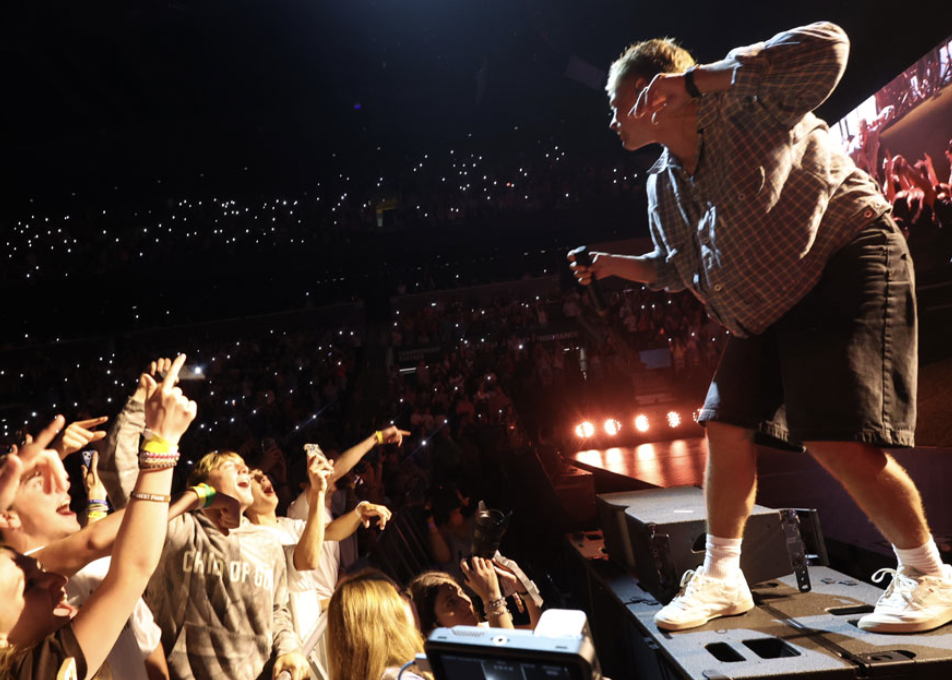
Summer beats, dashes of theology and the growing glowing power of hip-hop

Summer beats, dashes of theology and the growing glowing power of hip-hop

In the first centuries of Christian life, bishops wrestled with the Greek in this puzzle -- whether God the Father and Jesus were "homoiousios (of similar substance)" or "homoousios (of one substance), with "one substance" winning the day.

This "hypostatic union" is a complex, mysterious subject, but hip-hop artist Shai Linne has demonstrated that modern believers can dance to it.

"Two natures united in one glorious person / Jesus, the God-Man, official Soul Reaper / The hypostatic union, it gets no deeper," rapped Linne, on his "Lyrical Theology" disc. "I know it's deep but when you peep, you'll find it's dense / Jesus both God and man, two hundred percents / Fully divine, fully human / Introducing: the hypostatic union."

Nayanna Holley and Steve Zank even found a way, with rap commentary, to use the whole Apostles Creed. Both of these tracks made it into "Good Theology, Good Beats" -- a 100-song summer online playlist created by the Gospel Coalition.

“The purpose of a playlist is simply to bring mixtapes into the 21st century. … You can put lists on social media platforms and hundreds and thousands of people can share them," said Brett McCraken, director of communications for the group and creator of the playlist. "We used to make mix tapes for our friends. Now, there's no limit. … You can literally make an online playlist with just about any song that has ever existed."

Playlists are, for some, an art form -- with creators choosing specific songs and placing them in sequences to address specific issues, said McCracken, reached by telephone.

Playlists also build online networks. With this list, the Gospel Coalition team wanted to reach younger listeners, stressing that musicians around the world are using rap, hip-hop, Afrobeats, Gospel and other forms of music to build more ties between believers in Black, white and Latino cultures. In the no-borders world of Spotify, Instagram and TikTok, this reality is affecting music in many churches, as well as the mainstream media.

Quiet crisis: Who will lead those small churches all over the United States?

Quiet crisis: Who will lead those small churches all over the United States?

One of the crucial services the Rev. Tony Marr provides as leader of the Higher Ministries consulting firm is to connect young pastors -- fresh out of seminaries and Bible colleges -- with churches that need new leaders.

But there's a problem. Most of these churches seeking pastors have fewer than 150 members and are considered "small churches" in the Protestant marketplace. Many of them have around 50 active members or less. It takes about 80 to 90 active members, in most church traditions, to pay a full-time pastor's salary.

"This is a conversation I have almost every week," said Marr, who is based in Johnson City, Tennessee. "At any given time, we have three or four small churches looking for pastors. … It seems like nobody wants to go to those small churches. Nobody wants to serve God there."

When Marr asks young pastors to describe their ideal "first job," most say that they want to serve as an associate pastor on the staff of a truly large church -- one with 1,000 members or more. In other words, they want to prepare to lead churches of that size, or larger.

"They have no intention of taking a church with 45 or 50 or 60 active members," he said, reached by telephone. "Many of these young pastors would rather work in coffee shops than lead that kind of church, even if these jobs would let them preach several times a week while ministering to real people and real families. They would rather work part-time, or be volunteers, at the large churches that they see in their futures."

This is a crisis that denominational leaders will have to face, he explained, for a simple reason. A recent survey from Faith Communities Today (.pdf) found that seven out of 10 American congregations have fewer than 100 people attending their main worship services. The average church has 65 members in the pews on Sunday. Digging deeper, in some denominations -- especially shrinking mainline bodies -- most congregations struggle to pay full-time salaries.

Backing that up, a Baptist Press report stressed that the "most recent National Congregations Study (NCS) found the median congregation in the U.S. welcomes 70 regular participants, including adults and children, and has an annual budget of $100,000."

Challenge for Leo XIV: Battles over Latin and worship traditions are not going away

Challenge for Leo XIV: Battles over Latin and worship traditions are not going away

On the first Sunday of his papacy, Pope Leo XIV stood on the central Loggia of St. Peter's Basilica and did something that shocked some Catholics -- he chanted the Marian prayer Regina Caeli in Latin.

"Regina caeli, laetare, alleluia," he sang, leading to the crowd's response, "Quia quem meruisti portare, alleluia." In English, that would be: "Queen of Heaven, rejoice, alleluia. For He whom you did merit to bear, alleluia."

While many consider Latin chant controversial, the Pontifical Institute of Sacred Music immediately launched a project called "Let's Sing with the Pope." It offers "video tutorials on social media to help the People of God sing along with the Holy Father during the upcoming major liturgical celebrations," said Father Robert Mehlhart, on the institute's Instagram account.

The goal, he added, is to "make the rich heritage of Gregorian chant accessible to all."

So far, Pope Leo XIV has not addressed ongoing debates about restrictions on use of the Tridentine Mass, often called the "traditional Latin Mass." Bishops around the world have been pulled into these battles after the 2021 release of the Pope Francis apostolic letter "Traditionis Custodes (Guardians of Tradition)."

In 2023 remarks to Jesuits in Hungary, Pope Francis said stronger restrictions on use of the pre-Vatican II rite were necessary because of a state of "indietrismo" -- or "backwardness" -- caused by a "nostalgic disease" among many Catholics.

"After all the necessary consultations, I decided this because I saw that the good pastoral measures put in place by John Paul II and Benedict XVI were being used in an ideological way, to go backward," he added, in a transcript released by a Jesuit journal.

While use of the Latin Mass remains a flashpoint, a controversy in the rapidly growing Diocese of Charlotte, North Carolina, has raised questions about the status of other liturgical traditions and symbols.

Does the Anglican Church of Canada have a future?

Does the Anglican Church of Canada have a future?

In the year of our Lord 1967, the Anglican Church of Canada had 1,218,666 members and 272,400 worshippers on a typical Sunday.

In a recent report, the church found 294,382 members on parish rolls and 58,871 people attending worship services.

”The religious institution many of us have long known and loved does not look now as it did even 20 years ago, and it will not look the same 20 years from now," noted a report from church leaders, "Creating Pathways for the Transformational Change of the General Synod (.pdf)."

Waves of declining statistics will "evoke grief, fear and longing. …This report does not seek to reverse current trends, but to respond to them to empower a much smaller church to thrive as it proclaims the gospel today and in the future."

Obviously, the "church is changing. … But that change is not the same as the end of the church. That change may be uncomfortable, but being uncomfortable is not the same as the end of the church," noted the Rev. Neil Elliot of the Province of British Columbia, in the report's executive summary. His X profile says he is the "official stats nurd" for Canadian Anglicans.

The "Creating Pathways" text noted that, while pew-level statistics have plunged 75%, the denomination still has 1474 parishes, compared to 1849 in 1967. Meanwhile, the number of bishops has increased from 36 to 39.

While promising to offer "prophetic imagination" and a "refusal to ignore difficult conversations," the report focuses on cuts and consolidations to increase efficiency, perhaps through remote work, AI advances and better communication networks. The bottom line: The church's 30 dioceses, four provinces and two national administrative bodies have "been sustained with a drastically decreased base of support." The General Synod staff has, in recent decades, been cut from 94 to 39.

Catholics see symbols and signals of unity, as Pope Leo XIV begins his papacy

Catholics see symbols and signals of unity, as Pope Leo XIV begins his papacy

For more than 26 years, Pope John Paul II traveled the world with a silver pastoral staff topped with a dramatic, abstract crucifix crafted by the 20th-century artist Lello Scorzelli.

This symbol of papal ministry was first used by Pope Paul VI at the Second Vatican Council finale and has been carried on occasion by subsequent popes. But, year after year, Mass after Mass, it became a powerful symbol of the life of John Paul II -- now St. John Paul II -- during the second longest papacy in history.

John Paul II used this staff during his inauguration Mass and so did Pope Leo XIV, during the May 18 rite that fell on the 105th anniversary of John Paul II's birth. The new pope also wore an iconic chasuble -- the outer liturgical cloak -- that is now considered a relic of St. John Paul II.

With the fisherman's ring and the lambswool pallium over his shoulders, these links to John Paul II helped Leo XIV stress the need for unity and core Catholic traditions.

"The Apostle Peter himself tells us that Jesus is the stone that was rejected by you, the builders, and has become the cornerstone. Moreover, if the rock is Christ, Peter must shepherd the flock without ever yielding to the temptation to be an autocrat, lording it over those entrusted to him," Leo XIV told the flock of 150,000 assembled in St. Peter's Square.

"Brothers and sisters, I would like that our first great desire be for a united Church. … This is the missionary spirit that must animate us; not closing ourselves off in our small groups, nor feeling superior to the world."

But Leo XIV faces painful challenges, even while calling for unity.

Raymond Arroyo of the Eternal Word Television Network, and Fox News, tweeted on X: "Pope Leo at his Inaugural Mass, in a subtle reference to his predecessor, says 'Peter (the Pope) must shepherd the flock without ever yielding to the temptation to be an autocrat.' … He then pledged to be a source of unity."

Pollsters need to start asking more detailed questions about American Catholic life

Pollsters need to start asking more detailed questions about American Catholic life

Theology news rarely sends shock waves through Catholic offices around the world, but this headline did: "Just one-third of U.S. Catholics agree with their church that Eucharist is body, blood of Christ."

The key word in that famous Pew Research Center survey was "transubstantiation," which the report defined as the belief that the "bread and wine used for Communion become the body and blood of Jesus Christ."

It mattered, of course, whether the Catholics in this survey went to Mass. Nearly 70% of self-proclaimed Catholics said the consecrated bread and wine were mere "symbols," but 63% of those who reported weekly Mass attendance affirmed transubstantiation. Insiders noted that this meant that 37% of observant Catholics didn't embrace this crucial church doctrine.

"Any effort to measure human behavior is fraught with peril and complications," noted John C. Green of the University of Akron, reached by telephone. A trailblazer in studies of politics, pulpits and pews, Green has often served as a Pew Research consultant.

"If people say they go to Mass once a week, how certain can you be that they're telling the truth? … When it comes to doing surveys about what believers say and what they do, you can never ask too many questions."

Now, as Catholics prepare for a new pope, Pew has released new insights into lines of tension and division among American Catholics. Five years after the "transubstantiation" study, a new survey includes more evidence that "U.S. Catholics" disagree with many core Catholic doctrines and, thus, want a "more inclusive" church.

The tricky question, again, was how to define "U.S. Catholic," since the survey said:

Puzzle: Many Catholic churches are in rapid decline, while others are booming

Puzzle: Many Catholic churches are in rapid decline, while others are booming

For a century, there was one certainty in France -- the population was 97% Catholic.

That changed in the 1960s, with survey numbers spiraling to the current plateau of 25%, while the "religiously unaffiliated" numbers in France soared to 53%.

Thus, it made headlines when the French Bishops Conference announced that 10,384 adults joined the church this Easter, a 45% increase over 2024. The sharpest rise in conversions was among students and young people, representing 42% of the adult catechumens.

Truth is, many parishes in Europe are growing. But others are dying. As one theologian noted in a 1969 German radio interview, Catholicism was entering a time of painful decline in the modern world. But that was not the end of the story. Easter follows Good Friday.

"From the crisis of today the Church of tomorrow will emerge -- a Church that has lost much," warned Father Joseph Ratzinger. "She will become small and will have to start afresh more or less from the beginning. She will no longer be able to inhabit many of the edifices she built in prosperity. … In contrast to an earlier age, it will be seen much more as a voluntary society, entered only by free decision. As a small society, it will make much bigger demands on the initiative of her individual members."

This was, of course, the man who became Pope Benedict XVI, explained Pope Francis, during a 2022 meeting with his fellow Jesuits.

"Pope Benedict was a prophet of this Church of the future, a Church that will become … more humble and authentic and find energy for the essential," said Pope Francis, who died of a stroke on the Monday after Easter. His predecessor predicted the coming of a "Church that is more spiritual, poorer and less political: a Church of the little ones."

This Easter, large numbers of converts swimming the Tiber also made headlines in England, with The Daily Telegraph noting “The Extraordinary Resurgence of the Catholic Faith in Britain” while a report at The Times said, "“Catholics Outnumber Anglicans Two to One Among Gen Z Churchgoers.”

A bridge between Ash Wednesday and Easter: Most Americans do not 'get' Lent

A bridge between Ash Wednesday and Easter: Most Americans do not 'get' Lent

When it comes to pulling Catholics into pews, Christmas rites top the list -- followed by a tie between Easter, the Christian calendar's most joyous day, and Ash Wednesday, which is the most sobering.

Last year, 51% of U.S. Catholics attended Mass on Easter, the same percentage as Ash Wednesday, according to the Center for Applied Research in the Apostolate at Georgetown University. Christmas drew 68%.

The bridge between Ash Wednesday and Easter is the penitential season of Lent.

"Participating in Ash Wednesday which leaves a black cross on the forehead is one way for Catholics to identify themselves publicly and to express pride in their religious tradition," noted Father James J. Bacik, writing for the Association of U.S. Catholic Priests. "It is also a way of indicating an intention to take Lent seriously."

Ash Wednesday services have, in recent decades, become common in some Protestant denominations. But what about Lent?

Lent is "not on the radar" for most Americans, according to a new Lifeway Research study focusing on Catholics, Protestants and the unchurched. One in four participants in the survey (26%) say they observe Lent, to one degree or another. That's lower than the 31% of Americans who claim to attend worship services weekly or almost weekly, according to 2023 polling by Gallup.

Most believers who observe Lent find their own ways to mark the season, with some form of the "give up one thing for Lent" pattern as the norm. It's hard to find evidence of ancient Christian patterns of fasting and abstinence in the survey results.

"Fasting is on the Christian liturgical calendar not unlike the Jewish Yom Kippur and Muslim Ramadan," noted Lifeway executive director Scott McConnell, in the organization's summary of the study. "For Christians attending non-liturgical churches, they may not even notice the season of Lent has arrived. It is not that they look down on the practices of fasting, prayer and charity. But if they participate, they may be exchanging additional time with God for other forms of self-denial."