
Brett McCraken

Why Christians in today's marketplace need Advent music playlists

Why Christians in today's marketplace need Advent music playlists

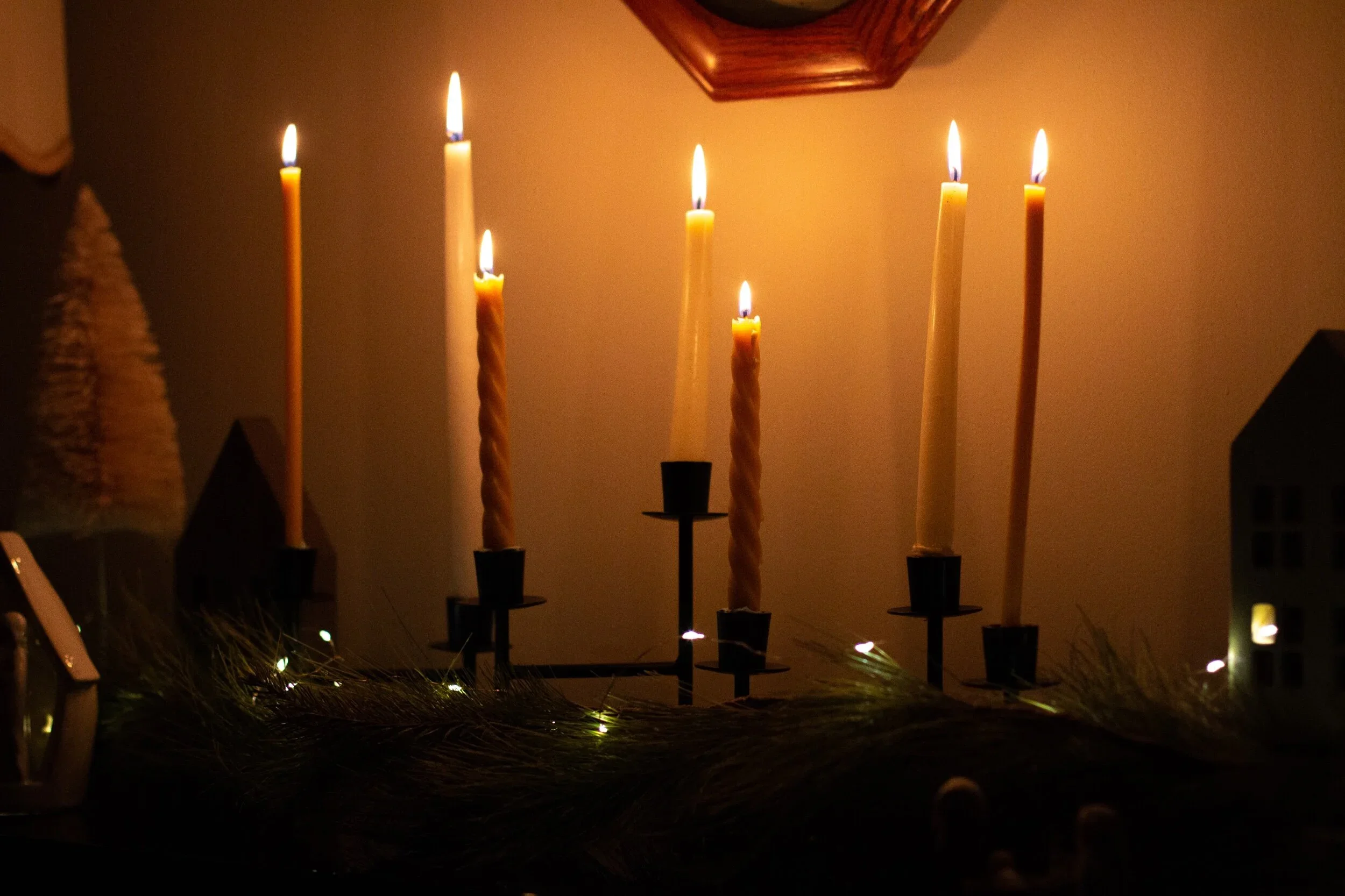
"O Lord, How Shall I Meet You" is a perfect Lutheran hymn for the weeks before Christmas, but shoppers will never hear it between Muzak versions of "Jingle Bells" and "White Christmas" in their local malls.

The key is that "O Lord, How Shall I Meet You" is from the penitential season of Advent, said Pastor Will Weedon. That's the four weeks preceding Christmas in liturgical calendars for Catholics, Lutherans and others in Western Christianity.

The Christmas connection is clear, stressed Weedon, with lines such as: "O Lord, how shall I meet You / How welcome You aright? /Your people long to greet You / My hope, my heart's delight! / O kindle, Lord most holy / Your lamp within my breast / To do in spirit lowly / All that may please You best."

The hymn contains this confession: "I lay in fetters, groaning / You came to set me free / I stood, my shame bemoaning / You came to honor me."

"We need to hear this as we prepare for Christmas," said Weedon, former director of worship and chaplain for the Lutheran Church-Missouri Synod. "Advent hymns have about them a sense of dissatisfaction with our lives in this world. …

"We have a mess on our hands, some of it of our own making, and we're praying for Christ to come and save us," he said, reached by telephone. That message "doesn't work at Walmart, where Christmas starts at Halloween. Our culture doesn't understand the idea of fasting before feasting. We are urged to party and feast all the time."

Collections of Christmas music often include a few popular Advent hymns sung in Protestant services and even in Christmas parties, such as "Joy to the World," "It Came Upon a Midnight Clear" and, especially, "O Come, O Come Emmanuel." Many Catholic Advent hymns focus on the role of Mary, the mother of Jesus, such as "Rorate Caeli (Drop down, ye Heavens."

Summer beats, dashes of theology and the growing glowing power of hip-hop

Summer beats, dashes of theology and the growing glowing power of hip-hop

In the first centuries of Christian life, bishops wrestled with the Greek in this puzzle -- whether God the Father and Jesus were "homoiousios (of similar substance)" or "homoousios (of one substance), with "one substance" winning the day.

This "hypostatic union" is a complex, mysterious subject, but hip-hop artist Shai Linne has demonstrated that modern believers can dance to it.

"Two natures united in one glorious person / Jesus, the God-Man, official Soul Reaper / The hypostatic union, it gets no deeper," rapped Linne, on his "Lyrical Theology" disc. "I know it's deep but when you peep, you'll find it's dense / Jesus both God and man, two hundred percents / Fully divine, fully human / Introducing: the hypostatic union."

Nayanna Holley and Steve Zank even found a way, with rap commentary, to use the whole Apostles Creed. Both of these tracks made it into "Good Theology, Good Beats" -- a 100-song summer online playlist created by the Gospel Coalition.

“The purpose of a playlist is simply to bring mixtapes into the 21st century. … You can put lists on social media platforms and hundreds and thousands of people can share them," said Brett McCraken, director of communications for the group and creator of the playlist. "We used to make mix tapes for our friends. Now, there's no limit. … You can literally make an online playlist with just about any song that has ever existed."

Playlists are, for some, an art form -- with creators choosing specific songs and placing them in sequences to address specific issues, said McCracken, reached by telephone.

Playlists also build online networks. With this list, the Gospel Coalition team wanted to reach younger listeners, stressing that musicians around the world are using rap, hip-hop, Afrobeats, Gospel and other forms of music to build more ties between believers in Black, white and Latino cultures. In the no-borders world of Spotify, Instagram and TikTok, this reality is affecting music in many churches, as well as the mainstream media.