family life

The convert era: What will Orthodox America look like in 2040 (Part II)

The convert era: What will Orthodox America look like in 2040 (Part II)

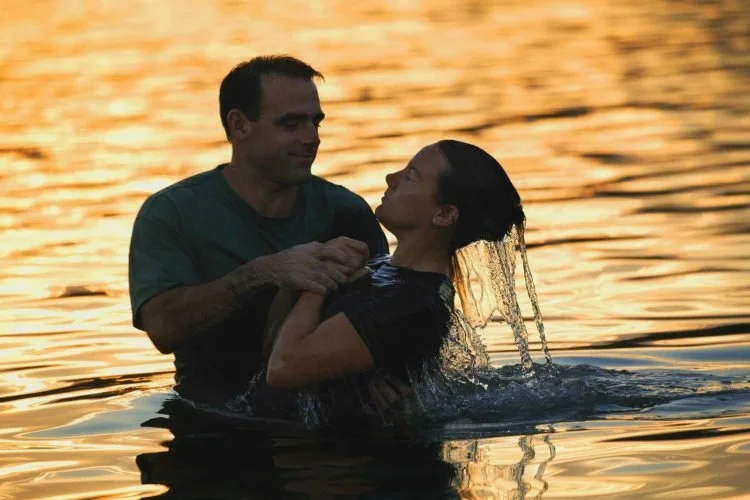
The Orthodox baptism rite includes a three-stage exorcism that is extremely detailed about the spiritual warfare that surrounds new Christians.

Finally, there is this appeal to God: "Redeeming this Your creature from the yoke of the Enemy, receive him (her) into Your heavenly Kingdom. … Yoke unto his (her) life a shining Angel to deliver him (her) from every plot directed against him (her) by the Adversary, from encounter with evil, from the noon-day demon, and from evil dreams. Drive out from him (her) every evil and unclean spirit, hiding and lurking in his (her) heart."

The "Enemy" is Satan. Catechumens are asked, three times: "Do you renounce Satan, and all his works, and all his worship, and all his angels, and all his pomp?" They respond: "I do renounce him."

After several years of conversations while travelling nationwide, Father Andrew Stephen Damick is convinced these ancient prayers are painfully relevant to many converts surging into the small, but now growing, "Eastern Church" in America. It is no longer unusual to meet converts who have worshipped other gods and spirits.

"There's a sense of disenchantment, both in the sense of people feeling disillusioned and sort of bummed by the culture in general, but also disenchantment in the sense of a disconnection from the unseen spiritual world," said Damick, of the online Ancient Faith Ministries.

The converts want stability and guidance. Damick, via Zoom, stressed that many have "experienced the darkness of the unseen spiritual world and want to know what to do about that."

During a recent online forum -- "American Orthodoxy in 2040" -- Seraphim Rohlin, a data scientist who is also a deacon in the Orthodox Church in America, described a survey of converts in the Dallas area. As expected, 50% were former evangelicals, but 25% were former Catholics and 25% were truly "unchurched," including some neopagans. After a surge of young male converts, Orthodox leaders are now tracking a larger wave of young families.

As with many faith groups, some Orthodox parishes declined during the coronavirus pandemic. Other parishes stalled. Still, there have been pockets of Orthodox growth across the nation, even in areas with plateaued or declining population numbers. The biggest surge is in the Sun Belt and West, with numerous parishes doubling and tripling in size.

Ancient churches of Orthodoxy are being flooded with American converts (Part I)

Ancient churches of Orthodoxy are being flooded with American converts (Part I)

For Orthodox Christians in America, the 20th century was shaped by waves of believers fleeing wars, revolutions and persecution in lands such as Greece, Syria, Russia and Romania.

The Orthodox did everything they could to preserve their faith and cultural traditions. When bishops visited these small flocks, it was rare to see converts.

Then, in the late 1980s, flocks of evangelical Protestants swept into the Antiochian Orthodox church and then the Orthodox Church in America, which has Slavic roots. These converts began reaching out to others. Then came the seeker-friendly Internet. Then came COVID. Suddenly, streams of young families began exploring what was often called the mysterious, ancient "Eastern Church."

"Some observers liken this influx to a flood, and the comparison is accurate. I do not visit a parish without meeting catechumens there. In some parishes, they number more than 100," said Metropolitan Saba, leader of the Antiochian Orthodox Christian Archdiocese of North America, in a recent Denver address.

"While many long-standing believers see in the converts a source of renewal and vitality -- and a spur to discover their own Orthodoxy personally and deeply, not merely as a social religious tradition -- many also feel somewhat threatened by the cultural changes occurring in their parish."

In a survey of his priests, Saba said, one wrote: "The century of the 'church of immigrants' has ended; the century of evangelization has begun. Orthodoxy's mission is no longer primarily geographical … but existential."

Orthodox Christianity remains a small flock in America, with 2-3 million believers in 2,000 parishes. The Pew Research Center has estimated that, globally, there are 260 million Orthodox Christians, the next largest communion after the Catholic Church with 1.4 billion.

The bottom line: The catechumenate class numbers are staggering.

What is "success" for modern pastors working in a stressful ministry marketplace?

What is "success" for modern pastors working in a stressful ministry marketplace?

Every decade or so, perhaps during a global pandemic, it's common to see news reports about pastors leaving pulpits in search of less stressful work.

Consider the 2024 Hartford Institute for Religion Research poll in which more than half of pastors said they have, at some point, seriously considered quitting, with 10% admitting this often crossed their minds. According to 2022 polling by the Barna Institute, the main causes for anxiety were strong job stress (56%), feeling isolated (43%) and current political tensions (38%).

These reports are sobering, but complex, noted Ryan Burge of the Center on Religion and Politics at Washington University in St. Louis. But it's important to note the other side of the equation, when studying how clergy view their work. Five years ago, the National Survey of Religious leaders found that, when asked if "in most ways" their lives were ideal, 21% of pastors "completely" agreed, 50% said "moderately" and 16% “slightly." Only 1% "completely" disagreed and 2% said "moderately."

"The long and short of it was this -- I can't find another population group that scores higher on this metric than clergy," noted Burge, on his Graphs about Religion website. In fact, "I'm pretty confident in saying that clergy seemed pretty content with their station in life (or at least this was the case before the pandemic)."

No one doubts that pastors face significant stress, said Scott McConnell, executive director of Lifeway Research. The key is whether clergy and laity have clear understandings about what is expected from pastors and their families.

For example, what does the word "success" mean? Is that defined by growth in the congregation's size, as well as its facilities, staff and budget?

Lifeway has done a number of surveys on topics related to the life of pastors and, for most, "success" means "they are seeing lives changed, people following Christ more closely, troubling sins being avoided, people serving the Lord in ways that they have not done before," said McConnell, reached by telephone. "I think most pastors see some of that every year, but they always want to see more."

Will Leanne Morgan's faith make the cut in her new sitcom on Netflix?

Will Leanne Morgan's faith make the cut in her new sitcom on Netflix?

It's hard to take Jello salad to the after-church brunch a few hours after your husband of 33 years runs off with a younger woman.

But the old-fashioned church Leanne Morgan attends in her summer Netflix sitcom does have a Philippians 4:13 poster in the fellowship hall proclaiming: "I can do all things through Him who gives me strength."

Alas, the faithful are walking stereotypes. Asked how she's doing, a widow offers a pasted-on smile and says she is "basking in the sunshine of our Savior." Leanne remains silent about her marriage disaster, until she cracks and dashes, shouting, out the door.

"You've been a good Christian your whole life," her twice-divorced sister quips. "You're intitled to a small psychotic break in fellowship."

The writers' room for "Leanne" did some Southern-church research, but the faith content is nowhere near as smart and on-target as Morgan's stand-up comedy, said Randall King, who teaches classes in video storytelling at North Greenville (S.C.) University.

"It's not anti-Christian. … But some of the people behind this show are totally tone-deaf when it comes to the Christian faith. And we know that isn't the case with Leanne," he said, reached by telephone. "You can be smart and funny and moral. Leanne Morgan is all of that. … That's what we want, if you're going to take her comedy up a level" into a sitcom.

After binging "Leanne," King said "it's obvious that the character Leanne is playing is a believer. But it's like she's all alone, surrounded by hypocrites making jokes. … Is it realistic that no one close to her shares her faith and can help?"

King admits that his interest in the Netflix series is linked to his "darling fanboy" appreciation of Morgan's stand-up skills. Plus, the comedienne, and her real-life husband, live in the booming "new south" city of Knoxville, Tennessee. She has a University of Tennessee degree in child and family studies. King earned his communications doctorate there, while continuing his work as a reporter, producer and anchor in broadcast journalism.

Truth is, YouTube clips turned Morgan into an "overnight sensation" after two decades of stand-up comedy, mostly in women's groups, church events and small comedy clubs.

Angel Studios offers a scary movie about families, death, grief and monsters

Angel Studios offers a scary movie about families, death, grief and monsters

During the rituals of prayers and stories one night, Angel Studios co-founder Jeffrey Harmon's young son asked: "Dad, what does the other side of your eyeballs look like? … Can I pull them out and look at them?"

The answer was "No." But this exchange was a reminder that kids tend to have "wild ideas" in their heads, said Harmon, in a video chat with Angel Guild members who crowdfund the studio's efforts to produce and distribute movies and cable shows.

The eyeball question surfaced during a discussion of "SKETCH," a new movie from the values-driven studio focusing on a widower and his children who are wrestling with grief. The artsy daughter, Amber, starts drawing vivid monsters, which -- after her notebook falls into a mysterious pond -- come to life and terrorize the community.

The "Evil Amber" character, a violent zombie shrouded in black, is "legit scary," admitted Harmon.

One Angel Guild member said: "This movie is demonic. I pulled my family out within 10 minutes." Others shared concerns about demons and Harmon said "dozens and dozens and dozens" said the movie needed a PG-13 rating because of language and horror issues.

One supporter bluntly asked if Angel is still a "Christian based platform." Harmon stressed that its motto promises to "amplify light," but that also means "demons are real" and believers must defeat them.

“If you think Angel is not going to show demons, or show scary images or scary monsters, we just may not be the home for your movie viewing," he explained. Harmon also offered this quotation from Christian apologist G.K. Chesterton: "Fairy tales do not tell children that dragons exist. Children already know that dragons exist. Fairy tales tell children the dragons can be killed."

While "SKETCH" team members have called it "Jurassic Park" meets "Inside Out," the dark-humor flick also contains nods to Richard Donner's "The Goonies," Alfred Hitchcock's "Psycho" and the faith-versus-aliens flick "Signs" by M. Night Shyamalan. Some scenes resemble "Godzilla" movies, only created by a child with crayons and Sharpie pens.

The golf world is still dissecting Scottie Scheffler's heart, mind and soul

The golf world is still dissecting Scottie Scheffler's heart, mind and soul

When Scottie Scheffler celebrated his recent victory at the British Open, it was hard to tell who drew the loudest cheers -- the world's No. 1 golfer or his toddler son.

Nike captured the family vibe with a viral advertisement showing Scheffler and Bennett, with the caption, "You've already won," before adding, "But another major never hurt."

After the win, Scheffler added fire to the week's hot story, which was his candid remarks about why he isn't obsessed with winning trophies week after week.

"My faith and my family is what's most important to me," he told reporters. "Those come first for me. … Golf is third in that order."

The key words were "in that order," noted Daniel Darling, director of the Land Center for Cultural Engagement at Southwestern Baptist Seminary. "Scottie Scheffler doesn't see golf as a god. He's thankful that God has given him the abilities that he has." However, he also "knows the challenge in life is to keep things in the right order, to focus on what really matters."

The firestorm began earlier that week, when the 29-year-old superstar drew nervous laughter by stressing: "I'm not here to inspire somebody else to be the best player in the world, because what's the point? … This is not a fulfilling life. It's fulfilling from a sense of accomplishment, but it's not fulfilling from a sense of the deepest places of your heart.

"There's a lot of people that make it to what they thought was going to fulfill them in life. And then you get there, then all of a sudden you get to No. 1 in the world, and they're like, what's the point? … That's something that I wrestle with on a daily basis."

Scheffler's remarks revealed a "human side we too often don't get to see," noted Shane Ryan, writing for Golf Digest. "For those with ears to hear it, there was a deep message at play, and an almost unbearably honest one." Perhaps, Ryan added, if "someone like Scheffler, who has been to the mountaintop of his world, finds spiritual emptiness on that summit, what hope do the rest of us have?"

Living Good Friday -- An Orthodox mother's meditation on autism

Living Good Friday -- An Orthodox mother's meditation on autism

On many Sundays, Corey Hatfield sent her family ahead into church, while she lingered outside with her autistic son Grayson -- trying to decide if he would scream or run the second they entered the sanctuary.

Approaching the chalice during Holy Communion was another challenge.

"Some Sundays, I drew near with Grayson in a headlock, my hand clamped tightly over his mouth to silence his steady stream of cuss words," she wrote, in "The Light from a Thousand Wounds," her spiritual memoir about the impact of profound autism on her family.

Getting to St. Spyridon Orthodox Church, in Loveland, Colorado, often left her "late, tousled and out-of-breath, adorned in bite marks instead of jewelry. Often, I never even made it to church. … I lamely offered God my unproductive exasperation."

Some congregations may have the resources and space to offer ministries to help families dealing with neurodiversity, said Hatfield, reached by telephone. But everyone needs to know that no one-size-fits-all strategy exists. One professional told her, "If you've seen one autistic kid, you've seen … one autistic kid."

What clergy and their people cannot do is look away, said Metropolitan Nathanael of Chicago, during the "Gathered as One Body: Disability, Accessibility and Inclusion in the Orthodox Church" conference this past spring in Boston.

"Isolation, not disability, is the greatest wound," he said. "Today, many people living with disabilities and their caregivers and families experience the same isolation. They feel invisible in their parishes, they feel they have no one to help them draw near to the healing waters of the church's life. …This is a tragedy, and it is also a sin."

Hatfield, in an interview focusing on issues in her memoir, noted specific responses that congregations could carefully consider.

A Catholic parish dared to discuss smartphones -- on Sunday, after Mass (Part II)

A Catholic parish dared to discuss smartphones -- on Sunday, after Mass (Part II)

Professionals who sell technology are used to events in which they display their goods and explain why they are important.

But the scene was different at Our Lady of Mount Carmel Catholic Church in Carmel, Indiana, on a Sunday a few weeks before Christmas. After each Mass, the faithful could enter the parish hall and meet representatives of companies that sell "dumb phones," mobile devices without unlimited access to the Internet.

Most active Catholic parents have already been exposed to the national debates about smartphones on the mental health of young children and teens, said parishioner Lauren Clark, who helped organize the event. The question is whether churches should get involved.

"Lots of parents are on board … but they don't know what they can do," she said, reached by telephone. "They still feel like they need -- thinking about safety -- some way to keep in touch with their kids."

Parents also worry about arguing with their children, or other parents, about these decisions. And while they worry about the impact of smartphones on their children, they worry about what will happen if their children unplug from the digital culture of their peers.

"Parents know that social media is more dangerous than the technology itself," said Clark. "But if kids have that smartphone, there's really no way to keep them off social media. It's a critical mass situation. ...

"You get them that smartphone to avoid conflict. But when you open that door, you're going to face many other conflicts. Can I get Instagram? Can I get on TikTok? That smartphone is not a neutral object. It's a tool."

Religious groups need to get involved, said the researcher at the heart of these debates. Jonathan Haidt of New York University, author of "The Anxious Generation: How the Great Rewiring of Childhood is Causing an Epidemic of Mental Illness," is a self-avowed Jewish atheist. Nevertheless, he has found that Orthodox Jewish educators are the leaders most willing to work with him.

Orthodox Jews know they will clash with the culture around them, he said, in an interview this past fall. Other religious leaders need to face that reality.

What happened when clergy were offered help on the smartphone crisis? (Part I)

What happened when clergy were offered help on the smartphone crisis? (Part I)

As the CEO of a company that sells family friendly mobile phones, Bill Brady thought it was safe to assume that many believers in religious sanctuaries and schools would want alternatives to handing their kids smartphones.

After comparing Troomi data with a national consumer database, he saw that his clients were more religious, more educated and more conservative on moral, cultural and political issues. Then again, a high percentage of these families were in the Northeast -- not a region known as a "hotbed of religion," he said.

"Certainly, there are people with a strong faith background that are very conscious of trying to keep their kids out of pornography, for example. They have strong moral reasons for that," he said, in a telephone interview.

Thus, Brady decided to create an outreach program to work with religious organizations, trying to create bridges to companies that market what are often called "dumb phones" -- mobile devices without open doors to social media and the Internet. The Troomi phone is built on an Android-based operating system and includes moderated forms of texting and some aps, such as map-and-traffic programs.

"The church needs to be playing a leadership role," said Brady. "What I know from my conversations with faith leaders is that they are concerned. … I know that they are worried about kids zoning out on screens and not making time in their lives for God. I know that they are worried about the stress and the anxiety and depression. …

“But all parents love their children. All parents want their children to be happy and healthy and protected from bullies and protected from predators."

The question was whether religious leaders would act on their concerns.

In the fall of 2024, Brady's research team created a national mailing list of 1,200 "faith leaders" and religious organizations -- including 600 specific pastors. Most, but not all, of these contacts were with Christian organizations.