
Anglicanism

Pope Leo XIV in Africa: Concerning Catholics tempted to worship other gods

Pope Leo XIV in Africa: Concerning Catholics tempted to worship other gods

During his recent visit to booming churches in Africa, Pope Leo XIV sounded warnings to Catholics tempted to embrace pieces of other religions, including sorcery and superstition.

Consider, he said, biblical accounts of throngs following Jesus because of his miracles and healings.

"The crowd sees Jesus as means to an end, a provider of services. If he had not given them something to eat, his actions and teachings would not have interested them," said the pope, during an April 20 Mass at Saurimo in Angola. "This happens when genuine faith is replaced with superstitious practices, in which God becomes an idol that is sought only when it is advantageous to us and only for as long as it is. …

"Even the motivation of the crowd is inadequate: they were not seeking a teacher whom they love, but a leader to applaud for their own advantage."

The pope's warnings about syncretism -- mixing beliefs and practices from clashing faiths -- were important since many Catholics in Africa are surrounded by tribal religions, Islam and "health and wealth" forms of Pentecostal Christianity. Still, Africa's conservative Catholic churches are growing faster than those on any other continent, according to Vatican statistics.

However, the pope's remarks were timely for another reason.

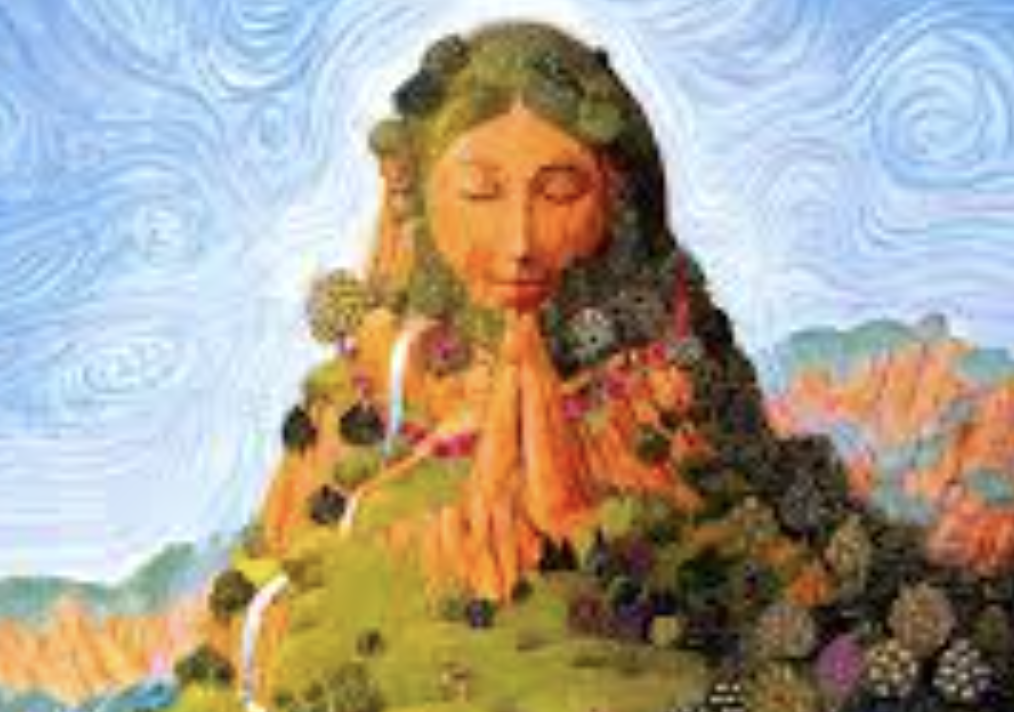
Recently, a 1995 photograph surfaced showing Father Robert Prevost, now Pope Leo, at an "eco-theology" event in Brazil that included references -- in words and symbols -- to "Pachamama," an Andean fertility goddess, or "Mother Earth." Some Catholics flashed back to a 2019 controversy, a Vatican synod of Pan-Amazon bishops with an event featuring a pregnant "Our Lady of the Amazon" statue, which Pope Francis later described as "Pachamama."

These photos of the future pope may be important, but Catholics will need to see how Leo responds, said Mark Lambert, writing for the conservative Catholic Unscripted website. Ultimately, what matters is how the pope addresses the first of the Ten Commandments, "You shall have no other gods before me."

King Charles III and the dangers of talking about Easter

King Charles III and the dangers of talking about Easter

In western Christian churches, the highest holy day on the liturgical calendar is Easter -- the Solemnity of the Resurrection of the Lord.

A year ago, King Charles III, in an Easter message that made little news, proclaimed that the love Jesus showed "when he walked the Earth reflected the Jewish ethic of caring for the stranger and those in need, a deep human instinct echoed in Islam and other religious traditions. …

"The abiding message of Easter is that God so loved the world -- the whole world -- that He sent His son to live among us to show us how to love one another, and to lay down His own life for others in a love that proved stronger than death."

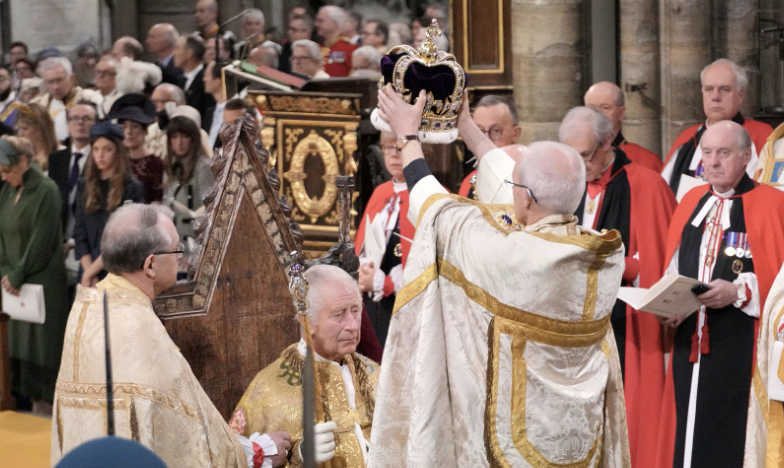
This year, Buckingham Palace made headlines when it confirmed that Charles III, the Supreme Governor of the Church of England, would not release a statement for Holy Week or Easter. While the monarch traditionally addresses the public at Christmas, Easter messages have not been the norm.

This news shocked many Christian leaders, since the king had just offered statements marking the beginning and end of Ramadan, the month of fasting and prayer for Muslims.

Adding fuel to the fire, a protester sprayed "Not our King" in red paint on a wall of the ancient Cathedral of Saints Asaph and Cyndeyrn in Wales before the arrival of King Charles and Queen Camilla for a Maundy Thursday rite during Holy Week.

The Royal Family did release a short Easter message on social media, showing a cross, the message, "Happy Easter. He is risen!" and a caption wishing "a joyous Easter Sunday to Christians celebrating in the UK, the Commonwealth and around the world today."

It's fair to ask how the king expected the public to interpret both his actions and what could be seen as strategic silence, said Gavin Ashenden, a convert to Catholicism who, as a priest in the Church of England, served as chaplain for Queen Elizabeth II from 2008-2017.

It would have been consistent for Charles to issue remarks about Great Lent, as well as Ramadan, since the fasting and prayer themes in these seasons are similar, wrote Ashenden, on his "New English Catholic" website.

The Episcopal Church is about to die? It's leader says that's a lie "from the pit of hell"

The Episcopal Church is about to die? It's leader says that's a lie "from the pit of hell"

Episcopal Church leaders have long heard warning sirens in their annual reports, with brutal statistics supporting this reality -- they have lost half of their members since the 1960s.

If trends continue, the mainline Anglican flock in America will lose another half of its membership by 2040, with some demographers predicting institutional demise by 2050. But that's better than the Anglican Church of Canada, which could be gone by 2040.

After years of producing reports about religion in America, political scientist Ryan Burge knows a viral headline when he sees one. One of his recent Graphs about Religion posts asked: "When are Half of Your Members Going to be Dead?"

"Episcopalians are old," wrote Burge. "In fact, two-thirds of their adult members have celebrated their 60th birthday. In contrast, just 6% are under the age of 30. Put simply: for every young adult Episcopalian in the pews this Sunday, there will be about 10 retirees. Oof."

Episcopalians hold five funerals for every wedding, he noted, in a January 23 address for the Episcopal Diocese of Central Florida.

"My job is to tell the truth," said Burge, of the John C. Danforth Center on Religion and Politics at Washington University in St. Louis. For the Episcopal Church, "the check engine light is flashing."

Episcopalians are not alone, he stressed. In the 1950s, according to historians, "mainline" Protestants -- Episcopalians, Lutherans, Presbyterians, Methodists and others -- were 52% of the U.S. population. That fell to 30% by 1970 and, today, has hit 8.7%.

"Guess what? Old people die, and they're really religious. And you know who they're going to be replaced by? Young people, who are not very religious," said Burge, noting that about 43% of Generation Z claims no religious affiliation.

Drawing laughter, he added: "Hey, here's some good news. Attendance is up, a little bit." And donations are steady. However, "If you die with the most money, you're still dead."

Burge's name surfaced during the Episcopal Parish Network's annual meeting, held in Charlotte, North Carolina. Asked about reports of doom, Presiding Bishop Sean Rowe noted that "people make their living telling us that."

Are the massacres in Nigeria "old news"? Not to the pastors who bury the dead

Are the massacres in Nigeria "old news"? Not to the pastors who bury the dead

The Rev. Ezekiel Dachomo had every reason to be emotional as he stood in a shallow grave containing the corpses of 11 members of his Church of Christ in Nations congregation in Rachas village, located in central Nigeria.

"I am tired of mass burials! … Nigerian government came out and openly denied -- there is no massacre. There is no genocide of Christians in Nigeria and look at it today," he shouted, gesturing toward to machete-slashed bodies around him. "United Nations, I know you are watching me! American Senate, you are watching what I am doing! Special advisor to Trump, now, please, tell Trump to save our lives in Nigeria!"

The pastor's mid-October Facebook video went viral, joining years of social-media messages from Catholic, Protestant and secular human-rights activists responding to raids by armed Boko Haram and Fulani insurgents. Many of the attacks occur at Easter, Christmas and other holy days.

Responding to pleas from Republicans in Congress and religious conservatives, President Donald Trump sent this warning, via his Truth Social platform.

"If the Nigerian Government continues to allow the killing of Christians, the U.S.A. will immediately stop all aid and assistance to Nigeria and may very well go into that now disgraced country, 'guns-a-blazing,' to completely wipe out the Islamic Terrorists who are committing these horrible atrocities," warned Trump. "If we attack, it will be fast, vicious, and sweet, just like the terrorist thugs attack our CHERISHED Christians!"

During his first White House administration, Trump designated Nigeria as a Country of Particular Concern for tolerating religious freedom violations against Christians -- a stance dropped by President Joe Biden in 2021. Now, Trump has restored that designation, in part responding to appeals by the U.S. Commission on International Religious Freedom.

"Nigeria is the most dangerous nation on Earth to follow Christ," said a statement from House Appropriations Committee Chairman Tom Cole, Vice Chair Mario Díaz-Balart and Legislative Branch Subcommittee Vice Chair Riley Moore.

Graffiti tales at Canterbury, and a new leader for divided Anglican Communion

Graffiti tales at Canterbury, and a new leader for divided Anglican Communion

In ordinary times, the arrival of a new Archbishop of Canterbury would be a headline that stood alone, especially if England's monarch had just approved the first woman to serve as the symbolic leader of the Anglican Communion.

But the recent decision to add decorative graffiti inside Canterbury Cathedral, founded in 597, added tension to debates surrounding the October 2 appointment of the Right Reverend and Right Honorable Dame Sarah Mullally as the 106th successor to St. Augustine.

The "Hear Us" exhibition added flashy decals to the columns, walls and floors of the iconic sanctuary, imitating the spray-paint art common in alleys, road underpasses and urban neighborhoods. The images offered bold challenges, such as: "God, what happens when we die?", "Are you there?", "Why did you create hate?" and "Do you ever regret your decisions?"

Cathedral Dean David Monteith explained: "There is a rawness which is magnified by the graffiti style which is disruptive." The exhibit, which ends in January, "allows us to receive the gifts of younger people who have much to say."

Among Anglicans, Monteith's leadership role has fueled debates because of his public decision to enter a same-sex civil partnership -- a stance rejected by traditional clergy in England and around the world. He also made headlines in 2024 with "Rave in the Nave" disco nights, with a temporary alcoholic bar located near where St. Thomas Becket was martyred in 1170.

In her first sermon after being named Archbishop of Canterbury, Mullally alluded to the messy divisions inside the worldwide Anglican Communion, with its 85-110 million believers.

"In an age that craves certainty and tribalism, Anglicanism offers something quieter but stronger: shared history, held in tension, shaped by prayer, and lit from within by the glory of Christ," she said.

"Across our nation today, we are wrestling with complex moral and political questions. The legal right of terminally ill people to end their own lives. Our response to people fleeing war and persecution. … The deep-rooted question of who we are as a nation, in a world that is so often on the brink."

The fellowship of J.R.R. Tolkien and C.S. Lewis, shaped by reality in World War I

The fellowship of J.R.R. Tolkien and C.S. Lewis, shaped by reality in World War I

A British soldier began writing "The Fall of Gondolin" while in a hospital bed, stricken by "trench disease" from the lethal front lines of World War I.

A German soldier later bemoaned the "lice, rats, barbed wire, fleas, shells, bombs, underground caves, corpses, blood, liquor, mice, cats, artillery, filth, bullets, mortars, fire, steel." Add poison gas to that ordeal.

Young J.R.R. Tolkien wrote: "The fume of the burning, and the steam of the fair fountains of Gondolin withering on the flame of the dragons of the north, fell upon the vale of Tumladen in mournful mists." The battlefields were "cold and terrible."

This was a vision of war from a man who had been there, said Joseph Loconte, author of "A Hobbit, a Wardrobe and a Great War." The book explores the many ways that World War I shaped Tolkien and C.S. Lewis.

"Tolkien wasn't writing escapist fantasy," said Loconte, reached by telephone. "If this is about escape, it's the writings of a prisoner who has escaped the world of cells, bars and keys. This kind of escapism … helps us realize that our prisons have windows and we can use them to see better things."

Tolkien later wrote that he began creating his Middle Earth mythology -- the foundation for the future "The Lord of the Rings" -- while "in grimy canteens, at lectures in cold fogs, in huts full of blasphemy and smut, or by candlelight in bell-tents, even some down in dugouts under shell fire."

Yes, the man who survived days huddled in shell craters and trenches in France would later write, in a blank page in an Oxford student's exam book, these famous words: "In a hole in the ground there lived a Hobbit."

Tolkien and Lewis remain stunningly popular -- in print and on digital screens.

Does the Anglican Church of Canada have a future?

Does the Anglican Church of Canada have a future?

In the year of our Lord 1967, the Anglican Church of Canada had 1,218,666 members and 272,400 worshippers on a typical Sunday.

In a recent report, the church found 294,382 members on parish rolls and 58,871 people attending worship services.

”The religious institution many of us have long known and loved does not look now as it did even 20 years ago, and it will not look the same 20 years from now," noted a report from church leaders, "Creating Pathways for the Transformational Change of the General Synod (.pdf)."

Waves of declining statistics will "evoke grief, fear and longing. …This report does not seek to reverse current trends, but to respond to them to empower a much smaller church to thrive as it proclaims the gospel today and in the future."

Obviously, the "church is changing. … But that change is not the same as the end of the church. That change may be uncomfortable, but being uncomfortable is not the same as the end of the church," noted the Rev. Neil Elliot of the Province of British Columbia, in the report's executive summary. His X profile says he is the "official stats nurd" for Canadian Anglicans.

The "Creating Pathways" text noted that, while pew-level statistics have plunged 75%, the denomination still has 1474 parishes, compared to 1849 in 1967. Meanwhile, the number of bishops has increased from 36 to 39.

While promising to offer "prophetic imagination" and a "refusal to ignore difficult conversations," the report focuses on cuts and consolidations to increase efficiency, perhaps through remote work, AI advances and better communication networks. The bottom line: The church's 30 dioceses, four provinces and two national administrative bodies have "been sustained with a drastically decreased base of support." The General Synod staff has, in recent decades, been cut from 94 to 39.

Which candidate did Hell endorse? That isn't the real question facing believers right now

Which candidate did Hell endorse? That isn't the real question facing believers right now

Forget the opinions of newspaper czars, the question many voters needed to know in this feverish White House race was simple: Who did Hell endorse?

Writing in the style "The Screwtape Letters" by Christian apologist C.S. Lewis, in which a veteran tempter lectures lesser demons, Dominick Baruffi didn't answer that question. But his satirical lecture by the Infernal National Convention chairman "Gurtfoot" stressed that this year's options were truly hellish.

"Almost everything said in front of a camera is said for the purposes of being seen while saying it, and any policy has become entirely secondary to their celebrity," wrote Baruffi, a Westminster Theological Seminary graduate who works as a counselor for troubled children.

His demon "Gurtfoot" added: "What are the humans to do but either spend their time quarreling over choosing 'the lesser of two evils' or permit themselves to drift into apathy and ignorance? Of course, both are perfectly acceptable outcomes in our eyes. … If we can continue to produce candidates such as these two halfwits in the years to come our victory is all but assured."

But the main goal of the "Screwtape Endorses a Candidate" essay was not to slam the Republican and Democratic candidates. Instead, Baruffi focused on an issue discussed by insiders -- whether the acid of recent elections has warped how Christians view politics.

With President Donald Trump returning to the White House, progressive religious leaders will feel an immediate stab of disappointment. But believers on the left and right will soon have to face the fact that compromises are painful in a bitterly divided nation.

Thus, Baruffi's proud tempter noted: "The modern man now sees politics as repugnant, wholly undesirable and certainly unable to be discussed reasonably with others. …This is a great victory for our kind. The less the humans are made to think of the IDEA of politics, the more isolated and fractured they become, thus making them more vulnerable to our advances."

If millions of believers choose to flee politics, that will be tragic.

When a Doritos chip becomes a meme: Progressive take on Holy Communion?

When a Doritos chip becomes a meme: Progressive take on Holy Communion?

On election night in 2016, an event offering pain as well as triumph, Kamala Harris dug into a big bag of salty snack-food consolation.

"It was incredibly bittersweet. When I took the stage for my acceptance speech -- to represent California in the Senate -- I tore up my notes. I just said, 'We will fight,' " said Vice President Harris in a fundraising letter for her White House campaign.

"Then I went home, and I sat on the couch with a family-sized bag of nacho Doritos. I did not share one chip with anybody. ... Two things are true eight years later: I still love Doritos and we still have not stopped fighting."

Thus, in her campaign against Republican presidential nominee Donald Trump -- whose 2016 victory angered her -- the Harris team has used Doritos as a symbol of the feisty, combative side of her personality.

Thus, Michigan Gov. Gretchen Whitmer recently made waves with a social-media clip in which she placed a Dorito on the tongue of podcaster Liz Plank, a popular online "influencer" and MSNBC contributor.

Many Catholics cried "foul," since Plank was kneeling and appeared to be imitating the posture of a believer receiving the sacrament of Holy Communion. After the video went viral, defenders of Whitmer and Plank said they were merely offering their take on a TikTok meme in which someone feeds food to a friend, and then awkwardly stares into the camera.

It didn't help that the full version of the video -- produced for Plank's "feministabulous" Instagram page -- also focused on debates about abortion rights. In the past, Plank has called faith-based crisis-pregnancy centers "fake clinics."

The president of the Michigan Catholic Conference was not amused.