
worship

Father's Day Mass in Pride month: Gay dads celebrate the faith of their Catholic parish

Father's Day Mass in Pride month: Gay dads celebrate the faith of their Catholic parish

Landon Duyka and Alex Shingleton had almost given up on Catholicism.

Then they found Old St. Patrick's Church in Chicago, where their family was welcomed because the parish practices what its clergy call "radical inclusivity." This year, the two husbands created an online buzz when, after a decade in these pews, they shared the pulpit during a symbolic Sunday Mass.

“Chicago is celebrating Pride and, of course, today is Father's Day and, conveniently, we tick both of those boxes," said Duyka. "In all honesty, if you had told us as young boys who wasted countless hours of our lives in church trying to 'pray the gay away' that we someday would be standing in front of all of you in our Catholic church talking about our family on Father's Day, we would never have believed you."

At this historic parish, their adopted daughters are thriving. The youngest was baptized with no complications, unlike the "secret ceremony" for their first daughter at a previous church. In 2016, the Old St. Pat's altar featured -- for a month -- photos of victims from Orlando's Pulse nightclub massacre. Parishioners shook their hands during the Sign of the Peace. There was no need to worry about sermons opposing gay marriage or seeing conversion-therapy pamphlets.

The Father's Day "reflection" by Duyka and Singleton filled the homily slot in the Mass, following the Gospel reading. There was no homily, even though Canon law requires a "priest of deacon" to deliver one during Sunday Masses with a congregation.

The details of this Pride-season Mass inspired online debates since it occurred in the powerful Archdiocese of Chicago, led by Cardinal Blase Cupich.

Pope Francis recently named Cupich to the Vatican's Dicastery for Divine Worship and the Discipline of the Sacraments. The Chicago cardinal has been a fierce defender of the pope's Traditionis Custodes ("Guardians of the Tradition") document limiting use of the Tridentine Latin Mass. With its authority, Cupich has also restricted other worship traditions favored by Catholic conservatives, such as priests celebrating Mass "ad orientem," as opposed to the modern "versus populum" stance in which, when at the altar, they face their congregations.

On LGBTQ issues, Cupich made news with his response to a 2021 Congregation for the Doctrine of the Faith text forbidding blessings for same-sex couples.
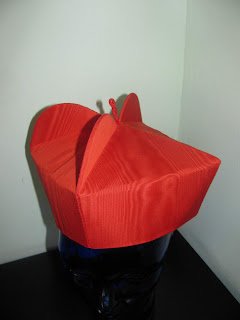
Pope elevates outspoken bishop on left: What was the message to U.S. bishops?

Pope elevates outspoken bishop on left: What was the message to U.S. bishops?

Two years before long-standing rumors about Cardinal Theodore McCarrick leapt into headlines worldwide, America's most outspoken activist on clergy sexual abuse met with his local bishop -- San Diego Bishop Robert McElroy.

"It was clear to me during our last meeting in your office, although cordial, that you had no interest in any further personal contact," wrote the late Richard Sipe, a former Benedictine priest who then worked for the Seton Psychiatric Institute in Baltimore. While church officials asked him to report to McElroy, "your office made it clear that you have no time in your schedule either now or 'in the foreseeable future' to have the meeting that they suggested."

Sipe's 2016 letter to the San Diego bishop was later posted online and is frequently cited as an example of a bishop ignoring warnings about the now defrocked McCarrick, who often boasted about his clout as a Vatican kingmaker. Now it will receive more attention because Pope Francis has named McElroy to the Sacred College of Cardinals. This promotes the San Diego bishop over several prominent archbishops -- including Los Angeles Archbishop Jose Gomez, who leads America's largest Catholic archdiocese and is president of the U.S. Conference of Catholic Bishops.

In his hand-delivered report, Sipe told McElroy that his ongoing research indicated that 6% of American priests were guilty of sex with minors. Meanwhile, a "systemic" trend was clear: "At any one time no more than 50% of priests are practicing celibacy."

As for the powerful McCarrick, Sipe noted: "I have interviewed twelve seminarians and priests who attest to propositions, harassment, or sex with McCarrick, who has stated, 'I do not like to sleep alone.' "

Debates about McElroy's elevation have focused on other divisive issues in Catholic life, although decades of sexual-abuse crimes loom in the background. He has, for example, supported the ordination of women to the diaconate, allowing them to preach, perform weddings and serve -- one step from the priesthood -- at Catholic altars.

McElroy has openly clashed with American bishops anxious to address "Eucharistic coherence" as prominent Catholics, especially President Joe Biden and House Speaker Nancy Pelosi, support -- with words and deeds -- abortion and LGBTQ rights.

Lessons from Kansas plains: Hall of Men in Wichita mixes books, beer, prayer and more

Lessons from Kansas plains: Hall of Men in Wichita mixes books, beer, prayer and more

WICHITA, Kan. — The Hall of Men fits the name, with meetings offering beer, cigars, an open bar, some kind of guy food (think pizza) and lots of chatter around a giant wooden table.

But then there are the evening prayers, icons, Bible readings and lectures about authors whose portraits hang in this “Christian speakeasy.” The names include C.S. Lewis, Flannery O’Connor, W.H. Auden, Dorothy Sayers, Fyodor Dostoevsky, J.R.R. Tolkien and many others. Johnny Cash and Bob Dylan are there, as well.

This group has met twice a month for a dozen years and most of the faithful are Orthodox, Catholic and Lutheran, with plenty of evangelicals at special events. The authors honored are selected after an informal process that usually starts during fellowship before and after lectures, with men talking about books that have touched their lives.”

The whole thing is affected by having that bookstore right next door,” said Pastor Geoff Boyle, a Missouri-Synod Lutheran long active in the project. “The man behind the front counter is used to having these conversations and obviously knows all about the books the guys are talking about. The books are right there and, if they’re not, they will be soon.”

“That bookstore” is Eighth Day Books, which draws customers from across the nation to an old three-story house with 46,000 new and used books — 27,000 titles — shelved and stacked anywhere that will hold them, including the basement “Hobbit Hole” packed with children’s literature. The white-haired man behind the counter is owner Warren Farha, an Orthodox believer with family ties to Lebanon.

This isn’t a “Christian bookstore” complete with knick-knacks, inspirational posters and religious self-help books — but “Eighth Day” is a reference to the Resurrection of Jesus.

Farha created the store in 1988 and selects all the books, with the help of an ecumenical network woven into the Eighth Day Institute and its conferences, newsletters, podcasts and groups such as the Hall of Men and the Sisters of Sophia.

“My goal has always been to be fair to the great traditions,” said Farha, in his office in the bookstore’s attic. “We have classics in history, literature, poetry, church history, theology and philosophy — Christian writings through the ages. … I’m always listening to people who GET the template for what we’re doing here.

“Great books from different traditions are on the shelves right next to each other, even if they clash in ways that we need to discuss.”

Pascha 2022: Messages of pain, anger and hope from Orthodox leaders in Ukraine

Pascha 2022: Messages of pain, anger and hope from Orthodox leaders in Ukraine

With the barrage of horrors from Ukraine, it wasn't hard to distinguish between the messages released by the Eastern Orthodox leaders of Russia and Ukraine to mark Holy Pascha, the feast known as Easter in the West.

The epistle from Russian Orthodox Patriarch Kirill offered hope for this life and the next. But his text contained only one possible reference to the fighting in Ukraine, which the United Nations says has claimed the lives of 3,000 civilians, at the very least.

"In the light of Pascha everything is different," wrote the patriarch of Moscow and All Russia. "We are not afraid of any mundane sorrows, afflictions and worldly troubles, and even difficult circumstances of these troubled times do not seem so important in the perspective of eternity granted unto us."

But the first lines of the message released by Metropolitan Onuphry of Kiev and All Ukraine placed this Pascha in a radically different context -- a clash between good and evil, right now. It was released on April 25th, the day after Orthodox Christians celebrated Pascha according to the ancient Julian calendar.

This letter was especially symbolic since Metropolitan Onuphry leads Ukraine's oldest Orthodox body, one with strong ties to the giant Russian Orthodox Church.

"The Lord has visited us with a special trial and sorrow this year. The forces of evil have gathered over us," he wrote. "But we neither murmur nor despair" because Pascha is "a celebration of the triumph of good over evil, truth over falsehood, light over darkness. The Resurrection of Christ is the eternal Pascha, in which Christ our Savior and Lord translated us from death to life, from hell to Paradise."

The contrast between these messages underlined a complex reality in Orthodox life after Russia's invasion of Ukraine, a land cruelly oppressed by the Soviet Union, but with strong Russian roots through the "Baptism of Rus" in 988. That was when, following the conversion of Prince Vladimir, there was a mass baptism of the people of Kiev -- celebrated for a millennium as the birth of Slavic Christianity.

Metropolitan Onuphry and other Orthodox hierarchs with historic ties to Moscow have openly opposed the Russian invasion, while trying to avoid attacks on the Russian Orthodox Church. The bottom line: Leaders of ancient Orthodox churches will ultimately, at the global level, need to address these conflicts.

Father Joseph Ratzinger's 1969 vision of the future and Germany's emerging reality

Father Joseph Ratzinger's 1969 vision of the future and Germany's emerging reality

The 1960s were turbulent times and, in Europe, Catholics faced storms of radical change that left many weary or even cynical.

In 1969, one of Germany's rising theologians -- a liberal priest at Vatican II who then became a conservative -- was asked what he saw in the future.

"What St. Augustine said is still true -- man is an abyss; what will rise out of these depths, no one can see in advance," said Father Joseph Ratzinger, on German radio. "Whoever believes that the church is not only determined by the abyss that is man, but reaches down into the greater, infinite abyss that is God, will be the first to hesitate with his predictions."

Ratzinger's words grew in importance in 1977 when he became Archbishop of Munich and quickly became a cardinal. Then Pope John Paul II made him prefect of the Vatican's powerful Congregation for the Doctrine of the Faith, where his orthodoxy led liberals to call him "God's Rottweiler." In 2005, he became Pope Benedict XVI.

Catholics continue to ponder his 1969 words: "From the crisis of today the church of tomorrow will emerge -- a church that has lost much. … As the number of her adherents diminishes, so it will lose many of her social privileges. In contrast to an earlier age, it will be seen much more as a voluntary society, entered only by free decision. As a small society, it will make much bigger demands on the initiative of her individual members."

The future pope predicted a "crystallization" process creating a "more spiritual church, not presuming upon a political mandate, flirting as little with the left as with the right. … It will make her poor and cause her to become the church of the meek."

The retired pope celebrated his 95th birthday on April 16th -- Holy Saturday. During an earlier meeting with Jesuits, Pope Francis called his predecessor "a prophet" and cited Benedict's predictions of a "poorer" and "more spiritual" church..

“Let us prepare ourselves to be a smaller church," said Pope Francis, in remarks published in a Jesuit journal. "This is one of his most profound intuitions."

Execution chaplain case offers rare sighting of 1990s left-right religious liberty coalition

Execution chaplain case offers rare sighting of 1990s left-right religious liberty coalition

Before putting his neck on the chopping block, King Charles I turned to his chaplain seeking personal peace after the chaos of the English Civil Wars.

The king was, on that infamous 1649 day, pondering heaven, hell and forgiveness.

“To show you that I am a good Christian," the king said, pointing to London Bishop William Juxon, "I hope there is a good man that will bear me witness that I have forgiven all the world, and even those in particular that have been the chief causers of my death. Who they are, God knows, I do not desire to know. God forgive them."

This isn't the kind of theology that ordinarily shapes U.S. Supreme Court decisions. Nevertheless, it was part of a litany of historical references during debates preceding a recent decision requiring Texas to grant a convicted murderer his Baptist pastor's audible prayers and comforting touch during his execution.

This was a rare moment in which activists on both sides of America's culture wars cheered for "religious liberty," a freedom that until recently didn't require cynical "scare quotes" that suggest uncertainty. This trend in First Amendment discourse has, for me, become the most important story I have covered during the third of a century -- as of this week -- in which I have written this national "On Religion" column.

The big question: Why did appeals to centuries of tradition work this time?

The condemned prisoner, John Ramirez, told the court he believed his pastor's "laying on of hands on him as he dies, and the vocalization of prayers and scripture, will assist his passing from life to death and will guide his path to the afterlife."

In his decision, Chief Justice John Roberts saluted the "rich history" of evidence supporting this prisoner's request "to have his pastor lay hands on him and pray over him during the execution. Both are traditional forms of religious exercise."

Episcopal Church poll: Americans like Jesus (sort of), but not his followers

Episcopal Church poll: Americans like Jesus (sort of), but not his followers

When it comes to exploring what Americans think about Jesus, a new study offers Christian leaders both good news and bad news.

The good news is that 76% of Americans affirm the "historical existence" of "Jesus of Nazareth," although it's also interesting to note that if 89% of self-identified Christians embraced that statement, the implication is that 11% are not sure.

Meanwhile, 84% of participants in a new "Jesus in America" study -- conducted by the global Ipsos research company for the Episcopal Church -- agreed that "Jesus was an important spiritual figure."

The bad news? While 50% of "not religious" Americans accepted this "important spiritual figure" language, they were much less impressed with the believers who represent Jesus.

When asked, "What characteristics do you associate with Christians in general?", the nonreligious selected these words from the poll's options -- "hypocritical" (55%), "judgmental" (54%) and "self-righteous" (50%). Next up: "arrogant," "unforgiving" and "disrespectful."

It appears that one of the goals of this poll -- with questions about racism, social justice and last year's attack on the U.S. Capitol -- was to see if nonbelievers have different attitudes about liberal and conservative Christians, said political scientist Ryan Burge of Eastern Illinois University, author of the new book "20 Myths about Religion and Politics in America." He is co-founder of the Religion in Public website and a contributor at GetReligion.org, which I have led since 2004.

"This is the million-dollar question," said Burge, who is also a pastor in the progressive American Baptist Church. "If non-religious people are turned off by what they see as the stricter faith of many Christians, evangelicals in particular, then wouldn't it make sense for them to seek more flexible alternatives?

"If there's all kinds of room in mainline Protestant churches these days, and that's putting it mildly, then why aren't these kinds of people filling up some of those pews?"

Is the Southern Baptist Convention preparing to fight its 1979 all over again?

Is the Southern Baptist Convention preparing to fight its 1979 all over again?

Once upon a time, Southern Baptists in Bible Belt communities knew how to talk to people who didn't go to church.

"We were dealing with people who were, for the most part, like us," said Baptist historian Nathan Finn, the provost of North Greenville University, located in the South Carolina hills near the North Carolina border. "Everyone understood sweet tea, fried chicken and SEC football. It was easier to talk to those people about Jesus."

Things changed, as the greater Greenville-Spartanburg welcomed waves of high-tech firms and industries with global brands such as BMW, Bosch, Fluor, Hitachi and many others. Today's newcomers speak German or Japanese.

"It's not Black folks and White folks from the South. We're past that. The Sunbelt has gone global and we're more urban. We don't know how to talk to the new people," said Finn. "The cultural gaps are bigger. … Southern Baptists are better at handling these kinds of issues in foreign missions than in our own communities."

Finn has been studying this trend and others for years, which led him to write a series of articles in 2009 for Southeastern Baptist Theological Seminary entitled "Fifteen Factors that have Changed the SBC since 1979."

Anyone who knows Southern Baptist Convention history gets that 1979 reference. That was when activists backing "biblical inerrancy" attacked establishment leaders of America's largest Protestant flock, while also supporting causes favored by the surging Religious Right. Electing one SBC president after another during the 1980s, this "conservative resurgence" helped change the face of evangelicalism.

There are signs a second Baptist civil war may be ahead. A key moment came on March 1, when SBC President Ed Litton of Alabama said he would not -- as has become the norm -- seek a second term. Last June, he narrowly defeated a pastor from the Conservative Baptist Network, a new coalition that insists SBC leaders have become "too woke" on Critical Race Theory, the role of women, COVID-19 policies and other fault lines in American life.

Finn is convinced that Southern Baptists are, this time around, fighting over how to respond to rapid cultural changes, as opposed to the theological disputes of the past.

Will Russia's ruler listen to Orthodox Christian voices praying for ceasefire?

Will Russia's ruler listen to Orthodox Christian voices praying for ceasefire?

During Sunday rites, worshippers in the Orthodox Church in America are led through a tour of the faith's music, with hymns from Russia, Romania, Georgia, Bulgaria and beyond.

The faithful know many by heart, including the ancient Trisagion hymn -- "Holy God, Holy Mighty, Holy Immortal, have mercy on us" -- in a haunting setting that for centuries has simply been called "Kievan Chant."

With Great Lent approaching, Archbishop Alexander Golitzin of the Diocese of Dallas and the South instructed parishes (including my own in East Tennessee) to add prayers for Ukraine in every Divine Liturgy: "Again, we ask Thy great mercy on our brothers and sisters who are presently involved in conflict. Remove from their midst all hostility, confusion and hatred. Lead everyone along the path of reconciliation and peace."

The OCA's Metropolitan Tikhon, leader of a church that began with Russian missionary work in 1794, has urged that "hostilities be ceased immediately and that President Putin put an end to the military operations. As Orthodox Christians, we condemn violence and aggression."

In Slavic Orthodox history, all roads lead to Kiev, now called Kyiv in the West.

Orthodox leaders with ties to the European Union and highly European Western Ukraine have issued fierce statements after the Russian invasion. Metropolitan Epiphanius I of the independent Ukrainian Orthodox Church, launched in 2018 by Ecumenical Patriarch Bartholomew of Istanbul, has said the "spirit of the Antichrist operates in the leader of Russia."

However, it's significant that leaders of many Orthodox churches with roots in Russian Orthodoxy have also condemned the invasion and urged a ceasefire. The leader of Ukraine's oldest Orthodox body -- one with centuries of ecclesiastical ties to Moscow -- condemned the invasion in a statement addressed directly to Vladimir Putin.