World religions

Ancient churches of Orthodoxy are being flooded with American converts (Part I)

Ancient churches of Orthodoxy are being flooded with American converts (Part I)

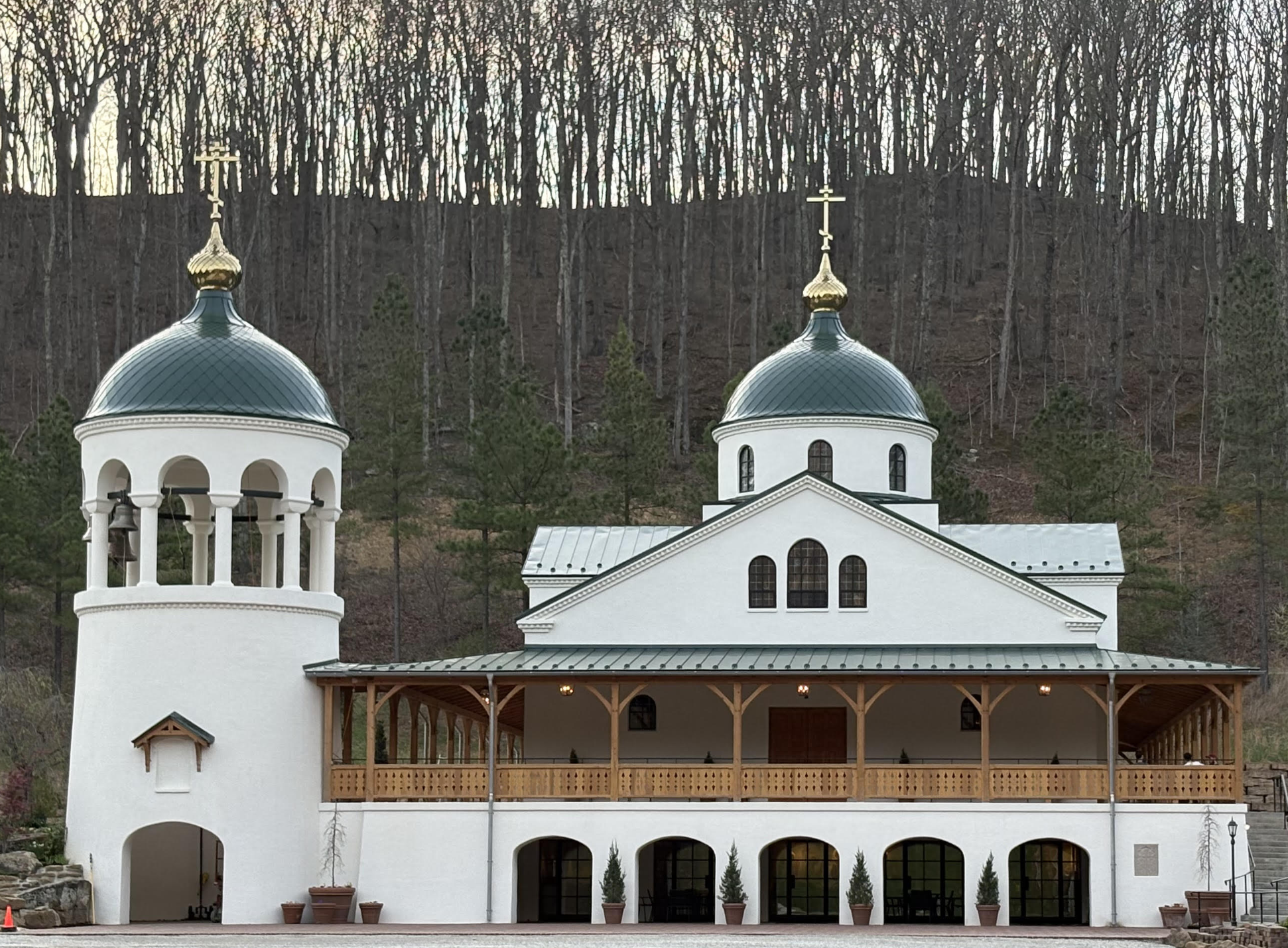
For Orthodox Christians in America, the 20th century was shaped by waves of believers fleeing wars, revolutions and persecution in lands such as Greece, Syria, Russia and Romania.

The Orthodox did everything they could to preserve their faith and cultural traditions. When bishops visited these small flocks, it was rare to see converts.

Then, in the late 1980s, flocks of evangelical Protestants swept into the Antiochian Orthodox church and then the Orthodox Church in America, which has Slavic roots. These converts began reaching out to others. Then came the seeker-friendly Internet. Then came COVID. Suddenly, streams of young families began exploring what was often called the mysterious, ancient "Eastern Church."

"Some observers liken this influx to a flood, and the comparison is accurate. I do not visit a parish without meeting catechumens there. In some parishes, they number more than 100," said Metropolitan Saba, leader of the Antiochian Orthodox Christian Archdiocese of North America, in a recent Denver address.

"While many long-standing believers see in the converts a source of renewal and vitality -- and a spur to discover their own Orthodoxy personally and deeply, not merely as a social religious tradition -- many also feel somewhat threatened by the cultural changes occurring in their parish."

In a survey of his priests, Saba said, one wrote: "The century of the 'church of immigrants' has ended; the century of evangelization has begun. Orthodoxy's mission is no longer primarily geographical … but existential."

Orthodox Christianity remains a small flock in America, with 2-3 million believers in 2,000 parishes. The Pew Research Center has estimated that, globally, there are 260 million Orthodox Christians, the next largest communion after the Catholic Church with 1.4 billion.

The bottom line: The catechumenate class numbers are staggering.

Are the massacres in Nigeria "old news"? Not to the pastors who bury the dead

Are the massacres in Nigeria "old news"? Not to the pastors who bury the dead

The Rev. Ezekiel Dachomo had every reason to be emotional as he stood in a shallow grave containing the corpses of 11 members of his Church of Christ in Nations congregation in Rachas village, located in central Nigeria.

"I am tired of mass burials! … Nigerian government came out and openly denied -- there is no massacre. There is no genocide of Christians in Nigeria and look at it today," he shouted, gesturing toward to machete-slashed bodies around him. "United Nations, I know you are watching me! American Senate, you are watching what I am doing! Special advisor to Trump, now, please, tell Trump to save our lives in Nigeria!"

The pastor's mid-October Facebook video went viral, joining years of social-media messages from Catholic, Protestant and secular human-rights activists responding to raids by armed Boko Haram and Fulani insurgents. Many of the attacks occur at Easter, Christmas and other holy days.

Responding to pleas from Republicans in Congress and religious conservatives, President Donald Trump sent this warning, via his Truth Social platform.

"If the Nigerian Government continues to allow the killing of Christians, the U.S.A. will immediately stop all aid and assistance to Nigeria and may very well go into that now disgraced country, 'guns-a-blazing,' to completely wipe out the Islamic Terrorists who are committing these horrible atrocities," warned Trump. "If we attack, it will be fast, vicious, and sweet, just like the terrorist thugs attack our CHERISHED Christians!"

During his first White House administration, Trump designated Nigeria as a Country of Particular Concern for tolerating religious freedom violations against Christians -- a stance dropped by President Joe Biden in 2021. Now, Trump has restored that designation, in part responding to appeals by the U.S. Commission on International Religious Freedom.

"Nigeria is the most dangerous nation on Earth to follow Christ," said a statement from House Appropriations Committee Chairman Tom Cole, Vice Chair Mario Díaz-Balart and Legislative Branch Subcommittee Vice Chair Riley Moore.

Catholic social media enters the age of digital flocks and "hot priests"

Catholic social media enters the age of digital flocks and "hot priests"

With a nod to digital life, Merriam-Webster has expanded its "influencer" definition to include a "person who is able to generate interest in something (such as a consumer product) by posting about it on social media."

Pope Leo XIV didn't use that term in his latest remarks on faith in the Internet age, even while addressing the recent Vatican Jubilee for Digital Missionaries and Influencers.

"Today, we are in a culture where the technological dimension is present in almost everything, especially as the widespread adoption of artificial intelligence will mark a new era in the lives of individuals and society as a whole," the pope told more than 1,000 "content creators," from 70 nations.

"We have a duty to work together to develop a way of thinking, to develop a language, of our time, that gives voice to Love" -- with a divine uppercase "L" in his text. "It is not simply a matter of generating content, but of creating an encounter of hearts. This will entail seeking out those who suffer, those who need to know the Lord, so that they may heal their wounds, get back on their feet and find meaning in their lives."

The pope, who studied mathematics as an undergraduate, warned Catholic "influencers" about temptations they should avoid, such as the "logic of division and polarization," "individualism and egocentrism," "fake news" and "frivolity."

The church, he noted, has "never remained passive" when facing cultural change, but strives to separate "good from evil and what was good from what needed to be changed, transformed and purified."

Meanwhile, journalists spotted modern trends while surfing the online work of many participants. The Daily Mail headline proclaimed: "Christianity is sexy now! How 'hot priest' influencers are drawing young people to the church in their droves." The Telegraph went further: "Vatican turns to 'hot priests' to spread faith -- Social media seen as means to ensure survival of a church suffering from declining numbers." 

Hooks for the coverage included an Italian "bodybuilder priest" on Instagram, whose bulging biceps are covered with tattoos. Other "influencer" priests offered digital followers content about their poetry, workouts, guitar skills, cycling trips and adventures with pets, as well as sermons and Bible studies. 

Catholics see symbols and signals of unity, as Pope Leo XIV begins his papacy

Catholics see symbols and signals of unity, as Pope Leo XIV begins his papacy

For more than 26 years, Pope John Paul II traveled the world with a silver pastoral staff topped with a dramatic, abstract crucifix crafted by the 20th-century artist Lello Scorzelli.

This symbol of papal ministry was first used by Pope Paul VI at the Second Vatican Council finale and has been carried on occasion by subsequent popes. But, year after year, Mass after Mass, it became a powerful symbol of the life of John Paul II -- now St. John Paul II -- during the second longest papacy in history.

John Paul II used this staff during his inauguration Mass and so did Pope Leo XIV, during the May 18 rite that fell on the 105th anniversary of John Paul II's birth. The new pope also wore an iconic chasuble -- the outer liturgical cloak -- that is now considered a relic of St. John Paul II.

With the fisherman's ring and the lambswool pallium over his shoulders, these links to John Paul II helped Leo XIV stress the need for unity and core Catholic traditions.

"The Apostle Peter himself tells us that Jesus is the stone that was rejected by you, the builders, and has become the cornerstone. Moreover, if the rock is Christ, Peter must shepherd the flock without ever yielding to the temptation to be an autocrat, lording it over those entrusted to him," Leo XIV told the flock of 150,000 assembled in St. Peter's Square.

"Brothers and sisters, I would like that our first great desire be for a united Church. … This is the missionary spirit that must animate us; not closing ourselves off in our small groups, nor feeling superior to the world."

But Leo XIV faces painful challenges, even while calling for unity.

Raymond Arroyo of the Eternal Word Television Network, and Fox News, tweeted on X: "Pope Leo at his Inaugural Mass, in a subtle reference to his predecessor, says 'Peter (the Pope) must shepherd the flock without ever yielding to the temptation to be an autocrat.' … He then pledged to be a source of unity."

Parsing the words of an emerging "pope able" cardinal from Jerusalem

Parsing the words of an emerging "pope able" cardinal from Jerusalem

In the spring of 2023, the Latin patriarch of Jerusalem addressed a conference about a dizzyingly complex subject -- Christianity in the ancient Middle East, as well as the future of its many churches and traditions.

This included Catholic interactions with Judaism and Islam, as well as trends in a region shaped by "extreme secularism and religious fundamentalism," noted Latin Patriarch Pierbattista Pizzaballa (.pdf here). Also, he stressed that Catholic leaders must grasp that the faith of many believers "no longer has deep roots," even in ancient churches.

"Their Christianity … is often a Christianity of identity, of tradition," said Pizzaballa, who has served for decades in the Holy Land. "We can no longer be satisfied with the Sunday presence of our faithful. It no longer has the strength to counter the tsunami of globalized secularism, which enters, through the Internet or other forms, even in the Bedouin tents or in the most remote villages."

In some ways, the faith "identity" found in the fragile Middle East is stronger than in many Western cultures, he said. But it's no longer acceptable to say, "Well at least it's not like Europe!" and move on.

Later that year, Pope Francis elevated Pizzaballa into the College of Cardinals -- the first cardinal residing in the modern State of Israel.

When the Latin Patriarch heard the Easter Monday news about the death of Pope Francis, he packed his bags. As he departed to Rome, his coworkers sang, in Arabic: "May the Lord guide your steps with His wisdom, fill your heart with His spirit, and be with you if it's His prayer that you should lead His church."

Since then, the cardinal's name has been included in almost every list -- in secular and Catholic media -- of "papabile," or "pope able" -- candidates to fill the Chair of Saint Peter.

Thus, journalists and church insiders have dissected sermons and addresses by Pizzaballa and other popular "papabile," searching for clues about their stands on doctrine, worship and pastoral issues in the wake of the tumultuous Francis papacy. It doesn't hurt that the 60-year-old cardinal -- that's young for a papabile -- has a colorful name, which can be translated as "Peter the baptizer" plus "pizza dancer," as well as family ties to an Italian soccer star.

Is this a news story? Yet another threat to the ancient churches of Syria

Is this a news story? Yet another threat to the ancient churches of Syria

In the Triumph of Orthodoxy service on the first Sunday of Great Lent, the clergy and faithful proclaim -- with many shouting -- bold statements of faith from the year 787, after decades of persecution.

"This is the Faith of the Apostles! This is the Faith of the Fathers! This is the Faith of the Orthodox! This is the Faith, which has established the Universe!"

These words were especially poignant during the March 9 rites at the Mariamite Cathedral of Damascus, amid reports that hundreds, maybe thousands, of Christians and members of the Muslim Alawite sect have been killed by Islamist militias in Syria.

The Antiochian Orthodox Patriarch John X addressed part of his sermon, by name, to the nation's interim president Ahmad al-Sharaa, the former ISIS and al-Qaeda militant who is also known as Abu Mohammad al-Julani.

"Mr. President, two days ago, I heard a sheikh, a friend of mine, publicly say that the Noble Prophet [Mohammad] instructed his followers that, 'If they go to war against a people, they must not harm the innocent, must not betray, must not mutilate, must not kill a woman or a child, and if they find a monk in his hermitage, they must not kill him,'" he said, in a translation by the ancient Antiochian patriarchate.

The patriarch added: "The tragic events unfolding in the Syrian coastal region have claimed the lives of many civilians and public security personnel, leaving numerous others wounded. However, the majority of the victims were not affiliated with any militant factions -- rather, they were innocent, unarmed civilians, including women and children."

In a Reuters interview, al-Sharaa vowed to stop the violence, adding: "We won't accept that any blood be shed unjustly, or goes without punishment or accountability, even among those closest to us. … Many parties entered the Syrian coast, and many violations occurred" while combatants sought "revenge."

In the chaos, journalists have struggled to confirm statistics about fatalities, while waves of social-media videos claim to show crucified Christians, Alawites being beaten, militants firing machine guns into houses, women being paraded naked and bodies stacked near streets.

Olympics debates rage on: Why did Dionysus invade The Lord's Supper tableau?

Olympics debates rage on: Why did Dionysus invade The Lord's Supper tableau?

The Catholic bishops of France admired the "marvelous display of beauty and joy" in the 2024 Olympics opening rites, but also slammed the blending of Christian sacred art, Greek mythology and the sexual revolution.

"This ceremony unfortunately included scenes of mockery and derision of Christianity," said the bishops. "We are thinking of all the Christians on every continent who have been hurt by the outrageousness and provocation of certain scenes."

That was soon followed by an appeal to the International Olympic Committee from a global circle of cardinals and bishops protesting "a grotesque and blasphemous depiction of the Last Supper. … It is hard to understand how the faith of over 2 billion people can be so casually and intentionally blasphemed."

But the Vatican remained silent for more than a week, while online combat raged between clergy, entertainers, academics, diplomats and armies of social-media warriors. Finally, the Holy See released a muted statement that it was "saddened" by the "offence done to many Christians and believers of other religions. … In a prestigious event where the whole world comes together around common values, there should be no allusions that ridicule the religious convictions of many people."

These debates raged on and on because few combatants could agree on what took place, in part because the opening ceremonies were quickly removed from the official Olympics YouTube and NBC Universal accounts.

However, photographs showed 16 or more drag and transgender performers, with one child, posed in "vogueing" stances along one side of a table, in front of the Seine River and Eiffel Tower. The edgy drama also included, with brief nudity, couples and threesomes prancing on a stylized fashion runway.

Eventually, a silver food dish opened to reveal, instead of bread and wine, singer Philippe Katerine -- painted blue -- portraying Dionysus, the Greek god of wine and ecstasy. Pointing to his groin, he sang (translated from French): "Where to hide a revolver when you're completely naked?"

ARC 2023: When defending a civilization, virtues matter more than mere 'stuff'

ARC 2023: When defending a civilization, virtues matter more than mere 'stuff'

Quoting Alexander Solzhenitsyn is not a typical cold open for an edgy Jewish comedian.

But the Russian-British Konstantin Kisin -- a self-avowed "politically non-binary satirist" -- wasn't joking during his recent speech to the Alliance for Responsible Citizenship in London's O2 Arena. He was describing what he sees as immediate threats to liberal Western culture.

Solzhenitsyn, who wrote "The Gulag Archipelago," noted: "The strength or weakness of a society depends more on the level of its spiritual life than on its level of industrialization. … If a nation's spiritual energies have been exhausted, it will not be saved from collapse by the most perfect government structure or by any industrial development. A tree with a rotten core cannot stand."

That quote came to mind, said Kisin, while watching throngs around the world celebrate the Oct. 7 raids on civilian populations in Israel.

"I am starting to lose faith. I don't know how long our civilization will survive. For years now, many of us have been warning that the barbarians are at the gates. We were wrong. They're inside," said Kisin, who offered serious commentary and dark humor. "I'm not going to be all doom and gloom. There are positives as well. Say what you want about Hamas supporters, at least they know what a woman is."

The ARC co-founders -- British Baroness Philippa Claire Stroud and Canadian psychologist Jordan Peterson -- urged the authors, business leaders, artists, scientists and others who spoke during the three-day gathering to focus on a positive vision of public life.

Thus, ARC circulated questions such as, "Can we find a unifying story that will guide us as we make our way forward?" and "How do we facilitate the development of a responsible and educated citizenry?" But, in a pre-conference paper, Peterson and the Canadian iconographer and YouTube maven Jonathan Pageau noted that future progress will require dealing with the past.

"We cannot have respect for ourselves, security or hope for the future while denigrating the past, because those who dwelled in the past are no different in essence from those who live now and who will live later," they said.

American Muslims learning that absolute-truth claims clash with Sexual Revolution

American Muslims learning that absolute-truth claims clash with Sexual Revolution

In terms of Islamic doctrine, alcohol is "haram," or forbidden, and the Quran is blunt: "O ye who believe! Strong drink and games of chance and idols and divining arrows are only an infamy of Satan's handiwork."

But it isn't hard to find Muslims that never boarded that bandwagon.

"There are Muslims who drink and get drunk. That's a fact, but that doesn't mean they can change what Islam teaches," said Yasir Qadhi, dean of the Islamic Seminary of America, near Dallas. "That's a sin. We all sin. But we cannot change our faith to fit the new norms in society."

Under normal circumstances, it wouldn't be controversial for Islamic leaders to affirm that their faith teaches absolute, unchanging truths about moral issues -- including subjects linked to sexuality, marriage and family life.

But Muslims in America never expected to be called "ignorant and intolerant" because they want public-school leaders to allow children to opt out of academic work that clashes with their faith. But that's what is happening in Montgomery County, Maryland, and a few other parts of the U.S. and Canada, where Muslim parents have been accused of cooperating with the cultural right, said Qadhi.

"That is so painful. … Truth is, we are not aligning with the political left or right," he added. "You cannot put Islam into a two-party world, where you have to choose the Democrats or the Republicans and that is that."

On the legal front, a Maryland district court recently ruled that parents do not have "a fundamental right" to avoid school activities that challenge their faith. The legal team for a coalition of Muslims, Jews, Orthodox Christians, evangelicals and others quickly asked the Fourth Circuit Court of Appeals to reconsider the Mahmoud v. McKnight decision.

At the same time, Muslim leaders are debating a May 23 statement -- "Navigating Differences: Clarifying Sexual and Gender Ethics in Islam" -- signed by more than 200 Muslim leaders and scholars, representing a variety of Islamic traditions. Qadhi was one of the first 60 to sign the document.