
Baptists

It doesn't help when true believers start joining mobs engaged in online combat

It doesn't help when true believers start joining mobs engaged in online combat

It seemed that whenever the Rev. Daniel Darling ventured into social media, he saw the same red flags -- so he posted a commentary on "Christians and Conspiracy Theories."

"Because it's online, doesn't mean it's true," he noted. "Because a story is advanced by someone whose ideology I agree with, doesn't mean it's true. …

"For some reason, we are a people who want to believe there is a big plot behind every single thing that happens. … If you watch enough cable TV, depending on your political persuasion, you will come to think that behind every act in Congress there is a string of connected dots that go back to either George Soros (liberal) or the Koch brothers (conservative)."

This wasn't a hot take on QAnon letters or rumors of shredded Georgia ballots.

Darling wrote those words a decade ago, while leading an evangelical church near Chicago. Now he's a crucial voice for the National Religious Broadcasters and author of a book -- "A Way with Words: Using Our Online Conversations for Good" -- pleading for believers to think twice about their online lives.

"I'm not saying we should run away and hide," said Darling, in a telephone interview. "There's no way to avoid the fact that social media is a crucial part of American life. I don't think Christians have any choice about whether or not to be engaged. …

"What we need to do is be more careful when deciding where to draw lines and take stands. But, unless you're Amish, I don't see anyone sitting this one out."

It's especially important for religious leaders to warn their followers not to join the online "mobs" that are destroying America's ability to have sane public debates. In some cases, digital attacks are also threatening lives and reputations.

Consider, for example, the woke social-media attacks that fueled inaccurate mainstream news reports about Covington Catholic High School students at the 2019 March for Life. Then there were the conservative social-media warriors who embraced #pizzagate conspiracy theory claiming that prominent Democrats were linked to a global child-trafficking ring.

Did Russia steal the White House in 2016? Yes, there were mainstream-news reports. Did China, Cuba, Venezuela or some other evil force steal the 2020 election? Yes, there have been headlines on the other side of America's partisan media wars.

Here we go again: Believers face complicated choices in #2020 COVID-tide

Here we go again: Believers face complicated choices in #2020 COVID-tide

Rather than preparing for a joyous Christmastide, believers are making tough decisions about how to celebrate during a season some call COVID-tide.

What about that beloved Christmas cantata or children's pageant? Government regulations about singing vary nationwide.

All those parties and dinners on the December calendar? Church officials may shut them down or, perhaps, look the other way.

The most emotional question: What about Christmas Eve, with glowing sanctuaries full of families gathered from near and afar dressed in festive holiday attire? In most churches some members will be allowed inside, while others stay home -- as during 2020's Holy Week and Easter -- holding candles while facing computer screens.

No one knows what will happen, especially in Protestant flocks where holiday traditions are more flexible and evolve from year to year.

Nevertheless, about 50% of American adults who typically go to church at Christmas hope to do so, according to a study by LifeWay Research in Nashville. In fact, another 15% of participants in the online survey said they were more likely to attend a service this year. However, 35% of typical churchgoers said they're more likely to stay home.

"About 50% of America are saying, 'We're going to do what we're going to do,' " said Tim McConnell, LifeWay's executive director. Since this survey was done before the recent coronavirus spike, "that makes things even more unpredictable" than they were already.

The survey results seem deceptively ordinary, but tensions emerge in key details. The survey focused on believers, and the unchurched, but included an oversample of self-identified evangelical Protestants.

"It's easy to look at these numbers and see that half the people say they will be having Christmas as usual. Then there's another group of people who say they plan to do even more," he said. "Then you look at the bigger picture and there's that other third that's missing. That's probably the large group of Americans who are older and at higher risk. …

Icons, heroes and even one superhero: Chadwick Boseman was an unusual film star

Icons, heroes and even one superhero: Chadwick Boseman was an unusual film star

Early in the coronavirus crisis, and this summer's wave of chaos in American streets, Rachel Bulman began paying close attention to the faces in news reports.

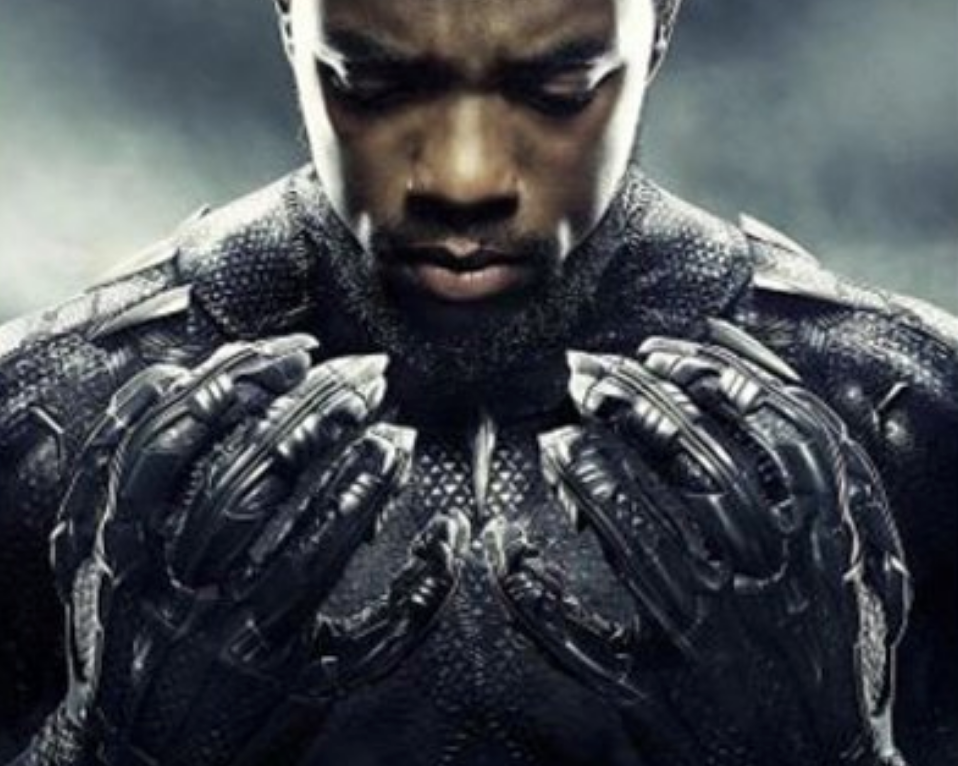
She also found herself thinking about a hero -- the Black Panther.

Born in the Philippines before being adopted, the Catholic writer has -- as a daughter, wife and mother -- lived her life in White America. As a child, she didn't look like her family. Now, her children are growing up "knowing that they just don't look like everyone else. … Our family has its own story," she said.

Bulman responded by hanging images of saints from Africa, Asia, Latin America and elsewhere in their home. There was St. Josephine Bakhita from the Sudan and an icon of St. Augustine with darker skin, since his mother was from North Africa's Berber tribe. There was St. Juan Diego of Mexico, who encountered Our Lady of Guadalupe, and Sister Thea Bowman of Mississippi, the granddaughter of slaves, whose cause for sainthood has been endorsed by America's bishops.

"I wanted my children to see all kinds of saints and heroes, including some with faces kind of like their own," she said.

Bulman had also become interested in the Marvel Comics universe and the symbolic role of King T'Challa -- the Black Panther -- for millions of Black Americans, especially children. She was stunned when actor Chadwick Boseman died at age 43 after a long, private fight with colon cancer. He endured years of chemotherapy and multiple surgeries while filming "The Black Panther" and related Avenger movies.

Searching through press reports, Bulman noted colleagues referring to Boseman as a "man of faith," a "beautiful soul" and someone with a "spiritual aura" about his work with others -- including children with cancer.

At a memorial rite for Boseman, his former pastor at Welfare Baptist Church in Anderson, S.C., said the actor remained the same person he knew as a young believer.

“He's still Chad," said the Rev. Samuel Neely. "He did a lot of positive things. … With him singing in the choir, with him working the youth group, he always was doing something, always helping out, always serving. That was his personality."

Digging deeper, Bulman said she "cried all the way through" a video of Boseman's 2018 commencement address at Howard University, his alma mater.

Philosophy, politics and money: What comes next for Liberty University?

Philosophy, politics and money: What comes next for Liberty University?

Liberty University's decision to close its philosophy department didn't make big headlines in May 2020, at least not when compared with the its coronavirus policies and the latest comments from President Jerry Falwell, Jr.

After all, liberal arts programs were shrinking while Liberty's online education programs prospered, along with job-friendly undergraduate degrees. Christian colleges everywhere are wrestling with similar issues.

But the philosophy department was symbolic because it once was crucial to "what made Liberty unique" -- an emphasis on blending faith with core academic disciplines, said Karen Swallow Prior, who taught there for 20 years. This summer she moved to Southeastern Baptist Theological Seminary in Wake Forest, N.C., to teach English literature, as well as Christianity and culture.

"That department was top notch and produced students who went straight to the Ivy League and had great success," she said. "Philosophy was larger when I first got there, and it was clear this discipline was seen as part of Liberty's mission. Then things started changing."

Now, Liberty leaders are wrestling with the undeniable impact Falwell Jr. had as president, after the 2007 death of his father, the Rev. Jerry Falwell. Facing years of red ink, the founder's heir soon pushed for $500 million in campus updates and expansions, along with profitable online programs. The university now has 15,000 on-campus students and roughly 100,000 online. Liberty claims an endowment of $1.6 billion.

At the same time, Falwell Jr. developed a swashbuckling style that caused heat, especially when linked to race, guns, jets, politics, yachts and his specialty -- real estate. Controversies about his de facto partnership with President Donald Trump thrilled many Liberty donors, alumni, parents and students, while deeply troubling others.

Many Christian college presidents are super-pastors who provide ties that bind to denominations, churches and networks of believers. Falwell Jr. -- a lawyer -- turned into a dynamic entrepreneur who courted powerful conservative politicos.

On regular Christian campuses, there "are higher expectations for presidents than members of the faculty, and members of the faculty live with greater expectations than students," noted religious-liberty activist David French, writing at The Dispatch.

"Liberty flipped this script. The president lived life with greater freedom than his students or his faculty. The message sent was distinctly unbiblical -- that some Christian leaders can discard integrity provided their other qualifications, from family name to fund-raising prowess, provided sufficient additional benefit."

All of this led to a soap-opera collapse, after flashes of risqué social media.

Cornel West and Robert George keep asking believers -- left and right -- to be tolerant

Cornel West and Robert George keep asking believers -- left and right -- to be tolerant

America is so divided that 50% of "strong liberals" say they would fire business executives who donate money to reelect President Donald Trump.

Then again, 36% of "strong conservatives" would fire executives who donate to Democrat Joe Biden's campaign.

This venom has side effects. Thus, 62% of Americans say they fear discussing their political beliefs with others, according to a national poll by the Cato Institute and the global research firm YouGov. A third of those polled thought their convictions could cost them jobs.

That's the context for the efforts of Cornel West of Harvard University and Princeton's Robert George to defend tolerant, constructive debates in the public square. West is a black Baptist liberal and George is a white Catholic conservative.

"We need the honesty and courage not to compromise our beliefs or go silent on them out of a desire to be accepted, or out of fear of being ostracized, excluded or canceled," they wrote, in a recent Boston Globe commentary.

"We need the honesty and courage to recognize and acknowledge that there are reasonable people of good will who do not share even some of our deepest, most cherished beliefs. … We need the honesty and courage to treat decent and honest people with whom we disagree -- even on the most consequential questions -- as partners in truth-seeking and fellow citizens, … not as enemies to be destroyed. And we must always respect and protect their human rights and civil liberties."

They closed with an appeal to Trump and Biden, reminding them that "victories can be pyrrhic, destroying the very thing for which the combatants struggle. When that thing is our precious American experiment in ordered liberty and republican democracy, its destruction would be a tragedy beyond all human powers of reckoning."

It's distressing that this essay didn't inspire debates in social-media and the embattled opinion pages of American newspapers, noted Elizabeth Scalia, editor at large of Word on Fire, a Catholic apologetics ministry. After all, West and George are influential thinkers with clout inside the D.C. Beltway and they spoke out during a hurricane of anger and violence -- literal and verbal -- in American life.

The big idea: It's crucial for all preachers -- black and white -- to fight racism in 2020

The big idea: It's crucial for all preachers -- black and white -- to fight racism in 2020

In times of turmoil, brutality, fire and rage, black preachers have always turned to the Old Testament prophets.

Hear Jeremiah addressing the king and his court: "Thus says the Lord: Act with justice and righteousness, and deliver from the hand of the oppressor anyone who has been robbed. And do no wrong or violence to the alien, the orphan and the widow, or shed innocent blood. … (If) you will not heed these words, I swear by myself, says the Lord, that this house shall become a desolation."

There's plenty more where that came from. No one is shocked when black pastors take biblical texts about sin, justice, repentance and mercy and weave them into images and headlines from the news, said the Rev. Terriel Byrd, urban ministry professor at Palm Beach Atlantic University. This is a crucial role they have always played in their communities and as bridgebuilders to others.

"Even when they know that what they're going to say will be rejected, they dare to speak as prophets," he said. "They aren't afraid to preach what they need to preach. If you go to church during times like these, you know a black preacher will not be silent."

After decades of studying the art of preaching -- he is the former president of the African American Caucus of the Academy of Homiletics -- Byrd knows that traditions are different in white sanctuaries. But he is convinced America needs to hear from all kinds of preachers after the killing of George Floyd, his neck under the knee of a white Minneapolis police officer.

On the streets, some white police are kneeling -- this is powerful symbolism on many levels -- with protestors in prayer. Unity across racial lines in churches will be just as important.

Black church leaders will be on the scene during peaceful protests. When it's time to heal and clean up, all kinds of religious believers will take part -- black, white, whatever. But will they be able to speak together?

"It's crucial for white-church leaders to step forward and take a leadership role at this moment," said Byrd, reached by telephone. "If we have some true partnerships form, with a real sense of honesty and equality, we could see a way forward and make real progress fighting this injustice."

This is not, of course, the first time that clergy have faced this challenge.

Prayer breakfast warfare: Did President Trump mean to reject words of Jesus?

Prayer breakfast warfare: Did President Trump mean to reject words of Jesus?

Few politicos at the National Prayer Breakfast were shocked when President Donald Trump brandished copies of The Washington Post and USA Today to celebrate their "ACQUITTED" headlines.

But it was a Harvard University professor who did something even more provocative -- quoting strong words from Jesus of Nazareth -- during an event known for its meek Godtalk and vague calls for unity.

America's "biggest crisis," said Arthur Brooks of the Kennedy School of Government, is a culture of contempt that is "tearing our society apart."

"I want to turn to the words of the ultimate original thinker, history's greatest social entrepreneur, and as a Catholic, my personal Lord and Savior, Jesus," said Brooks, author of books such as "The Conservative Heart" and "Love Your Enemies." He is the former leader of the American Enterprise Institute, a conservative think tank.

The key passage for this era, he said, is found in Gospel of Saint Matthew, chapter 5, verses 43-45: "You have heard that it was said, 'Love your neighbor and hate your enemy.' But I tell you, love your enemies and pray for those who persecute you, that you may be children of your Father in heaven."

Brooks added: "Love your enemies! Now that is thinking differently. It changed the world starting 2,000 years ago, and it is as subversive and counterintuitive today as it was then. But the devil's in the details. How do we do it in a country and world roiled by political hatred and differences that we can't seem to bridge?"

Trump declined to take part when Brooks challenged prayer-breakfast participants to raise their hand if they loved someone who disagreed with them about politics.

As the next speaker, the president responded to Brook's remarks with words that unleashed a week of online debate among conservative religious believers -- early Trump supporters and reluctant Trump supporters alike -- who have debated the degree to which they can embrace his take-no-prisoners approach to national leadership.

Addressing Brooks, Trump said: "Arthur, I don't know if I agree with you."

Facing ties that bind between 'pro-life' issues -- like human trafficking and immigration

Facing ties that bind between 'pro-life' issues -- like human trafficking and immigration

It's hard to talk about the horrors of human trafficking -- including young women and children forced into the sex trade -- without mentioning the I-10 corridor across northern Florida and over to California.

Florida and California are in the top three on the list of U.S. states involved in human-trafficking cases, according to Florida State University's Center for the Advancement of Human Rights. Any realistic discussion of this crisis has to include women, children, poverty, prostitution and crisis pregnancies.

"There are so many overlapping issues in all of this. But you know you're dealing with abused women and, often, their pregnancies," said Ashlyn Portero, co-executive director of City Church in Tallahassee, Fla., which has two campuses close to I-10.

"Churches that want to help can start right there. …When you see those connections, you know you're talking about issues that fall under the pro-life umbrella."

Thus, human trafficking is an issue that "pro-life" religious leaders in Tallahassee, as well as many other urban areas, need to face if they want to minister to women in crisis pregnancies and their children, she added. The problem is that tackling this issue also involves talking -- or even preaching -- about subjects that many people will call "political" in a state like Florida. Take immigration, for example.

Timing is crucial. Right now, thousands of Americans are preparing for the annual March For Life, which is linked to the anniversary of Roe v. Wade, the landmark U.S. Supreme Court decision in 1973 legalizing abortion. This year's march in Washington, D.C., will be on Jan. 24.

"When people come back from something like the March For Life, lots of them will be asking, 'What can we do now?' They want to do something practical," said Portero, in a telephone interview. "But these issues all seem so big and complex. It's hard to know where to start, in terms of ministries that will help real people."

One thing is certain: Nothing happens in a typical church without clear communication through preaching. That's where things can get tricky.

Top religion stories of 2019: #ChurchToo era hits the Southern Baptist Convention

Top religion stories of 2019: #ChurchToo era hits the Southern Baptist Convention

Protest rallies have been common during the #MeToo era, but many of the demonstrators outside the 2019 Southern Baptist Convention were quoting scripture.

As a teaching tool, they offered a large model of a millstone. That was a reference to the Gospel of Matthew, in which Jesus warns that anyone who leads "little ones" astray, "it would be better for him to have a great millstone fastened round his neck and to be drowned in the depth of the sea."

Protestors come and go. Inside the convention center in Birmingham, Ala., Rachael Denhollander warned SBC leaders that it was past time for them to focus on the faces and stories of sexual-abuse survivors in their own pews. 

Abuse survivors are trying to get church leaders to stop hiding abusers and the institutions that shelter them, she said. Far too often, "we do this in the name of unity: 'Don't say anything negative. We need to be unified.' But, brothers and sisters … we are to be unified around the holiness of God. We are to be unified around our confrontation of sin and our confrontation of the darkness. We are to seek light."

Headlines about sexual abuse among Southern Baptists are "not a surprise" to survivors, she added. "What you need to understand is these men and women have been pleading with the church to hear their voices for decades and they have been shut out over and over and over again in the name of Christ. That's what the SBC has done to these survivors. You need to understand the perspective that they have come from. You need to feel the grief and the betrayal and the harm and the hurt they have felt."

Denhollander is best known as the first woman to speak out and file a police report of abuse against USA Gymnastics doctor Larry Nassar. She also has played a crucial role in the #ChurchToo firestorm surrounding the SBC after a Houston Chronicle investigation that revealed hundreds of victims of abuse by clergy and volunteers in America's largest non-Catholic flock. Members of the Religion News Association members selected the SBC scandal as the religion story of 2019.

However, Denhollander was not selected as the RNA's top religion newsmaker. That honor went to Democratic U.S. Reps. Ilhan Omar and Rashida Tlaib, who were at the center of bitter 2019 debates about U.S. aid to Israel.

I voted for Denhollander as the top religion newsmaker. As my No. 1 story, I combined several poll options to focus on the year's hellish uptick in attacks on worshipers in mosques, Jewish facilities and churches, including 250 killed in terrorist attacks on Easter in Sri Lanka.