
UFOs

Concerning God, UFOs, angels, demons and centuries of mystery

Concerning God, UFOs, angels, demons and centuries of mystery

For centuries, stargazers of many kinds have debated the meaning of unidentified objects in the heavens and encounters with mysterious beings on earth.

"Each new discovery, even every new theory, is held at first to have the most wide-reaching theological and philosophical consequences. It is seized by unbelievers as the basis for a new attack on Christianity," noted Oxford don C.S. Lewis, in a 1958 essay, "Will We Lose God in Outer Space?" This was years after the Christian apologist finished his science-fiction trilogy that imagined contacts between humanity and extraterrestrials. 

After the "novelty has been chewed over by real theologians, real scientists and real philosophers, both sides find themselves pretty much where they were before," Lewis added. The big question remains: Are there other beings with "what we call 'rational souls'?"

In 2014, the Jesuit brother Guy Consolmagno wrote a book with this title, "Would You Baptize an Extraterrestrial?" He stated, with "whatever authority I have as a scientist and as one of the 'Official Astronomers' at the Vatican Observatory: Neither I, nor anyone I know, has any evidence that extraterrestrials exist."

The latest media storm was triggered by this Truth Social post by President Donald Trump: "Based on the tremendous interest shown, I will be directing the Secretary of War, and other relevant Departments and Agencies, to begin the process of identifying and releasing Government files related to alien and extraterrestrial life, unidentified aerial phenomena (UAP), and unidentified flying objects (UFOs), and any and all other information connected to these highly complex, but extremely interesting and important, matters. GOD BLESS AMERICA!"

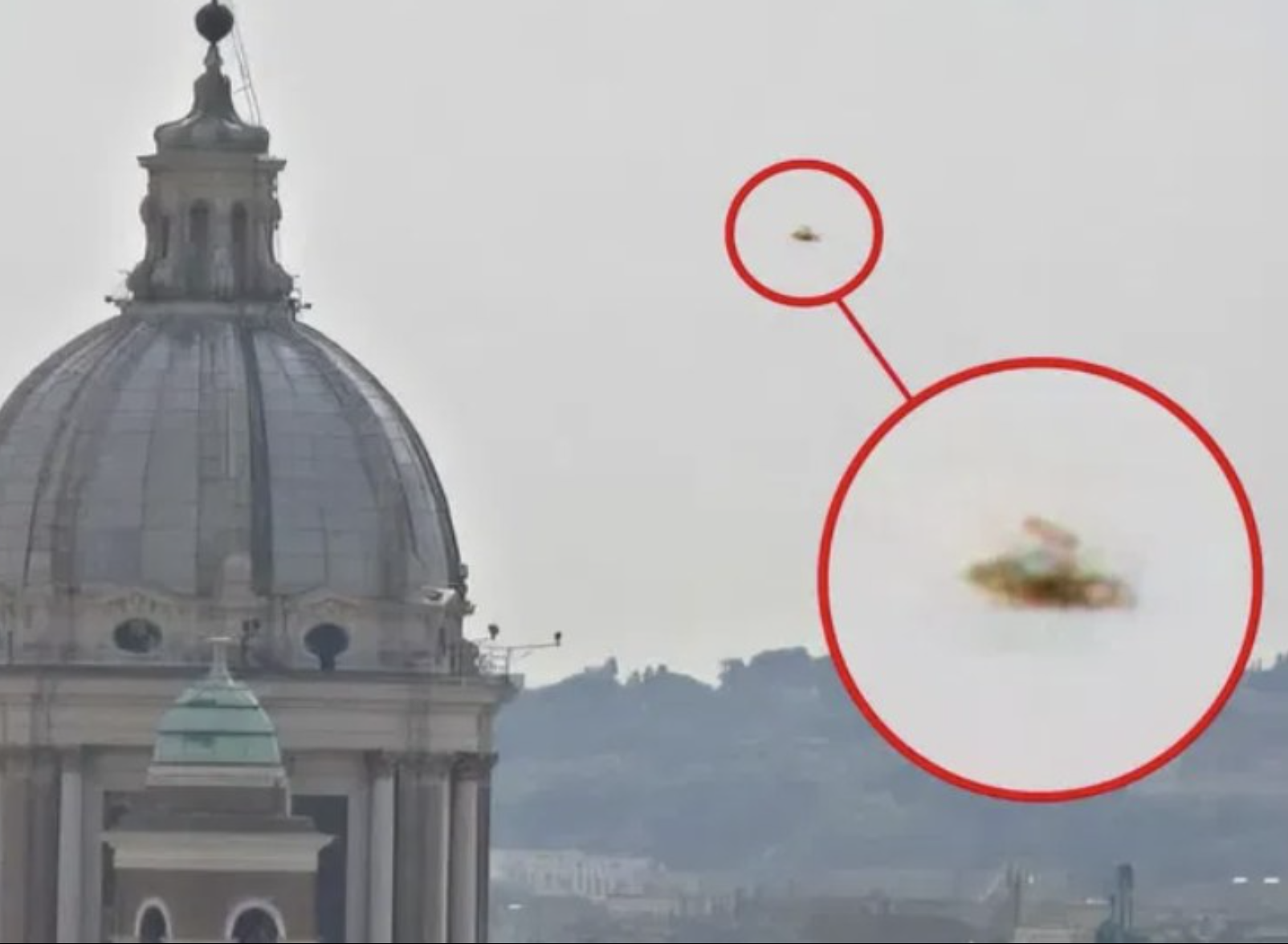
The first release included 170-plus files, beginning in the 1940s, ranging from encounters reported by farmers to videos filmed by U.S. military pilots.

Aliens in the news: Are UFOs a threat to traditional forms of religious belief?

Aliens in the news: Are UFOs a threat to traditional forms of religious belief?

The first episode of the "Ancient Aliens" cable-TV series promised to show that the growth of intelligent life on this planet had help that came from the stars.

The Prometheus Entertainment summary in 2010 asked: "If ancient aliens visited Earth, what was their legacy, and did they leave behind clues" that still exist?

The bigger question, nearly 200 episodes later, is whether aliens provided the building blocks of life itself. That's the kind of subject -- both theological and scientific -- that surfaces whenever there are debates about whether extraterrestrial life exists.

It's one thing for a recent U.S. national intelligence report -- "Preliminary Assessment: Unidentified Aerial Phenomena"-- to discuss incomplete technical data and the possibility of hostile spy drones. It was something else to say that experts had no scientific explanations for 140-plus reported "UAP" episodes.

The summary noted that 18 mysterious objects "appeared to remain stationary in winds aloft, move against the wind, maneuver abruptly or move at considerable speed, without discernable means of propulsion."

This raised familiar questions for those who have followed decades, even centuries, of debates about these mysteries: Who created these objects? Who created the beings who created them? Should this planet's religious leaders worry?

"The logic is that many people assume life is special, that human beings are uniquely purposed and created in God's image and that this life -- life made in God's image -- cannot exist anywhere else," said Stephen C. Meyer, who has a doctorate in the philosophy of science from Cambridge University. He is known for writing controversial books, such as "Signature in the Cell: DNA and the Evidence for Intelligent Design" and the new "Return of the God Hypothesis."

Many experts seem to think Christianity has explicit doctrines on this matter, he added, but "that's not a sound judgement, since there's no explicit Christian teaching on the subject -- unless we have now taken C.S. Lewis as canonical."