
CS Lewis

Concerning God, UFOs, angels, demons and centuries of mystery

Concerning God, UFOs, angels, demons and centuries of mystery

For centuries, stargazers of many kinds have debated the meaning of unidentified objects in the heavens and encounters with mysterious beings on earth.

"Each new discovery, even every new theory, is held at first to have the most wide-reaching theological and philosophical consequences. It is seized by unbelievers as the basis for a new attack on Christianity," noted Oxford don C.S. Lewis, in a 1958 essay, "Will We Lose God in Outer Space?" This was years after the Christian apologist finished his science-fiction trilogy that imagined contacts between humanity and extraterrestrials. 

After the "novelty has been chewed over by real theologians, real scientists and real philosophers, both sides find themselves pretty much where they were before," Lewis added. The big question remains: Are there other beings with "what we call 'rational souls'?"

In 2014, the Jesuit brother Guy Consolmagno wrote a book with this title, "Would You Baptize an Extraterrestrial?" He stated, with "whatever authority I have as a scientist and as one of the 'Official Astronomers' at the Vatican Observatory: Neither I, nor anyone I know, has any evidence that extraterrestrials exist."

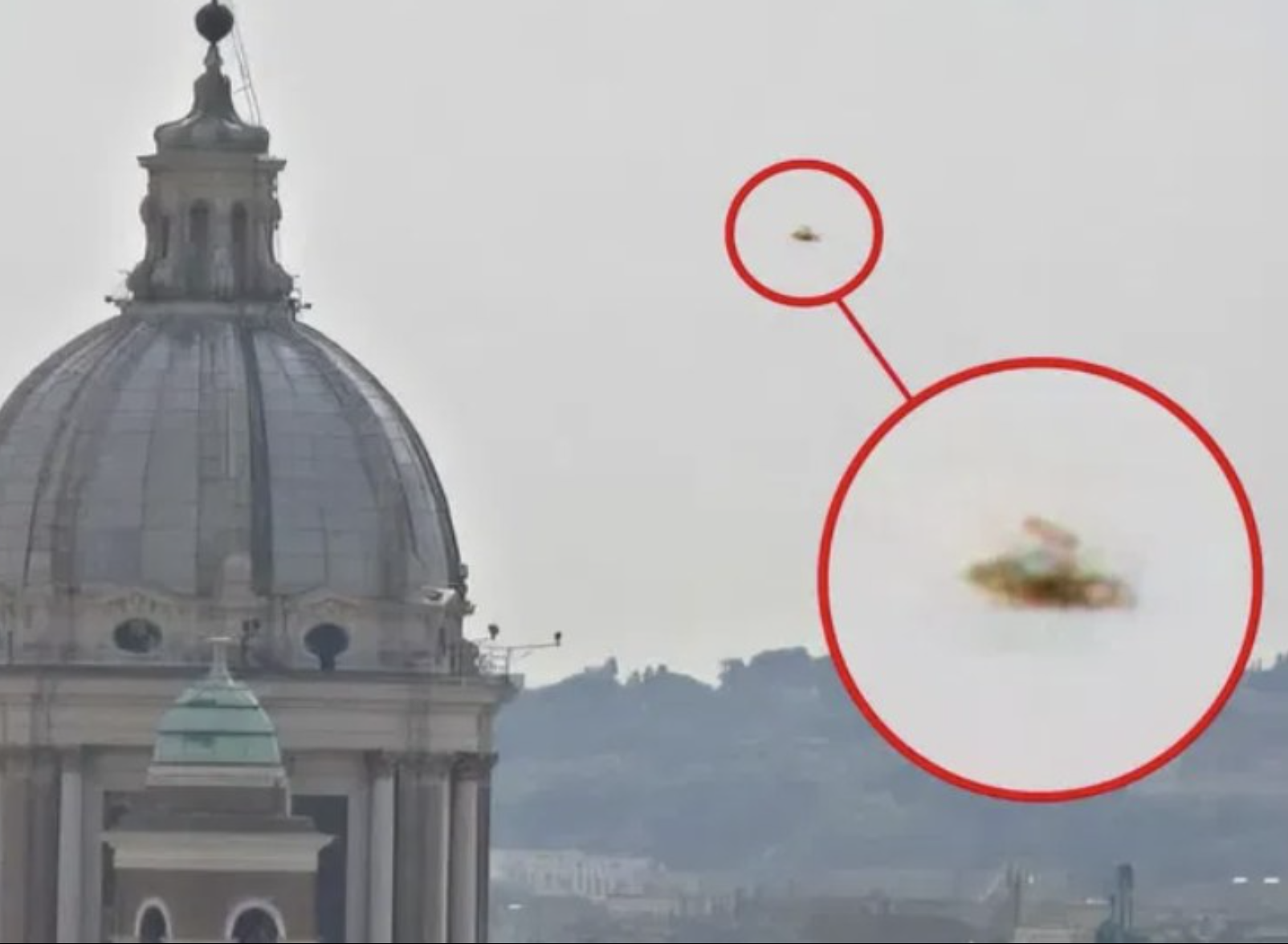
The latest media storm was triggered by this Truth Social post by President Donald Trump: "Based on the tremendous interest shown, I will be directing the Secretary of War, and other relevant Departments and Agencies, to begin the process of identifying and releasing Government files related to alien and extraterrestrial life, unidentified aerial phenomena (UAP), and unidentified flying objects (UFOs), and any and all other information connected to these highly complex, but extremely interesting and important, matters. GOD BLESS AMERICA!"

The first release included 170-plus files, beginning in the 1940s, ranging from encounters reported by farmers to videos filmed by U.S. military pilots.

'The Exorcist' turns 50 -- Visions of hell, in defense of beliefs about heaven

'The Exorcist' turns 50 -- Visions of hell, in defense of beliefs about heaven

William Peter Blatty was pounding out the first pages of "The Exorcist" when his telephone rang -- bringing the news that his mother had died.

The screenwriter was already digging into dark material that was completely different from the whimsical work -- such as the classic "A Shot in the Dark" Pink Panther script -- that established his Hollywood career. He was writing a fictional take on an exorcism case he heard discussed during his Georgetown University studies.

But the death of Blatty's Lebanese-born, fervently Catholic mother changed everything. She spoke very little English and called her son "Il Waheed," Arabic for "the one" or "the only." He struggled with grief for five years and his supernatural thriller turned into something much more ambitious.

"I wanted to write about good and evil and the unseen world all around us. I wanted to make a statement that the grave is not the end, that there is more to life than death," said Blatty, meeting in a diner near the Georgetown neighborhood described in "The Exorcist."

It was 2013, four years before Blatty's death, and our conversation focused on the 40th anniversary of the film that brought him an Academy Award, for adopting his novel for the big screen. Now, on the 50th anniversary of "The Exorcist," critics are still debating why it had such as seismic impact.

Blatty insisted, many times, that he wasn't trying to shock people, even though the R-rated classic sent many rushing for theater exits, sickened by its stomach-wrenching visions. His goal was "apostolic, from the beginning," an attempt to inspire faith and defend core Christian doctrines, he said.

The equation was simple: "If demons are real, why not angels? If angels are real, why not souls? And if souls are real, what about your own soul? … And, by the way, if incarnate evil is real, what are you going to do about that?"

"The Exorcist" set box-office records for horror films, with numbers that soared with subsequent re-releases. At the same time, Blatty was deeply satisfied to hear priests report that, in the weeks after the movie opened, penitents lined up for confession.