evangelicals

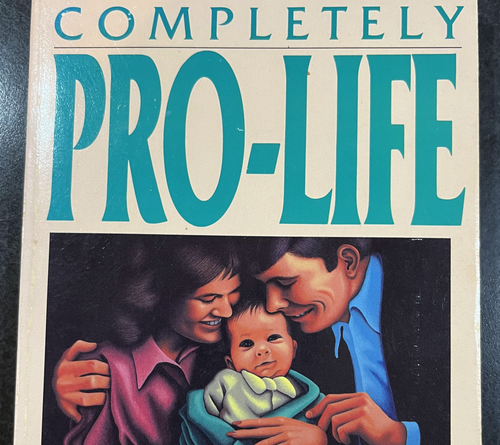
Ron Sider's struggle: Trying to be 'completely pro-life' can upset lots of Americans

Ron Sider's struggle: Trying to be 'completely pro-life' can upset lots of Americans

It was the kind of Pope John Paul II quotation that was powerful and prophetic -- but hard to print on a political bumper sticker.

"America will remain a beacon of freedom for the world as long as it stands by those moral truths which are the very heart of its historical experience," he said, during his 1999 U.S. tour. "And so, America: If you want peace, work for justice. If you want justice, defend life. If you want life, embrace truth -- the truth revealed by God."

One American activist who paid close attention was Ronald J. Sider, a Mennonite theologian who was already several decades into a career built on asking Americans to ponder precisely that equation.

Politicians on left and right would cheer as John Paul attacked the modern world's "culture of death," said Sider. But, in private, Democrats and Republicans would groan.

"People on the left will love what he had to say about the death penalty and racism and caring for the poor," said Sider, when I reached him by telephone. "But many liberals are going to squirm because he ties these issues directly to traditional Christian teachings on abortion and euthanasia and family life. Meanwhile, some people on the right will squirm because the pope made it very clear that he links these pro-life issues to the death penalty and poverty, sickness, hunger and even the environment."

Sider added: "We live in an age of incredible relativism in this society and even in the church. We live in a land that seems to have lost its way."

These kinds of tensions defined Sider's own struggles as a hard-to-label political activist and ecumenical leader. He died on July 27 at the age of 82.

Christianity Today listed Sider's classic "Rich Christians in an Age of Hunger" as one of the 20th century's most influential religion books. The flagship evangelical magazine also ran this headline with a cover story about Sider's career -- "Unsettling Crusade: Why does this man irritate so many people?"

Conservatives often noted that one of Sider's first forays into politics was creating Evangelicals for McGovern during the 1972 White House race.

Open Bible to Psalms: What messages are seen there, but not in modern praise music?

Open Bible to Psalms: What messages are seen there, but not in modern praise music?

It's hard to read the Psalms without encountering one of the 65 references to the Hebrew word "mishpat," which is usually translated as "judgments" or "justice."

The term appears 23 times in Psalm 119, in passages worshipers have sung for centuries, such as: "I will praise You with uprightness of heart, when I learn Your righteous judgments. I will keep Your statutes; Oh, do not forsake me utterly!"

But when Old Testament scholar Michael J. Rhodes dug into the Top 25 worship songs listed by Christian Copyright Licensing International, he found symbolic trends in the lyrics. For starters, "justice" was mentioned one time, in one song.

"The poor are completely absent in the top 25. By contrast, the Psalter uses varied language to describe the poor on nearly every page," he wrote, in a Twitter thread. "The widow, refugee, oppressed are completely absent from the top 25. …

“Whereas 'enemies' are the third most common character in the Psalms, they rarely show up in the Top 25. When they do, they appear to be enemies only in a spiritual sense. Maybe most devastatingly … not a SINGLE question is ever posed to God. The Top 25 never ask God anything. Prick the Psalter and it bleeds the cries of the oppressed pleading with God to act."

That's a long way from a Vespers Psalm promising: "The Lord sets the prisoners free; the Lord opens the eyes of the blind. The Lord lifts up those who are bowed down; the Lord loves the righteous. The Lord watches over the sojourners, he upholds the widow and the fatherless; but the way of the wicked he brings to ruin. … Praise the Lord."

When these issues surface in social media they often veer into debates about politics and social justice, noted Craig Greenfield, author of "Urban Halo" and "Subversive Jesus." A former dot-com entrepreneur, he leads the global youth ministry "Alongsiders International," based in Phnom Penh, Cambodia.

The question, he said, is why so many worship songs focus on personal experience and feelings -- alone. This has been true with new hymns for several generations.

What's next for Democrats for Life? Questions of faith and politics after Roe v. Wade

What's next for Democrats for Life? Questions of faith and politics after Roe v. Wade

As outraged Democrats jumped on social media after the fall of Roe v. Wade, some symbolic voices in the party offered careful words of celebration.

"Let's Stand Together and Support Women and Children!!!", tweeted state Sen. Katrina Jackson, the African-American Democrat who sponsored Louisiana's trigger bill that includes potential 10-year prison sentences for those who perform abortions.

Jackson's added calls for "womb to tomb" legislation raising wages for childcare workers, funds to fight human-trafficking and new state programs helping families.

Louisiana Gov. John Bel Edwards, also a Democrat, posted several Twitter messages, including: "My position on abortion has been unwavering. I am pro-life and have never hidden from that fact." He stressed that this Louisiana bill included clauses protecting procedures in cases of "medical futility" and ectopic pregnancies and added that he believes it needed "an exception to the prohibition on abortion for victims of rape and incest."

The Democratic Party, in its 2020 platform, remained committed to "protecting and advancing reproductive health, rights and justice," while promising to "fight and overturn federal and state laws" limiting or opposing abortion rights.

But in the wake of the Supreme Court's recent Dobbs vs. Jackson Women's Health Organization decision, crucial debates about abortion laws will move to state governments. Some have already passed bills protecting unborn children and others have taken equally strong stands defending abortion rights.

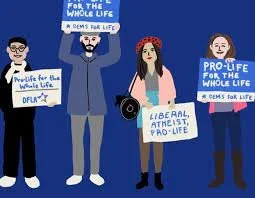
Many states are located somewhere in between, noted Kristen Day, leader of Democrats for Life of America. In these states there will be tense negotiations over legislation -- such as "heartbeat bills," usually defined as abortion bans after six weeks of gestation -- that were impossible under court actions linked to Roe v. Wade.

While "pro-life" Democrats are an endangered species inside the D.C. Beltway, there are "hundreds of us active in state governments," said Day, reached by telephone. Many of these Democrats are linked to Black and Latino churches -- grassroots workers that national party leaders may not want to attack or alienate.

Southern Baptists after Anaheim: Where to now when wrestling with sexual abuse?

Southern Baptists after Anaheim: Where to now when wrestling with sexual abuse?

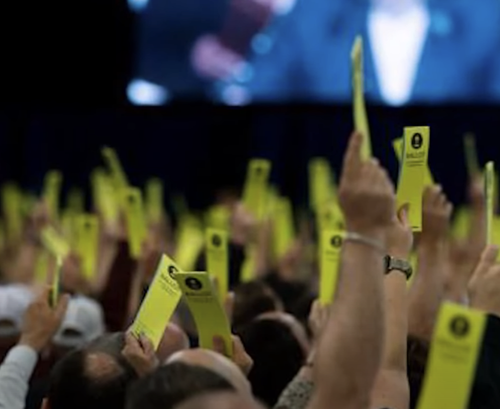
Before the Southern Baptists Convention's strong vote to approve what supporters called "bare minimum" sexual-abuse reforms -- with victims in the crowd weeping with relief -- there was a strategic amendment to the recommendations.

Rather than stay with the independent Guidepost Solutions organization, the Abuse Reform Implementation Task Force would seek to use "best practices in keeping with Southern Baptist church polity," while a "Ministry Check" website tracking those "credibly accused" of abuse would be "established and maintained by an independent contractor."

Activist Rachel Denhollander pleaded, before the vote: "Institutions must be held accountable. It doesn't matter who they are. Justice and truth are always what we should pursue."

Afterwards, the attorney and #ChurchToo abuse survivor posted another challenge on Twitter: "It is the first, most basic steps. But it is a testament to the survivors who fought so long and so hard. I am grateful. Now let's keep working."

That work will depend on the cooperation of pastors and church leaders in the SBC's 47,000 local churches, as well as the administrators and trustees of agencies, boards, seminaries and other institutions at the state and national levels.

The bottom line: In Southern Baptist "polity" -- with sprawling structures of autonomous congregations that, to varying degrees, fund state, national and global ministries -- there are no leadership structures resembling local Presbyterian presbyteries, regional annual conferences among United Methodists or the powerful diocesan structures of Catholics, Episcopalians and others. Local churches ordain, hire and fire clergy.

Outsiders often struggle to understand the theological and practical implications of Baptist polity, said Thomas Kidd, who teaches church history at Midwestern Baptist Theological Seminary and Baylor University.

"Many people continue to think that the SBC can make its churches do this or that or the other and that simply isn't true," he said.

Listening to Naomi Judd: She tried to be honest about her angels and her demons

Listening to Naomi Judd: She tried to be honest about her angels and her demons

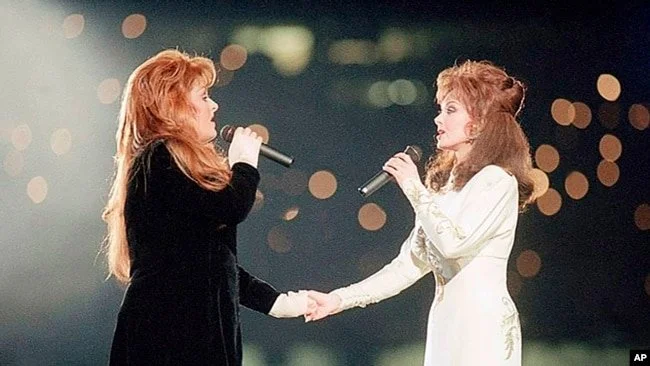
Naomi Judd thought she understood the ties that bind country-music stars and their audience -- then one aggressive fan went and joined the Pentecostal church the Judd family called home.

"It really burdened me," said Judd, after signing hundreds of her "Love Can Build a Bridge" memoir back in 1993. "I just don't sign autographs at church. The best way I can explain it to children … is to say, 'Honey, Jesus is the star.' "

After a year of this tense standoff, Judd became concerned and wrote the fan. "I said, 'I want you to really get away by yourself and read this letter and answer this question honestly: Do you come to church to see The Judds or do you come to church to see God?' She never came back to church. But she was in the autograph line today."

Through it all, Judd and her brash daughter Wynonna have talked openly about their triumphs and their struggles. Many fans identified with their failures just as much as the messages about faith and family.

At the time of that 1993 interview, Naomi Judd had battled through waves of anxiety attacks to address some dark realities -- such as rape, crisis pregnancy and her deadly battle with hepatitis C that retired the The Judds.

What she hadn't discussed was the sexual abuse in her childhood that led to treatment-resistant depression. Judd's April 30th death, at age 76, focused new attention on blunt passages in her 2016 book "River of Time," in which she said had been tempted by suicide. "I wanted to be completely honest that if someone took out a gun and killed me on stage, they would be doing me a favor," she wrote.

The Judds were inducted into the Country Music Hall of Fame the day after Naomi's death and her shaken daughter Ashley Judd told the crowd, "I'm sorry that she couldn't hang on until today."

After 'Born Again': What were the Big Ideas woven into the work of Chuck Colson?

After 'Born Again': What were the Big Ideas woven into the work of Chuck Colson?

As a D.C. Beltway power player, the late Charles W. Colson worked with a "Thank God it's Monday" attitude that meant his colleagues always knew they could contact him about hot topics and decisions.

But there was one exception -- visits by his autistic grandson Max.

"If Chuck was with Max, his phone was turned off," said Dave Carlson of the Colson Center for Christian Worldview. "Max could stop him in his tracks."

This bond was rooted in a conviction that shaped the Nixon White House strategist's work after his 1973 born-again Christian conversion and guilty plea for Watergate crimes that put him in federal prison, said Carlson, who spent two decades as a Colson aide and editor. This same conviction led Colson to create the global Prison Fellowship ministry in 1976.

"It didn't matter if you were in prison or what kind of crimes put you there. It didn't matter if you were missing a chromosome or were autistic," he said. Colson believed "we are all humans made in the image of God -- Imago Dei. He was passionate about that until the end."

The 80-year-old Colson died on April 21, 2012, felled by a brain hemorrhage moments after a speech about rising threats to religious liberty. His colleagues marked the 10-year anniversary by rebroadcasting that speech during a BreakPoint radio commentary.

"What we're witnessing in our culture … is but the tip of the iceberg. It's the latest visible manifestation of a growing hostility towards Christianity mainly because -- this has always been the case -- government officials feel threatened by the power of the church because we all worship a king higher than the kings of this earth," said Colson.

Cultural issues are bigger than mere politics, he stressed.

Healing that old Sunday morning racial divide? Start with pastors breaking bread

Healing that old Sunday morning racial divide? Start with pastors breaking bread

The Rev. Martin Luther King, Jr., faced a barrage of questions about race and politics during his landmark 1960 appearance on NBC News' "Meet the Press," but one of the most memorable exchanges concerned a blunt question about church life.

"How many white people are members of your church in Atlanta?", asked a reporter from Nashville.

"I think it is one of the tragedies of our nation, one of the shameful tragedies, that 11 o'clock on Sunday morning is one of the most segregated hours, if not the most segregated hour, in Christian America," King replied. Any church that has "a segregated body is standing against the spirit and the teachings of Jesus Christ, and it fails to be a true witness," he added.

Millions of Americans are still wrestling with this Sunday morning divide.

But another practical question emerged during a recent Southern Baptist Convention program entitled "Pursuing Unity: A Discussion of Racial Reconciliation Efforts and the SBC." Can Black and White church folks find gaps in their jammed schedules and start breaking bread together?

"It doesn't matter how many panel discussions you watch. It doesn't matter how many books you read, how many conferences you go to. None of that will do better than dinner table ministry," said the Rev. Jon Kelly of Chicago West Bible Church.

If people want progress, he said, they need to consider their circle of friends and ask "why everyone looks like me, votes like me, thinks like me. … When we talk about racial reconciliation, we want the fruit of reconciliation without the relationships. Until our dinner tables become diversified, … until we eat bread together and fellowship together, we won't make any progress."

Episcopal Church poll: Americans like Jesus (sort of), but not his followers

Episcopal Church poll: Americans like Jesus (sort of), but not his followers

When it comes to exploring what Americans think about Jesus, a new study offers Christian leaders both good news and bad news.

The good news is that 76% of Americans affirm the "historical existence" of "Jesus of Nazareth," although it's also interesting to note that if 89% of self-identified Christians embraced that statement, the implication is that 11% are not sure.

Meanwhile, 84% of participants in a new "Jesus in America" study -- conducted by the global Ipsos research company for the Episcopal Church -- agreed that "Jesus was an important spiritual figure."

The bad news? While 50% of "not religious" Americans accepted this "important spiritual figure" language, they were much less impressed with the believers who represent Jesus.

When asked, "What characteristics do you associate with Christians in general?", the nonreligious selected these words from the poll's options -- "hypocritical" (55%), "judgmental" (54%) and "self-righteous" (50%). Next up: "arrogant," "unforgiving" and "disrespectful."

It appears that one of the goals of this poll -- with questions about racism, social justice and last year's attack on the U.S. Capitol -- was to see if nonbelievers have different attitudes about liberal and conservative Christians, said political scientist Ryan Burge of Eastern Illinois University, author of the new book "20 Myths about Religion and Politics in America." He is co-founder of the Religion in Public website and a contributor at GetReligion.org, which I have led since 2004.

"This is the million-dollar question," said Burge, who is also a pastor in the progressive American Baptist Church. "If non-religious people are turned off by what they see as the stricter faith of many Christians, evangelicals in particular, then wouldn't it make sense for them to seek more flexible alternatives?

"If there's all kinds of room in mainline Protestant churches these days, and that's putting it mildly, then why aren't these kinds of people filling up some of those pews?"

Is the Southern Baptist Convention preparing to fight its 1979 all over again?

Is the Southern Baptist Convention preparing to fight its 1979 all over again?

Once upon a time, Southern Baptists in Bible Belt communities knew how to talk to people who didn't go to church.

"We were dealing with people who were, for the most part, like us," said Baptist historian Nathan Finn, the provost of North Greenville University, located in the South Carolina hills near the North Carolina border. "Everyone understood sweet tea, fried chicken and SEC football. It was easier to talk to those people about Jesus."

Things changed, as the greater Greenville-Spartanburg welcomed waves of high-tech firms and industries with global brands such as BMW, Bosch, Fluor, Hitachi and many others. Today's newcomers speak German or Japanese.

"It's not Black folks and White folks from the South. We're past that. The Sunbelt has gone global and we're more urban. We don't know how to talk to the new people," said Finn. "The cultural gaps are bigger. … Southern Baptists are better at handling these kinds of issues in foreign missions than in our own communities."

Finn has been studying this trend and others for years, which led him to write a series of articles in 2009 for Southeastern Baptist Theological Seminary entitled "Fifteen Factors that have Changed the SBC since 1979."

Anyone who knows Southern Baptist Convention history gets that 1979 reference. That was when activists backing "biblical inerrancy" attacked establishment leaders of America's largest Protestant flock, while also supporting causes favored by the surging Religious Right. Electing one SBC president after another during the 1980s, this "conservative resurgence" helped change the face of evangelicalism.

There are signs a second Baptist civil war may be ahead. A key moment came on March 1, when SBC President Ed Litton of Alabama said he would not -- as has become the norm -- seek a second term. Last June, he narrowly defeated a pastor from the Conservative Baptist Network, a new coalition that insists SBC leaders have become "too woke" on Critical Race Theory, the role of women, COVID-19 policies and other fault lines in American life.

Finn is convinced that Southern Baptists are, this time around, fighting over how to respond to rapid cultural changes, as opposed to the theological disputes of the past.