Web/tech

Here we go again: Believers face complicated choices in #2020 COVID-tide

Here we go again: Believers face complicated choices in #2020 COVID-tide

Rather than preparing for a joyous Christmastide, believers are making tough decisions about how to celebrate during a season some call COVID-tide.

What about that beloved Christmas cantata or children's pageant? Government regulations about singing vary nationwide.

All those parties and dinners on the December calendar? Church officials may shut them down or, perhaps, look the other way.

The most emotional question: What about Christmas Eve, with glowing sanctuaries full of families gathered from near and afar dressed in festive holiday attire? In most churches some members will be allowed inside, while others stay home -- as during 2020's Holy Week and Easter -- holding candles while facing computer screens.

No one knows what will happen, especially in Protestant flocks where holiday traditions are more flexible and evolve from year to year.

Nevertheless, about 50% of American adults who typically go to church at Christmas hope to do so, according to a study by LifeWay Research in Nashville. In fact, another 15% of participants in the online survey said they were more likely to attend a service this year. However, 35% of typical churchgoers said they're more likely to stay home.

"About 50% of America are saying, 'We're going to do what we're going to do,' " said Tim McConnell, LifeWay's executive director. Since this survey was done before the recent coronavirus spike, "that makes things even more unpredictable" than they were already.

The survey results seem deceptively ordinary, but tensions emerge in key details. The survey focused on believers, and the unchurched, but included an oversample of self-identified evangelical Protestants.

"It's easy to look at these numbers and see that half the people say they will be having Christmas as usual. Then there's another group of people who say they plan to do even more," he said. "Then you look at the bigger picture and there's that other third that's missing. That's probably the large group of Americans who are older and at higher risk. …

Survey of Millennials and Gen Z: Many young Americans just don't get the Holocaust

Survey of Millennials and Gen Z: Many young Americans just don't get the Holocaust

It was the kind of open-ended question researchers ask when they want survey participants to have every possible chance to give a good answer.

Thus, a recent 50-state study of Millennials and younger "Generation Z" Americans included this: "During the Holocaust, Jews and many others were sent to concentration camps, death camps and ghettos. Can you name any concentration camps, death camps or ghettos you have heard of?"

Only 44% could remember hearing about Auschwitz and only 6% remembered Dachau, the first concentration camp. Only 1% mentioned Buchenwald, where Nobel Laureate Elie Wiesel was a prisoner when the American Third Army arrived.

Another question: "How was the Holocaust carried out?" While 30% knew that there were concentration camps, only 13% remembered poison-gas chambers.

"That was truly shocking. I have always thought of Auschwitz as a symbol of evil for just about everyone. … It has always been the ultimate example of what hate can lead to if we don't find a way to stop it," said Gideon Taylor, president of the Conference of Jewish Material Claims Against Germany.

It was a sobering "wake-up call," he added, to learn that half of the young Americans in this survey "couldn't name a single concentration camp. … It seems that we no longer have common Holocaust symbols in our culture, at least not among our younger generations."

Popular culture is crucial. It has, after all, been nearly 30 years since the release of Steven Spielberg's "Schindler's List," so that landmark movie isn't a cultural reference point for many young people. And it's been 20 years since the original "X-Men" movie, which opens at the gates of Auschwitz, and almost a decade since "X-Men: First Class," which offered a variation on that concentration-camp imagery.

Old movies and school Holocaust-education materials, said Taylor, are clearly being buried in information from social media and Internet search engines.

Al Smith dinner 2020: Trump and Biden make pitches to very different Catholic voters

Al Smith dinner 2020: Trump and Biden make pitches to very different Catholic voters

During a normal White House race, the Alfred E. Smith Memorial Foundation Dinner allows the candidates to don formal attire, fire snappy one-liners and make subtle appeals to Catholic voters.

But nothing is normal in 2020. Thus, Joe Biden and President Donald Trump used this year's virtual dinner to preach to Catholic voters in swing states like Ohio, Pennsylvania, Michigan and Florida. The event produced few headlines, coming a mere six hours before Trump announced his positive test for COVID-19.

Saluting Catholic progressive, Biden offered a litany about the pandemic, race, the recession and climate change. He warned that many Americans have lost faith "in one another, in truth, in science and reason."

The current pope, Biden stressed, embraced him during a 2013 White House visit, offering comfort shortly after brain cancer took his son Beau's life.

"Pope Francis took the time to meet with my entire family to help us see the light through the darkness," said Biden. "I live in an amazing country … where an Irish Catholic kid like me from Scranton, Pennsylvania, would one day befriend a Jesuit pope. But that's who we are as a country -- where anything is possible when we care for one another, when we look out for one another, when we keep the faith."

While stressing that he is guided "by the tenets of Catholic social doctrine" -- helping the "least of these" -- Biden didn't mention his vow to codify Roe v. Wade if the Supreme Court overturns that decision or his promise to reinstate policies requiring the Little Sisters of the Poor to cooperate in providing birth control and abortifacients to staff. He didn't mention his decision to officiate at the same-sex wedding of two White House colleagues, an action clashing with church doctrine.

It was logical for Biden to avoid providing fresh ammunition for critics. But the speech, once again, trumpeted his Catholic credentials.

"Joe Biden's choice to run explicitly on the claim that he is a faithful Catholic squarely places on the table his claim to be a faithful Catholic," stressed legal scholar Robert P. George of Princeton University, writing on Facebook. He is a Catholic conservative who has also been a consistent critic of Trump.

“No way out of this, folks," he added. "It's not, or not just, Biden's critics who have raised the issue. It's the Biden campaign. …

Faith after COVID-19: How many flocks will survive digital 'worship shifting' trends?

Faith after COVID-19: How many flocks will survive digital 'worship shifting' trends?

Television professionals who survived the past decade have made their peace with terms like "binging" and "time-shifting."

But how, pray tell, can clergy embrace "worship-shifting"?

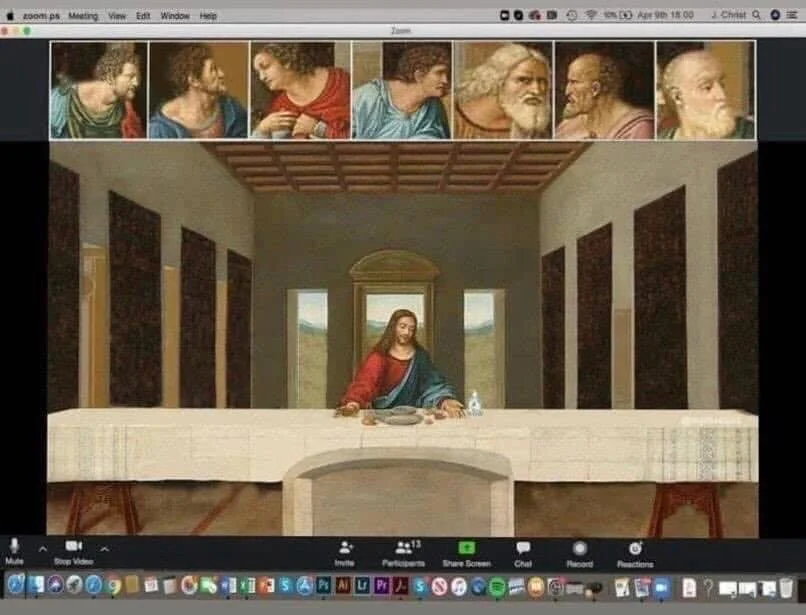
The coronavirus crisis has plunged pastors into digital technology while trying to replace analog community life with online worship, classes and fellowship forums. These changes have frustrated many, especially believers in ancient traditions built on rites requiring face-to-face contact. But many worshippers have welcomed online worship.

These changes have altered the "fundamental relationship that many young adults have with their churches," said David Kinnaman, president of the Barna Group, which does research with a variety of religious groups. "We're hearing about worship-shifting, as people use all the tech in their homes to fit services into their own schedules, just like everything else they watch on all those screens.

"This is another way people are using social media to renegotiate the role the church plays in the lives of their families."

The question religious leaders are asking, of course, is how many people will return to their pews when "normal" life returns. But it may be several years before high-risk older believers decide it's safe to return, even after vaccines become available. Younger members may keep watching their own local services, switch to high-profile digital flocks elsewhere or do both.

In talks with clients, Kinnaman said he is hearing denominational leaders and clergy say they believe that, in the next year or so, some churches will simply close their doors. Early in the pandemic the percentage of insiders telling Barna researchers they were "highly confident" their churches would survive was "in the high 70s," he said.

“Now it's in the 50s. … Most churches are doing OK, for now. But there's a segment that's really struggling and taking a hit, week after week."

After reviewing several kinds of research -- including patterns in finances and attendance -- Kinnaman sent a shockwave through social-media channels with his recent prediction that one in five churches will close in the next 18 months.

In "mainline" churches, he is convinced this number will be one in three, in part because these rapidly aging Protestant denominations have lost millions of members -- some up to 50% -- since the 1960s.

Memory eternal: Farewell to the sharp pen of Father Paul 'Diogenes' Mankowski

Memory eternal: Farewell to the sharp pen of Father Paul 'Diogenes' Mankowski

For millions of Americans, "The Battle Hymn of the Republic" is as familiar as the national anthem and much easier to sing.

Few would need help with: "Mine eyes have seen the glory of the coming of the Lord. He is trampling out the vintage where the grapes of wrath are stored. He has loosed the fateful lightning of His terrible swift sword. His truth is marching on! Glory, glory, Hallelujah! … His truth is marching on!"

During 1990s fights over updated Catholic liturgies, a Semitic languages professor at Rome's Pontifical Biblical Institute wrote a Battle Hymn for modernists.

This "sanitized" text -- "chanted to no tune in particular" -- declared: "I see God's approach; it is good. God makes wine with God's feet. … Brightness flashes from the decision-making apparatus. God's worldview is currently earning widespread respect. Give honor repeatedly to the god of our tradition. We have owned our values."

Father Paul V. Mankowski put his own name on that First Things piece, since it didn't lance specific institutions or leaders. For decades, Catholics seeking his satirical work learned to look for "Diogenes" at CatholicCulture.org or "Father X" elsewhere.

Mankowski died on September 3 at age 66, felled by a ruptured brain aneurysm. Raised in a middle-class Rust Belt family, he worked in steel mills to pay tuition at the University of Chicago. His advanced degrees included a master's from Oxford and a Harvard University doctorate.

Many researchers, politicos and journalists (like me) knew him through telephone calls and emails, usually seeking documents and statements from nearby Catholic leaders. He was a rarity in the modern age -- a Jesuit conservative -- and his superiors eventually ordered him not to address church controversies. Much of his work was published anonymously or using pen names.

Princeton University's Robert P. George blitzed through years of emails, after hearing about Mankowski's sudden death.

"There are some doozies -- especially the spoofs, send ups and parodies," said George, on Facebook. "His wit was a massive quiver full of poison-dipped arrows, and he was a master archer. … He would not give a pass to fools, frauds, charlatans, hypocrites, rent seekers, time servers, racketeers, manipulators, corrupt scholars, false teachers or weak or craven leaders, especially in the Church."

Philosophy, politics and money: What comes next for Liberty University?

Philosophy, politics and money: What comes next for Liberty University?

Liberty University's decision to close its philosophy department didn't make big headlines in May 2020, at least not when compared with the its coronavirus policies and the latest comments from President Jerry Falwell, Jr.

After all, liberal arts programs were shrinking while Liberty's online education programs prospered, along with job-friendly undergraduate degrees. Christian colleges everywhere are wrestling with similar issues.

But the philosophy department was symbolic because it once was crucial to "what made Liberty unique" -- an emphasis on blending faith with core academic disciplines, said Karen Swallow Prior, who taught there for 20 years. This summer she moved to Southeastern Baptist Theological Seminary in Wake Forest, N.C., to teach English literature, as well as Christianity and culture.

"That department was top notch and produced students who went straight to the Ivy League and had great success," she said. "Philosophy was larger when I first got there, and it was clear this discipline was seen as part of Liberty's mission. Then things started changing."

Now, Liberty leaders are wrestling with the undeniable impact Falwell Jr. had as president, after the 2007 death of his father, the Rev. Jerry Falwell. Facing years of red ink, the founder's heir soon pushed for $500 million in campus updates and expansions, along with profitable online programs. The university now has 15,000 on-campus students and roughly 100,000 online. Liberty claims an endowment of $1.6 billion.

At the same time, Falwell Jr. developed a swashbuckling style that caused heat, especially when linked to race, guns, jets, politics, yachts and his specialty -- real estate. Controversies about his de facto partnership with President Donald Trump thrilled many Liberty donors, alumni, parents and students, while deeply troubling others.

Many Christian college presidents are super-pastors who provide ties that bind to denominations, churches and networks of believers. Falwell Jr. -- a lawyer -- turned into a dynamic entrepreneur who courted powerful conservative politicos.

On regular Christian campuses, there "are higher expectations for presidents than members of the faculty, and members of the faculty live with greater expectations than students," noted religious-liberty activist David French, writing at The Dispatch.

"Liberty flipped this script. The president lived life with greater freedom than his students or his faculty. The message sent was distinctly unbiblical -- that some Christian leaders can discard integrity provided their other qualifications, from family name to fund-raising prowess, provided sufficient additional benefit."

All of this led to a soap-opera collapse, after flashes of risqué social media.

Christian icons and art before the rise of the blue-eyed Jesus with blond hair

Christian icons and art before the rise of the blue-eyed Jesus with blond hair

For modern skeptics, the 6th-century icon hanging in the Orthodox monastery in the shadow of Mount Sinai is simply a 33-by-18-inch board covered in bees wax and colored pigments.

For believers, this Christ Pantocrator ("ruler of all") icon is the most famous image of Jesus in the world, because the remote Sinai Peninsula location of St. Catherine's Monastery allowed it to survive the Byzantine iconoclasm era. The icon shows Jesus -- with a beard and long hair -- raising his right hand in blessing, while holding a golden book of the Gospels.

This Jesus does not have blond hair and blue eyes. "Christ of Sinai" shows the face of a wise teacher from ancient Palestine.

"When you talk about ancient icons, you are basically talking about images of Jesus with long hair, a beard and some kind of Roman toga. That's just about all you can say," said Jonathan Pageau of Quebec, an Eastern Orthodox artist and commentator on sacred symbols.

In the early church, he added, believers "didn't ask other questions -- about race and culture -- because those were not the important questions in those days. … Once you start politicizing icons there's just no way out of those arguments. You get into politics and dividing people and then you're lost."

In these troubled times, said Pageau, many analysts are "projecting valid concerns about racism and Europe's history of colonization and the plight of African-Americans back into issues of church history and art that are centuries and centuries old. It's a kind of category error and everything gets mixed up."

But that's what happened when debates about some #BlackLivesMatters activists toppling Confederate memorials -- along with attacks on Catholic statues and even insufficiently "woke" Founding Fathers -- veered into #WhiteJesus territory.

"Yes, I think the statues of the white European they claim is Jesus should also come down. They are a form of white supremacy," tweeted Shaun King, author of "Make Change: How to Fight Injustice, Dismantle Systemic Oppression, and Own Our Future."

Anglican debate in 2020 crisis: Can clergy consecrate bread and wine over the Internet?

Anglican debate in 2020 crisis: Can clergy consecrate bread and wine over the Internet?

In the late 1970s, the Episcopal Ad Project began releasing spots taking shots at television preachers and other trends in American evangelicalism.

One image showed a television serving as an altar, holding a priest's stole, a chalice and plate of Eucharistic hosts. The headline asked: "With all due regard to TV Christianity, have you ever seen a Sony that gives Holy Communion?"

Now some Anglicans are debating whether it's valid -- during the coronavirus crisis -- to celebrate "virtual Eucharists," with computers linking priests at altars and communicants with their own bread and wine at home.

In a recent House of Bishops meeting -- online, of course -- Episcopal Church leaders backed away from allowing what many call "Virtual Holy Eucharist."

Episcopal News Service said bishops met in private small groups to discuss if it's "theologically sound to allow Episcopalians to gather separately and receive Communion that has been consecrated by a priest remotely during an online service."

Experiments had already begun, in some Zip codes. In April, Bishop Jacob Owensby of the Diocese of Western Louisiana encouraged such rites among "Priests who have the technical know-how, the equipment and the inclination" to proceed.

People at home, he wrote, will "provide for themselves bread and wine (bread alone is also permissible) and place it on a table in front of them. The priest's consecration of elements in front of her or him extends to the bread and wine in each … household. The people will consume the consecrated elements."

Days later, after consulting with America's presiding bishop," Bishop Owensby rescinded those instructions. "I understand that virtual consecration of elements at a physical or geographical distance from the Altar exceeds the recognized bounds set by our rubrics and inscribed in our theology of the Eucharist," he wrote.

However, similar debates were already taking place among other Anglicans. In Australia, for example, Archbishop Glenn Davies of Sydney urged priests to be creative during this pandemic, while churches were being forced to shut their doors.

During a live-streamed rite, he wrote, parishioners "could participate in their own homes via the internet consuming their own bread and wine, in accordance with our Lord's command."

Believers in an angry age of 'fake news,' conspiracy chatter and the QAnon heresy

Believers in an angry age of 'fake news,' conspiracy chatter and the QAnon heresy

A majority of evangelicals are worried about "fake news" and they also think mainstream journalists are part of the problem.

The question, as pandemic-weary Americans stagger into the 2020 elections, is how many believers in this voting bloc have allowed their anger about "fake news" to push them toward fringe conspiracy theories about the future of their nation.

Some of these theories involve billionaire Bill Gates and global coronavirus vaccine projects, the Antichrist's plans for 5G towers, Democrats in pedophile rings or all those mysterious "QAnon" messages. "Q" is an anonymous scribe whose disciples think is a retired U.S. intelligence leader or maybe even President Donald Trump.

The bitter online arguments sound like this: Are these conspiracies mere "fake news" or is an increasingly politicized American press -- especially on politics and religion -- hiding dangerous truths behind its own brand of "fake news"?

"A reflexive disregard of what are legitimate news sources can feed a penchant for conspiracy theories," said Ed Stetzer, executive director of the Billy Graham Center at Wheaton College.

Many mainstream journalists do a fine job of covering the complex world of evangelicalism, stressed Stetzer, reached by email.

Nevertheless, he added: "I think that the bias of much of mainstream news has to be considered in this conversation. Many evangelicals have seen, over and over, news sources report on them irresponsibly, with bias, and -- at times -- with malice. When you see that enough, about people you know, there is a consequence. Regrettably, I don't think many in the mainstream news world are thinking, 'We should have done better.' "

It doesn't help that Americans disagree about the meaning of "fake news."