
Web/tech

Fighting the coronavirus wars -- in churches and impoverished communities overseas

Fighting the coronavirus wars -- in churches and impoverished communities overseas

While fighting the coronavirus, medical professionals have offered a strategy now seen everywhere in America, Europe and other First World cultures.

Here's the battle plan: Stock up on food and other essentials and then stay home. Wear masks when in public and practice safe social distancing. Everyone should wash their hands frequently for 20 seconds using soap and hot water. People with fevers or other symptoms should go into quarantine.

There's more. City and state lockdowns are essential to "flatten the curve" of new cases. Governments encourage waves of coronavirus tests. Hospitals collect ventilators to save critically ill patients. Mass transit is discouraged. Scientists rush to create a vaccine and develop new treatments, such as transfusions of antibody-rich blood serum from recovered COVID-19 patients.

Now, imagine selling those plans to the million-plus people jammed into the Kibera shantytown near Nairobi, Kenya -- Africa's largest urban slum.

“Our solutions are primarily for those who can afford it," said Dr. Mike Soderling, organizer of the Health for All Nations network for the Lausanne Committee for World Evangelization. "To whose advantage? … The big question: What are we going to do -- what can be done -- in the slums of Kibera?"

In America, news coverage of the crisis continues to be dominated by infection rates and death statistics, while politicos focus on the New York Stock Exchange and political polling about the 2020 elections. The lockdown-weary public celebrates any signs of normality witnessed in restaurants, big-box stores and sports stadiums.

Missionary doctors and activists active in Third World lands have a different point of view. Thus, 200 or more took part in a recent Lausanne webinar focusing on strategies for the COVID-19 battles they know will eventually reach the people they serve. Participants in this discussion kept asking painful questions, such as:

* How do slum-dwellers practice "universal hand-washing hygiene" without running water?

* Is it possible to practice respiratory hygiene in cultures in which masks are a stigma -- signs that individuals are carrying a life-threatening disease?
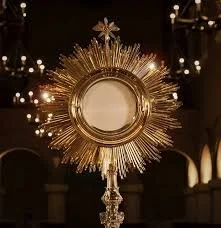
Struggling to take sacraments to the people, while honoring social-distancing rules

Struggling to take sacraments to the people, while honoring social-distancing rules

Priests in the Church of England have faced many challenges in recent decades -- from plummeting attendance numbers to fierce debates about marriage and sexuality.

Nevertheless, a coronavirus epistle from Archbishop of Canterbury Justin Welby and Archbishop of York John Sentamu was a shocker -- offering worship guidelines even stricter than those released by the government.

"Our church buildings must now be closed not only for public worship, but for private prayer as well and this includes the priest … offering prayer in church on their own," they wrote. "A notice explaining this should be put on the church door."

Thus, there was quiet defiance in Father Marcus Walker's voice as he stood alone near the altar of St. Bartholomew the Great -- London's oldest surviving church -- on the first Sunday after Easter and said, "I speak in the name of the Living God: Father, Son and Holy Spirit. Amen. And so we're back."

There was no response from his Facebook Live flock, but the priest stressed that he had been listening to his people. The bottom line: There had to be some way to proceed that stressed public safety, while addressing people's spiritual needs.

"Their voices have been loud, insistent and -- so far -- unanimous," he said, in his sermon. "I have received scores of letters and emails, calling on services to be restored here in their church: the church they have upheld and kept up, where they were married, where they buried a partner, saw a child christened, found God, were confirmed.

"This is their church and I am their pastor. I owe them my solidarity. As one said in her letter: 'We don't need you in solidarity at home, we need you in solidarity at the altar of our church.' "

With Easter in the rear-view mirror, members of ancient Christian flocks -- those built on liturgies and sacraments -- are waiting to see how their shepherds will walk a liturgical tightrope between church and state.

The bottom line: It's easier for megachurches to put their dramatic sermons and worship bands on home computer screens than for priests to digitize Holy Communion and rites of confession.

Concerning the coronavirus crisis and these Darwinian days in faith-based higher education

Concerning the coronavirus crisis and these Darwinian days in faith-based higher education

Every week or so, John Mark Reynolds does something that presidents of academic institutions rarely do -- he cleans his office at Saint Constantine School.

This isn't a symbolic gesture in an age of ominous trends, and now a global pandemic, that threaten private education. Reynolds always takes his turn -- with other members of his team -- cleaning administration offices at this classical school in Houston.

"We have no administrators who are just administrators. Everyone teaches. Everyone shares many of the jobs that need to get done," said Reynolds, reached at his "sheltering in place" home office. "We have a maintenance team, but we all help out. The first lady and I plan to water some plants later today. …

"We call this the economy of small."

Saint Constantine is a K-16 Orthodox Christian school, which means it offers four years of college credits. College tuition is $9,000 per year.

"Our whole model was created to survive the collapse of liberal arts education, while striving to preserve the core of liberal arts education through an Oxford-style tutorial system," said Reynolds. "This pandemic is only exposing the weaknesses of what was already a business model fraught with peril."

College educators have long known that painful challenges were coming in 2025, due to falling birth rates and the end of high millennial-generation enrollments.

Now, the coronavirus crisis is forcing students and parents to face troubling realities. A study by McKinsey & Company researchers noted: "Hunkering down at home with a laptop … is a world away from the rich on-campus life that existed in February."

What happens next? The study noted: "In the virus-recurrence and pandemic-escalation scenarios, higher-education institutions could see much less predictable yield rates (the percentage of those admitted who attend) if would-be first-year students decide to take a gap year or attend somewhere closer to home (and less costly) because of the expectation of longer-term financial challenges for their families."

This could crush some schools. In a report entitled "Dawn of the Dead," Forbes found 675 private colleges it labeled "so-called tuition-dependent schools -- meaning they squeak by year-after-year, often losing money or eating into their dwindling endowments."

Painful choices: Coronavirus lockdowns threaten some familiar Passover traditions

Painful choices: Coronavirus lockdowns threaten some familiar Passover traditions

Passover Seders include one moment that is especially poignant for grandparents.

Early in this ritual meal they look on as one or more of their grandchildren sing or recite the "Ma Nishtana," the "Four Questions" that frame the lessons Israelites learned from their bondage in Egypt and Exodus to freedom.

The first line echoes from generation to generation: "Why is this night different from all other nights?"

This year, Jews everywhere are wrestling with the fact that -- in a world wracked by the coronavirus -- this Passover is radically different from other Passovers.

"There's no way to replace having Passover with your parents, your grandparents, your friends and loved ones," said Rabbi Yaacov Behrman, founder of the Jewish Future Alliance and director of Operation Survival, a drug abuse prevention program in the Crown Heights neighborhood of Brooklyn.

"A grandmother looks forward to seeing her grandchildren at the Seder. Fathers and mothers look forward to seeing their families around that table. … There's no way to ignore the pain of what is happening this year."

Prayers and symbols describing suffering and liberation are at the heart of Haggadah (Hebrew for "telling") texts that guide the Seder meal and interpret the eight-day Passover season, which began this year at sundown on Wednesday, April 8.

Why is matzo the only bread at Passover? Because the Israelites didn't have time to bake leavened bread as they fled Egypt. Why dip bitter herbs into chopped apples, dates, nuts and wine? Because this paste resembles the clay Hebrew slaves used to make bricks. Why dip parsley into salt water? This represents new life, mixed with tears.

One ritual will have special meaning this year, as the leader of the Seder prays: "Blessed are you, Lord our God, King of the universe, who has sanctified us with His commandments, and commanded us concerning the washing of the hands."

Coronavirus crisis creates a legal, doctrinal minefield for priests and their flocks

Coronavirus crisis creates a legal, doctrinal minefield for priests and their flocks

Every now and then, while a priest is traveling or out running errands, a stranger will approach and ask: "Father, will you hear my confession?"

This can happen on a city sidewalk or in a quiet corner of a big-box store. Often the question is urgent -- because something disturbing has shaken someone's faith.

"I've been asked for confession in a taxi. I've been asked while on a train," said Father Fergal O'Duill, part of the Dallas-Fort Worth branch of the Catholic movement Regnum Christi. His name is pronounced "O'Doul" and he is originally from Dublin, Ireland.

These requests happen, he added, because "people see you and they know you're a priest. We're priests no matter where we go."

Hearing confessions is crucial during the penitential season of Lent, which precedes Easter, which is on April 12th this year for Catholics and Protestants (and April 19th for Eastern Orthodox Christians). Centuries of Catholic and Orthodox tradition urge believers to go to confession during Lent, before receiving Holy Communion on Easter.

The irony, right now, is that O'Duill can hear confessions during chance encounters, but not during scheduled times at the school where is serves as a chaplain.

The evolving coronavirus pandemic has turned Lent into a confusing minefield of legal and doctrinal questions for pastors and their flocks. In many communities, but not all, state or local officials have ordered people to "shelter in place" -- staying home unless they have "essential" needs elsewhere. This has raised an obvious question: Is going to confession "essential," even if Catholics are preparing for Holy Week and Easter rites they will have to watch on digital screens at home?

For most of March, O'Duill was one of several priests who heard confessions in a giant parking lot, or in a pair of tents, near the Highlands School in Irving, Texas. Every effort was made to provide enough privacy to maintain the "dignity" of the sacrament, he said, while priests remained a safe distance from the penitents. Priests offered similar "drive-through" confession opportunities in a few other parts of America.

Then, on March 22, Dallas County Judge Clay Jenkins issued a "shelter in place" order effective through April 3 and, perhaps, beyond.

The ground rules changed.

Our new normal isn't really new -- ancient prayers go online during latest epidemic

Our new normal isn't really new -- ancient prayers go online during latest epidemic

For centuries, Eastern Orthodox Christians have shared prayers "for the sick, the suffering, the captive and for their safety and salvation" as well as petitions that "we may be delivered from all affliction, wrath and need."

The faithful respond: "Lord, have mercy."

This past Sunday, some worshippers heard modern phrases woven into the ancient cadences of the Divine Liturgy of St. Basil the Great.

During the Litany of Fervent Supplication, priests in the Orthodox Church in America added: "O Lord who lovest mankind, deliver us from the impending threat of the Corona Virus. Send thine angel to watch over us and protect us. Grant health and recovery to those suffering from this virus. Guide the hands of physicians and preserve those who are healthy. Enable us to continue to serve our suffering brothers and sisters in peace that together we may glorify thy most honorable and majestic name of the Father and of the Son and of the Holy Spirit, now and ever and unto ages of ages."

Following instructions from our bishop, most members of parishes in the Diocese of the South heard these words while gathered around home computers.

This was part of America's new normal as religious leaders -- some already tech-friendly, others veering into new territory -- worked to develop online forms of worship, education and fellowship. For Catholics, the Orthodox and others in liturgical traditions, all of this is happening at a highly symbolic time -- the penitential season of Lent. Easter is April 12 for Western churches. For the Orthodox, Pascha is April 19.

This is not the season of Great Lent we anticipated, but it is nonetheless a fitting Lenten effort, "explained Archbishop Alexander, OCA bishop of Dallas and the South. In his letter to priests and parishioners he urged believers -- using a monastic image -- to recognize "that this initial response to this pandemic will work for the greater good of our faithful and our neighbors. Use this time of 'social distancing' for prayer and to keep vigil 'in one's cell.' "

Across the nation, some religious congregations met, drawing smaller flocks, while many closed their doors. Things were different at my home Orthodox parish in Oak Ridge, Tenn. We were somewhere in between.

The darkness returns -- Rabbi Lord Sacks on new wave of anti-Semitism in Europe and USA

The darkness returns -- Rabbi Lord Sacks on new wave of anti-Semitism in Europe and USA

Andrew Neil of BBC kept asking Labour Party leader Jeremy Corbyn the same question -- over and over.

"Eighty percent of Jews think that you're anti-Semitic," he stressed. "Wouldn't you like to take this opportunity tonight to apologize to the British Jewish community for what's happened?"

Corbyn would not yield: "What I'll say is this -- I am determined that our society will be safe for people of all faiths."

The Daily Express called this late-2019 clash a "horror show." This BBC interview, with surging fears of public anti-Semitism, lingered in headlines as Brits went to the polls. Corbyn's party suffered its worst defeat in nearly a century.

Meanwhile, in America, a wave of anti-Semitic attacks left Jews wondering if it was safe to wear yarmulkes and symbols of their faith while walking the sidewalks of New York City. In suburban Monsey, a machete-waving attacker stabbed five people at a Hasidic rabbi's Hanukkah party. Finally, thousands of New Yorkers marched to show solidarity with the Jewish community.

The NYPD estimates that anti-Semitic crimes rose 26% last year. Anti-Semitic hate crimes in New York, Los Angeles and Chicago are expected to hit an 18-year high, according to research at California State University, San Bernardino. 

No one who watches the news can doubt that "the darkness has returned. It has returned likewise to virtually every country in Europe," argued Rabbi Lord Jonathan Sacks, who led the United Hebrew Congregations of the Commonwealth from 1991-2013. He was knighted by Queen Elizabeth in 2005 and entered the House of Lords.

"That this should have happened within living memory of the Holocaust, after the most systematic attempt ever made … to find a cure for the virus of the world's longest hate -- more than half a century of Holocaust education and anti-racist legislation -- is almost unbelievable. It is particularly traumatic that this has happened in the United States, the country where Jews felt more at home than anywhere else in the Diaspora."

Why now?

How do some young Americans remain believers while living in 'digital Babylon'?

How do some young Americans remain believers while living in 'digital Babylon'?

Soon after the Internet boom in the 1990s, the Christian consulting firm WisdomWorks obtained software that could run automated chat groups -- allowing anonymous teens to ask candid questions.

Mark Matlock and his team called the project "Wise Intelligent Guide (WIG)."

Tech-savvy young people were careful, often repeating easy questions over and over to determine if the "bot" was truly autonomous, as opposed to being operated by hidden adults. A typical user would then probe with relatively safe questions -- like "Does God exist?"

Finally, there would be the "actual question the teen wanted to ask, usually about sex, depression, suicide, or abuse," noted Matlock and Barna Group President David Kinnaman, in their new book "Faith for Exiles." Typical questions: "How do I know if I am gay? What does God think about masturbation? What happens to people who commit suicide? I had sex with my boyfriend; what should I do?"

That was two decades ago. Today, most teens would use their omnipresent smartphones and take these personal questions straight to Google -- a secular oracle offering guidance on topics that religious leaders often avoid.

"The church has bubble-wrapped itself in an attempt to avoid thinking about the truly disruptive forms of technology that are everywhere in our world," said Kinnaman, reached by telephone. "Most church leaders think they can just use technology as a way of reaching people. … They aren't looking at the real impact of all this on their people. It's easier just to look the other way."

Meanwhile, practical decisions on tough lifestyle and religious questions often have long-term consequences.

Religious leaders have been forced -- after waves of Pew Research Center polling -- to acknowledge the surge in Millennial Americans (born 1981-1996) who now identify as atheists, agnostics or "nothing in particular" when asked about religion. In a 2019 update, Pew noted that 40% of Millennials are "nones."

The goal of the "Faith for Exiles" study was to find patterns among young Americans (18 to 29 years of age) who were raised as Christians.

Union seminary holds another interfaith rite, causing an explosion that rocked Twitter-verse

Union seminary holds another interfaith rite, causing an explosion that rocked Twitter-verse

When describing the life and work of St. Francis of Assisi, his admirers -- environmentalists as well as theologians -- usually quote his "Canticle of Brother Sun and Sister Moon."

It begins with the Catholic mystic stressing that to God alone belong "all glory, all honor and all blessings."

Then St. Francis, who died in 1226, proclaims: "Praised be You my Lord with all Your creatures, especially Sir Brother Sun. … Praised be You, my Lord, through Sister Moon and the stars, in the heavens you have made them bright, precious and fair. Praised be You, my Lord, through Brothers Wind and Air."

This famous hymn teaches that God is Creator and that Francis is thankful for all of creation -- rain, wind, fire, plants, humanity and even "Sister Death."

That wasn't the doctrinal equation many Twitter users saw in a recent message from Union Theological Seminary in New York City. The seminary tweet described a chapel service linked to a class -- "Extractivism: A Ritual/Liturgical Response" -- taught by the Rev. Claudio Carvalhaes, a Presbyterian Church (U.S.A.) theologian from Brazil.

"Today in chapel, we confessed to plants," said the seminary statement. "Together, we held our grief, joy, regret, hope, guilt and sorrow in prayer; offering them to the beings who sustain us but whose gift we too often fail to honor. What do you confess to the plants in your life?" The tweet showed a student facing potted ferns, palms, cattails, a lily and other houseplants.

"The prayers were said to the plants," confirmed Carvalhaes, reached by telephone. "The way we understand this, we are not praying to the plants as God. … We were seeing the plants in a way that the indigenous peoples see them -- as living things with lives of their own. …

"We were speaking to the plants as part of the 'we' of God. We are all part of God's creation -- both mankind and the rest of creation."

The Rev. Albert Mohler Jr., president of Southern Baptist Theological Seminary heard a different message. "If you do not worship the Creator, you will inevitably worship the creation, in one way or another. That is the primal form of idolatry," he said, in a podcast from the Louisville campus, which has 1,731 full-time students.

The Union rite created a furor because of this seminary's fame as a center for progressive theology and its academic association with nearby Columbia University on Manhattan's West Side.