
Social issues

Can clergy help modern parents struggle with technology issues in their homes?

Can clergy help modern parents struggle with technology issues in their homes?

The evidence keeps growing that families need help controlling technology in their homes, but this is a subject most megachurch pastors would have trouble addressing with a straight face.

"Talking about this subject in many of our churches would be … controversial for reasons that are rather ironic," said author Andy Crouch, senior communication strategist for the John Templeton Foundation in Philadelphia. "Pastors would be preaching in churches dominated by giant video screens and lots of them now ask their people to tweet sermon feedback right there in the service. The technology is everywhere."

It's hard to talk about controlling today's digital-screens culture without being accused of advocating a semi-Amish retreat. But at some point, he said, parents who care about faith, morality and character will have to develop some strategies. For starters, their children will need to hear, over and over: "Our family is different."

Clergy could help parents face this task. But that would require them to address hot-button issues ranging from online porn to whether parents should give children smartphones. It would also require saying, "Our church is different."

Crouch doesn't have easy answers for any of these questions. His new book, "The Tech-Wise Family," includes "Crouch Family Reality Check" pages detailing the struggles behind the principles he recommends. While his family uses candles at its screens-free dinners, Crouch admits that his home's number of Apple devices is in double digits.

Obviously, it's hard to observe any kind of "digital Sabbath" in which all these screens go dark for an hour, a day or even a week, said Crouch. Nevertheless, trying to control this digital lifestyle is a subject religious leaders should discuss with their flocks.

"If we don't have some rhythm with these things -- in terms of when we use them and when we don't -- then they're using us, instead of us using them," he said. But it's crucial to remember that, "we're not saying all this technology is bad. It's good, when used as part of a Christian family culture. That's what takes planning and commitment.

Fightin' words and confusion surrounding Trump's shot at the Johnson Amendment

Fightin' words and confusion surrounding Trump's shot at the Johnson Amendment

There was nothing new about the Rev. Jerry Johnson talking about abortion, gay rights and other hot-button moral issues during sermons at the Central Baptist Church of Aurora, outside Denver.

But on this particular Sunday in the mid-1990s, Johnson mentioned President Bill Clinton, noting his liberal take on several issues. Later, several laypeople told him he had risked the church's tax-exempt status -- by mentioning the president's name in the pulpit. Americans United for Separation of Church and State had just begun circulating letters warning religious leaders against endorsing or opposing candidates.

Two decades later, Johnson leads the National Religious Broadcasters and he still thinks preachers should have the right to say whatever they want about faith and politics, even if that includes letting believers know what they think of candidates. Whether pulpit endorsements are wise or necessary is another matter, he said.

"Speech is speech and free speech is free speech," said Johnson. "The question isn't whether it's wise or not for church leaders to endorse candidates, the question is who gets to make that decision. If the answer is the government, then that's the old Soviet answer, that's the answer you get in China. If the church gets to make that decision, then there's your First Amendment answer, right there."

Thus, Johnson was among those celebrating President Donald Trump's executive order telling Internal Revenue Service officials not to "take any adverse action against any individual, house of worship, or other religious organization" that endorses candidates. Those actions were banned in the mid-1950s by the rarely enforced Johnson Amendment, engineered by Senate Majority Leader Lyndon B. Johnson, who wanted to corral his opponents in secular and religious nonprofit groups.

Yes, an executive order is not the same thing as Congress overturning the Johnson Amendment, said Johnson. The NRB leader also knows that Trump didn't really address the rising tide of First Amendment clashes between religious believers -- such as wedding photographers, cake bakers and florists -- and discrimination claims by LGBTQ activists.

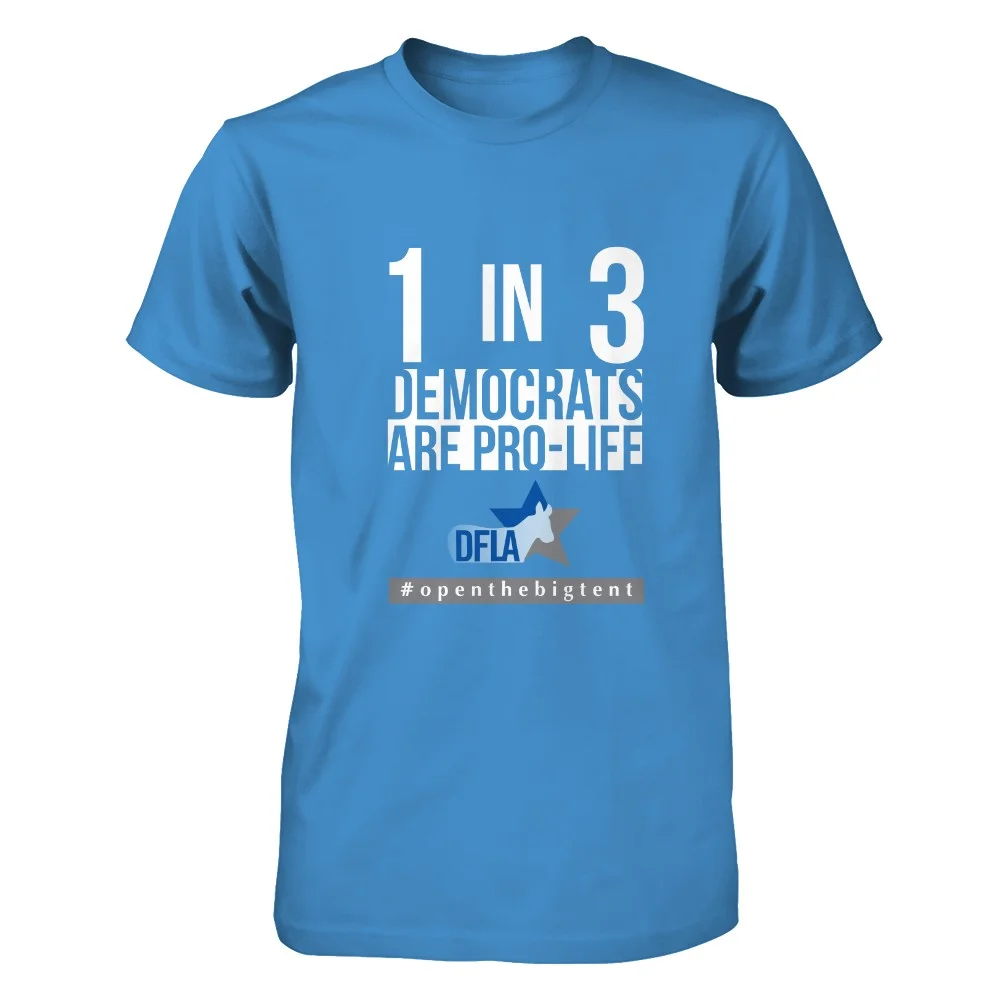
Is there still room for pro-life Democrats in their own political party?

Is there still room for pro-life Democrats in their own political party?

On the subject of abortion rights, the 2016 Democratic Party platform language prepared for candidates was as firm as ever.

"Democrats are committed to protecting and advancing reproductive health, rights, and justice," it noted. "We believe unequivocally, like the majority of Americans, that every woman should have access to quality reproductive health care services, including safe and legal abortion -- regardless of where she lives, how much money she makes, or how she is insured."

Most of the party's candidates agreed on other implications of that statement, from legal third-trimester abortions, taxpayer funded abortions and gender-selection abortions, which usually means aborting unborn females.

Most Democratic candidates backed that platform -- but not all.

Thus, it stunned some Democrats, especially in heartland and Bible Belt states, when Democratic National Committee Chairman Tom Perez drew another bright line defining who participates in the work of his party.

"Every Democrat, like every American," he said, "should support a woman's right to make her own choices about her body and her health. This is not negotiable and should not change city by city or state by state." In fact, he added, "every candidate who runs as a Democrat" should affirm abortion rights.

Needless to say, these were fighting words for Kristen Day, executive director of Democrats for Life of America.

"I am glad this conversation is taking place," she said, in a telephone interview earlier this week. It would help if the party's chairman "sat down and talked with us, because we are obviously feeling left out.

Reality keeps raising the April Fools' bar for all those online Catholic satirists

Day after day, Kevin Knight scans news and commentary pages looking for items that will interest Catholics and others who visit his New Advent website.

With its plain white background, stark graphics and columns of headlines, the site looks something like the powerful, secular Drudge Report. But New Advent focuses on church life and doctrine, not celebrity scandals and political horse races.

Knight does appreciate the occasional zinger. Still, he has learned to be extra careful when April 1 approaches. After all, the Chair of St. Peter is occupied by a pope whose off-the-cuff remarks often puzzle the faithful. Oh, and Donald Trump is president of the United States.

"Yes, it has gotten harder to tell satire and hoaxes from the real thing," noted Knight. "It's getting more necessary to be explicit when linking to some stories -- especially when they deal with Pope Francis. … In the past two years, I've deliberately avoided linking to April Fools' stories for this very reason."

All savvy news consumers need to do to see what Knight is taking about is open an online search program and enter various religious terms and then the phrase "not the Onion," referring to The Onion, a secular satire site.

Take this headline, for example: "Muslim Schoolgirl Sent Home Because Her Skirt Was Too Long." That story is real.

Or how about this? "Pope Francis to make Martin Luther a Saint on October 31." That jest ran on April 1 on the "Liturgy: Service and Gratitude" site.

Consider this headline: "Jesuits to Admit Women to the Society."

Defending older truths: Rod Dreher, Albert Mohler and St. Benedict in conversation

Defending older truths: Rod Dreher, Albert Mohler and St. Benedict in conversation

Journalist Rod Dreher used to find comfort when seeing rows of churches along roads in his home state of Louisiana.

The world might be going crazy in places like New York City and Washington, D.C. -- where Dreher had worked as a journalist -- but it felt good to know the Bible Belt still existed.

But that changed as the popular digital scribe -- his weblog at The American Conservative gets a million-plus hits a month -- kept digging into research about life inside most of those churches. The bottom line: There's a reason so many young Americans say they have zero ties to any faith tradition.

"God is not the center of American culture or of Western civilization anymore. But it's easy to think that this is alarmist when you look around you, especially if you live in the South as I do and see churches everywhere," said Dreher, during a podcast with R. Albert Mohler, Jr., president of Southern Baptist Theological Seminary in Louisville, Ken. Mohler is an influential voice at all levels of the Southern Baptist Convention, America's largest Protestant flock.

"Go inside those churches," stressed Dreher. "Talk to the people about what they know about the historic Christian faith. You'll often find it's very, very thin. … And I think that the loss of faith among the elites in society is huge. Christianity is now a minority position and in many places at the highest levels of our society … orthodox Christianity is considered bigotry. This is not going to get any better."

It's easy for conservatives to bemoan public trends, such as amoral Hollywood sermons, the U.S. Supreme Court's same-sex marriage decision and corporate giants backing the gender-blending of bathrooms and showers. However, some of the most sobering remarks by Mohler and Dreher were about Christian homes, schools and sanctuaries.

At the center of the conversation was Dreher's new book, "The Benedict Option: A Strategy for Christians in a Post-Christian Nation," which debuted at No. 7 on the New York Times bestseller list, while sparking fierce debates online.

A married priest parses latest sound bite -- about married priests -- from Pope Francis

A married priest parses latest sound bite -- about married priests -- from Pope Francis

Every now and then, a typical Catholic asks Father Dwight Longenecker for his take on whether Rome will ever ordain more married men as priests. 

This is logical, since Longenecker is a former Anglican priest who is married and has four children. He was raised as a fundamentalist Protestant, graduating from Bob Jones University in Greenville, S.C., and now leads Our Lady of the Rosary Catholic Church in that same city.

These conversations begin with the layperson cheering for married priests. Then Longenecker mentions the "elephant in the room" -- the 1968 papal encyclical Humanae Vitae defending church doctrines forbidding artificial contraception. Surely bishops would strive to ordain men who, with their wives, would defend these teachings. Right?

"They might have a dozen kids," says Longenecker. "Who's going to pay for them?"

The typical Catholic assumes the bishop will do that. Actually, parishes are responsible for their priest's pay, even when his children go to Catholic schools and off to college. That might require parishioners to put more than $5 in offering plates.

The typical Catholic then says: "I don't think having married priests is such a good idea."

Longenecker is ready for more chats -- in person and at his "Standing on my Head" website -- after recent Pope Francis remarks to the German newsweekly Die Zeit.

Asked about the global shortage of priests, Francis expressed a willingness to consider ordaining "viri probati" (tested men), such as married men already ordained as deacons. While "voluntary celibacy is not a solution," he added: "We need to consider if viri probati could be a possibility. … We would need to determine what duties they could undertake, for example, in remote communities."

This latest Pope Francis sound bite was not surprising, since Vatican officials have often discussed ordaining more married men, said Longenecker, author of 15 books on Catholic faith and apologetics.

The quiet (in terms of news coverage) rise of a secular coalition in US politics

The quiet (in terms of news coverage) rise of a secular coalition in US politics

NEW YORK -- Believe it or not, most Americans think their nation is becoming more tolerant, at least when it comes to warm feelings about most religious believers.

A recent Pew Research Center survey found that, in terms of "thermometer" ratings, Americans felt "warmer" about nearly all religious groups than they did in 2014. Even chilly ratings for atheists and Muslims are approaching a neutral 50 score.

But there was one glitch in this warming trend, with evangelical Protestants stuck on a plateau. Christianity Today magazine noted that, when the views of evangelicals were removed from the mix, only a third of non-evangelical Americans had warm feelings toward evangelicals. Flip that around and that means two-thirds of non-evangelicals have lukewarm or cold feelings about evangelical Christians.

"There's a sharp divide in this country and it's getting stronger. … This tension has been obvious for years, for anyone with the eyes to see," said political scientist Louis Bolce of Baruch College in the City University of New York. "It's all about moral and social issues. Some people don't like the judgmental streak that they see in traditional forms of Christianity, like in evangelicalism and among traditional Roman Catholics."

Bolce and colleague Gerald De Maio have, over two decades, mustered research demonstrating that journalists have shown little or no interest in the liberal side of this divide. While offering in-depth coverage of the Christian Right, journalists have all but ignored a corresponding rise in what the Baruch College duo have called "anti-fundamentalist" activists. Among Democrats, the term "evangelical" has become as negative as the old "fundamentalist" label.

When journalists deal with religion and politics, "prejudice is attributed to people on the Religious Right, but not to people on the secular and religious left. Everything flows from that," said De Maio.

Gallup Poll team offers an update on faith and our divided states of America

Gallup Poll team offers an update on faith and our divided states of America

The cartoon map of North America began appearing after the bitter "hanging chads" election of 2000, when the U.S. Supreme Court put Republican George W. Bush in the White House.

In most Internet variations, part of the map is blue, combining Canada and states along America's left coast and the urban Northeast and Midwest into "The United States of Liberty and Education." The rest is red, with America's Southern and Heartland states united into the "Republic of Jesusland" or tagged with a nasty name beginning with "dumb" and ending with "istan" that cannot be used in a family newspaper.

Variations on the "Jesusland" map have been relevant after nearly every national election in the past two decades. The map's basic shape can also be seen in the latest Gallup survey probing "religiosity" levels in all 50 American states.

Once again, Gallup found that Mississippi was No. 1, with 59 percent of its people claiming "very religious" status, in terms of faith intensity and worship attendance. Vermont was the least religious state, even in the secular New England region, with 21 percent of the population choosing the "very religious" label.

"You can see the 'R&R' connection, which means that -- among white Americans -- the more actively people practice their religion, the more likely they are to vote Republican," said Frank Newport, editor in chief at Gallup.

After Mississippi, the rest of the Top 10 "most religious" states were Alabama, Utah, South Dakota, South Carolina, Arkansas, Louisiana, Tennessee, Oklahoma and Georgia. After Vermont, the next nine least religious states were Maine, Massachusetts, Rhode Island, Nevada, Alaska, Oregon, Connecticut, Hawaii and New Hampshire.

"Religion isn't always a perfect guide to politics at the state level," said Newport, reached by telephone. "After all, New Hampshire is a swing state and Alaska is just its own thing."

Nevertheless, a reporter with decades of religion-beat experience took these Gallup numbers to the next level, overlapping them with state results in the hard-fought 2016 campaign. In terms of the "pew gap" phenomenon, there are few surprises.

Quran in the cathedral: A symbolic window into soul of multicultural England

In Christian tradition, the Epiphany feast marks the end of the 12-day Christmas season and celebrates the revelation -- to the whole world -- that Jesus is the Son of God.

Thus, it was highly symbolic when a Muslim participating in an Epiphany rite at St. Mary's (Episcopal) Cathedral in Glasgow, Scotland, chanted verses from the Quran, Surah 19, in which the infant Jesus proclaims:

"Lo! I am the slave of Allah. He hath given me the Scripture and hath appointed me a Prophet. … Peace is on me the day I was born, and the day I die, and the day I shall be raised alive!" The text then adds: "Such was Jesus, son of Mary: a statement of the truth concerning which they doubt. It befitteth not Allah that He should take unto Himself a son."

Cathedral leaders took to social media to hail this as a lovely moment. But in the Church of England, one of the chaplains of Queen Elizabeth II was dismayed by what many would consider an act of blasphemy -- a reading of this clear Islamic denial of Jesus being the Son of God.

The Glasgow rite was justified as "a way of building bridges and a way of educating people," the Rev. Gavin Ashenden told the BBC.

Nevertheless, he argued that it was wrong to insert such a reading into "the Holy Eucharist and particularly a Eucharist whose main intention is to celebrate Christ the word made flesh come into the world. … To choose the reading they chose doubled the error. Of all passages you might have read likely to cause offence, that was one of the most problematic."

After hearing from Buckingham Palace, Ashenden resigned as one the queen's chaplains. Thus, he surrendered his unique status in a land in which the Church of England has been weakened by almost every cultural trend, yet retains a unique niche in the national psyche.

This was, Ashenden said, a matter of personal principle and ancient doctrine.