World religions

Pope Benedict XVI and Europe's future: New data about fading faith in Christendom's old heart

Pope Benedict XVI and Europe's future: New data about fading faith in Christendom's old heart

After years of worrying about Europe's future, Cardinal Joseph Ratzinger of Germany put his hopes and fears on the record during a 2001 interview.

There had been hints. German journalist Peter Seewald noted an old quote in which Ratzinger said the church would be "reduced in its dimensions, it will be necessary to start again." Had the leader of Rome's Congregation for the Doctrine of the Faith changed his views?

"Statistical data shows irrefutable tendencies," replied Ratzinger. "The mass Church may be something lovely, but it is not necessarily the Church's only way of being.

"The Church of the first three centuries was small, without being, by this fact, a sectarian community. On the contrary, it was not closed in on itself, but felt a great responsibility in regard to the poor, the sick."

Four years later, this bookish cardinal became Pope Benedict XVI, serving until his stunning resignation in 2013 -- the first pope to resign in 600 years. Meanwhile, waves of change have continued to rock Eastern and Western Europe.

Now, the Benedict XVI Centre for Religion in Society, based at St. Mary's University in London, has released a study showing that Christianity is no longer Europe's default religion, especially among the 16- to 29-year-olds who are its future. "Europe's Young Adults and Religion," was produced with the Institut Catholique de Paris, analyzing data from 22 countries, drawn from the 2014-2016 European Social Survey.

In 18 of these countries "fewer than 10 percent of all 16-29 year-olds attend religious services at least weekly. And in 12 of them, over half say that they have 'no religion,' " noted Stephen Bullivant, the report's author and director of the Benedict XVI Centre, in email exchanges with Rod Dreher of The American Conservative.

"These are all countries in Europe, the very heart of Christendom, where Christianity (albeit in several forms) has been reliably passed on from generation-to-generation for the best part of 2000 years. And now, in the space of just a couple of generations, that's largely stopped in many places."

The key, he said is that "nominal" or "cultural" faith doesn't pass from one generation to another.

Life after Sexual Revolution: United Methodists still waiting for final shoe to drop

Life after Sexual Revolution: United Methodists still waiting for final shoe to drop

After decades of fighting about sex and marriage, the world's 12.5 million United Methodists are still waiting for a final shoe to drop.

Now, it's less than a year until a special General Conference that has been empowered to choose a model for United Methodist life after the Sexual Revolution -- some path to unity, rather than schism.

As the faithful watch and wait, Boston-area Bishop Sudarshana Devadhar composed a prayer for use among United Methodists in New England, on of the church's most liberal regions.

"God help us! Help us … to take the next faithful step forward not based on doctrine, tradition or theology; judgments, fears or convictions; notions of who are the righteous and unrighteous," wrote Devadhar. "God help us! Help us … to take the next small faithful step forward that is neither … right or wrong; good or bad; for or against; left or right; pro or con."

The problem is that ongoing battles among United Methodists have demonstrated that any realistic unity plan has to address this global church's doctrinal fractures, said the Rev. Thomas Lambrecht, vice president of the conservative Good News organization. He is a member of the Commission on a Way Forward that will make recommendations to the historic Feb. 23-26, 2019, General Conference in St. Louis.

If United Methodists had a "quick and easy way" forward that managed to ignore "doctrine, tradition and theology" they would have tried it already, he added. Meanwhile, many of the church's leaders still have "a dream that there are millions of evangelicals who are willing to live in a United Methodist Church that doesn't defend the authority of scripture and our church's own teachings."

Meanwhile, on the left, many United Methodists fear the growing flocks of evangelicals in their denomination -- especially overseas.

Yes, those Star Wars theology wars are heating up -- again

Yes, those Star Wars theology wars are heating up -- again

Debates about "Star Wars" theology have come a long way since the first "Star Wars generation" children asked: "Is the Force the same thing as God?"

Later, kids viewing the second George Lucas trilogy faced the puzzling Nativity story of Anakin Skywalker. The future Darth Vader was conceived by bloodstream midi-chlorians -- the essence of life -- acting in union with the Force? His mother explained: "There is no father."

Now the middle film in the new trilogy -- "Star Wars: The Last Jedi" -- has believers debating whether the mythology created by Lucas has evolved into something more polemical, political and commercial, all at the same time. The big question: Can those who loved the early films trust Disney to protect the true faith?

From the beginning, it was clear Lucas was blending the comparative religion scholarship of Joseph "The Hero with a Thousand Faces" Campbell with dashes of Arthurian legend, samurai epics and Flash Gordon. At the heart of it all was the "monomyth" of Luke Skywalker and his epic spiritual quest, noted Bishop Robert Barron of the Archdiocese of Los Angeles.

"A young man (typically) is summoned out of the comfort of his domestic life and compelled to go on a dangerous adventure," argued Barron, at his "Word on Fire" website. "In the process, he comes to realize and conquer his weakness, to face down enemies, and finally to commune with the deep spiritual powers that are at play in the cosmos. … Usually, as a preparation for his mission, he is trained by a spiritual master."

Some of these themes remain in "The Last Jedi," noted Barron, and it's obvious that Rey is a young heroine on her own quest. The problem, argued the bishop, is what has happened to Luke Skywalker and the rest of the ensemble. The old myths and archetypes have been buried in "an aggressively feminist ideology."

Searching for some facts about St. Matthew and those mysterious Epiphany magi

Searching for some facts about St. Matthew and those mysterious Epiphany magi

Several centuries after the birth of Jesus, Syrian scribes offered these names for the wise men who came to Bethlehem -- King Hormizdah of Persia, King Yazdegerd of Saba and King Perozadh of Shelba.

A late 5th century Alexandria chronicle called them Bithisarea, Melichior and Gathaspa, which evolved into the familiar Balthazar, Melchior and Caspar. In the 6th century, Emperor Justinian commissioned a Ravenna mosaic in what is now called the Basilica of St. Apollinaris, showing three magi wearing what appears to be Persian clothing, and carrying gifts.

Over the centuries, these images shaped countless Nativity scenes, church pageants and carols, noted Father Dwight Longenecker, author of a new book, "Mystery of the Magi." He is an Oxford University graduate and former Anglican priest who, after converting to Roman Catholicism with his wife and children, now leads Our Lady of the Rosary Catholic Church in Greenville, S.C.

This weekend, worshipers celebrating the Epiphany feast -- which closes the 12-day Christmas season -- will hear what the Gospel of St. Matthew says about all this. Comparing the simple biblical account with many colorful "Three Kings" stories, Longenecker explained, is rather like comparing the humble, pious, 3rd century St. Nicholas of Myra with the Santa Claus found in Hollywood flicks.

"I don't think we need to give up Nativity plays and singing 'We Three Kings of Orient Are.' But I do think we need to realize that these are elaborations on the historical story from Matthew's Gospel. They're delightful, but they are related to the facts of Jesus' birth in the same way the Broadway musical Camelot is related to scholars writing about the historical King Arthur," he said.

"Our culture has … stuck the magi in the same sentimental, magical Christmas bundle with Santa and a bunch of flying reindeer.

The Top 10 religion news stories of 2017? Alas, it's Donald Trump uper alles

The Top 10 religion news stories of 2017? Alas, it's Donald Trump uper alles

While there was nothing new about someone entering a religious sanctuary and gunning down the faithful, the bloodshed at First Baptist Church in Sutherland Springs, Texas, was truly historic.

Was that 2017's most important religion story?

What about Myanmar troops forcing half a million Muslim Rohingya into Bangladesh, with reports of children being beheaded and people burned alive? What about the #MeToo campaign against sexual abuse, which turned into #ChurchToo, with women describing soul-wracking private tragedies.

For me, the year's biggest story took place in Charlottesville, Va., where white supremacist marchers shouted anti-Semitic curses and claimed God was on their side. Meanwhile, clergy prayed and sang hymns in counter-protests. Southern Baptists and other believers proclaimed the alt-right was working for Satan.

But that wasn't the top story, either, according to journalists voting in the Religion News Association poll for 2017. No, once again this was a year dominated by Donald Trump and armies of evangelicals who, in myriad mainstream news reports, marched in lockstep support behind his political agenda.

Trump was named Religion Newsmaker of the Year, after "his inauguration triggered upheaval across a number of religious fronts, among them the role of evangelical support of his administration; fierce debates over Islam, race and religious liberty; the appointment of conservative Supreme Court Justice Neil Gorsuch; and executive orders relating to immigration and terrorism," said the RNA announcement.

Meanwhile, in a variety of public debates, bitter Trump-era rifts among Christian conservatives kept getting deeper and wider. This was perfectly captured in a New York Times forum after the Alabama defeat of old Religious Right hero Roy Moore.

Looking for alternative forms of faith in the streets of postmodern Czech Republic

Looking for alternative forms of faith in the streets of postmodern Czech Republic

PRAGUE -- The Czech Republic's capital has long been called the "city of 100 spires" and there are many church steeples among all those soaring medieval landmarks.

But along the winding, cobblestone streets, something else is happening at eye level in the bookstores, artsy shops, coffee hangouts and sidewalk posters. This is where yoga mixes with sacred rocks, folk religion bumps into numerology and dark themes in fantasy comics blend into pop versions of Hinduism and Buddhism.

In today's Czech Republic, people are "still asking questions about what is good and what is bad, and questions about life and death," said Daniel Raus, a journalist and poet known for his years with Czech Radio, covering politics, culture and religion.

"What is different is that (Czechs) are saying, 'I will decide what is good and I will decide what is bad. No one can tell me what to believe about any of this.' "

These trends can be seen in revealing numbers in a new Pew Research Center study entitled "Religious Belief and National Belonging in Central and Eastern Europe."

Looking at the big picture, the survey shows that the influence and practice of faith is slipping in lands long identified with Catholicism, those closest to the European West. Eastern Orthodoxy is rising, especially in lands in which faith and national identity blend. Among the Orthodox, however, statistics linked to prayer and worship remain sobering.

But the location of the most stunning changes is clear.

"The most dramatic shift … has occurred in the Czech Republic, where the share of the public identifying as Catholic dropped from 44% in 1991 to 21% in the current survey," noted the Pew summary document. "Today, the Czech Republic is one of the most secular countries in Europe, with nearly three-quarters of adults (72%) describing their religion as atheist, agnostic or 'nothing in particular.' "

Sen. Bernie Sanders opens up a new front in America's church-state warfare

Sen. Bernie Sanders opens up a new front in America's church-state warfare

Try to imagine the media storm if the following drama ever took place under the hot glare of television lights in a U.S. Senate hearing.

So a Muslim believer who has been nominated for a cabinet-level post is taking questions. A Bible Belt senator asks: "Do you believe that Jesus is the Son of God?"

Or perhaps a senator from a New England state -- say Sen. Bernie Sanders of Vermont -- asks the nominee: "Do you think Christians who believe in the Holy Trinity will be condemned because they reject the oneness of God?"

Ismail Royer knows what would happen if he faced those questions. He would defend one of Islam's core doctrines.

"I believe Jesus was a prophet of God, but not God himself," said Royer, who works at the Center for Islam and Religious Freedom in Washington, D.C. "I'd have to say that worshipping Jesus alongside God amounts to polytheism and is a rejection of the one God. There is no way that I could apologize for what I believe as a Muslim."

A purely hypothetical case? Not after a recent confrontation during a U.S. Senate budget committee hearing on the nomination of Russell Vought to serve as deputy director of the White House Office of Management and Budget.

Sanders questioned a Vought article about a Wheaton College controversy, in which a professor made headlines with her claims that Christians and Muslims worship the same God. As a former Wheaton professor, Vought argued that salvation was found through Jesus -- period.

Thus, Sanders said: "You wrote, 'Muslims do not simply have a deficient theology. They do not know God because they have rejected Jesus Christ, His Son and they stand condemned.' Do you believe that that statement is Islamophobic?"

The nominee repeated his defense of this ancient Christian doctrine. Sanders kept asking if Vought believed that Muslims "stand condemned."

Once again, Vought said: "Senator, I'm a Christian …"

What Vice President Pence said about global (not U.S.) persecution of Christians

What Vice President Pence said about global (not U.S.) persecution of Christians

Their loved ones died on a Libyan beach, beheaded by Islamic State militants as cameras recorded their agony for a 2015 propaganda video.

Some of the Coptic Christians died repeating these words: "Lord, Jesus Christ." An ISIS leader in a ski mask, in turn, offered this warning: "We will conquer Rome with Allah's permission."

During the recent World Summit in Defense of Persecuted Christians, relatives of these modern martyrs stood to receive the applause of participants, who came from 136 nations -- including the ravaged lands of the Middle East and Africa.

"Today our Christian brothers and sisters across the world are facing persecution and martyrdom on an unprecedented scale," said the Rev. Franklin Graham, who hosted the event for the Billy Graham Evangelistic Association. "No part of the Christian family is exempt -- Catholic, Protestant or Orthodox -- nor is any part of the world exempt."

There were other poignant moments, including an Iranian woman ringing a memorial bell for the dead, including her father who was hanged for converting to Christianity. Summit speakers represented the global church, including remarks by Archbishop Christophe Louis Yves Georges Pierre, the U.S. ambassador for Pope Francis, and a major address by Metropolitan Hilarion, leader of the Russian Orthodox Church's ecumenical office.

But this meeting was held in Washington, D.C., and led by the always outspoken Franklin Graham -- who called the persecution of Christians "genocide." Also, an address by Vice President Mike Pence guaranteed some mainstream news coverage, as well as a hot spotlight on the U.S. political implications of his remarks.

Thus, a Huffington Post news report claimed: "Pence reiterated a common belief among conservative Christians in the U.S. that they are among the most persecuted people of faith in the world."

While the vice president alluded to trends in the United States, he made it clear that his primary worries and prayers about persecution were global.

Tricky interfaith details: Muslim preacher in an Episcopal pulpit and at the altar

Tricky interfaith details: Muslim preacher in an Episcopal pulpit and at the altar

Soumaya Khalifah's sermon fell in the usual place in the Holy Week rite in which Episcopal Diocese of Atlanta clergy renewed their vows -- after a Gospel passage and before the consecration of bread and wine as Holy Communion.

In this Mass, the Liturgy of the Word also included a Quran reading, including: "God, there is no god but He, the Living, the Self-Subsisting. Neither slumber overtakes Him nor sleep. Unto Him belongs whatsoever is in the heavens and whatsoever is on the earth. Who is there who may intercede with Him save by His leave?"

Khalifah asked leaders from the region's 96 Episcopal parishes an obvious question: Was this an historic moment, with a Muslim woman preaching in a liturgy for an entire Christian diocese?

"I truly believe that interfaith works is the Civil Rights Movement for the 21st century," said Khalifah, head of the Islamic Speakers Bureau of Atlanta. "Faith is used to divide us and we need to make intentional efforts to bring ourselves together. Normally we worship, associate and have friends from our own faith tradition, our own race. …

"When I look at the beautiful creations of God and how they worship, I see my Christian brothers and sisters. I think of their love for Jesus -- peace be upon him -- and their trying to live by his specific example of loving his enemies."

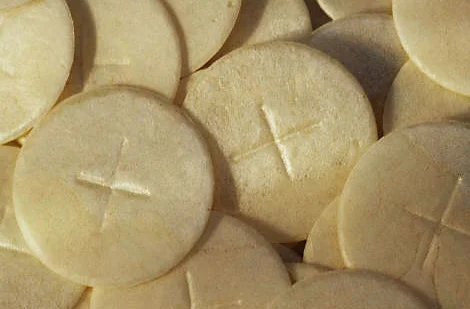
After her sermon, Atlanta Bishop Robert C. Wright invited Khalifah to join clergy and others at the altar for the Eucharistic prayers consecrating the bread and wine. As the worshippers stepped forward to receive Holy Communion, the bishop said Khalifah took part.

"She held out her hand to receive the Host and it is not my practice to refuse people," said Wright, reached by telephone. He noted that "open Communion" is common across his diocese, especially with visitors. Khalifah returned to her seat without receiving the consecrated wine, the bishop said.