doctrine

Sen. Bernie Sanders opens up a new front in America's church-state warfare

Sen. Bernie Sanders opens up a new front in America's church-state warfare

Try to imagine the media storm if the following drama ever took place under the hot glare of television lights in a U.S. Senate hearing.

So a Muslim believer who has been nominated for a cabinet-level post is taking questions. A Bible Belt senator asks: "Do you believe that Jesus is the Son of God?"

Or perhaps a senator from a New England state -- say Sen. Bernie Sanders of Vermont -- asks the nominee: "Do you think Christians who believe in the Holy Trinity will be condemned because they reject the oneness of God?"

Ismail Royer knows what would happen if he faced those questions. He would defend one of Islam's core doctrines.

"I believe Jesus was a prophet of God, but not God himself," said Royer, who works at the Center for Islam and Religious Freedom in Washington, D.C. "I'd have to say that worshipping Jesus alongside God amounts to polytheism and is a rejection of the one God. There is no way that I could apologize for what I believe as a Muslim."

A purely hypothetical case? Not after a recent confrontation during a U.S. Senate budget committee hearing on the nomination of Russell Vought to serve as deputy director of the White House Office of Management and Budget.

Sanders questioned a Vought article about a Wheaton College controversy, in which a professor made headlines with her claims that Christians and Muslims worship the same God. As a former Wheaton professor, Vought argued that salvation was found through Jesus -- period.

Thus, Sanders said: "You wrote, 'Muslims do not simply have a deficient theology. They do not know God because they have rejected Jesus Christ, His Son and they stand condemned.' Do you believe that that statement is Islamophobic?"

The nominee repeated his defense of this ancient Christian doctrine. Sanders kept asking if Vought believed that Muslims "stand condemned."

Once again, Vought said: "Senator, I'm a Christian …"
Old-school journalism values ended up leading Lee Strobel to God

Old-school journalism values ended up leading Lee Strobel to God

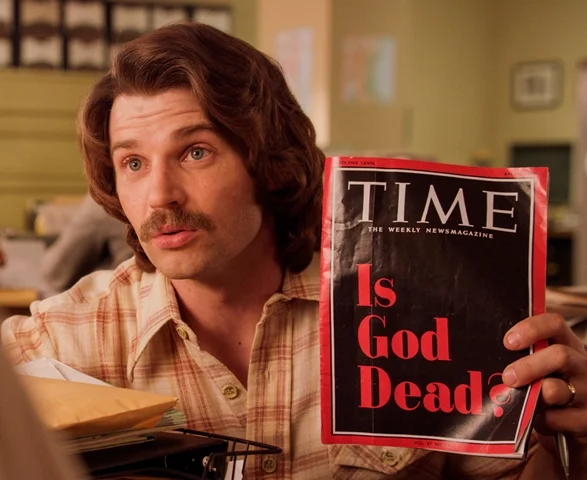
Reporter Lee Strobel was investigating the story of his life and he knew it.

As legal-affairs editor at The Chicago Tribune, he had covered plenty of hot-button issues -- like abortion rights -- that required him to wrestle with the views of people on the "other side." Strobel knew what he believed, as an atheist committed to abortion rights and other liberal causes. But he knew -- as a journalist -- that he had a job to do.

"I grew up in the era of old-school journalism, when you really had to try be balanced and fair and accurate. You had to listen to what other people had to say," he said. "Besides, I knew that if I turned in a story with holes in it my editor would come down on me. He'd bounce that thing right back."

But this story was different. The person on the other side of this Strobel investigation was his formerly agnostic wife, Leslie, whose 1979 conversion to Christianity rocked the foundations of their marriage. Suddenly, their home contained a new set of expectations when it came to anger, alcohol, ego and workaholism.

"I was mad and I wanted my wife back," Strobel said. "I decided that the Resurrection was the key to this whole thing and I set out to prove it was all nonsense."

The result was 19 months of research and interviews with experts on both sides of centuries of arguments about the claims of Christianity. As a graduate of the famous University of Missouri journalism program, followed by a Yale Law School degree, Strobel worked through a library of classic texts by atheist and Christian scholars.

The result was Strobel's own conversion, a career shift into ministry and, in 1998, the first of his many books, "The Case For Christ." This year, that book evolved into a movie built on a screenplay by Hollywood veteran Brian Bird -- a former reporter. The indie film made a modest $15 million at the box office. Here is the surprise: It drew an A-plus rating from CinemaScore and 79 percent of Rotten Tomatoes ratings by critics were positive.

The key to many reviews was that journalism remained front and center in the story, creating what Variety film critic Joe Leydon called a cross between an a basic "investigative-journalism drama" and a "theological detective story."

Some serious shopping tips for Catholic parents (and others) seeking traditional schools

Some serious shopping tips for Catholic parents (and others) seeking traditional schools

Buried inside the websites of colleges and universities are the calendars covering the nitty-gritty details of academic and student life.

That's a great place for research by parents considering places for their children to spend some of the most formative years of their lives, according to a Catholic scholar involved in fierce debates about postmodern trends in education.

Anthony Esolen thinks parents should pay special attention to student-life offerings on Friday and Saturday nights.

"You aren't just looking to see what kinds of things they're doing, you're looking for what is missing," said Esolen, best known for his translation of Dante's "The Divine Comedy." He has also written "The Politically Incorrect Guide to Western Civilization," "Ten Ways to Destroy the Imagination of Your Child" and other books on hot-button subjects.

For example, Esolen once noticed that calendars at Benedictine College in Atchison, Kan., contained lots of dancing -- swing dancing, to be precise. That sounded fun, but it didn't sound like business as usual in this day and age.

"What you're trying to find out," he explained, "is whether campus leaders are making serious attempts to build some wholesome community life. You're looking for chances for young men and women to get together in settings that tend to reinforce what a Catholic college is all about. … Otherwise, the weekend is just the weekend and we know what that means."

This topic may not sound controversial, said Esolen, but it is because of cultural issues looming in the background -- the defense of ancient doctrines on sexuality, gender and marriage. What happens in classrooms is important, but so are the expectations campus leaders establish for campus life, especially in their dormitories.

"Like it or not, parents have to learn whether a school is or is not on board with the whole Sexual Revolution," he said. If a school "has capitulated on that front" then traditional Catholic parents, or serious religious believers in other flocks, "have to run away and not look back. You can't compromise on that, right now."

The irony is that these kinds of doctrinal issues are critically important to both liberal and conservative Catholics. The bottom line: They are seeking different answers to the same questions.

Saith Peggy Noonan: Pick up the Book and change your world

Saith Peggy Noonan: Pick up the Book and change your world

Any history of Catholic thought, and the rise of Western culture, has to mention the turning point in the conversion story of Aurelius Augustinus.

During a time of inner torment, the young man from North Africa withdrew into a garden. As Pope Benedict XVI told the story in 2008, he "suddenly heard a child's voice chanting a rhyme never heard before: tolle, lege, tolle, lege -- pick up and read, pick up and read. He … returned to the Pauline codex that he had recently read, opened it, and his glance fell on the passage of the Epistle to the Romans where the Apostle exhorts to abandon the works of the flesh and to be clothed with Christ."

The man who became St. Augustine picked up that book and, thus, he "changed himself and changed our world," said journalist Peggy Noonan, in her May 13 commencement address at the Catholic University of America.

That was the punch line in her urgent appeal for the graduates to grasp that there is much more to life than the fleeting contents of the glowing, omnipresent screens that dominate their days and nights.

Instead, the winner of the 2017 Pulitzer Prize for commentary urged them to "embark on a lifelong relationship with a faithful companion who will always help you and sometimes delight you -- who will never desert you, who will make you smarter, and wiser, who will always be by your side and enlighten you all the days of your life.

"I am talking about -- books. You must not stop reading books. That's all. If you seek a happy and interesting life, one of depth, meaning and accomplishment, you must read books."

Noonan said she certainly couldn't tell her own story without referencing one book after another, from biographies she read as a child to "Saints for Sinners: Nine Desolate Souls Made Strong by God," which as an adult "helped me understand that I was a Catholic and believed it all." Her love of history, which helped shaped her speechwriting for presidents Ronald Reagan and George H.W. Bush, came from shelves of books.

The closest Noonan came to talking politics -- she made only two passing references to the current president -- was to note the degree to which the story of 2016 was told by journalists raised in cyberspace.

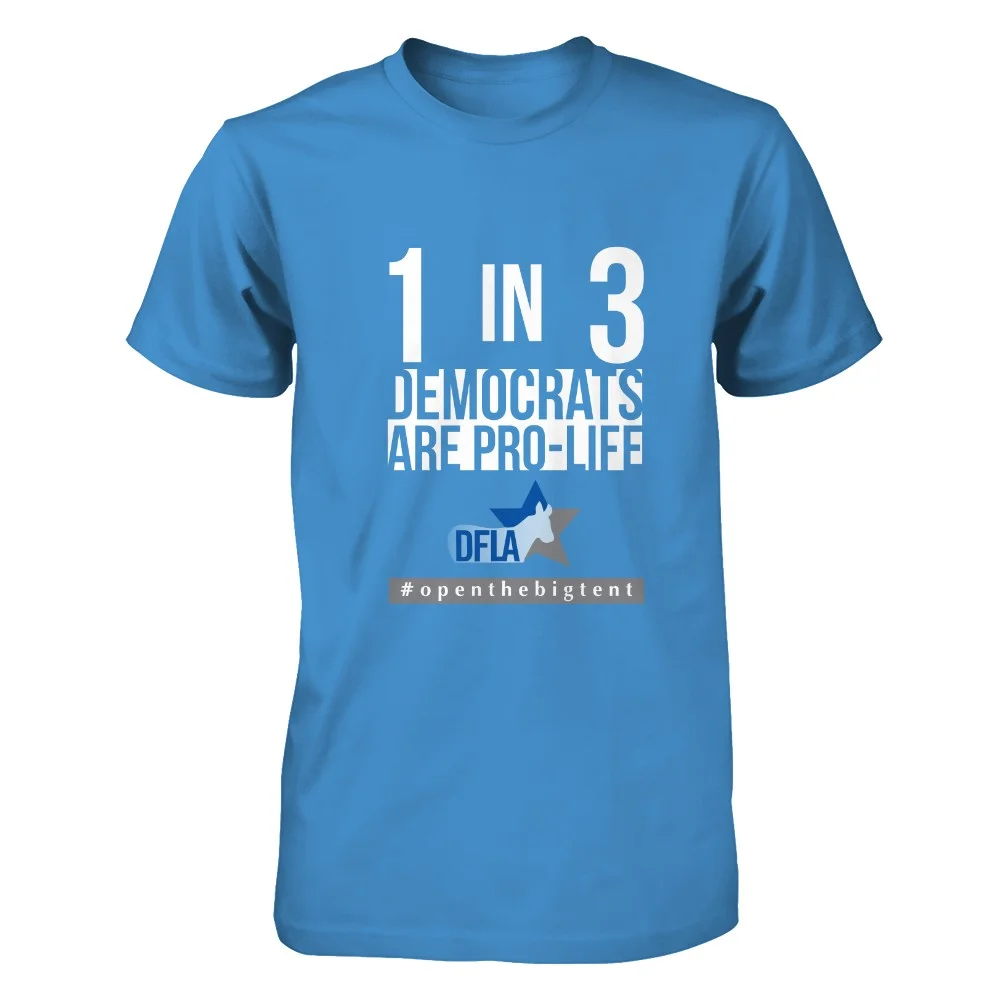
Is there still room for pro-life Democrats in their own political party?

Is there still room for pro-life Democrats in their own political party?

On the subject of abortion rights, the 2016 Democratic Party platform language prepared for candidates was as firm as ever.

"Democrats are committed to protecting and advancing reproductive health, rights, and justice," it noted. "We believe unequivocally, like the majority of Americans, that every woman should have access to quality reproductive health care services, including safe and legal abortion -- regardless of where she lives, how much money she makes, or how she is insured."

Most of the party's candidates agreed on other implications of that statement, from legal third-trimester abortions, taxpayer funded abortions and gender-selection abortions, which usually means aborting unborn females.

Most Democratic candidates backed that platform -- but not all.

Thus, it stunned some Democrats, especially in heartland and Bible Belt states, when Democratic National Committee Chairman Tom Perez drew another bright line defining who participates in the work of his party.

"Every Democrat, like every American," he said, "should support a woman's right to make her own choices about her body and her health. This is not negotiable and should not change city by city or state by state." In fact, he added, "every candidate who runs as a Democrat" should affirm abortion rights.

Needless to say, these were fighting words for Kristen Day, executive director of Democrats for Life of America.

"I am glad this conversation is taking place," she said, in a telephone interview earlier this week. It would help if the party's chairman "sat down and talked with us, because we are obviously feeling left out.

Tricky interfaith details: Muslim preacher in an Episcopal pulpit and at the altar

Tricky interfaith details: Muslim preacher in an Episcopal pulpit and at the altar

Soumaya Khalifah's sermon fell in the usual place in the Holy Week rite in which Episcopal Diocese of Atlanta clergy renewed their vows -- after a Gospel passage and before the consecration of bread and wine as Holy Communion.

In this Mass, the Liturgy of the Word also included a Quran reading, including: "God, there is no god but He, the Living, the Self-Subsisting. Neither slumber overtakes Him nor sleep. Unto Him belongs whatsoever is in the heavens and whatsoever is on the earth. Who is there who may intercede with Him save by His leave?"

Khalifah asked leaders from the region's 96 Episcopal parishes an obvious question: Was this an historic moment, with a Muslim woman preaching in a liturgy for an entire Christian diocese?

"I truly believe that interfaith works is the Civil Rights Movement for the 21st century," said Khalifah, head of the Islamic Speakers Bureau of Atlanta. "Faith is used to divide us and we need to make intentional efforts to bring ourselves together. Normally we worship, associate and have friends from our own faith tradition, our own race. …

"When I look at the beautiful creations of God and how they worship, I see my Christian brothers and sisters. I think of their love for Jesus -- peace be upon him -- and their trying to live by his specific example of loving his enemies."

After her sermon, Atlanta Bishop Robert C. Wright invited Khalifah to join clergy and others at the altar for the Eucharistic prayers consecrating the bread and wine. As the worshippers stepped forward to receive Holy Communion, the bishop said Khalifah took part.

"She held out her hand to receive the Host and it is not my practice to refuse people," said Wright, reached by telephone. He noted that "open Communion" is common across his diocese, especially with visitors. Khalifah returned to her seat without receiving the consecrated wine, the bishop said.

Yes, it appears that Easter and resurrection of Jesus are still controversial

Yes, it appears that Easter and resurrection of Jesus are still controversial

It's a challenge, but every Easter preachers around the world strive to find something different to say about the Christian doctrine of the resurrection.

This applies to the pope, as well, in his Holy Week and Easter sermons. Journalists always sift through these papal texts searching references to the Middle East, global warming, social justice or other "newsy" topics worthy of headlines.

 But Pope Francis did something different this year, abandoning his prepared sermon to speak from the heart about a recent telephone conversation with a young engineer who is facing a serious illness, as well as life-and-death questions.

Christians insist that Easter is the ultimate answer, said Francis.

"Today the church continues to say: Jesus has risen from the dead. … This is not a fantasy. It's not a celebration with many flowers," he said, surrounded by Easter pageantry.

Flowers are nice, but the resurrection is more, he added. "It is the mystery of the rejected stone that ends up being the cornerstone of our existence. Christ has risen from the dead. In this throwaway culture, where that which is not useful … is discarded, that stone -- Jesus -- is discarded, yet is the source of life."

So the pope has to defend Easter? As it turns out, anyone seeking other motives for the pope's blunt words could point to headlines triggered by a new BBC survey claiming that many self-identified British Christians have rejected, or perhaps watered-down, biblical claims that Jesus rose from the dead.

The BBC.com headline proclaimed: "Resurrection did not happen, say quarter of Christians." Among the survey's claims:

Year 29 for this column -- Yes, lots of journalists still need to get religion

Year 29 for this column --  Yes, lots of journalists still need to get religion

It was a month after Donald Trump won the presidency and, to be honest, many stunned journalists were still trying to figure out how they missed the tremors that led to the political earthquake.

That was the backdrop for an appearance by New York Times executive editor Dean Baquet on the Fresh Air program at National Public Radio. While the focus was politics and journalism, Baquet also offered a refreshingly candid sound bite about mainstream media efforts to cover religion news.

I think those remarks are worth a flashback this week, which marks the end of year 29 for my syndicated "On Religion" column. You see, I am just as convinced as ever that if journalists want to cover real stories in the real lives of real people in the real world, then they need to be real serious when handling religion.

Quoting a pre-election Times column by Jim Rutenberg, Fresh Air host Terry Gross said: "If you're a working journalist and you believe that Donald J. Trump is a demagogue playing to the nation's worst racist and nationalistic tendencies, that he cozies up to anti-American dictators and that he would be dangerous with control of the United States nuclear codes, how the heck are you supposed to cover him? Because if you believe all of those things, you have to throw out the textbook American journalism has been using for the better part of the past half-century."

For Baquet, this topic was linked to stirred-up populist emotions out in the heartland. Journalists must strive, he said, to understand the "forces in America that led to Americans wanting a change so much" that they were willing to back Trump.

"I want to make sure that we are much more creative about beats out in the country so that we understand that anger and disconnectedness that people feel. And I think I use religion as an example because I was raised Catholic in New Orleans," said Baquet. "I think that the New York-based, and Washington-based too probably, media powerhouses don't quite get religion. …"

Reality keeps raising the April Fools' bar for all those online Catholic satirists

Day after day, Kevin Knight scans news and commentary pages looking for items that will interest Catholics and others who visit his New Advent website.

With its plain white background, stark graphics and columns of headlines, the site looks something like the powerful, secular Drudge Report. But New Advent focuses on church life and doctrine, not celebrity scandals and political horse races.

Knight does appreciate the occasional zinger. Still, he has learned to be extra careful when April 1 approaches. After all, the Chair of St. Peter is occupied by a pope whose off-the-cuff remarks often puzzle the faithful. Oh, and Donald Trump is president of the United States.

"Yes, it has gotten harder to tell satire and hoaxes from the real thing," noted Knight. "It's getting more necessary to be explicit when linking to some stories -- especially when they deal with Pope Francis. … In the past two years, I've deliberately avoided linking to April Fools' stories for this very reason."

All savvy news consumers need to do to see what Knight is taking about is open an online search program and enter various religious terms and then the phrase "not the Onion," referring to The Onion, a secular satire site.

Take this headline, for example: "Muslim Schoolgirl Sent Home Because Her Skirt Was Too Long." That story is real.

Or how about this? "Pope Francis to make Martin Luther a Saint on October 31." That jest ran on April 1 on the "Liturgy: Service and Gratitude" site.

Consider this headline: "Jesuits to Admit Women to the Society."