
Oops…
Sorry, looks like something is missing.
Try a quick search to find what you're looking for, or see Terry's latest articles below:
Columns

In black-and-white Merriam-Webster Dictionary terms, "sickbed" is defined as "the bed on which one lies sick."
Anyone who has experienced years of chronic illness knows the reality is much more complex. Shortly before her "Para(site)dise" exhibition at the William King Museum of Art in Abington, Virginia, artist Jocelyn Mathewes used a pillowcase and 30 pieces of fabric to create a 7-by-9 floating sculpture called "The Bed (Horizontal Time)."
"Illness often leaves humans bed-bound, horizontal in space. Lying flat, habitating flat, a sick person exists on this plane," she wrote, in a text prepared for the William King Museum of Art in Abington, Virginia. The exhibit opened in August and closes January 10.
"The bed, however, is the center of the universe -- a nest, a resting place. For the chronically ill, it becomes the workspace, the conversation space. All uses are combined into a single whole, bleeding into one another, fragmented yet fundamentally attached."
This experience touches minds and souls, as well as bodies. The sickbed can become a place for confession, penitence, forgiveness and communion. People bring faith and joy with them, as well as fear and worry.
"All of the things that you need can come to you in that bed. … It's a place for the sick, but it is also a place for people who love them," she recently told me. "It can morph and change shape and your feelings about it change with the things that are happening in it, and around it."
In her "the tiny little high five" newsletter, she added: "A bed is a horizontal space that becomes the place of healing, the place of possibility. A bed that takes you to other worlds. A bed that you return to as a refuge. A bed that envelops you kindly, or consumes you, suffocating. It is not static. … It sometimes takes flight."

During a fistfight, young David Bowie suffered an injury to his left eye, leaving its pupil permanently wide open, with one blue eye looking radically different than the other.
Bowie didn't have heterochromia -- different-colored eyes. But his mysterious gaze was a key trait of Ziggy Stardust, his genderbending, rainbow-hued stage persona mixing glitter, bright lipstick, platform shoes and various female fashion trends.
This early 1970s bolt of glam-rock lightning was part of the cultural storm that shaped Greta Gerwig's imagination, leading to her "rock opera" vision of "The Chronicles of Narnia," the classic C.S. Lewis novels for children.
"David Bowie saved my life," Gerwig told Empire Magazine, while discussing "Narnia: The Magician's Nephew," poised for release in early 2027.
"Paul McCartney saved my life. David Gilmour saved my life. Pete Townshend saved my life. … When I heard their music, I had this deep sense of [thinking], 'You're gonna be okay.'" She added: "Narnia is literally a world made out of music. It is a world sung to life by Aslan."
In Narnia, Aslan is the Christ figure, repeatedly described by Lewis -- an Oxford don and Christian apologist -- as the "King of the wood and the son of the great Emperor-Beyond-the-Sea. … The Lion, the great Lion." In "The Magician's Nephew," Narnia's creation story, Aslan is first described as "a Lion. Huge, shaggy and bright," with a basso profundo voice "deep enough to be the voice of the earth."
Gerwig ignited an online firestorm by choosing the legendary actress Meryl Streep to provide Aslan's voice. And the director moved "The Magician's Nephew" from the early-1900s to the 1950s, so that its young hero Digory Kirke would grow up in the world that produced Bowie and other rock visionaries. Thus, the Narnia timeline created by Lewis will, in its climactic books, move from World War II Britain to the cultural and sexual revolutions of the 1960s and '70s.
Also, the Empire cover offers the first portrait of the character some call "Ziggy Aslan."
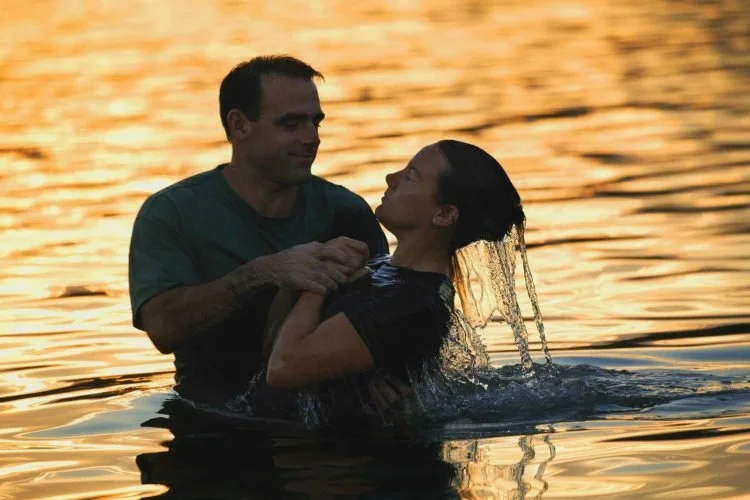
Back in the Southern Baptist Convention's boom years, from the 1960s to 2010, the experts charting baptism statistics divided "children" into three groups -- starting with those under age 6.
Behind the scenes, there were discussions about when children reached the "age of accountability" and could make mature professions of faith in Jesus Christ, leading to "believer's baptism" by full immersion in water. As with many other doctrinal issues, this was settled by local-church leaders. The same was true when adults asked to be rebaptized, for various reasons.
"At the end of the day, when someone says they've decided to give their life to Christ, the local church is going to let them symbolize that by being baptized," noted Scott McConnell, executive director of Lifeway Research. "That's what Baptists do. That's who we are."
Obviously, Baptists pay close attention to baptism statistics, along with trends with church attendance and membership. In a new report, Lifeway dug into Southern Baptist Convention Annual Church Profile numbers for 2025 and reported that baptisms rose for the fifth consecutive year.
Baptist leaders quickly noted another current trend -- adults 30 and older represented 33% of all baptisms. That was higher than the baptism of those 12-17 (25%), children before age 12 (22%) and young adults between 18-29 (20%). In the past, it was common for the baptism of minors to be two-thirds of the total, noted McConnell, reached by telephone.
The "seismic development" in these numbers is the consistently rising number of conversions among Americans over age 18, noted the Rev. R. Albert Mohler, Jr., president of Southern Baptist Theological Seminary in Louisville, Kentucky.
Say the word "Vegas" and most travelers think about the 30-plus casinos and resorts along the 4.2-mile stretch of Las Vegas Boulevard known as "The Strip."
The Southern Baptist "City Missionary" for Las Vegas thinks about a different set of numbers -- the 30 churches the denomination's Send Network has planted in this desert valley in the past decade. There are nearly 100 SBC churches in greater Las Vegas and 177 in Nevada.
"It's hard to narrow Las Vegas down into some kind of majority culture that fits the stereotypes. … This place is multiethnic, multicultural and we have people who are dealing with all kinds of issues and sins," said the Rev. Heiden Ratner, 37, who leads the WALK Church, a 10-year-old congregation with about 1,100 worshippers.
"Las Vegas is pretty much pre-Christian, and what I mean by that is that there has never been a revival that has swept through this city. When I was growing up here, there wasn't a single Sunday morning that I woke up and thought, 'Maybe I should go to church.' Never.”
Obviously, the Strip has not vanished, and its "Sin City" label remains relevant. The Nevada Gaming Control Board reported $8.82 billion in Gross Gaming Revenue (what operators keep after payouts) for the Strip in 2025. But the world has changed. Researchers struggle to describe online gambling today -- from $100 billion global GGR in 2025 to a Gaming Compliance International estimate of $5.9 trillion in unregulated activity.
For decades, Ratner noted, Las Vegas couldn't land big-league football, baseball, basketball and hockey because of gambling. Now the city has teams in three of the four sports, and the National Basketball Association may be next. The city hosted its first Super Bowl in 2024 and the game returns in 2029.
"That kind of credibility is leading all kinds of people and corporations to take a second look at this city," he said.
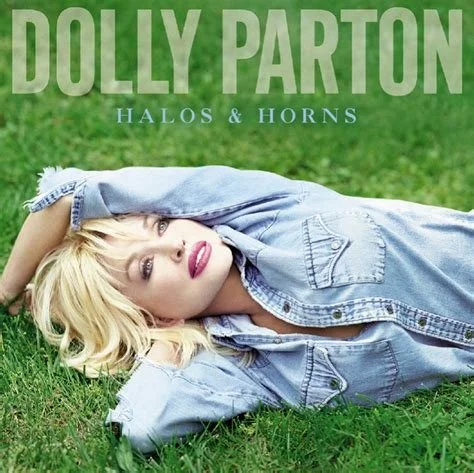
When Robert Lee Parton died in 2000, the illiterate former sharecropper asked his large musical family to sing "If We Never Meet Again (This Side of Heaven)," his favorite country-gospel song.
"If we never meet again this side of heaven / As we struggle through this world and its strife / There's another meeting place somewhere in heaven / By the river of life," they sang.
Recalling that family salute to the eternal ties that bind led his daughter Dolly Parton to ask that Albert E Brumley's hymn be sung, once again, at her private August 28 funeral.
Celebrating the country music legend is an honor "mixed with absolute pride and great sadness," stressed Bryan Seaver, the son of Parton's sister Cassie Parton, in the family's announcement of her death.
"But sadness lies with us, not with Dolly," said Seaver, who served as Parton's security director and also spoke in her funeral. "Dolly has lived in the light and is in the arms of Jesus. Surely met by Carl, her parents, and countless others who have watched her and longed for her to meet them in the heavens."
Like her nearly 59-year marriage to construction worker Carl Dean, Parton's faith was something she never hid, but the details were mysterious enough to cause chatter.
"Very few artists -- outside of strictly gospel -- are able to clearly articulate the relationship between their music and their faith," said Steve Beard, a contributor to "Spiritual Journeys," a book about the spiritual lives of musical icons. But one thing is certain, he said, via email: "Dolly was raised to believe in and preach a God of love. She would be quick to point that out and leave the fine and important details of theology to eternity."
Parton grew up in mountain churches, with a grandfather who was a fire-and-brimstone Pentecostal preacher and also with ties to Robert F. Thomas, a Methodist missionary doctor who delivered many babies -- including Parton, the fourth of 12 children in the family's one-bedroom cabin.
In her 1994 autobiography, Parton said she never lost her faith, but it certainly evolved: "One day as I prayed in earnest, I broke through some sort of spirit wall and found God. … Not as a chastising, bombastic bully but as a friend I could talk to on a one-to-one basis."

After watching Christopher Nolan's take on "The Odyssey," Father Dwight Longenecker remembered a comment Steven Spielberg made in a movie commentary while discussing how viewers react to symbolism in cinema.
The legendary director, a progressive Jew, was responding to comments that prominent crosses in "Saving Private Ryan" cemetery scenes suggested that the hero was a Christ figure who suffered to save a lost soul. Spielberg replied: "I'm always fascinated, to learn about the things people see in my pictures that I never knew about."
Now, faithful movie lovers are debating whether Nolan's Catholic background soaked into his version of Homer's pagan epic. For example, how did an arrogant, brilliant, pagan Greek warrior develop a strong sense of guilt about his mistakes?
"Nolan is coming from a Catholic background and 2,000 years of Western Christian tradition," said Longenecker, a former journalist and screenwriter who leads Our Lady of the Rosary Catholic Church in Greenville, South Carolina. A former Anglican priest, he converted to Catholicism with his wife and four children.
"He cannot help but bring, quote, 'Christian sensibilities' into his understanding of the story, even though he may not have done it explicitly," he explained, via Zoom. Guilt is a human emotion, "part of what C.S. Lewis called the 'Tao,' a universal sense of morality, the universal sense of right and wrong."
Nolan addressed this issue with political philosopher Zhuge Yiyang, during an interview originally posted on China's Bilibili video platform. Another question: How did the doctrine of "atonement" for sin get into this movie? Nolan said his film stressed what he called "Zeus' Law," the ideal of "mutual respect -- that I treat you the way I want to be treated."
Nolan added: "I think in a way we may be bringing our more modern sensibility to that. Insofar as [atonement is] there, it's not a deliberate attempt to Christianize it, but it's an outgrowth … of burrowing in on this philosophical idea of what happens when you break Zeus' Law."
Cardinals, archbishops and bishops have many ways to communicate with Vatican officials and even the pope himself, outside of occasional personal meetings.
In the digital age, one blunt way to reach Pope Leo XIV is to write a candid letter and post it online. That's what Bishop Robert Mutsaerts of the Netherlands, auxiliary bishop of the Diocese of 's-Hertogenbosch, did recently.
"Holy Father," he began, with "reverence for the office entrusted to you as successor of Saint Peter, and in communion with the Church which Christ built upon the apostles, I address you with this open letter. I don't do so lightly."
What followed was one bishop's heart cry for the pope to speak candidly about why believers should cling to ancient truths, even while struggling with the riptides of modern life.
Peter, the first pope, "received from Christ not only the commission to unite the brothers, but also to strengthen them in the faith," wrote Mutsaerts. "Ultimately, the world gains little from a Church that merely repeats what the world itself already thinks."
After years of "synodality" meetings built on dialogue with modern Catholics and church critics, the bishop offered hard questions: "Not: how many reports were written? Not: how many people participated? But: has faith become stronger? Has Christ been proclaimed more clearly? Has Catholic identity deepened? Have more people come to convert? Is Sunday Mass better attended? Are there more priestly vocations? …Has greater reverence for the Eucharist emerged? Has the moral teaching of the Church become clearer? Has missionary courage increased?"
The auxiliary bishop's superior, Bishop Gerard Johannes Nicolaus de Korte, quickly distanced himself from these words, while debates continued online.
The context for the Mutsaerts letter is larger than headline grabbing debates about the use of the Latin Mass, bleak attendance trends in Western nations, Catholic politicians clashing with church teachings and same-sex union blessings in many European Catholic churches.
Freelance
It doesn't take a Ph.D. in Liturgical Studies to tell the difference between a Southern Baptist church and an Orthodox church. You can get some pretty good clues just by walking in the door and looking around. But there are some similarities between the two that might be a little trickier to spot. For instance, let me tell you about what life is like on Sunday nights in a Southern Baptist congregation.
Baptists worship at several different times during the week -- at least they did in the old days when I was growing up as a Southern Baptist pastor's son. One of those times is on Sunday nights. Back in the early 1980s, I was active in a church in Champaign-Urbana, Illinois, in which the typical Sunday morning crowd would be about 200 to 300 people, which is rather small for a Baptist church, but fairly normal for an Orthodox parish. Then the crowd on Sunday night would be from 40 to 45 people.
Now, that ratio should sound familiar to many priests who lead Vespers services. But the similarities don’t stop there.
Before the age of 30, I became a deacon and the finance chairman of that church -- which, in the Southern Baptist way of doing things, meant that I was the only person, not excluding the pastor, who saw the annual pledge cards. I was the only person in the congregation who knew who was giving what.
If there is an experience in life that will teach you the meaning of original sin, finance chairman is that role. What I discovered through that experience is that there is no connection whatsoever between how much a family gives to the church and how much money that family makes. Instead, I found that the key connection is faithfulness in worship. If you attend the Sunday night service at a typical Baptist church and look around at the 40 people there in comparison to the 200 or 300 in attendance on Sunday morning, you will find that about 80 percent of the church's giving is accounted for in that group.
The bottom line: The Sunday night experience in a Baptist church is very similar to that in Saturday evening Vespers services in an Orthodox church. As Bishop Antoun told me once, if you look at who attends Great Vespers and comes to confession, you are looking at about 80 percent of the service, the giving, and the energy in most parishes.
Who comes to Vespers? Who comes to confession? Who comes to the feasts, and why do they come? That’s where I would like to start as we consider this question: What do the converts want?
Originally posted on getreligion.org
Day after day, millions of Americans who frequent pews see ghosts when they pick up their newspapers or turn on television news.
They read stories that are important to their lives, yet they seem to catch fleeting glimpses of other characters or other plots between the lines. There seem to be other ideas or influences hiding there.
One minute they are there. The next they are gone. There are ghosts in there, hiding in the ink and the pixels. Something is missing in the basic facts or perhaps most of the key facts are there, yet some are twisted. Perhaps there are sins of omission, rather than commission.
A lot of these ghosts are, well, holy ghosts. They are facts and stories and faces linked to the power of religious faith. Now you see them. Now you don't. In fact, a whole lot of the time you don't get to see them. But that doesn't mean they aren't there.
I want to show you an an example -- a case study, if you will -- of what I am talking about, a ghost in a set of stories that is related to this blog that you are visiting (and we hope you come back often).
inter is over and it's time to pack away the shovels, down jackets, insulated boots and mittens until next year. The changing seasons teach different lessons and, this winter, I was reminded of a great truth about life. It goes something like this: There is a right way and a wrong way to shovel snow.
Perhaps you saw the headlines about the massive storms that hit the nation's capital, this past winter. Right after everyone calmed down from the Y2K scare, we were reminded that there are other ways to bring an entire region to a screeching halt.
Or, perhaps you had to dig your way out of record-breaking drifts in some other corner of the country, this year. Or perhaps you live someplace where it's normal to see several feet of snow. Perhaps you're a pro.
I grew up on the Texas Gulf Coast, which is hardly a great place to learn how to handle snow. We were masters of mosquito control.
But, after college, I found myself in the frozen Midwest, where shoveling snow is an art -- right up there with boiling corn and planning tailgate parties. The snow started about Thanksgiving and, before long, I realized that it wasn't going away on its own.
Several weeks, and several backaches later, I started watching the local talent. This is when it hit me: I was not the first person in the history of the world to shovel snow. I didn't have to reinvent the wheel. There I was, a youngster, slumping to the side of the path in exhaustion while gray- haired neighbors soldiered on.
What did they know that I didn't know? Well, yes, there were different kinds of shovels and different kinds of techniques and some folks were more doctrinaire than others. But there were common themes, such as bending your knees, not getting the shovel TOO full and never flinging the snow into the wind. There was a right way and wrong way to face this challenge and, I decided, only a fool would go it alone.
Eventually, I humbled myself and started asking questions. The elders took me in, showed me the ropes and handed down what they had learned -- a kind of oral snow-shoveling Tradition.
Religion Coverage: Past as Prologue?
(Copyright) The Poynter Institute Poynter Reports, May 2003
Lou Grant had a problem.
Actually, the city editor of the classic TV comedy had two problems.
First of all, the fictional Los Angeles Tribune had lost its religion editor and no self-respecting journalist wanted the job. Second, Grant needed to ditch a lazy, often-drunk, no-good reporter named Mal Cavanaugh.
Finally, Grant saw the light. He told Cavanaugh he was the new religion editor.
"That stinks! Before you stick me with a lousy job like that, I'd quit," said the reporter, before storming out of the room.
Grant's staff beamed. The religion beat was still vacant, but who cared?
That scenario rang true to the editors and religion reporters I interviewed while doing my graduate work at the University of Illinois in Urbana-Champaign, researching a project that reached the cover of The Quill in January, 1983.
Many religion-beat veterans were proud of their work, but felt like Rodney Dangerfield in their newsrooms. Editors kept saying that they knew religion was news, but that religion-beat stories seemed too boring, or too controversial, to warrant dedicated coverage.
That's the ticket -- too boring and too controversial.
Soon after John Grisham finished law school in 1981, he started hanging out at the DeSoto County Courthouse on the town square in Hernando, Miss. He had tried writing a book or two at the University of Mississippi, but nothing came of it. Then one day he overheard the horrifying courtroom testimony of a 12-year-old girl who had been raped. What would happen, he asked himself, if the girl's father became so outraged that he killed the rapist?
Grisham couldn't get this story out of his head. Soon he was getting up at 5 a.m. with a notepad, writing chapter after chapter of his first courtroom drama. It took three years to finish the manuscript, and another year of rejections by dozens of companies, before Wynwood Press published 5,000 copies in 1988.
But there was more to this process than telling a story that was in his head and heart.
"While I was writing 'A Time to Kill,' I read everything that was on the New York Times list," said Grisham, at a Baylor University conference called "Art & Soul" in March, 2000. "Most of it, I said to myself, 'I can do better than this.' A lot of it, I said, 'I'll never be that good.' "
Grisham realized that he was not writing the first legal thriller. So he read the competition and he learned the rules -- the writing style of the marketplace in which he would have to compete. He created a likable hero and then he ensnared him in a dangerous conspiracy. Then he carefully plotted a way to get him out of that mess, with as many entertaining twists and turns along the way as possible to create tension.
"I didn't invent that," said Grisham.
A Yale law professor -- and evangelical -- warns about the costs of political involvement.
God's Name in Vain: The Wrongs and Rights of Religion in Politics Stephen L. Carter Basic, 288 pages, $26
Reviewed by Terry Mattingly
During the 1992 Republican Convention, Vice President Dan Quayle shouted this question to a room full of delegates: "Who do we trust?"
The assembly yelled, "Jesus!"
Quayle had expected to hear, "George Bush!"
This anecdote appears early in God's Name in Vain by Yale law professor Stephen Carter. The question, of course, is whether this is a parable about Christians (a) selling their souls for a place at a worldly table or (b) bluntly confessing that eternal authority is more important than a political endorsement. The answer seems to be--both.
In this sequel to his breakthrough book, The Culture of Disbelief, Carter argues that believers--even fundamentalists and evangelicals--have every right to raise their voices early and often in the public square. He warns, however, that they will pay a high price for their covenants with political principalities and powers.
So, yes, the religious right has softened its rhetoric on moral and social issues in order to dance with the Libertarians in the gop tent.
But what goes around comes around, notes Carter, who openly identifies himself as an evangelical believer in this book. Leaders on the religious left have also walked this tricky path. Long ago, the clergy who led the civil rights movement surrendered many of their most prophetic goals when they married the Democratic Party. How long has it been since anyone heard the Rev. Jesse Jackson preach a prolife sermon?
This would not have surprised C. S. Lewis, whose brief essay "Meditation on the Third Commandment" provides one of the central themes of this book. In it, Lewis argued against founding a "Christian" political party. If it were truly Christian, then it would preach the whole package of the Christian faith and, thus, would be too demanding to succeed at the ballot box. But if it were truly a political party, it would be driven to make the kinds of compromises needed to win elections. Thus, it would not be truly Christian.
Carter concludes, "Religious organizations making pragmatic compromises for victory should ask themselves two simple questions: If we win, what are we winning? And at what cost?"
Copyright © WORLD Magazine, November 2000
The Gen-X blond standing behind the Democratic Party placards gave me a tired smile election morning as I headed into my polling place a few miles from the D.C. Beltway.
Vote for the Democratic Party, said the signs.
Not this time, sister.
I smiled back, sort of. It was a sad smile. I'm a Democrat and have been all my life. That used to be a normal thing for people who grew up in middle-class Bible Belt homes. But I cast my first vote today for a Republican candidate for president.
Why? Because Gov. Robert Casey of Pennsylvania is dead and I can't write in his name anymore, that's why. He's the old-guard Catholic Democrat who was banned from the 1992 Democratic National Convention floor, the man who told his party's platform hearings: "The national Democratic Party has embraced abortion on demand. I believe this position is wrong in principle and out of the mainstream of our party's historic commitment to protecting the powerless.... Abortion is the ultimate violence. Abortion on demand has, in my judgment, contributed significantly to an environment in our country in which life has become very cheap."
Powerful words, coming just a few years before Columbine High School and so, so much more.
Published in Again Magazine and a shorter version at WWW.Beliefnet.com
When I was a teen-ager, it took forever to get my hair right.There was this one place that was really bad, behind my right ear. My hair wanted to flip out. I wanted it to flip under. The longer I grew my hair out, the better, or the worse, this particular thicket would become.
It was incredibly important -- almost a life-and-death matter -- to have long-ish hair when you were a Southern Baptist preacher's kid in the late 1960s.
But there was no way, given the social and theological realities of the circumstances, for me to take the plunge and grow my hair out so far that gravity would take care of the tell-tale flip, turning it into a mere wave in a shoulder-length mane. What I needed was hair that was long enough to satisfy me and my friends, yet hair that wasn't longer than the hair on most of the heads of the sons of the deacons at the Proctor Street Baptist Church in Port Arthur, Texas. In many ways, it must have been easier to be a hippie than a Baptist.
Sports analyst Paul Finebaum is often called the voice of Bible Belt football, but he has never had the luxury of preaching to one choir.
The war between Auburn University and the University of Alabama has, for example, verged on a crusade with fans so devoted some seem possessed. In the most infamous moment on "The Paul Finebaum Show, "Al from Dadeville (Harvey Updyke)" offered this explanation for his poisonous attack that killed Auburn's hallowed Toomer's Corner oak trees: "I just had too much 'Bama in me."
But there's more to Finebaum's ESPN flock than Southeastern Conference shouting matches. He often allows regular callers -- "Squirrel," "I-Man," "Jim from Tuscaloosa," the late, beloved Tammy "War Damn Eagle" Bullard -- to veer into commentary about grief, health issues, personal tragedies and answered prayers.
"Paul Finebaum truly listens to what Americans have to say, and as a result he hears a lot of God talk," noted Michael Schmitz, editor of Compact, an online magazine that blends progressive economics with cultural conservatism.
Writing for First Things, he added: "On a recent show, Legend -- known for his bravura calls and the fifteen years he spent in prison for murdering his cousin -- reassured listeners that he was fine after being unceremoniously ejected from the SEC's media days. 'I've actually really been being blessed by the Lord.' … He also admitted that he may have been at fault for the recent dustup. 'Pride and ego, those are horrible things. I asked God to deal with me.'"
Yes, some of this may be a sign that talk-radio listeners are often old, retired or in jobs -- truckers, for example -- with time to ponder the puzzles of daily life. When Southerners testify about suffering and their own mortality, these are rarely secular subjects.